
The Weller Soldering Gun 8200: A 2026 Legacy Review
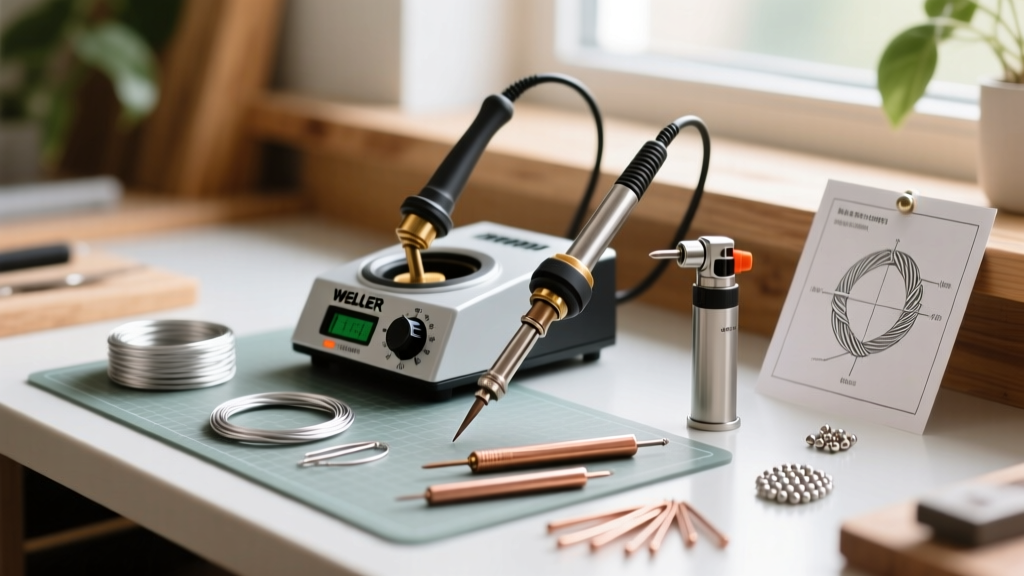
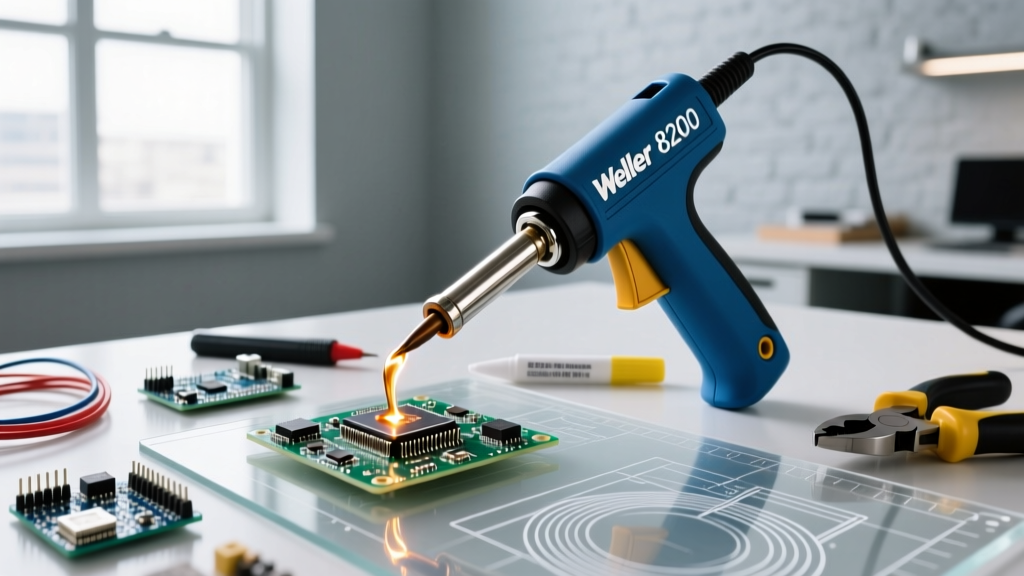
For decades, the Weller 8200 (often sold in the 8200PK kit) has been the undisputed workhorse for heavy-duty electrical soldering. Operating on a dual-range 120W/140W transformer design, it delivers massive current directly to a copper tip, achieving heat-up times of roughly six seconds. But as electronics shrink, wire gauges in automotive and renewable energy sectors evolve, and cordless technology matures in 2026, does the classic 8200 still hold its ground?
In this best-of comparison, we dissect the exact physics, failure modes, and real-world applications of the Weller 8200. We then stack it against the top heavy-duty alternatives on the market—including the Weller D550, Hakko FX-601, and Milwaukee’s M18 cordless lineup—to help you choose the right tool for your specific thermal mass requirements.
Weller 8200PK Quick Specs (2026 Market Data)
- Model: Weller 8200 (Kit: 8200PK)
- Wattage: 120W (Low Trigger) / 140W (High Trigger)
- Technology: Step-Down Transformer (AC)
- Heat-Up Time: ~6 seconds to 900°F (482°C)
- Standard Tip: CT5F7 (1/4" Chisel, Long-Life Plated)
- Average 2026 Street Price: $45.00 - $58.00 USD
The Physics of the 8200: Why It Works (And Where It Fails)
Unlike ceramic-heater soldering stations that rely on thermal conduction from a heating element to the tip, the Weller 8200 uses a heavy step-down transformer. The primary coil takes 120V AC mains power and steps it down to approximately 0.5V AC at the secondary coil. Because power (Watts) is conserved, this low voltage translates to hundreds of amps flowing directly through the copper tip. The tip itself acts as the heating element due to its electrical resistance.
This design offers incredible thermal recovery for thick wires (12 AWG to 8 AWG). However, it introduces two critical edge cases:
- Thermal Mass Limitations: While excellent for 12 AWG automotive wire, the 140W output will instantly bog down and freeze if you attempt to solder 4 AWG battery lugs or massive copper ground planes.
- Inductive Kickback: When you release the trigger, the magnetic field in the transformer collapses. This induces a high-voltage spike. If the tip is touching a sensitive unshielded microcontroller pin or a Hall-effect sensor, this spike can latch up or permanently destroy the silicon die.
Head-to-Head: Weller 8200 vs. The 2026 Heavy-Duty Lineup
To determine if the 8200 is still your best option, we compared it against three distinct categories of heavy-duty soldering tools available in 2026.
| Model | Wattage / Tech | Best Application | 2026 Price | Magnetic Interference |
|---|---|---|---|---|
| Weller 8200 | 140W / Transformer | 16-10 AWG wire, stained glass | ~$50 | High (Avoid on PCBs) |
| Weller D550 | 260W / Transformer | 8-2 AWG battery cables, heavy lugs | ~$95 | Very High |
| Hakko FX-601-02 | 230W / Ceramic | Large PCB ground planes, precision heavy work | ~$78 | None (Safe for ICs) |
| Milwaukee M18 (48-22-6800) | 200W / Lithium-Ion | Field service, automotive, off-grid | ~$160 (Bare) | Low / Regulated |
1. Weller D550: The Big Brother
If your primary use case involves marine battery terminals, 4 AWG welding cables, or thick copper busbars, the 8200 will leave you frustrated with cold solder joints. The Weller D550 pushes 260W on the high setting. Its massive CT6C7 tip holds enough thermal mass to melt high-temperature silver-bearing solders on large lugs without stalling. However, at nearly double the weight of the 8200, wrist fatigue is a genuine factor during prolonged overhead automotive work.
2. Hakko FX-601-02: The PCB Safe Alternative
For technicians soldering heavy 10 AWG wires directly to large printed circuit board (PCB) ground planes, the 8200 is a liability due to its magnetic spike and uneven heat distribution. The Hakko FX-601 is a 230W adjustable ceramic iron. It uses a closed-loop thermocouple to maintain exact temperatures up to 500°C. Because it lacks a transformer, it generates zero electromagnetic interference (EMI), making it fully compliant with sensitive electronics repair while still possessing the raw wattage to conquer heavy thermal masses.
3. Milwaukee M18 Cordless Soldering Gun
For field technicians pulling low-voltage security wiring or repairing solar arrays off-grid, the 120V AC tether of the Weller 8200 is a dealbreaker. Milwaukee’s M18 soldering gun delivers 200W of cordless power, heating a 1/4" tip in under 15 seconds. While the upfront cost is steep (especially if you need to purchase the M18 battery ecosystem), the ergonomic pistol grip and integrated LED work light offer superior job-site utility compared to the 8200.
Maintenance: Preventing the 'Black Oxide' Failure Mode
The most common reason users discard a Weller 8200 is tip degradation. The CT5F7 tip features an iron plating over a copper core. If you operate the gun at the 140W high setting continuously for more than 30 seconds, the flux core in your solder burns away, and the tip oxidizes, turning a crusty black. Once black oxide forms, heat transfer drops by over 90%, making the tool feel broken.
Expert Troubleshooting Tip: Never use sandpaper, files, or abrasive emery cloth on a blackened Weller tip. This strips the iron plating, exposing the copper core, which will rapidly dissolve into your solder and ruin the tip permanently. Instead, use a damp cellulose sponge or brass wire sponge while the tip is hot, and immediately apply fresh 60/40 rosin-core solder to re-tin the surface.
Proper Tinning Protocol for Longevity
- Prep: Ensure the tip nut is tightened with a wrench (loose nuts cause arcing and pitting at the connection point).
- Heat: Squeeze the trigger to the low (120W) setting. Do not use high unless actively melting a large joint.
- Clean: Wipe the tip on a damp cellulose sponge (never a dry brass sponge while the gun is actively heating, as thermal shock can micro-fracture the plating).
- Tin: Apply a generous amount of 63/37 or 60/40 rosin-core solder immediately before releasing the trigger.
Safety and Compliance: Flux Fumes in 2026
Soldering with a high-wattage gun like the 8200 vaporizes rosin-based flux at an aggressive rate. According to the NIOSH Guidelines on Occupational Asthma, colophony (rosin) fumes are a known respiratory sensitizer. When working with the 8200 in enclosed spaces like automotive dashboards or electrical panels, a localized HEPA and activated carbon fume extractor is mandatory. Furthermore, any soldering done on commercial electronic assemblies must adhere to the wetting and fillet requirements outlined in the IPC J-STD-001 Standard, which strictly prohibits the use of excessive heat that damages wire insulation or delaminates PCB pads—a common risk when users hold the 8200 trigger down too long.
For more on tool safety and ergonomic best practices, refer to the official Weller Tools safety documentation, which emphasizes keeping the tool's ventilation louvers clear of debris to prevent primary coil overheating.
Final Verdict: Who Should Buy the Weller 8200?
The Weller 8200 remains an exceptional, budget-friendly tool for specific, non-electronic applications. If you are building stained glass projects, soldering 16-10 AWG automotive wires, or doing general household electrical splicing, the 8200’s $50 price point and instant heat recovery are unbeatable. However, if you are working on sensitive PCBs, require cordless mobility, or regularly solder 4 AWG+ battery cables, you must upgrade to the Hakko FX-601, Milwaukee M18, or Weller D550, respectively.
FAQ: Troubleshooting the Weller 8200
Q: Why is my 8200 buzzing loudly and vibrating?
A: Transformer hum is normal, but excessive vibration usually indicates a loose tip nut or a failing primary coil laminate. Tighten the tip nut with the included wrench while the tool is unplugged and cool.
Q: Can I use lead-free solder with the 8200?
A: Yes, but lead-free alloys (like SAC305) require higher temperatures. You will need to use the 140W high setting exclusively, which accelerates tip oxidation. We recommend sticking to 60/40 leaded solder for heavy wire splices where RoHS compliance is not legally mandated.
Q: The trigger feels sticky and doesn't snap back.
A: The dual-range trigger relies on a physical microswitch and a spring return mechanism. Over time, vaporized flux residue can gum up the switch housing. A quick blast of electrical contact cleaner into the trigger mechanism usually resolves this without requiring a full teardown.