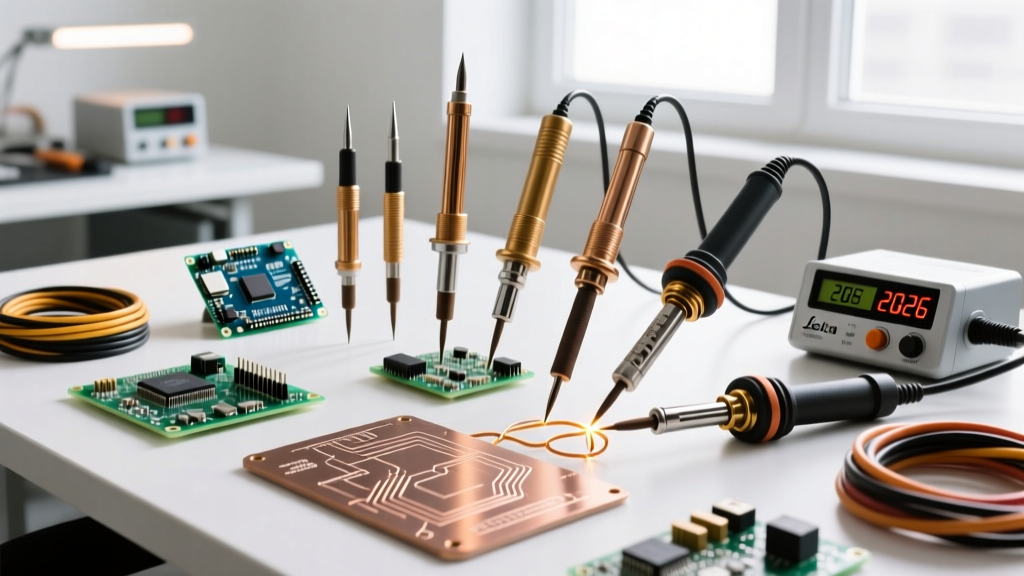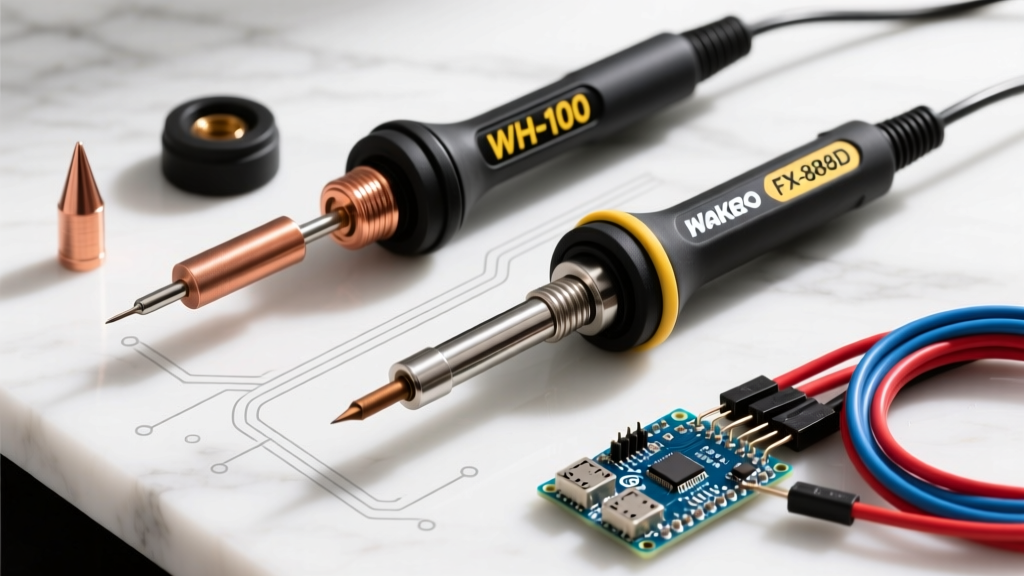

The Anatomy of a Soldering Station: Why OEM Parts Matter
When maintaining a professional electronics workbench in 2026, understanding your soldering iron parts is the difference between a flawless IPC-compliant joint and a cold, fractured connection. According to the IPC J-STD-001 standards, thermal recovery and precise temperature control are non-negotiable for reliable intermetallic compound (IMC) formation. Yet, many technicians unknowingly compromise their stations by sourcing counterfeit replacement parts that lack proper thermal mass or contain lead impurities in the plating.
This comprehensive comparison breaks down the best OEM and high-end aftermarket soldering iron parts for industry-standard stations like Weller, Hakko, JBC, and the open-source favorite, Pinecil. Whether you are replacing a burnt-out heating element or upgrading to ergonomic silicone grips, selecting the right components ensures your station performs at peak efficiency.
Best Replacement Heating Elements: Ceramic vs. Nichrome
The heating element is the heart of your soldering iron. In 2026, the market remains divided between traditional nichrome wire-wound elements and advanced ceramic core heaters. Understanding the failure modes of each is critical when ordering replacements.
Hakko A1321 (Ceramic) vs. A1322 (Nichrome)
Hakko's FX-888D and older 936 stations rely on these two distinct element types. The A1321 ceramic element features an integrated thermocouple, allowing for rapid thermal feedback. Conversely, the A1322 nichrome element uses a separate thermocouple sensor. Critical Warning: These elements have different pinouts (4-pin vs. 5-pin) and are not cross-compatible without modifying the station's internal wiring.
| Element Model | Technology | Avg. Price (2026) | Thermal Recovery | Primary Failure Mode |
|---|---|---|---|---|
| Hakko A1321 | Ceramic Core | $22 - $28 | Excellent (<3s) | Cracking from thermal shock (dropping) |
| Hakko A1322 | Nichrome Wire | $14 - $18 | Good (5-8s) | Wire burnout from sustained 450°C use |
| Weller PES51 | Nichrome / Sensor | $38 - $45 | Very Good (4s) | Thermocouple wire fatigue at handle joint |
| Pinecil V2 Core | Direct DC Injection | $12 - $15 | Instantaneous | MOSFET failure on mainboard (rare) |
Essential Tip Cartridges & Sleeves: The Metallurgy of Heat
A soldering tip is not just a piece of copper; it is a highly engineered composite. Genuine OEM tips feature a solid copper core for rapid heat transfer, plated with a layer of iron to resist solder erosion, and finished with nickel and chromium to prevent solder from creeping up the shaft.
JBC C245 & C115 Cartridge Ecosystem
JBC revolutionized the industry by integrating the heating element directly into the tip cartridge. The JBC C245 series remains the gold standard for general SMD and through-hole work in 2026. Because the sensor is millimeters from the wetting surface, thermal recovery is virtually instantaneous. However, this proprietary design means you are locked into the JBC ecosystem, with genuine cartridges costing between $42 and $48 each.
Hakko T18 and Weller RT Series
For traditional sleeve-style tips, the Hakko T18 and Weller RT series dominate. When sourcing these parts, beware of online marketplace clones priced at $1 to $2. Independent teardowns reveal that counterfeit tips use an iron plating thickness of less than 20µm, compared to the ~100µm used by genuine Hakko and Weller parts. Thin plating leads to rapid copper pitting and core dissolution, ruining your joints and potentially contaminating your PCB with unknown alloys.
Expert Insight: Never use a water-soaked cellulose sponge to clean your tips. The rapid thermal contraction causes micro-fractures in the iron plating. Always use high-quality brass wool or specialized tip cleaners, as recommended by Hakko's official tip care guidelines, to extend tip life by up to 300%.
Top Handle & Grip Upgrades for Ergonomics
When performing rework for 8-hour shifts, handle weight and thermal insulation dictate user fatigue. Upgrading your handle or adding aftermarket grips is one of the most cost-effective soldering iron parts modifications you can make.
- Pinecil V2 Silicone Sleeves ($6-$9): The stock Pinecil handle can become uncomfortably warm when pushing 65W via USB-C PD. The official silicone ribbed sleeves provide excellent thermal isolation and improve grip for precision SMD work.
- Hakko FX-888D Replacement Handle Assembly ($20-$25): If your internal wiring is fraying or the ceramic tube holding the element has snapped, replacing the entire B5054 handle assembly is cheaper and safer than attempting a micro-soldering repair on the handle itself.
- Weller Cork Wraps (Aftermarket, $12): For Weller WES51 and WESD51 users, wrapping the standard hard-plastic handle in natural cork provides a custom, sweat-resistant grip that molds to your hand over time.
Transformers and Power Cords: Upgrading Your Base Station
The base station transformer is rarely replaced, but it is a critical soldering iron part when diagnosing power delivery issues. The Hakko FX-888D utilizes a 24V AC, 60VA transformer. If your station displays an 'Error 1' or fails to heat despite a known-good element and handle, the internal thermal fuse on the transformer primary winding may have blown. Replacement transformers (Part # B5053) cost around $35, but require careful desoldering of the mainboard connections to install safely.
For portable setups like the TS101 or Pinecil V2, upgrading to a verified 100W USB-C GaN charger with an E-marker chip in the braided cable is essential to prevent voltage drop and erratic temperature oscillations under heavy thermal loads.
Troubleshooting Common Part Failures
Before ordering new soldering iron parts, accurately diagnose the failure to avoid wasting money on components you don't need. Follow this diagnostic flow:
- Station Reads 'Sensor Open' or 'Error': This almost always indicates a broken thermocouple wire inside the handle or a cracked ceramic element. Unplug the iron, disconnect the handle from the base, and use a multimeter to check the resistance across the sensor pins. (Refer to your station's service manual for exact pinouts).
- Iron Heats but Won't Reach Target Temp: The heating element is likely intact, but the tip is oxidized or pitted, creating an air gap between the element and the tip sleeve. Clean the element shaft with isopropyl alcohol and a fiberglass scratch pen before ordering a new element.
- Erratic Temperature Swings: Check the DIN connector on the handle cord. The pins on 5-pin and 7-pin DIN plugs frequently bend or accumulate flux residue, causing intermittent signal loss to the station's PID controller.
Sourcing Authentic Parts: Avoiding the Counterfeit Trap
The proliferation of fake soldering iron parts on major e-commerce platforms is a severe issue in 2026. Counterfeit heating elements often lack proper electrical isolation, posing a lethal shock hazard if the internal winding shorts to the outer metal sheath. Always purchase replacement parts from authorized industrial distributors (like Digi-Key, Mouser, or Farnell) or directly from the manufacturer's verified storefronts. As highlighted in SparkFun's comprehensive soldering tutorials, using quality tools and genuine parts is the foundational step in electronics assembly and repair.
Frequently Asked Questions (FAQ)
Can I use Weller RT tips on a Hakko FX-951 station?
No. Weller RT tips are designed for Weller's proprietary WX and WR power supplies and feature a completely different mechanical footprint and electrical contact layout compared to Hakko's T15 or T18 series. Attempting to force incompatible parts will damage the station's receptacle.
How often should I replace my soldering iron heating element?
A genuine ceramic or nichrome element should last for 2,000 to 5,000 hours of active use. If you are replacing elements every few months, you are likely running the station at maximum temperature (450°C+) unnecessarily, or you are dropping the iron, which fractures the internal ceramic substrate.
Are JBC C245 tips worth the high price compared to Hakko T18?
For high-volume production or complex multi-layer PCB rework, absolutely. The integrated heater in the C245 provides unmatched thermal recovery when soldering large ground planes. For basic through-hole hobbyist work, the $9 Hakko T18 is more than sufficient and vastly more economical.