
The Physics of Bench Stability: Why the Stand Matters
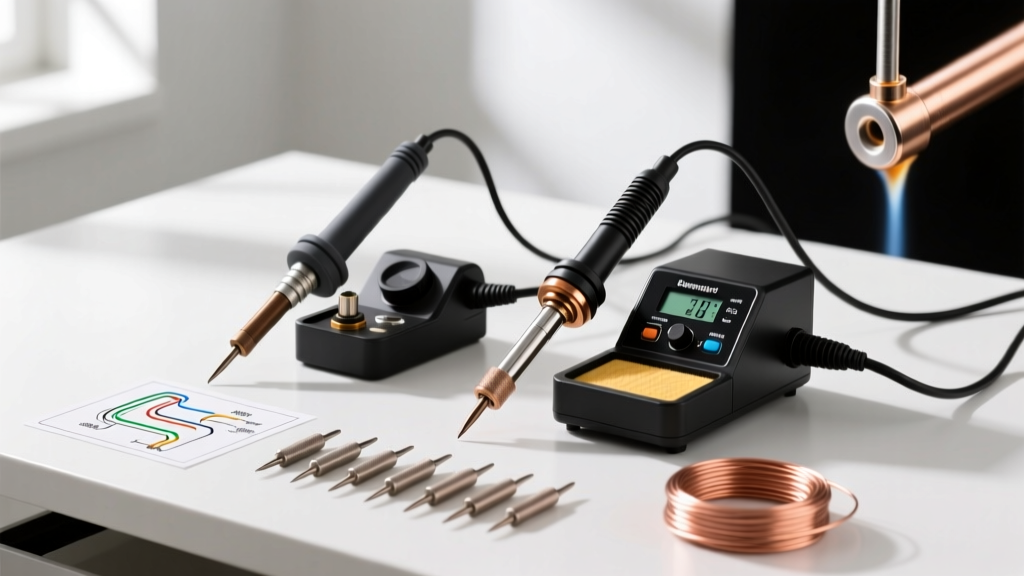
When outfitting an electronics workbench in 2026, treating the soldering iron and stand as a single, integrated system is critical. A $150 precision soldering station is practically useless if its accompanying stand tips over when the silicone cord is pulled, or if the holster degrades under continuous 400°C thermal load. According to the IPC (Association Connecting Electronics Industries), proper thermal management and tip maintenance are foundational to meeting J-STD-001 workmanship requirements. A poorly designed stand directly compromises both by exposing tips to ambient drafts or failing to provide adequate cleaning interfaces.
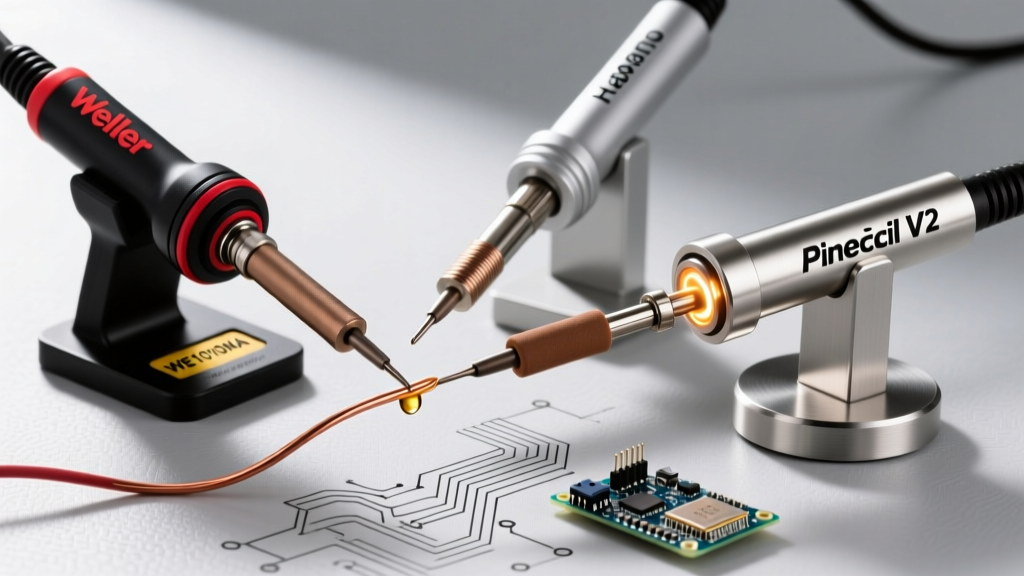
In this tool comparison, we evaluate three dominant market contenders—the Hakko FX-888D, the Weller WE1010NA, and the Pinecil V2—specifically focusing on how their respective soldering iron and stand configurations perform under real-world bench conditions. We will analyze center-of-gravity metrics, thermal recovery times, and long-term mechanical failure modes.
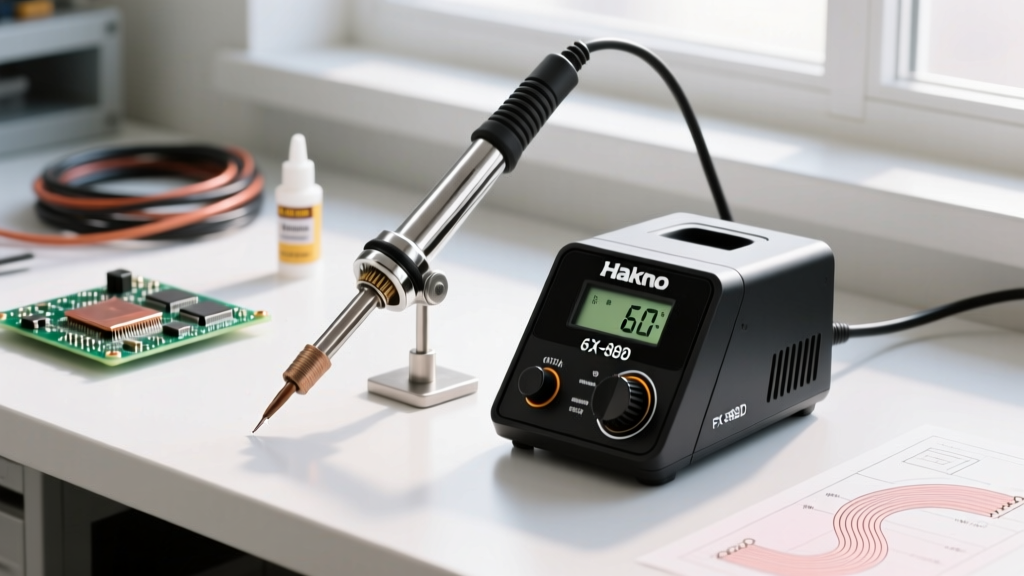
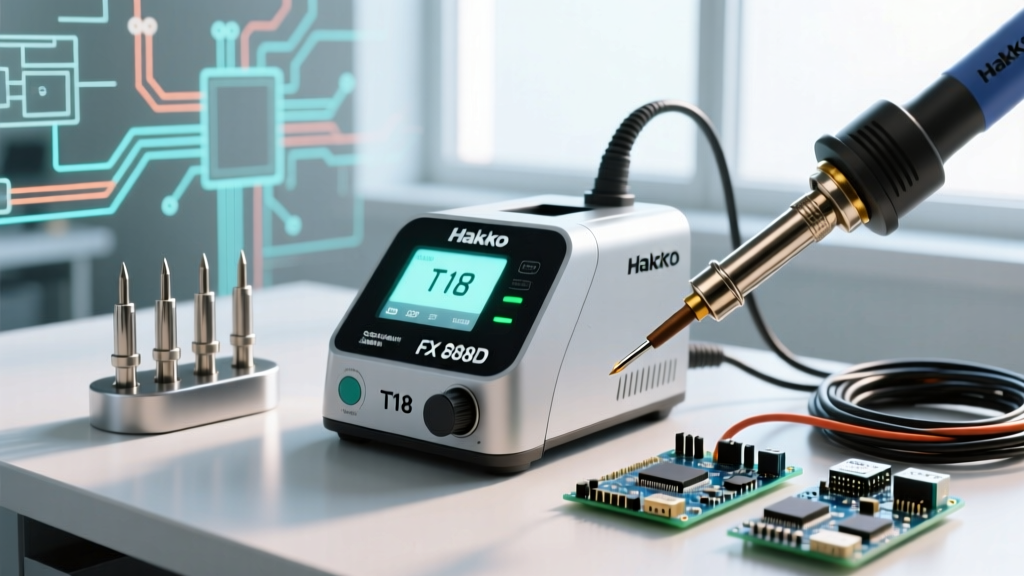
Contender 1: Hakko FX-888D and the FH-800 Stand
The Hakko FX-888D remains a staple in both hobbyist and professional environments. Priced around $110 in 2026, its value proposition is heavily tied to the included FH-800 stand. The FH-800 features a heavy, stamped steel base that weighs approximately 1.5 lbs (680g), providing a remarkably low center of gravity.
Stand Stability and Tip Maintenance
The FH-800 ships with Hakko’s proprietary brass wire sponge (the 'Hakko 599B' style cleaner). Unlike traditional cellulose sponges that require constant hydration and cause rapid thermal shock to the tip plating, the brass wool allows for cleaning without dropping the tip temperature below the solder’s liquidus point. The holster itself is constructed from high-temperature thermoplastic that resists the 70W iron’s radiant heat.
- Pros: Exceptional base weight prevents tipping; brass wool extends T18 tip lifespan; heavy-duty cord strain relief.
- Cons: The digital interface requires a two-button 'enter' sequence to change temperatures, which is frustrating during fast-paced rework.
- Thermal Recovery: Reaches 350°C from room temperature in roughly 22 seconds.
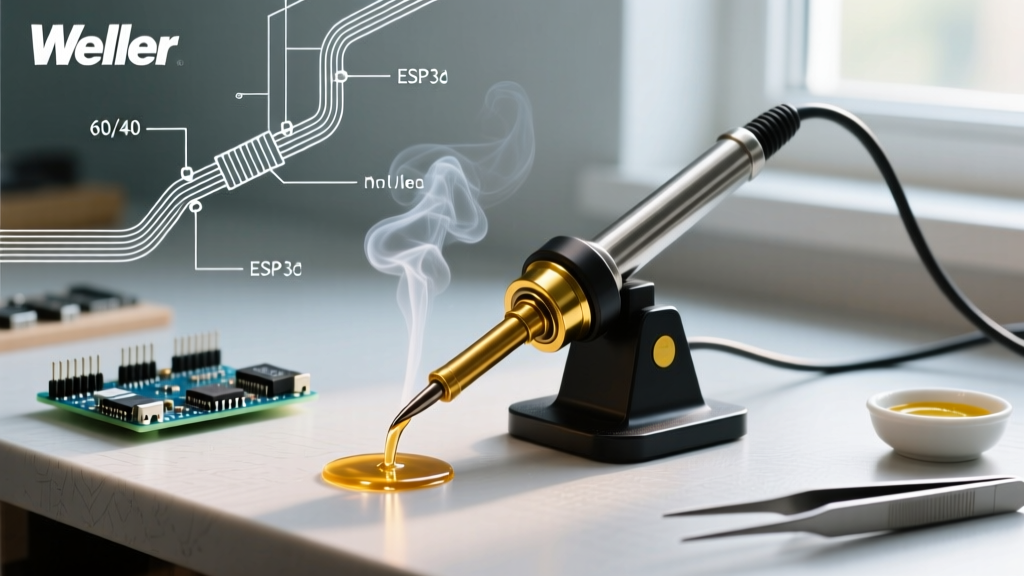
Contender 2: Weller WE1010NA and the WDH10T Stand
Weller’s WE1010NA (approximately $115) targets the industrial and serious prosumer market. The accompanying WDH10T stand is a masterclass in die-cast engineering. Instead of relying purely on base weight, the WDH10T utilizes a wide, triangular footprint and a zinc-alloy die-cast chassis that anchors the unit firmly to the bench via optional adhesive padding.
Ergonomics and the ET Tip Series
As detailed in the Weller official tool lineup, the WE1010NA utilizes the ET series tips, which thread directly onto the heating element for superior thermal transfer compared to Hakko’s sleeve-based T18 series. The WDH10T stand holds the iron at a precise 45-degree angle, optimizing the user’s line of sight for microscopic 0402 SMD components.
- Pros: Die-cast metal construction outlasts plastic holsters; intuitive single-dial temperature control; superior thermal coupling.
- Cons: The included cellulose sponge degrades quickly if not swapped for aftermarket brass wool; the cord is slightly stiffer than Hakko’s.
- Thermal Recovery: Reaches 350°C in roughly 19 seconds due to the direct-threaded ET tip design.
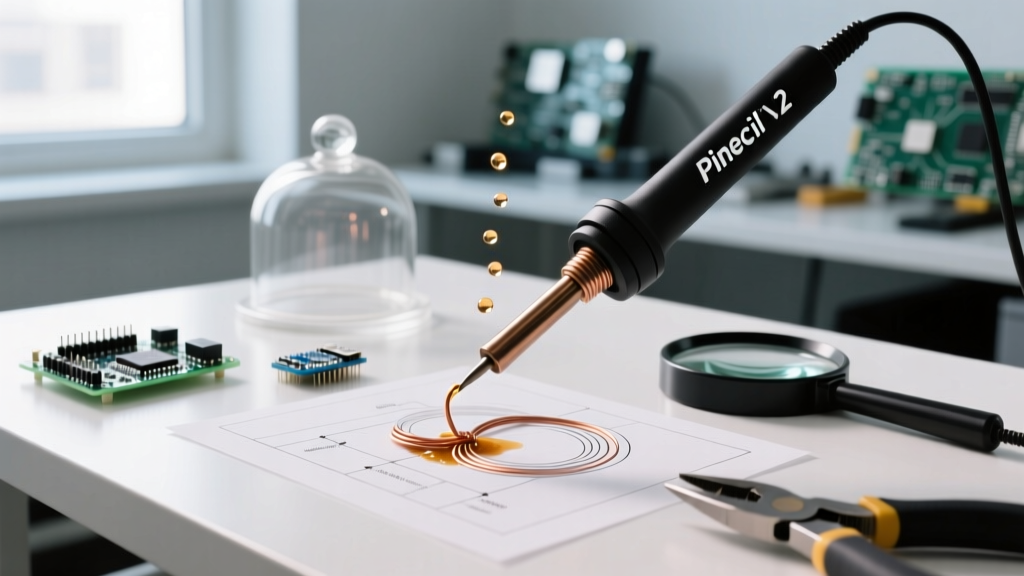
Contender 3: Pinecil V2 and the Mini Portable Stand
The Pinecil V2 has disrupted the market by offering 65W of USB-C Power Delivery (PD) heating in a form factor the size of a marker. At just $26 for the iron and $15 for the official mini stand, the total soldering iron and stand combo costs under $45. However, this extreme portability introduces unique physical challenges.
The Cable Drag Dilemma
According to the Pine64 community wiki, the Pinecil V2 requires a high-quality 20V/3.25A USB-C cable to maintain peak thermal output. The official mini stand is incredibly lightweight (under 0.2 lbs). When paired with a thick, braided silicone USB-C cable, the cable’s memory and stiffness can easily overpower the stand’s mass, causing the entire unit to drag across the bench or tip backward when the iron is holstered.
- Pros: Unbeatable price-to-performance ratio; open-source RISC-V firmware; instant heat-up via high-wattage PD.
- Cons: Stand is too light for thick cables; requires a separate, expensive GaN charger to reach full 65W potential.
- Thermal Recovery: Reaches 350°C in just 14 seconds when supplied with adequate 65W PD.
Head-to-Head Comparison Matrix
| Feature | Hakko FX-888D | Weller WE1010NA | Pinecil V2 |
|---|---|---|---|
| Stand Base Material | Stamped Steel | Die-Cast Zinc | Stamped Sheet Metal |
| Stand Weight | 1.5 lbs (680g) | 1.3 lbs (590g) | 0.18 lbs (85g) |
| Cleaning Medium | Brass Wire Sponge | Cellulose Sponge | None (Sold Separately) |
| Max Power Draw | 70W (AC Mains) | 70W (AC Mains) | 65W (20V USB-C PD) |
| 2026 Street Price | ~$110 | ~$115 | ~$41 (Combo) |
Failure Modes: What Goes Wrong with Cheap Stands?
When evaluating a soldering iron and stand setup, understanding mechanical failure modes is essential for long-term bench safety. Budget stands (often bundled with $30 clone stations) suffer from three primary defects:
- Thermal Creep and Holster Deformation: Inexpensive stands use ABS plastic for the iron holster. Over months of use, radiant heat from a 400°C tip softens the plastic, causing the holster to warp. This alters the insertion angle, eventually leading to the iron sliding out and scorching the workbench.
- Spring Tension Fatigue: The retaining spring that holds the iron handle degrades under cyclic heat exposure. Once the spring loses its temper, it fails to grip the iron, creating a severe burn hazard.
- Oxidation from Poor Sponge Integration: Stands that only accommodate small cellulose sponges force users to let the sponge dry out between sessions. Re-wetting a dry sponge with a hot iron causes rapid steam generation and micro-fractures in the iron’s iron-plated copper core, drastically reducing tip lifespan.
Expert Tip: If your current stand relies on a cellulose sponge, discard it immediately. Replace it with a coiled brass wire sponge. Brass is softer than the iron plating on modern tips, effectively scraping away oxidized flux without damaging the microscopic plating layer.
Final Verdict: Which Setup Fits Your Bench?
The ideal soldering iron and stand configuration depends entirely on your workspace constraints and project scope.
For production environments and heavy daily use, the Weller WE1010NA takes the top spot. The direct-threaded ET tips offer unmatched thermal recovery for heavy ground-plane soldering, and the WDH10T stand’s die-cast build guarantees a decade of mechanical reliability.
For general-purpose hobbyists and repair technicians, the Hakko FX-888D remains the gold standard. The FH-800 stand’s heavy steel base and included brass wool make it the most 'bench-ready' package out of the box, requiring zero immediate upgrades.
For field technicians, drone racers, and space-constrained makers, the Pinecil V2 is revolutionary. However, you must mitigate the lightweight stand issue by either mounting the stand to a heavy baseplate using double-sided VHB tape or utilizing a third-party weighted silicone mat to anchor the USB-C cable drag.