
The Metallurgy of Heat Transfer: Why Your Soldering Iron Replacement Tip Matters
The longevity and thermal performance of your soldering station depend entirely on the interface between the heater and the solder joint. In 2026, with the industry-wide dominance of lead-free SAC305 alloys requiring sustained temperatures of 350°C to 380°C, the physical degradation of soldering tips has accelerated. Choosing the right soldering iron replacement tip is no longer just about matching a chisel or conical shape; it is an exercise in applied metallurgy. A subpar tip will suffer from iron plating erosion, copper core dissolution, and thermal sensor lag, resulting in cold joints and damaged PCB pads.
This best-of comparison dissects the top replacement tip ecosystems available today. We evaluate original equipment manufacturer (OEM) benchmarks against the rapidly improving third-party clone market, providing a data-driven framework to help you select the ideal tip for your specific soldering workload.
The Anatomy of a Premium Soldering Iron Replacement Tip
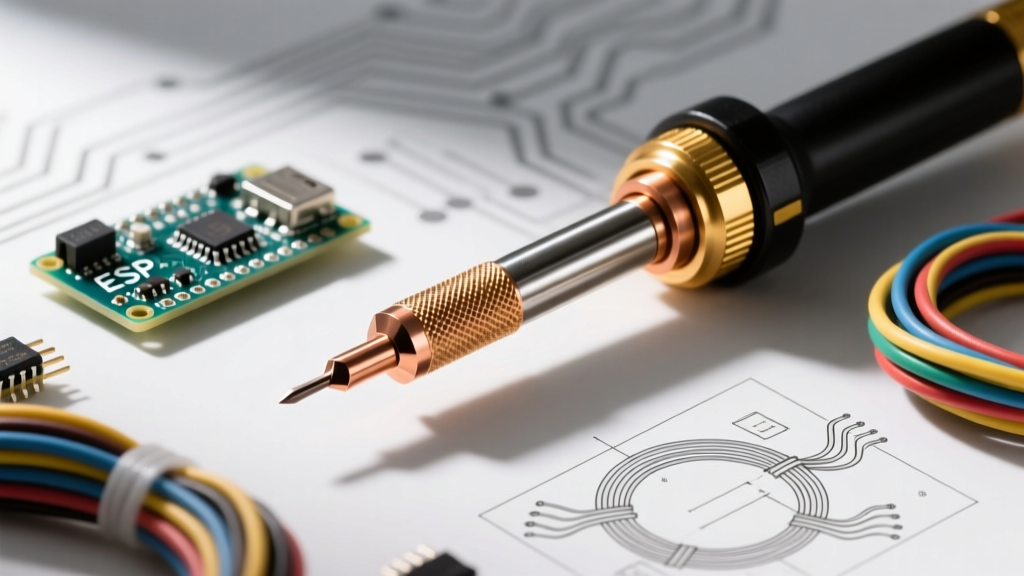
Before comparing brands, it is critical to understand the cross-sectional anatomy of a high-performance tip. A premium tip consists of four distinct layers:
- Solid Copper Core: Provides high thermal conductivity (approx. 385 W/m·K) to rapidly pull heat from the heating element to the joint.
- Iron Plating Layer: The sacrificial shield. Premium OEM tips feature an iron plating thickness of 70µm to 100µm. This layer resists erosion from molten solder and aggressive flux activators.
- Nickel Barrier: A microscopic layer preventing the molten solder from eating through the iron plating and dissolving the copper core.
- Tinned Working Surface: The active area pre-tinned with Sn63/Pb37 or SAC305 to ensure immediate wetting upon contact.
Budget clones often reduce the iron plating to 15µm–30µm to cut costs. While they perform adequately for the first 20 hours, the thin plating quickly micro-fractures, exposing the copper core to rapid dissolution.
2026 Comparison Matrix: Top Tip Series Benchmarked
| Tip Series / Ecosystem | Plating Thickness | Heater Integration | Avg. Lifespan (Lead-Free) | Price Range (USD) |
|---|---|---|---|---|
| Hakko T18 (OEM) | ~80µm - 100µm | External (Ceramic) | 400 - 600 Hours | $8.00 - $12.00 |
| Weller RT (OEM) | ~90µm | Internal Cartridge | 500 - 800 Hours | $12.00 - $18.00 |
| KSGER / Quicko T12 (Clone) | ~20µm - 40µm | Internal (Thermocouple) | 80 - 150 Hours | $2.50 - $5.00 |
| JBC C245 (Clone) | ~30µm - 50µm | Internal Cartridge | 150 - 250 Hours | $4.00 - $9.00 |
1. Hakko T18 Series: The OEM Benchmark
The Hakko T18 series remains the gold standard for traditional ceramic heater stations like the FX-888D. The T18 tip slides over the ceramic element, relying on physical contact for heat transfer. Hakko's proprietary iron plating process yields a highly uniform crystalline structure that resists the corrosive effects of rosin-activated (RA) and mildly activated (RMA) fluxes.
Best For: General-purpose through-hole soldering, heavy wire tinning, and labs requiring strict OEM traceability.
The Drawback: Because the heater is separate from the tip, thermal recovery on large ground planes is limited by the air gap and mass of the copper core. You must use larger bevel or broad chisel tips to compensate for thermal mass deficits.
2. Weller RT Series: Active Heating Powerhouse
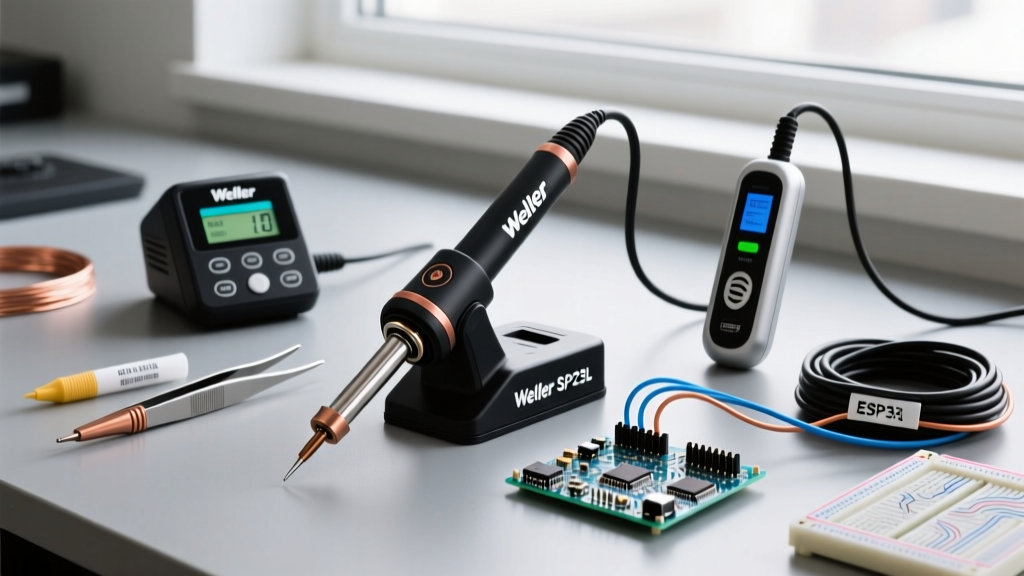
Weller revolutionized the market by integrating the heating element and thermocouple directly into the base of the RT replacement tip. This cartridge system eliminates the air gap found in traditional stations. The thermal lag is reduced to under one second, allowing the station to dump up to 40 watts directly into a heavy ground plane without overshooting the target temperature.
Best For: Mixed-technology boards with heavy copper pours, multilayer PCBs, and high-volume production environments where thermal recovery speed is paramount.
The Drawback: The proprietary cartridge system locks you into the Weller ecosystem, and the $15+ price point per tip makes experimentation with obscure tip geometries expensive.
3. KSGER & Quicko T12 Clones: The Budget Disruptor
Originally designed for the Hakko FX-951, the T12 format integrates a thermocouple and heater coil inside the tip shaft. Chinese manufacturers like KSGER and Quicko have reverse-engineered this design, flooding the market with $3 clones. In 2026, the thermal calibration of these clones is remarkably accurate, often holding within ±2°C of the setpoint.
Best For: Hobbyists, repair technicians on a budget, and makers who frequently switch between micro-tips and heavy chisels without wanting to spend $15 per swap.
The Drawback: Metallurgical shortcuts. The thin iron plating on clone T12 tips degrades rapidly when exposed to water-soluble fluxes or when left dry-tinned at 380°C. Expect to replace them 4x more often than OEM equivalents.
4. JBC C245 Clones: High-Performance SMD Mastery
JBC's C245 cartridge system is legendary in the micro-soldering community for its instant heat-up time (under 2 seconds). Third-party clones of the C245 form factor have become highly sophisticated. While they lack the exact nano-coating of genuine JBC tips, premium clone manufacturers have improved their iron plating adhesion, making them viable for 0201 SMD components and fine-pitch QFPs.
Best For: Smartphone repair, micro-soldering, and intricate SMD rework where localized heat application is required to prevent collateral thermal damage to nearby components.
Critical Failure Modes: Why Your Tips Are Dying Prematurely
Even the most expensive Weller RT tip will fail in weeks if subjected to poor operational habits. Understanding failure modes is essential for maximizing the ROI of your soldering iron replacement tip purchases.
Iron Plating Erosion and Copper Dissolution
When molten lead-free solder (SAC305) is held at 380°C, the tin actively seeks to alloy with copper. If the iron plating is scratched (often by using abrasive sandpaper or steel wool to clean the tip), the molten solder eats through the copper core, leaving a hollow, concave crater. Once pitted, the tip cannot transfer heat efficiently and must be discarded.
Oxidation and Blackening
Leaving a tinned tip exposed to ambient oxygen at high temperatures causes the solder to oxidize into a hard, black crust. This oxide layer acts as a thermal insulator. Never use brass wire wool to aggressively scrape off heavy oxidation; the mechanical friction degrades the plating. Instead, use a damp high-cellulose sponge or specialized tip activator pastes containing mild reducing agents.
Pro-Tip: Always apply a thick layer of fresh, flux-cored solder to your tip immediately before powering down the station. This sacrificial blob oxidizes instead of the tip's working surface, preserving the iron plating for your next session.
Industry Standards for Tip Maintenance and Longevity
Professional electronics manufacturing adheres to strict workmanship standards that dictate how soldering equipment is maintained. According to the IPC J-STD-001 requirements for soldered electrical and electronic assemblies, soldering irons must be maintained at controlled temperatures and regularly calibrated to prevent thermal overstress to components.
Furthermore, the NASA-STD-8739.3 workmanship manual for soldering explicitly outlines that soldering iron tips must be properly tinned when not in active use to prevent oxidation. NASA guidelines mandate the use of non-corrosive cleaning methods, explicitly warning against the use of harsh abrasives that compromise the protective iron plating. Adopting these aerospace-level maintenance habits will easily double the lifespan of even budget clone tips.
Final Verdict: Which Soldering Iron Replacement Tip Should You Buy?
Your choice of soldering iron replacement tip should be dictated by your workload, budget, and tolerance for maintenance.
- Choose OEM Hakko T18 if you run a traditional FX-888D station in an educational or repair lab where durability and consistent wetting are required, and you want to avoid the frequent swapping associated with clones.
- Choose OEM Weller RT if you are soldering multilayer PCBs with heavy thermal vias and ground planes. The integrated cartridge heater is unmatched for thermal recovery, justifying the premium price.
- Choose KSGER/Quicko T12 Clones if you are a hobbyist or independent repair tech who needs access to 30+ different tip geometries for varied projects without spending hundreds of dollars. Just remember to keep them heavily tinned and avoid abrasive cleaning.
Ultimately, the best tip is one that matches the thermal mass of your specific joint. Stop defaulting to the needle-sharp conical tip that came in the box; upgrade to a broad chisel or bevel geometry to maximize heat transfer, and your solder joints—and your wallet—will thank you.