
The Physics and Reality of the Weller 8200 Architecture
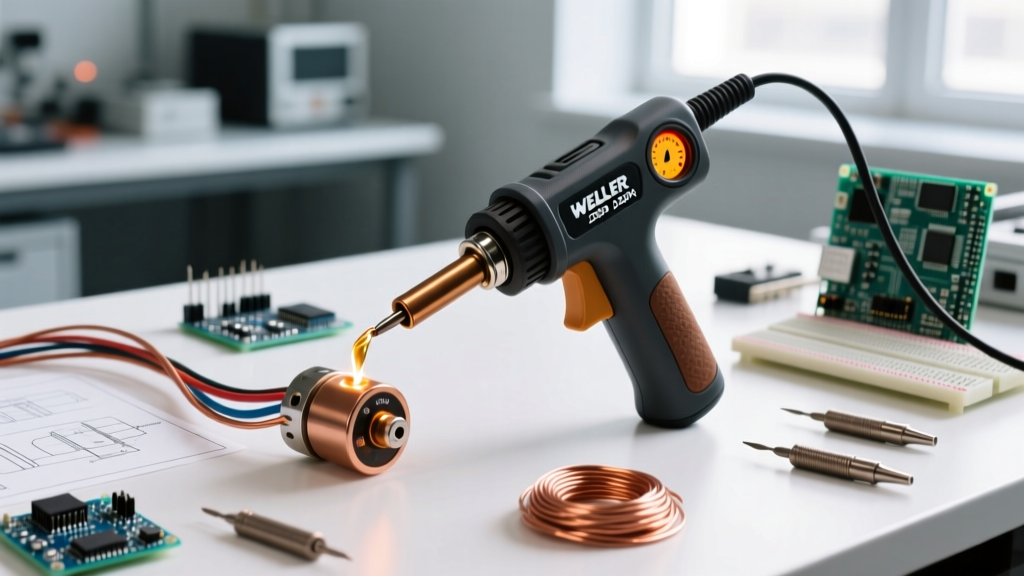
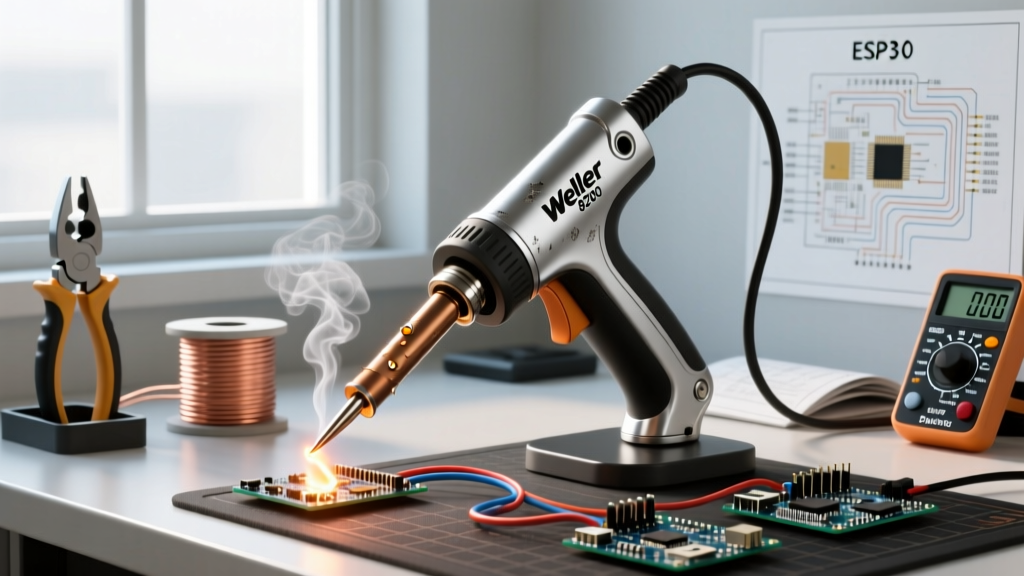
If you are stepping up to the Weller 8200 (often sold as the 8200PK kit) for heavy-gauge electrical work, automotive harnesses, or stained glass, you are wielding a fundamentally different beast than a standard ceramic-heater soldering station. Unlike closed-loop stations that use a thermocouple and PID controller to maintain a steady temperature, the Weller 8200 is an unregulated, transformer-based tool. The tip itself is the heating element.
When you squeeze the trigger, the transformer steps down 120V AC to a fraction of a volt while pushing massive amperage through the copper loop. This low-voltage, high-amperage current generates heat via I²R (current squared times resistance) directly inside the tip. As of 2026, the 8200 remains the undisputed king of the 100W/140W dual-heat gun category, retailing around $65 for the bare gun. However, this raw thermal power comes at a cost to the consumable copper tips if you do not understand the metallurgy of Weller 8200 soldering gun tips.
Choosing the Right Replacement Tip for the Job
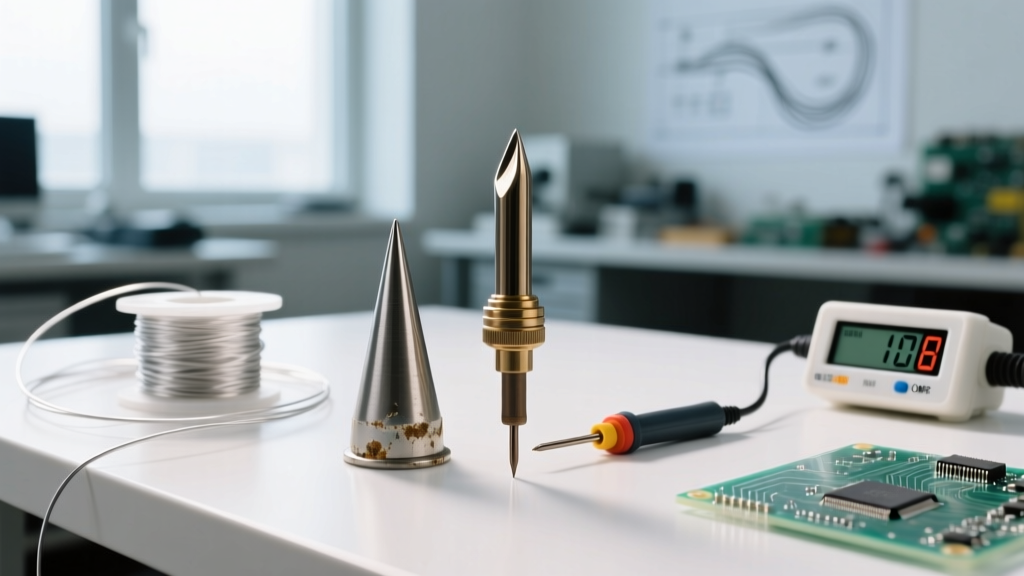
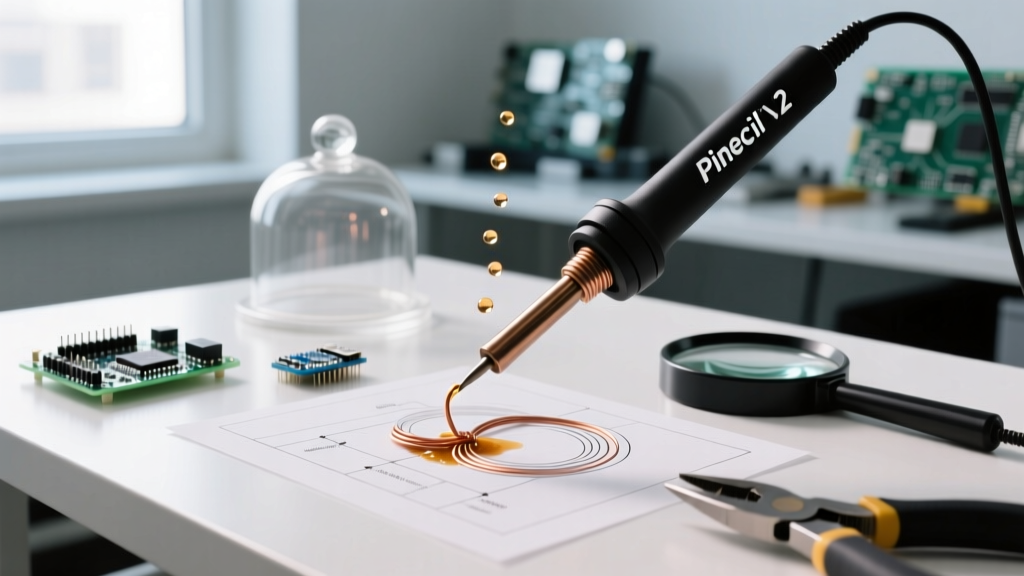
The Weller 8200 utilizes screw-on copper loop tips. Selecting the correct thermal mass for your specific wire gauge or lug size is the first step in preventing cold joints and tip degradation. Below is the definitive guide to the most common OEM replacement tips.
| Part Number | Tip Style | Best Application | Approx. Cost (2026) |
|---|---|---|---|
| 7150 | Standard Loop | 12 AWG to 6 AWG wire, standard ring terminals, stained glass foil | $6.50 - $8.00 |
| 7054 | Heavy-Duty Loop | 4 AWG to 2/0 AWG battery cables, heavy copper lugs, thick plumbing | $8.50 - $10.00 |
| 7058 | Cutting/Shaping | Trimming heat-shrink tubing, scoring plastic enclosures, cutting thin wire | $11.00 - $13.00 |
| 7150-SC | Standard Loop (Solid Core) | Applications requiring higher localized heat transfer without loop flex | $9.00 - $11.00 |
Expert Insight: Never attempt to bend or reshape the 7150 or 7054 copper loops to fit a tight space. Bending work-hardens the copper, altering its electrical resistance and creating a localized hot spot that will snap or melt during high-amperage use.
The "Trigger Pulse" Technique for Heat Management
The most common failure mode for Weller 8200 soldering gun tips is copper leaching (dissolution). When molten solder (especially tin-lead eutectic like Sn63/Pb37) contacts bare copper at temperatures exceeding 750°F (400°C), the tin actively dissolves the copper into the solder pool. Because the 8200 can push the tip past 900°F in under six seconds, holding the trigger continuously will literally eat your tip away in a matter of hours.
Mastering the Dual-Stage Trigger
The Weller 8200 features a dual-position trigger: the first position delivers 100 watts, and squeezing fully engages 140 watts. To manage heat and preserve your tip, adopt the Trigger Pulse Method:
- Pre-Heat (140W): Squeeze the trigger fully (140W) and apply the tip to the heavy lug or wire. Hold for 2 to 4 seconds until the flux begins to smoke and the metal accepts solder.
- Maintain (100W): Release the trigger to the first position (100W) or release it entirely for one second. The thermal mass of the heavy copper wire will hold the heat.
- Feed Solder: Apply your solder to the workpiece, not the tip. The workpiece should be hot enough to melt the wire instantly.
- Cool Down: Release the trigger completely and remove the gun immediately. Never leave the gun resting on a stand with the trigger engaged.
Tinning, Flux Chemistry, and Tip Preservation
Bare copper oxidizes the moment it cools, forming a black copper oxide layer that solder will not wet. To prevent this, your Weller 8200 soldering gun tips must remain tinned. However, the high heat of the 8200 burns off standard rosin fluxes rapidly, leaving behind a carbonized crust that insulates the tip and ruins thermal transfer.
The Correct Tinning Protocol
- Use High-Solids Flux: For electrical work, use a mild rosin paste flux (such as Kester 186) or a high-quality rosin-core wire solder (like Kester 44). Avoid acid-core plumbing solder on electrical connections, as it violates IPC J-STD-001 standards for electronic assemblies and will cause severe galvanic corrosion.
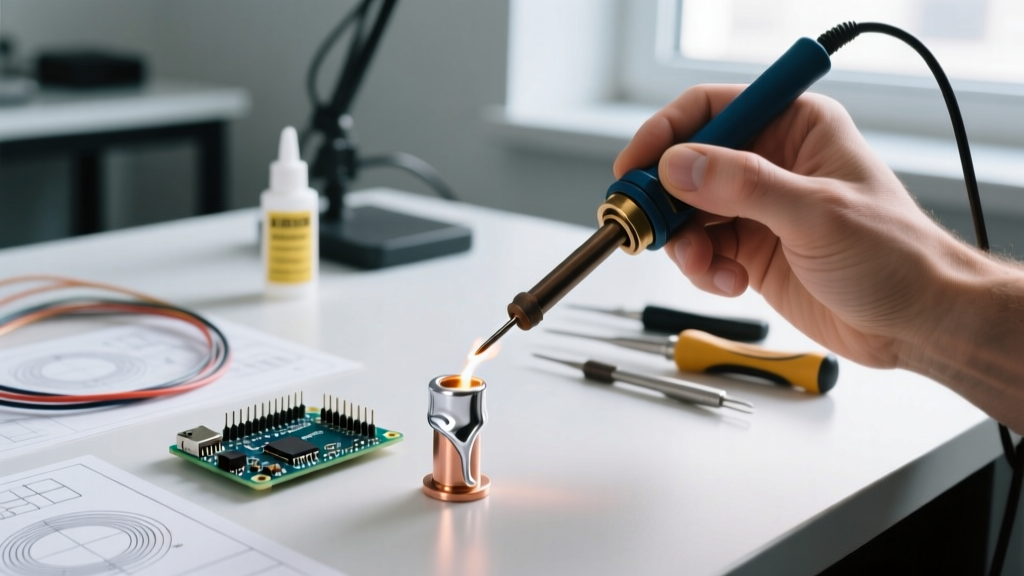
- The "Glob" Method: Before turning off the gun, melt a large glob of 63/37 tin-lead or SAC305 lead-free solder directly onto the tip loop, completely encasing it. This sacrificial layer of solder will oxidize instead of the copper loop while the gun sits in your holster.
- Wipe Before Use: When you next turn on the gun, wipe away the oxidized sacrificial glob on a dry brass sponge before applying fresh solder to your workpiece.
Crucial Maintenance: Terminal Nut Torque
The tips on the Weller 8200 are secured by two 8-32 threaded terminal nuts. A frequent mistake made by DIYers and junior technicians is over-tightening these nuts with heavy pliers, or leaving them too loose, causing arcing.
If the nuts are loose, the high-amperage current will arc across the microscopic gap between the copper tip and the brass terminal block. This arcing pits the metal, welds the tip to the gun, and destroys the terminal block. If over-tightened, the copper loop will shear off under thermal expansion.
The Expert Standard: Thread the nuts on by hand until they seat. Then, use a nut driver or pliers to tighten them exactly one-quarter turn past finger-tight. This provides enough clamping force to prevent arcing while allowing the copper to expand safely as it heats to 900°F.
Troubleshooting Common Weller 8200 Failure Modes
Even with meticulous care, heavy-duty soldering guns encounter issues. Here is how to diagnose and resolve the most common problems specific to the 8200 platform.
1. The Tip Glows Cherry Red Instantly
Cause: The copper loop has thinned out due to copper leaching, or you are using a tip that is too thin for the 140W setting. A thinner cross-section of copper has higher electrical resistance, causing it to heat much faster and hotter than a fresh tip.
Solution: Discard the tip immediately. Continuing to use a thinned tip will cause it to melt and potentially short the secondary winding of the transformer, which can blow the internal thermal fuse.
2. Solder Balls Up and Rolls Off the Tip
Cause: Severe oxidation or carbonized flux buildup. This often happens if the gun was left on a workbench with the trigger squeezed without being tinned.
Solution: Never use a wet cellulose sponge to clean a Weller gun tip. The thermal shock of the water will snap the copper loop. Instead, plunge the hot tip into a dry brass wool sponge (like the Weller W101) and twist gently. Follow immediately with fresh rosin-core solder to re-tin.
3. The Gun Hums Loudly but Generates No Heat
Cause: The secondary circuit is open. This means either the tip is broken, the terminal nuts are loose (no electrical contact), or the internal transformer secondary winding has burned out.
Solution: Check the tip continuity with a multimeter (it should read near 0.0 ohms). If the tip and terminal connections are solid, the transformer is likely dead. According to Weller Tools Technical Documentation, replacing the transformer on an 8200 is rarely cost-effective compared to buying a new unit, as the transformer accounts for 80% of the tool's manufacturing cost.
Safety and Transformer Longevity
The Weller 8200 is not designed for continuous duty cycles. The internal transformer relies on the thermal mass of the copper tip and the ambient air to dissipate heat. If you hold the trigger continuously for more than 60 seconds, the transformer core will overheat, degrading the enamel insulation on the primary winding over time.
For production-line work involving hundreds of heavy-gauge splices per shift, the 8200 is the wrong tool; you should upgrade to a high-wattage, closed-loop industrial station like the Weller W1000 or an induction soldering system. But for field repairs, automotive diagnostics, and heavy electrical maintenance, mastering the trigger pulse, maintaining proper terminal torque, and understanding the metallurgy of your Weller 8200 soldering gun tips will ensure this legendary tool outlasts your career.