
Understanding the 852D Soldering Iron Architecture
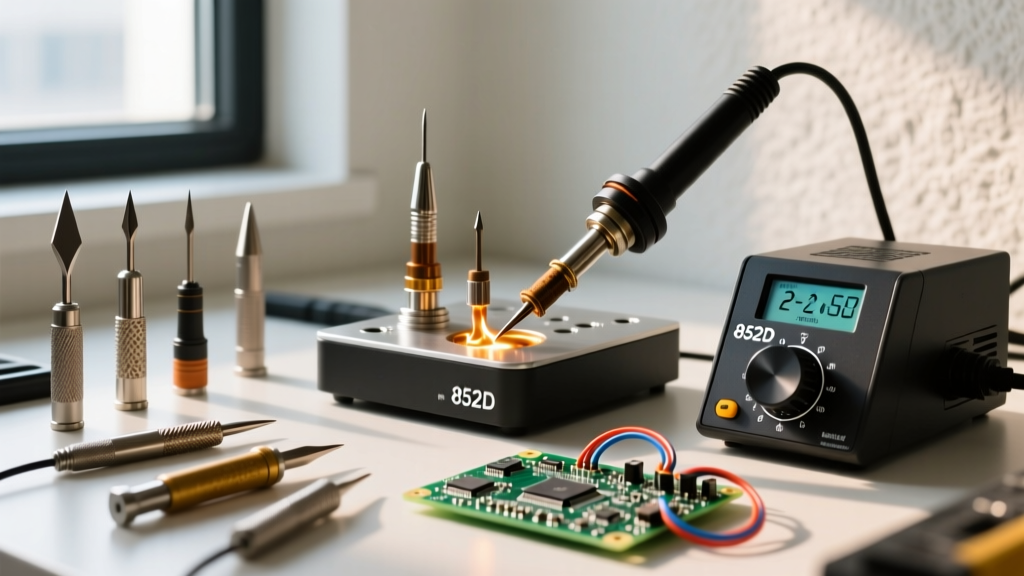
The 852D rework station ecosystem—most notably popularized by the Yihua 852D+ and its numerous 2026 market clones—remains a cornerstone for electronics repair technicians, DIY hobbyists, and prototyping labs. While the 700W hot air gun often steals the spotlight for BGA and SMD rework, the integrated 50W soldering iron is the workhorse for precision joint finishing, through-hole soldering, and targeted thermal bridging. However, the effectiveness of this iron is entirely dictated by your choice of tip. The 852D series utilizes the industry-standard 900M series tips, a clone-derivative of the classic Hakko 900M geometry. Selecting the correct soldering iron tip for 852D applications requires a deep understanding of thermal mass, tip plating, and the specific solder alloy you are melting.
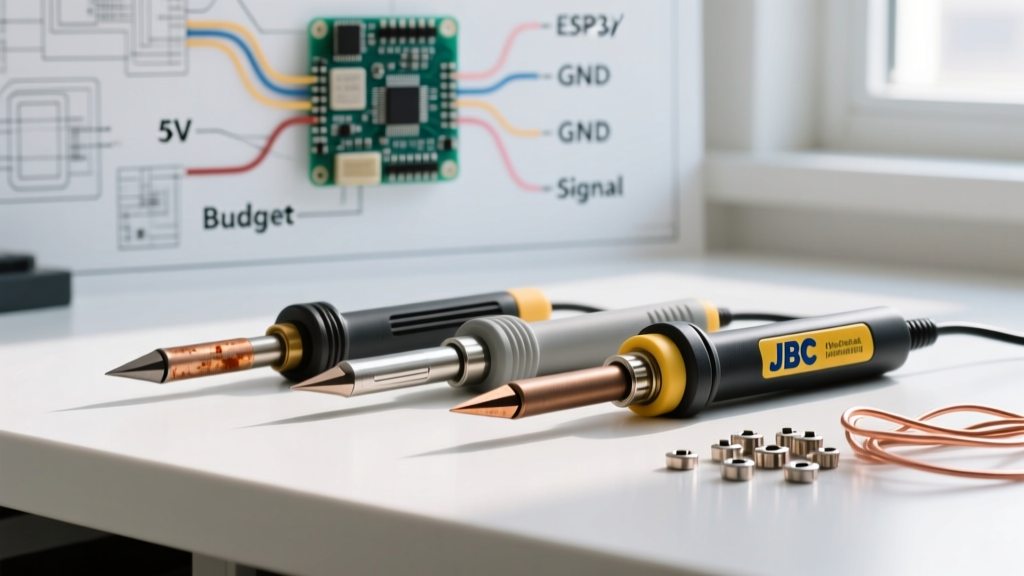
Unlike high-end active-tip stations (like the JBC C245 or T245 systems) where the heater is embedded directly inside the tip cartridge, the 852D relies on a separate 4-wire ceramic heating element. The 900M tip slides over this ceramic core. This indirect heating method introduces thermal lag, meaning that choosing a tip with inadequate thermal mass for a heavy ground plane will result in cold joints, prolonged dwell times, and potential pad delamination. According to the workmanship guidelines outlined in IPC standards for electronic assemblies, excessive dwell time is a primary catalyst for PCB damage, making tip selection a critical variable in your rework success.
The 900M Tip Geometry Matrix
When sourcing a soldering iron tip for 852D stations, you will encounter a wide array of alphanumeric suffixes. Below is a definitive breakdown of the most common 900M geometries, their thermal characteristics, and their ideal use cases in a modern 2026 repair environment.
| Tip Model | Geometry Profile | Thermal Mass | Best Application | Recommended Temp (SAC305) |
|---|---|---|---|---|
| 900M-T-I | Needle / Conical | Very Low | Precision 0402/0603 SMD, tight-pitch jumper wires. Avoid on ground planes. | 340°C |
| 900M-T-D | Bevel / Conical | Low-Medium | Standard 0805/1206 SMD, general purpose through-hole. | 330°C |
| 900M-T-C | Chisel / Bevel | Medium-High | Heavy through-hole, multi-layer board joints, wire tinning. | 320°C |
| 900M-T-K | Knife (Angled) | High | Drag soldering QFP/SOIC, cleaning up SMD pads, cutting flux residue. | 330°C |
Advanced Technique: Drag Soldering with the 900M-T-K (Knife)
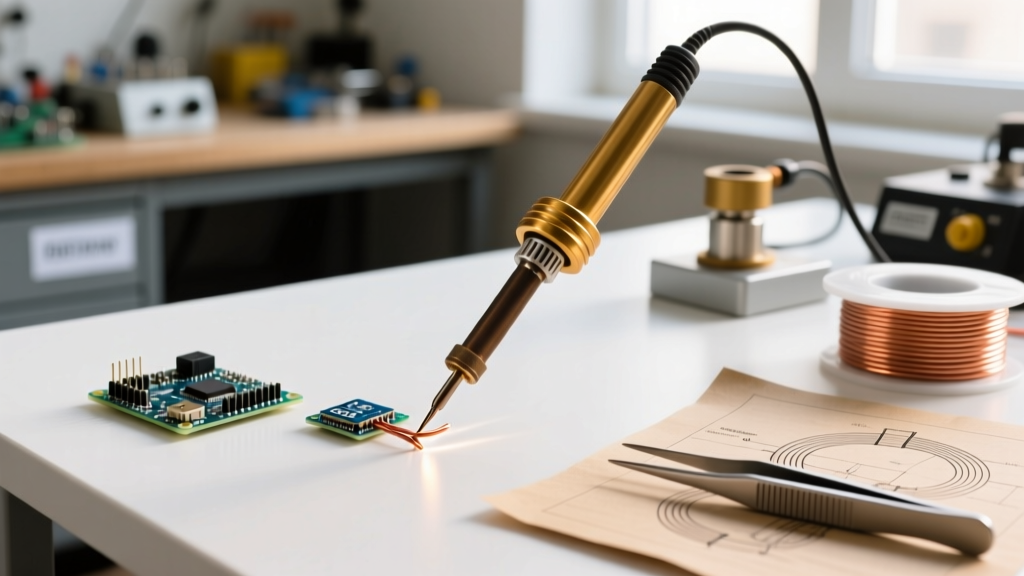
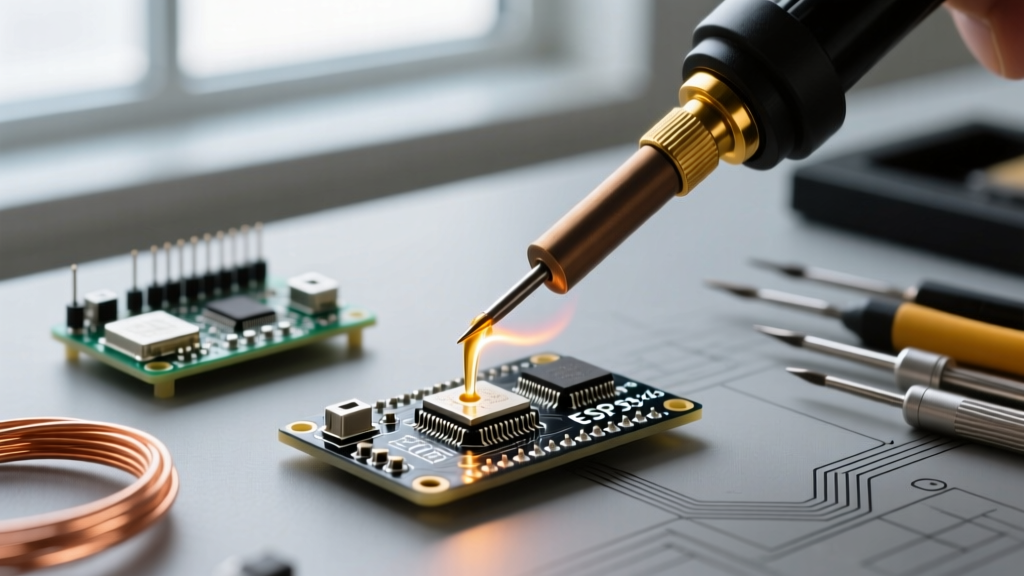
The 900M-T-K (Knife) tip is arguably the most versatile and underutilized soldering iron tip for 852D users working on surface-mount integrated circuits. The angled blade provides a broad edge for rapid heat transfer and a sharp point for precision rework. Here is the step-by-step technique for drag soldering a 0.5mm pitch QFP chip using the 852D station:
- Preparation: Apply a generous layer of high-quality tacky flux (e.g., Amtech NC-559 or Chip Quik SMD291) across the footprint. Do not skip this step; flux dictates the wetting angle and prevents bridging.
- Alignment: Tack down two diagonal corner pins using the sharp point of the 900M-T-K tip at 330°C.
- The Drag: Load the flat, broad edge of the knife tip with a small amount of fresh Sn63/Pb37 or SAC305 solder. Tilt the iron so the trailing edge contacts the pins.
- Execution: Pull the iron slowly across the row of pins in a single, fluid motion. The flux will break the surface tension, allowing the solder to wick exclusively onto the copper pads and component leads.
- Cleanup: Use a flux-coated braided copper desoldering wick to remove any accidental micro-bridges.
Thermal Synergy: Combining 852D Hot Air and Iron
One of the distinct advantages of the 852D platform is the ability to use the hot air gun and the soldering iron simultaneously. When dealing with multi-layer PCBs with heavy internal copper pours (such as motherboard repair or automotive ECUs), a 50W iron with a standard 900M tip will rapidly lose heat to the surrounding copper, resulting in a frozen, dull solder joint.
To circumvent this, utilize the Preheat-and-Finish technique:
- Set the 852D hot air gun to 250°C with a medium airflow setting (approx. 40 on the dial).
- Use a large BGA nozzle to broadly preheat the target area of the PCB to roughly 120°C–140°C. This elevates the baseline temperature of the copper pour without melting the existing solder.
- Introduce your 900M-T-C (Chisel) soldering iron set to 320°C. Because the board is already preheated, the iron no longer has to fight the thermal mass of the ground plane. The solder will flow instantly, creating a glossy, concave fillet that meets the stringent visual requirements of NASA workmanship standards for high-reliability assemblies.
Expert Insight: Never use the 900M-T-I (Needle) tip for heavy ground plane soldering, even with hot air preheating. The needle tip lacks the physical copper core volume to transfer heat faster than the ground plane can dissipate it. You will end up pressing harder, which fractures the internal ceramic heater of the 852D iron.
Preventing Iron Plating Dissolution and Oxidation
The 900M series tips feature a copper core wrapped in an iron plating, which is then chrome-plated on the non-wetting surfaces. In 2026, with the widespread adoption of lead-free solders containing aggressive flux activators, tip degradation is a major issue. Lead-free solders (like SAC305) dissolve the iron plating up to three times faster than traditional leaded solders.
To maximize the lifespan of your soldering iron tip for 852D stations, adhere to these strict maintenance protocols:
- Never use a wet cellulose sponge. The rapid thermal shock of a damp sponge causes microscopic fracturing in the iron plating, allowing molten solder to penetrate and dissolve the copper core. Always use a dry brass wire sponge (curls).
- Always tin before shutdown. Before turning off the 852D station, melt a large blob of cheap, rosin-core 63/37 solder over the entire working surface of the tip. This sacrificial layer oxidizes instead of the tip's iron plating while it cools.
- Lower idle temperatures. If your 852D model features a sleep or standby mode, set it to drop to 180°C when the iron is holstered. Continuous exposure to 350°C in an oxygen-rich environment will blacken and destroy a 900M tip in a matter of days.
Troubleshooting Common 852D Tip Failures
Why is my 900M-T-C tip turning black and rejecting solder?
This is known as oxidation burnout. It occurs when the tip is left at high temperatures (above 380°C) without a protective layer of solder, or when using highly acidic, water-soluble fluxes without cleaning the tip. To rescue a mildly oxidized tip, use a specialized tip tinner (a mixture of abrasive powder and solder) while the iron is at 280°C. Gently swirl the tip in the tinner, then wipe it on a brass sponge. If the black oxide layer has pitted the iron plating, the tip is permanently ruined and must be replaced.
Can I use Hakko T18 tips on the 852D station?
No. The 852D soldering iron wand is designed specifically for the 900M series sleeve dimensions. The Hakko T18 series (used on the Hakko FX-888D) has a different internal diameter and length. Attempting to force a T18 tip onto the 852D ceramic heater will crack the fragile ceramic element, rendering the wand useless. Always stick to high-quality 900M clones from reputable brands to ensure proper thermal coupling.
How do I safely remove a seized 900M tip from the ceramic heater?
Over time, flux vapors and microscopic oxidation can cause the 900M tip to seize onto the ceramic heater. Never pull or twist the tip while it is cold. Turn the 852D station on and allow it to reach 250°C. The thermal expansion will break the oxidation bond. While wearing heat-resistant ESD-safe gloves (adhering to basic ESD safety protocols), use a pair of wooden tweezers or a thick silicone cloth to gently pull the tip straight out. Apply a tiny dab of high-temperature anti-seize compound or fresh solder to the ceramic element before inserting the new tip to prevent future seizing.
Final Thoughts on 852D Rework Mastery
The 852D rework station is a highly capable, budget-friendly tool, but it is not a magic wand. Its performance is entirely bottlenecked by the physical limitations of indirect ceramic heating. By deliberately selecting the correct soldering iron tip for 852D tasks—leveraging the high thermal mass of the 900M-T-K for drag soldering and the 900M-T-C for heavy through-hole work—you can achieve professional, IPC-compliant joints. Combine this with intelligent hot-air preheating and rigorous tip maintenance, and your 852D will rival stations costing three times as much.