
The Metallurgy Reality: What is a 'Welding' Soldering Iron?
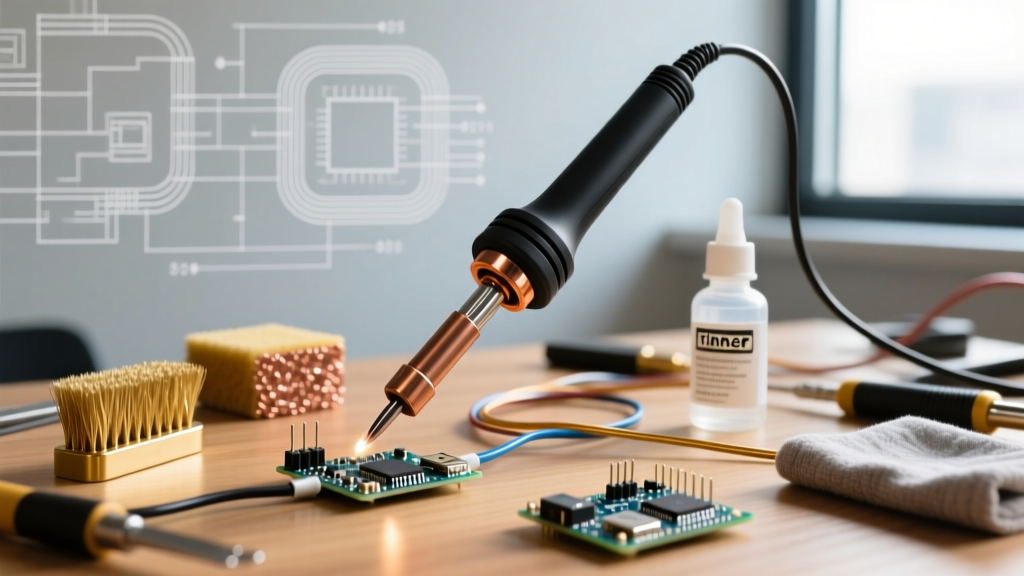
In strict metallurgical terms, a welding soldering iron is an oxymoron. Welding involves melting the base metals to fuse them together, while soldering relies on capillary action and a lower-melting-point filler metal (the solder) to join intact base materials. However, in the DIY, automotive, and electronics communities, the search term 'welding soldering iron' has become shorthand for a very specific category of tools: high-wattage, high-thermal-mass soldering irons designed for extreme heat-sinking applications.
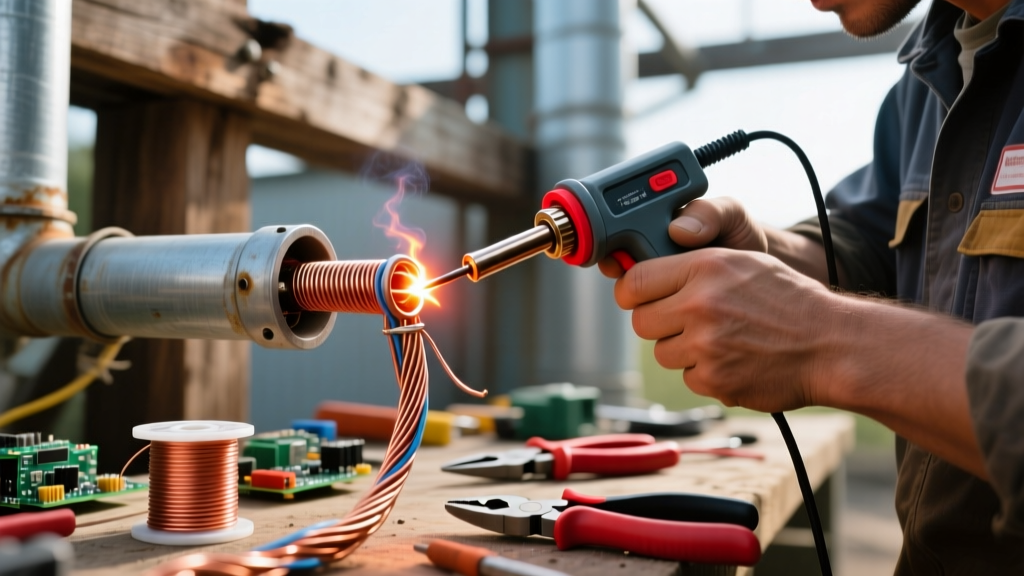
Whether you are soldering 4 AWG silicone wire to XT90 connectors, tinning thick copper busbars for EV battery packs, or performing structural plastic welding on ABS/Nylon enclosures, standard 60W electronics irons will fail. They suffer from thermal collapse, resulting in cold joints and damaged components. In 2026, the market is split between raw-wattage budget tools and closed-loop premium stations. Let us break down which approach actually delivers the thermal kinetics required for heavy-duty work.
Expert Note: According to the IPC J-STD-001 standards for soldered electrical and electronic assemblies, high-thermal-mass joints require precise thermal profiling to prevent insulation charring and pad delamination. Brute-force wattage without temperature regulation violates best practices for heavy-gauge terminations.
Budget Contenders (Under $70): The Raw Wattage Approach
The budget tier relies on sheer electrical resistance to generate heat. These tools are typically unregulated or use basic triac-based dimmer switches.
1. Generic 300W 'Wood Burning & Soldering' Kits ($25 - $40)
Often marketed as multi-purpose tools, these unregulated irons push massive wattage through a nichrome wire heating element.
- The Good: Unmatched raw thermal mass. A 3/8-inch copper chisel tip will retain enough heat to melt 60/40 rosin-core solder onto a 1/4-inch copper braid without stalling.
- The Bad: Zero thermal regulation. The tip temperature will skyrocket past 450°C (842°F) when not in contact with a joint. This causes rapid tip oxidation (requiring constant re-tinning) and will instantly melt the insulation on 12 AWG wire if you linger for more than three seconds.
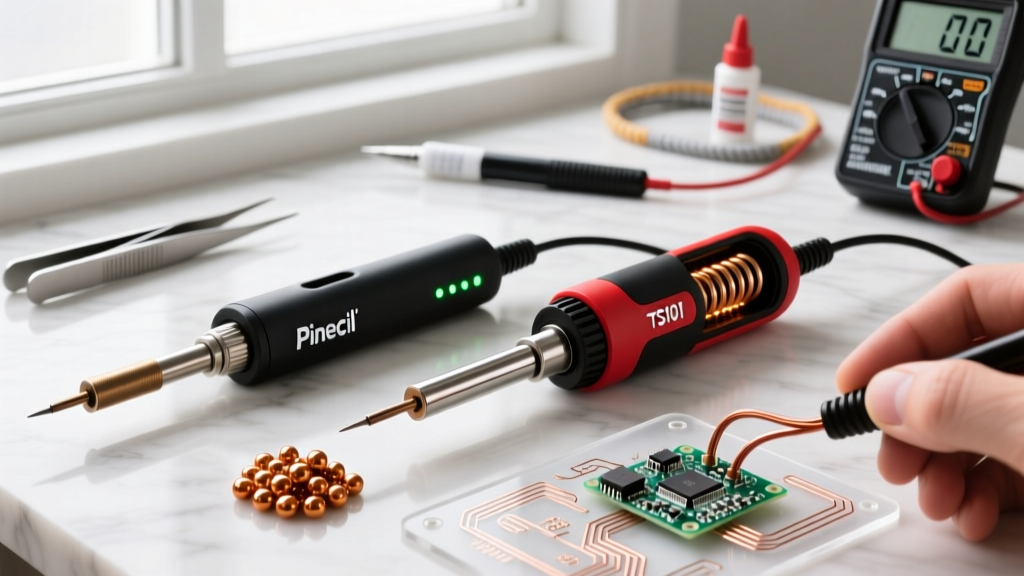
2. Pinecil V2 with 24V GaN Power Supply ($65 Total Setup)
The Pinecil V2 represents the 2026 evolution of budget irons. While the iron itself is $26, pairing it with a modern 24V 5A GaN (Gallium Nitride) laptop charger unlocks 120W of peak power.
- Pros: Closed-loop PID temperature control, rapid heat-up (under 8 seconds), and compatibility with heavy-duty ST-BC2 bevel tips for wrapping around thick wires.
- Cons: 120W is the absolute ceiling. When applied to a massive ground plane or an EV battery busbar, the thermal recovery rate still lags behind dedicated heavy-duty stations.
Premium Contenders ($130 - $250+): Thermal Recovery & Precision
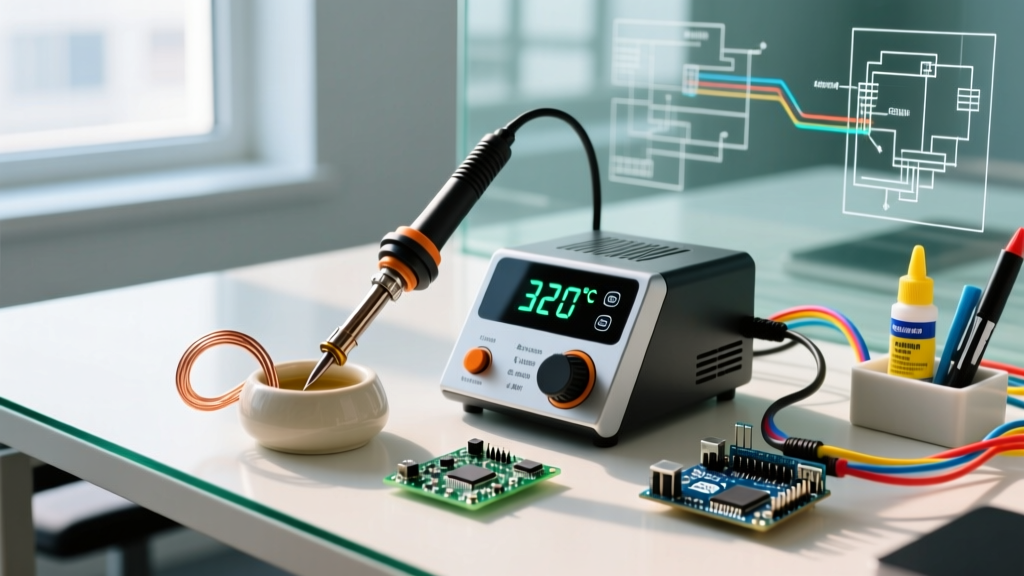
Premium tools do not necessarily boast higher raw wattage; instead, they utilize advanced ceramic heaters, closed-loop sensors, and massive copper-cored tips to deliver heat exactly when the joint demands it.
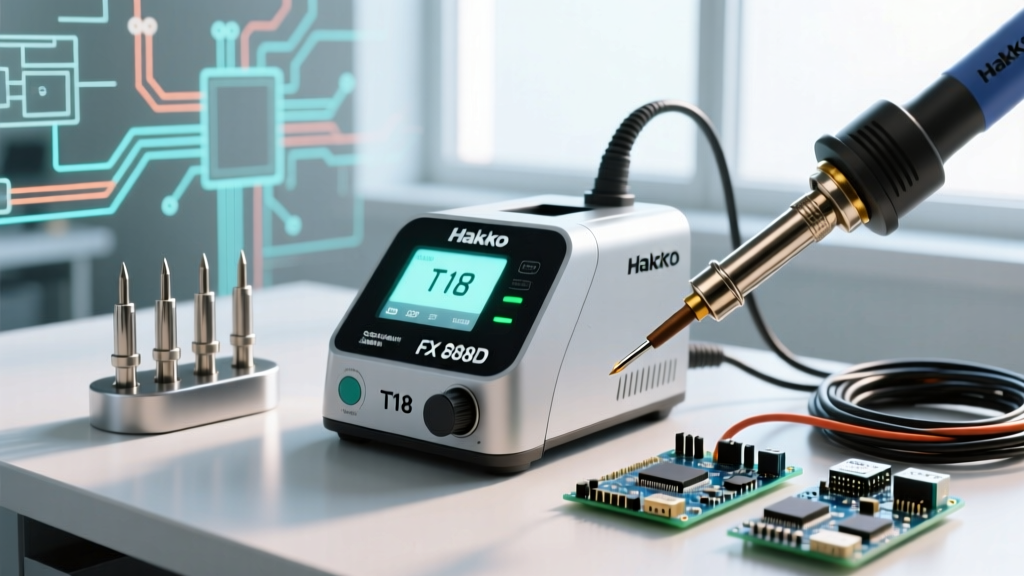
1. Hakko FX-601-02/P ($135)
The Hakko FX-601 is the gold standard for heavy-duty field work. It features a 67W nominal draw but utilizes a high-efficiency ceramic heater that mimics the thermal recovery of a 200W+ analog station.
- Thermal Kinetics: When the T19-D24 (large chisel) tip hits a cold 8 AWG wire, the sensor detects the micro-second temperature drop and floods the heater with current.
- Ergonomics: Despite the heavy-duty cord, the handpiece remains relatively lightweight, reducing fatigue during long stained-glass or automotive wiring sessions.
2. Weller W100PGD Heavy-Duty Station ($140 - $180)
Weller’s approach uses the CT6 series tips, which feature a built-in ferromagnetic Curie-point thermostat. The W100PG pushes a true 100W continuously.
- The Curie Advantage: The tip itself regulates the temperature. Once the tip reaches its rated Curie point (e.g., 700°F / 371°C), it loses its magnetic properties, cutting off the induction field. This makes it physically impossible to thermally runaway, protecting sensitive components near heavy-gauge joints.
- Plastic Welding Capability: Weller offers specialized PTC plastic welding tips for the W100 series, allowing you to seamlessly transition from soldering heavy copper to welding cracked ABS automotive bumpers.
3. Pace TF-7000 ThermoFlo ($220+)
While technically a stained-glass iron, the Pace TF-7000 is heavily utilized in industrial settings for running continuous solder beads on heavy copper foil. Its rheostat-controlled 7000-series handpiece offers unmatched ergonomic balance for drag-soldering applications where standard electronics irons would stall and create uneven, lumpy joints.
Head-to-Head Comparison Matrix
| Feature | Generic 300W Budget | Pinecil V2 (120W GaN) | Hakko FX-601 | Weller W100PGD |
|---|---|---|---|---|
| Peak Wattage | 300W (Unregulated) | 120W (Max via 24V PSU) | 67W (Nominal) | 100W (Continuous) |
| Temp Control | None (Manual Dial) | PID Digital | Analog Dial / Sensor | Curie-Point (In-Tip) |
| Thermal Recovery | Poor (Slow Nichrome) | Good (Up to 120W limit) | Excellent (Ceramic) | Excellent (Magnetic) |
| Best Application | Stained Glass, Scraping | 10-12 AWG Wire, RC Hobby | 8 AWG Wire, Field Repair | 4 AWG Wire, Plastic Welding |
| Estimated Tip Life | 10-20 Hours | 50+ Hours | 200+ Hours | 300+ Hours |
Application-Specific Verdicts for 2026
Scenario A: EV Battery Tab 'Welding' (Soldering Busbars)
Pure nickel strips cannot be soldered without aggressive fluxes and mechanical abrasion. However, tinning thick copper busbars for parallel battery groups requires massive heat. Verdict: Skip the budget irons. The Weller W100PGD with a CT6F8 (1/4 inch chisel) tip is mandatory here. You need the 100W continuous draw and the heavy copper core to prevent the busbar from acting as a heatsink and creating a catastrophic cold joint.
Scenario B: Plastic Welding (ABS/Nylon Enclosures)
Many users searching for a 'welding soldering iron' actually need a plastic welder. Plastic welding requires maintaining a precise 250°C - 300°C surface temperature to melt the polymer without burning it (which releases toxic fumes and weakens the bond). Verdict: The Weller W100PG equipped with the Weller plastic welding shoe attachment is the superior choice. Budget irons lack the PTC stability required to keep the plastic in its viscous state without scorching.
Scenario C: Automotive Ground Straps (1/0 AWG)
For 1/0 AWG battery cables, even the Hakko FX-601 will struggle. According to NASA's Electronic Parts and Packaging (NEPP) guidelines on heavy wire termination, when thermal mass exceeds the iron's recovery capacity, you must use localized pre-heating or a micro-torch. If you must use an iron, a 300W unregulated budget iron with a massive custom-machined copper tip is the only cost-effective way to dump enough raw joules into a 1/0 AWG lug to achieve flow, though it requires immense operator skill to avoid melting the lug's insulation.
Failure Modes: Why Cheap High-Wattage Irons Destroy Pads
When attempting heavy-duty soldering with unregulated budget irons, operators frequently encounter three catastrophic failure modes:
- Thermal Runaway & Pad Lifting: Because the 300W iron lacks a sensor, the operator often leaves it on the joint for 15+ seconds waiting for the solder to flow. This transfers heat through the via into the internal PCB layers, causing the copper pad to delaminate from the FR4 fiberglass substrate.
- Flux Burn-Off: Unregulated tips easily exceed 400°C. At this temperature, rosin and organic acid fluxes vaporize instantly before they can clean the oxidation off the heavy copper wire, resulting in a 'balling' effect where the solder refuses to wet the joint.
- Tip Pitting: High heat combined with aggressive lead-free solders (like SAC305) causes the iron plating to dissolve into the solder pot, pitting the tip and destroying its thermal transfer efficiency within hours.
Final Recommendation
If your definition of a welding soldering iron involves precision work on 8 AWG to 4 AWG wires, automotive connectors, or plastic fabrication, the Weller W100PGD or Hakko FX-601 are non-negotiable investments. The closed-loop thermal recovery will save you hundreds of dollars in ruined components, melted insulation, and replaced tips. Reserve the budget 300W irons strictly for non-electrical tasks like scoring acrylic, burning wood, or stripping heavy paint, where thermal precision is irrelevant.