
The Beginner's Dilemma: Navigating the Soldering Aisles
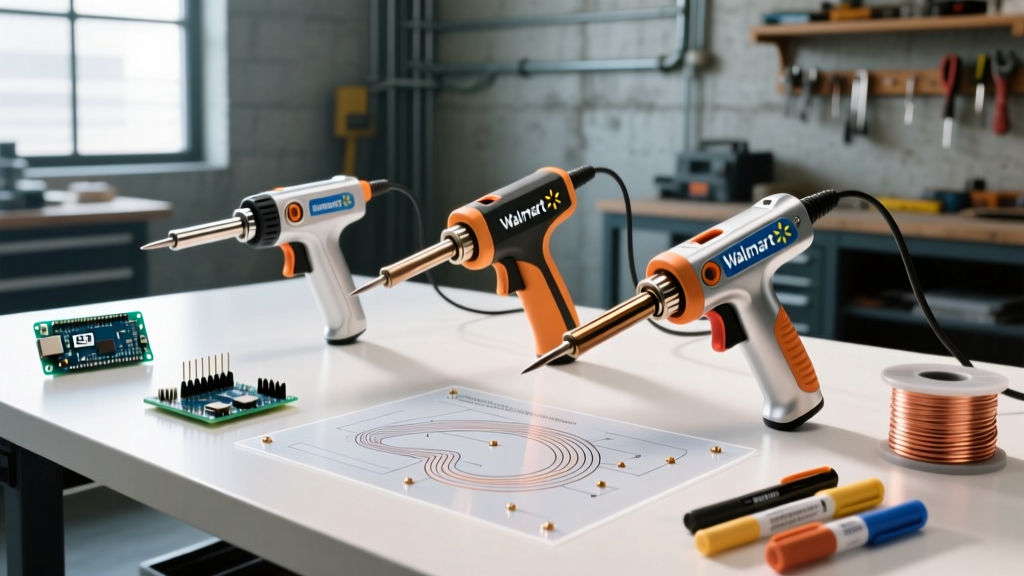
When you need a soldering gun, Walmart is often the first stop for beginners due to its accessibility, competitive pricing, and immediate availability. However, walking into the hardware department or browsing Walmart.com can be overwhelming. The shelves are stocked with everything from heavy-duty transformer guns to cheap, unregulated pencil irons. For a beginner, picking the wrong tool doesn't just mean a frustrating afternoon—it can mean destroyed printed circuit boards (PCBs), melted plastic connectors, and wasted components.
This 2026 guide cuts through the retail noise. We will break down the exact models available at Walmart, explain the critical metallurgical differences between soldering tools, and provide a framework to ensure you buy the right equipment for your specific DIY electronics or automotive projects.
The Golden Rule: Soldering Gun vs. Soldering Iron
The most common mistake beginners make is using the terms 'soldering gun' and 'soldering iron' interchangeably. They are fundamentally different tools designed for entirely different thermal profiles. According to the workmanship guidelines outlined in NASA's Electronic Parts and Packaging Program, applying the wrong thermal mass to a joint is a primary cause of catastrophic pad delamination.
Expert Insight: A soldering gun uses a step-down transformer to push massive current through a thick tip, generating 200W+ of instant heat. A soldering iron uses a resistive heating element in a pencil form factor, typically ranging from 30W to 60W, designed for precision thermal transfer.
| Feature | Soldering Gun (e.g., Weller D550) | Soldering Iron / Station (e.g., Weller WLC100) |
|---|---|---|
| Best Use Case | Thick wires (10-14 AWG), stained glass, plumbing grounds | PCBs, Arduino headers, delicate connectors, SMD |
| Wattage | 150W - 260W+ (Trigger operated) | 30W - 60W (Continuous or thermostatic) |
| Thermal Risk | High: Will melt plastic housings and lift PCB pads | Low: Safe for standard FR-4 fiberglass boards |
| Weight | Heavy (1.5 - 2.5 lbs) | Light (2 - 5 oz) |
Top Walmart Soldering Tools for Beginners in 2026
Whether you are shopping in-store or online, here are the most reliable options currently stocked by Walmart, categorized by their ideal application.
1. The Heavy-Duty Choice: Weller D550PK Soldering Gun Kit
Price Range: $50 - $60
Availability: In-store hardware aisle & Walmart.com
If you are building a custom car audio setup, soldering 12-gauge speaker wire, or working on stained glass art, the Weller D550PK is the undisputed king of the Walmart shelf. It features a dual-heat trigger (260W on high, 200W on low) and a built-in LED work light. Warning: Do not use this on standard electronics PCBs. The massive thermal shock will exceed the glass transition temperature (Tg) of the FR-4 substrate, causing the copper traces to permanently delaminate from the board.
2. The Best Electronics Starter: Weller WLC100 40W Station
Price Range: $55 - $70
Availability: Primarily Walmart.com (sometimes in-store)
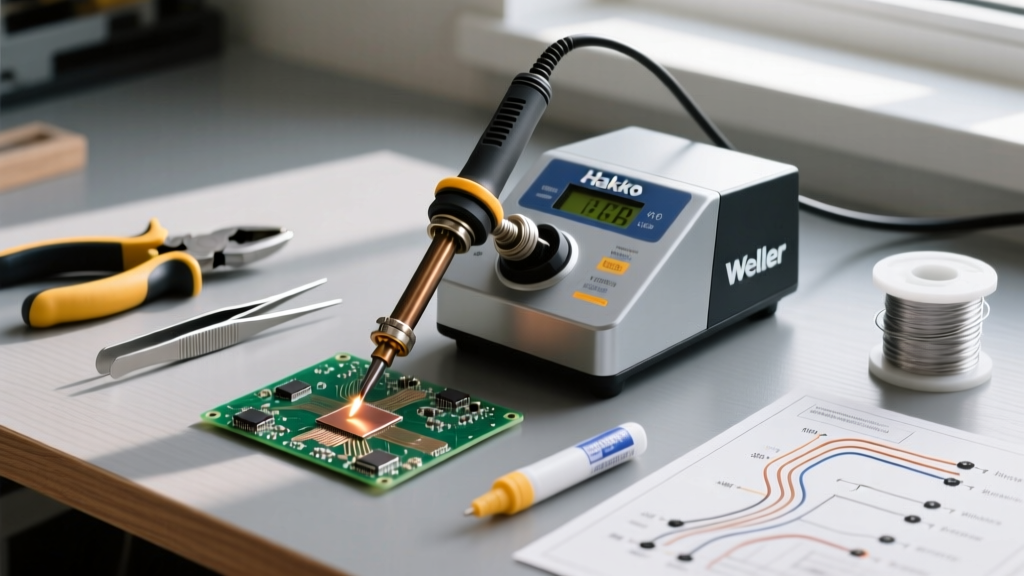
For beginners building DIY microcontroller kits, repairing retro game consoles, or splicing small sensor wires, the Weller WLC100 is the safest bet. It is a true soldering station with a variable power dial. While it lacks the closed-loop digital temperature control of a $120 Hakko FX888D, its 40W ceramic heater recovers heat fast enough for standard 60/40 rosin-core soldering. It accepts standard Weller ST-series tips, meaning you can easily swap to a fine conical tip for 0.1-inch pitch headers.
3. The Budget Marketplace Pick: Generic 60W Adjustable Kits
Price Range: $15 - $25
Availability: Walmart.com (Third-party sellers)
Walmart's online marketplace is flooded with generic '60W 110V Soldering Iron Kits' that include a dial-adjustable iron, a cheap multimeter, tweezers, and a roll of solder. These are highly tempting for students on a strict budget. The Verdict: They are acceptable for basic wire splicing or learning how to melt solder, but the included solder is often low-quality, high-lead or lead-free alloys with poor flux cores, and the tips oxidize rapidly. If you buy this kit, immediately throw away the included solder and purchase a separate tube of Kester 44 rosin-core solder.
What to Avoid in the Walmart Aisles
Critical Purchasing Mistakes
- Acid-Core Plumbing Solder: Never buy the solder located in the plumbing aisle for electronics. Acid flux will corrode your copper traces and destroy components within months. Always look for 'Rosin Core' in the electrical section.
- Unregulated 'Fire Starter' Irons: Avoid the $8 fixed-plug irons with no power switch or stand. They run continuously at uncontrolled temperatures, rapidly oxidizing the tip into a useless black crust.
- 'Instant Heat' Butane Pens: While great for field repairs on farm equipment, butane soldering irons lack the thermal stability required for consistent PCB work and are dangerous for indoor beginner use.
Step-by-Step: Your First Solder Joint Using a Walmart Kit
To ensure your joints meet the visual inspection criteria of IPC J-STD-001 standards, follow this exact sequence when using your new Weller WLC100 or similar iron:
- Tin the Tip (0:00 - 0:05): Turn the station to roughly 350°C (662°F) for 60/40 leaded solder. As it heats, melt a small amount of solder directly onto the iron tip to create a shiny protective layer. Wipe on a damp brass sponge.
- Heat the Joint (0:05 - 0:08): Touch the flat side of the tip to BOTH the copper pad and the component lead simultaneously. Do not apply solder yet.
- Feed the Solder (0:08 - 0:11): Touch the solder wire to the joint, not the iron tip. The heat from the components should melt the solder. Feed exactly 2-3mm of solder.
- Withdraw (0:11 - 0:12): Remove the solder wire first, then smoothly pull the iron away at a 45-degree angle to create a clean, concave 'volcano' fillet.
Frequently Asked Questions
Does Walmart sell good solder?
In-store, Walmart usually carries basic Gardner Bender or Weller-branded rosin-core solder, which is adequate for beginners. However, for professional-grade results, you are better off ordering Kester or MG Chemicals online. Never use the solid-core solder meant for copper pipes.
Can I use a Walmart soldering gun for automotive repairs?
Yes. The Weller D550PK soldering gun is exceptionally well-suited for automotive wiring harness repairs, bullet connectors, and heavy-gauge battery cables where high thermal mass is required to overcome the heat-sinking effect of thick copper strands.
Why is my solder balling up and refusing to stick?
This is called 'de-wetting' and is almost always caused by an oxidized tip or a lack of flux. If your tip is black, it will not transfer heat. Clean it with brass wool, re-tin it immediately, and ensure your workpiece is free of oils and dirt. For more advanced troubleshooting, refer to the Weller Tools official troubleshooting guides.