
The American Beauty Ecosystem: Heavy-Duty and Resistance Soldering
When professionals tackle high-thermal-mass joints—such as heavy-gauge automotive wiring, stained glass came, or thick silver jewelry bezels—standard 40W to 60W electronics stations fall short. Enter American Beauty, a legacy brand synonymous with high-wattage AC soldering irons (like the 10200 series) and specialized resistance soldering systems. However, as supply chains have shifted and online marketplaces have flooded with generic replacements, a critical question has emerged for 2026: Are genuine American Beauty soldering iron tips worth the premium, or can budget off-brand alternatives deliver comparable results?
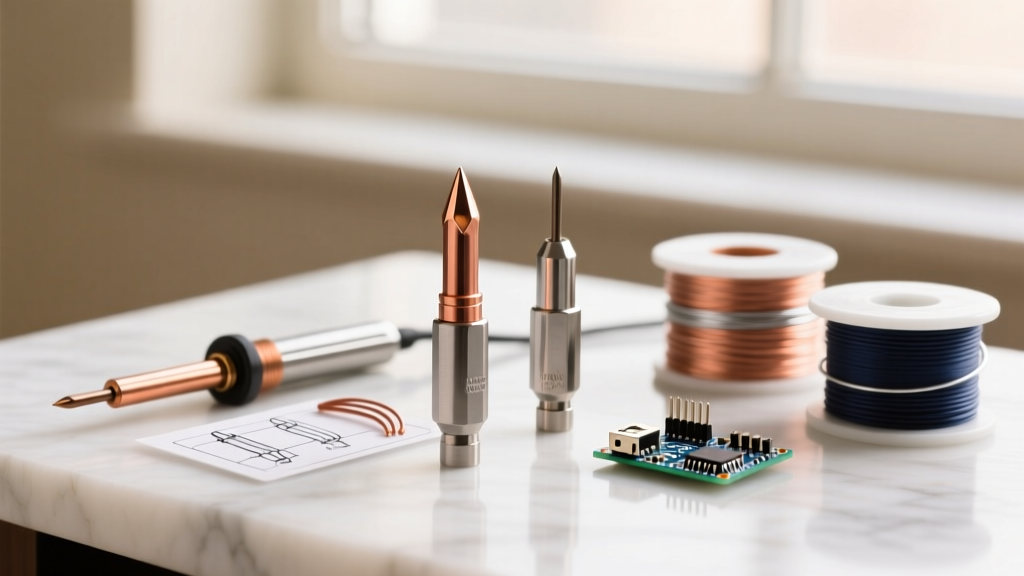
To answer this, we must separate the two primary tip categories in the American Beauty lineup: heavy-duty copper bits for traditional AC irons, and carbon electrodes for resistance soldering tweezers and probes. The metallurgical differences between OEM (Original Equipment Manufacturer) tips and budget clones dictate not just the lifespan of the tool, but the structural integrity of the solder joint itself.
The 2026 Verdict: For hobbyists soldering occasional 14 AWG wire, budget copper bits offer acceptable utility. However, for production environments, stained glass artisans, and anyone utilizing resistance soldering for precision jewelry, genuine American Beauty tips are non-negotiable due to superior thermal transfer and arc-prevention metallurgy.
Head-to-Head Comparison: Genuine vs. Off-Brand Tips
Before diving into the failure modes, let us look at the raw specifications and current market pricing for the most common American Beauty replacements.
| Feature | Genuine American Beauty (OEM) | Budget / Off-Brand Alternatives |
|---|---|---|
| Copper Bit Alloy | Tellurium Copper (C14500) with multi-layer iron/nickel plating | Standard ETP Copper (C11000) with single-layer micro-plating |
| Carbon Electrode Density | High-density, isotropic graphite (prevents spalling) | Extruded amorphous carbon (prone to micro-fractures) |
| Thermal Conductivity | Optimized for rapid recovery at 750°F+ | High thermal lag; struggles with large ground planes |
| Avg. Price (10425 Copper Bit) | $16.00 - $22.00 | $4.50 - $8.00 |
| Avg. Price (10505 Carbon Rod) | $18.00 - $24.00 | $3.00 - $6.00 |
| Wetting Performance | Excellent; resists pitting from aggressive fluxes | Poor; plating dissolves rapidly in lead-free solders |
Deep Dive: Carbon Electrodes for Resistance Soldering
Resistance soldering relies on passing a high-amperage, low-voltage current (often 10 to 15 amps) directly through the workpiece and the carbon electrode. The American Beauty 10505 series carbon rods are the industry standard for this application. When you substitute these with budget carbon rods sourced from generic marketplaces, you introduce severe operational hazards.
The Spalling and Arcing Failure Mode
Budget carbon electrodes are typically manufactured using lower-grade amorphous carbon binders. When subjected to the intense localized heat and mechanical pressure (usually 2 to 4 lbs of downward force) required for a resistance joint, impurities in the budget rods cause uneven electrical resistance. This leads to micro-arcing.
According to guidelines referenced in NASA Workmanship Standards for high-reliability interconnects, any arcing during the soldering process can cause localized melting of the base metal and carbon inclusion in the joint. With budget rods, this manifests as spalling—tiny flakes of carbon breaking off and embedding into the molten solder. This creates a brittle, high-resistance joint that will inevitably fail under mechanical vibration. Genuine American Beauty rods use high-density, isotropic graphite that maintains a smooth, rounded working face and dissipates heat evenly without fracturing.
Deep Dive: Copper Bits for Heavy-Duty AC Irons
For traditional high-wattage irons like the American Beauty 10200 (100W) or 10300 (150W), the tip must act as a massive thermal reservoir. The OEM 10425 heavy-duty copper bits are engineered specifically to withstand the aggressive chemical environment of modern soldering.
The Plating Dissolution Crisis
The primary enemy of any copper soldering tip is dissolution. Molten solder, particularly lead-free alloys like SAC305 (Tin-Silver-Copper) and SAC405, actively leaches copper. To prevent the tip from dissolving, manufacturers apply an iron plating layer.
- Budget Tips: Utilize a single-layer iron flash plating measuring roughly 0.001 to 0.002 inches thick. When exposed to the high operating temperatures (750°F - 800°F) required for heavy-gauge work, and combined with aggressive fluxes (like zinc chloride used in plumbing or stained glass), this thin plating breaches within 10 to 15 hours of active use. Once breached, the raw copper core dissolves, resulting in severe pitting and a complete failure to wet.
- Genuine American Beauty Tips: Employ a multi-layer plating process (often iron over a nickel barrier) exceeding 0.005 inches in thickness. Furthermore, the core is not just pure copper, but often a tellurium-copper alloy (C14500) which offers superior machinability and structural stability under repeated thermal cycling.
The IPC J-STD-001 standard for soldered electrical assemblies strictly mandates that solder joints exhibit proper wetting and a smooth, continuous fillet. A pitted, budget copper bit cannot transfer heat evenly, leading to cold solder joints and excessive dwell times that can scorch wire insulation or delaminate PCB pads.
Real-World Cost Analysis: The Hidden Expense of "Cheap"
Let us apply a practical decision framework for a small production shop or a dedicated stained glass artisan working 20 hours a week in 2026.
Scenario: Stained Glass Foil Soldering (60/40 Alloy, Zinc Chloride Flux)
The Budget Route: You purchase a 5-pack of generic copper bits for $25. Due to the aggressive flux and continuous high-heat exposure, the thin plating fails. You cycle through one tip every 3 weeks. Annual cost: $175, plus the cost of ruined came and wasted solder due to poor wetting.
The Premium Route: You purchase two genuine American Beauty 10425 bits for $40. With proper maintenance (regular tinning and avoiding dry-burning), the thick multi-layer plating withstands the flux. The tips last 8 to 10 months. Annual cost: $40 to $60.
As demonstrated, the "budget" option actually costs nearly three times as much over a fiscal year, not including the labor cost of stopping to change tips and clean up defective joints. For professional environments, the ROI on genuine American Beauty soldering iron tips is overwhelmingly positive.
Expert Recommendations by Application
To help you allocate your tooling budget effectively, we have categorized recommendations based on specific use cases:
- Precision Jewelry (Resistance Soldering): Always buy Genuine. When soldering 18k gold or platinum bezels, a budget carbon rod's arcing will pit the precious metal, requiring hours of bench time to polish out. Suppliers like Rio Grande stock OEM American Beauty electrodes specifically to protect jewelers' high-value workpieces.
- Automotive Harness Repair (Heavy-Duty AC): Buy Genuine. Soldering 8 AWG to 4 AWG battery cables requires massive thermal transfer. A budget tip will drop in temperature upon contact with the copper wire, causing the operator to dwell too long and melt the PVC/XLPE insulation.
- Occasional Hobbyist RC Wiring (12-14 AWG): Budget is Acceptable. If you are soldering XT60 connectors or 12 AWG silicone wire for a few hours a month, a budget copper bit will suffice. Just ensure you keep the tip heavily tinned to stave off oxidation.
Frequently Asked Questions
Can I use standard Hakko or Weller tips on an American Beauty iron?
No. American Beauty heavy-duty irons (like the 10200 series) use proprietary, high-mass copper bits designed for massive thermal reservoirs. Standard 900M or T18 tips used on Hakko/Weller stations are physically incompatible and thermally inadequate for the 100W+ output and heavy-gauge applications American Beauty tools are designed for.
How do I extend the life of my genuine American Beauty copper bits?
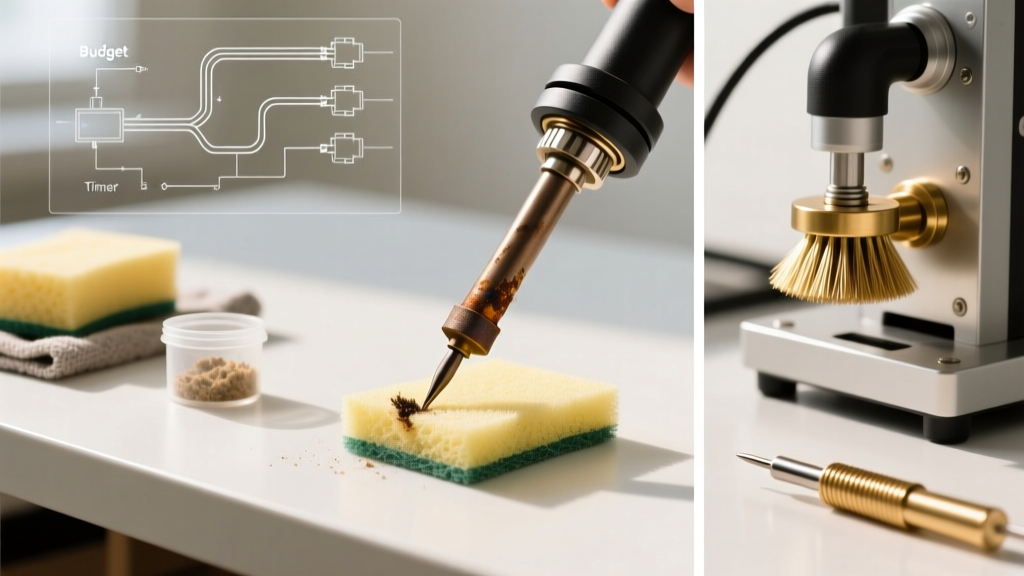
The golden rule is never leave the tip dry. When putting the iron down, apply a thick blob of 63/37 or 60/40 rosin-core solder to the working face. This sacrificial layer will oxidize instead of the iron plating. Before your next joint, simply wipe it on a damp brass sponge and apply fresh solder. Avoid using abrasive sandpaper or steel wool, which will instantly destroy the protective iron plating.
Why do my budget carbon electrodes snap when I press down?
Resistance soldering requires firm mechanical pressure to ensure low electrical contact resistance. Budget carbon rods are extruded with lower density and lack the structural binders found in OEM American Beauty 10505 electrodes. When you apply the necessary 2 to 4 lbs of pressure, the structural integrity of the budget rod fails, resulting in a clean snap. Always use OEM rods for high-pressure resistance work.