
Thermal Fusion: Repurposing Soldering Irons for Plastic Welding
While traditional soldering irons are engineered to melt metallic alloys like SAC305 or 63/37 tin-lead, the DIY and repair communities have increasingly adopted them for thermal plastic fusion. Whether you are repairing a cracked ABS automotive bumper tab, reinforcing a 3D-printed PETG drone frame, or sealing a polypropylene (PP) fluid reservoir, using a soldering iron to weld plastic requires a fundamental shift in technique, tip selection, and temperature management.
Unlike solvent welding—which chemically melts the surface but can weaken UV-stabilized polymers and fail under shear stress—thermal fusion creates a continuous molecular chain across the joint. However, because plastics are thermal insulators with low thermal conductivity compared to copper or steel, the tool you choose must possess high thermal mass or rapid PID recovery to prevent 'cold welding' or, conversely, thermal degradation (burning).
The Science of Plastic Welding: Temperature & Material Match
The most common failure mode when using a soldering iron on plastic is applying electronic soldering temperatures (350°C+) to polymers that degrade at 250°C. This releases toxic volatile organic compounds (VOCs) and creates a brittle, carbonized joint. Below is the definitive 2026 material reference matrix for plastic welding.
| Polymer Type | Common Applications | Ideal Melt Temp | Recommended Tip Profile | Weldability |
|---|---|---|---|---|
| ABS | Automotive interiors, enclosures, LEGO | 210°C - 240°C | Flat Spade / Trowel | Excellent |
| PLA | 3D printed prototypes, cosmetic parts | 160°C - 180°C | Knife / Chisel | Good (Prone to warping) |
| PETG | Drone frames, mechanical brackets | 220°C - 250°C | Flat Spade | Very Good |
| Polypropylene (PP) | Bumpers, fluid tanks, hinges | 160°C - 170°C | Trowel / Wide Chisel | Poor (Requires PP filler rod) |
| Nylon (PA) | Gears, high-stress mechanical parts | 250°C - 270°C | Heavy Spade | Difficult (Hygroscopic) |
Best-Of Comparison: Top Tools for Plastic Welding in 2026
To execute a proper plastic weld, you need a station that can maintain stable temperatures at the tip interface without overshooting. Here are the three best configurations for using a soldering iron to weld plastic this year.
1. The Dedicated Specialist: Weller W695PT Plastic Welder
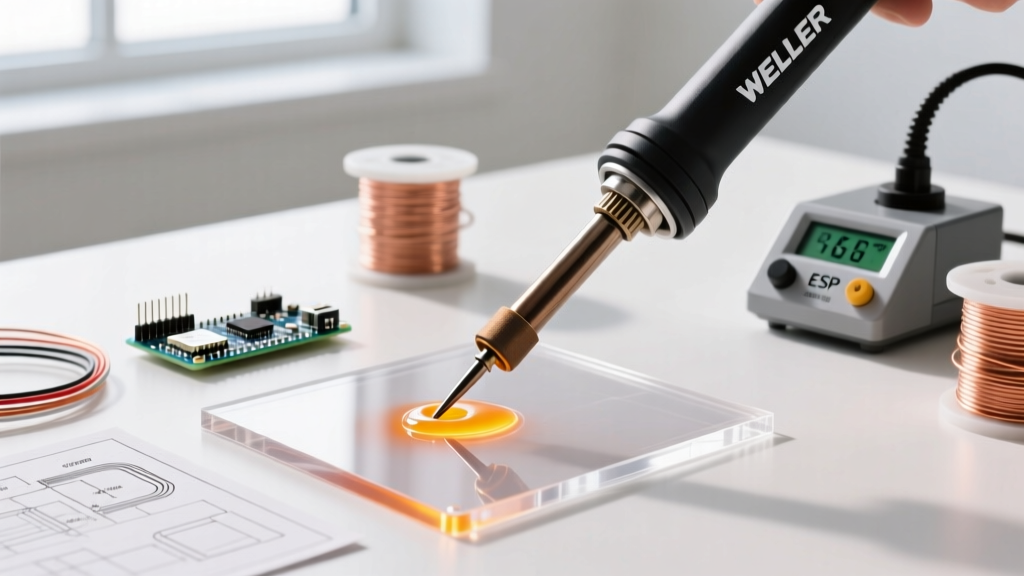
Weller designed the W695PT specifically for heavy-duty plastic fusion. Unlike standard electronics stations, this 100W iron prioritizes raw thermal mass over delicate precision.
- Price: ~$135 - $150
- Best For: Thick automotive ABS/PP repairs, kayak hulls, and heavy structural tabs.
- Pros: Massive thermal reserve; includes a specialized wide trowel tip that smooths the plastic bead rather than digging a trench; heavy-duty heating element.
- Cons: Lacks digital PID precision; overkill for delicate 3D-printed PLA; bulky handle.
2. The Versatile Workhorse: Hakko FX-888D with T18-D32 Spade Tip
The Hakko FX-888D is a staple in electronics, but when paired with the T18-D32 (3.2mm Chisel/Spade) or a custom flat blade, it becomes an exceptional precision plastic welder.
- Price: ~$110 (Station) + $15 (Tip)
- Best For: Precision 3D print repair (PLA/PETG), RC car body mounts, and electronics enclosure modifications.
- Pros: Digital PID control prevents thermal overshoot; rapid heat recovery; highly affordable; interchangeable tips.
- Cons: Standard tips are coated for solder wetting and will degrade if used exclusively on plastics (you must dedicate a specific tip solely to plastic).
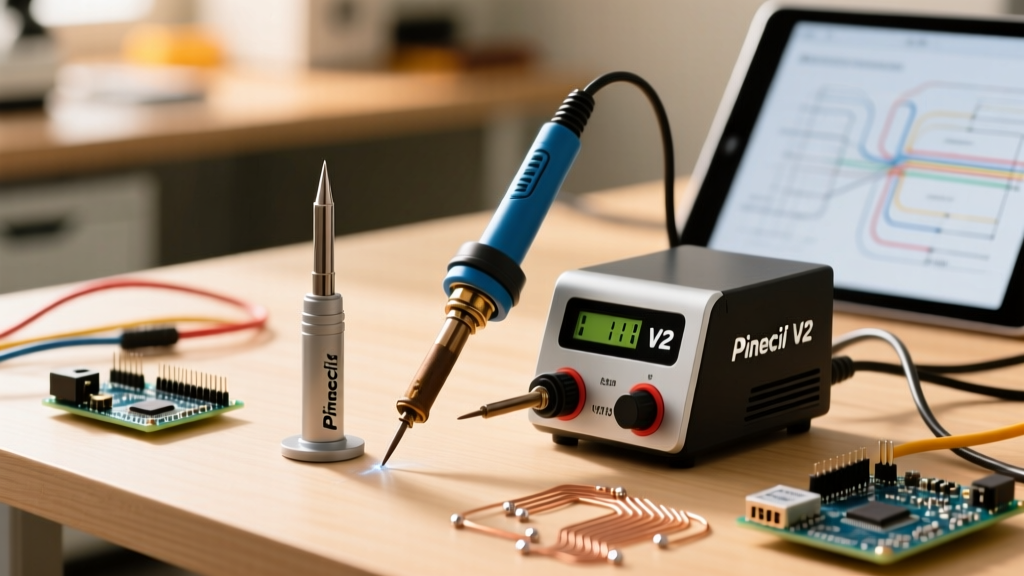
3. The Field Repair Option: Pine64 Pinecil V2 (USB-C PD)
For drone pilots and RC enthusiasts who need to weld PETG or ABS frames in the field, the Pinecil V2 powered by a 65W USB-C PD battery bank is unmatched.
- Price: ~$55 (Iron) + $30 (65W GaN Charger)
- Best For: Portable field repairs, tight spaces, and lightweight mesh-embedding.
- Pros: RISC-V chip provides instant heat-up (under 6 seconds); open-source firmware allows custom temperature curves; extreme portability.
- Cons: Lower total thermal mass compared to the Weller; struggles with thick, heat-sinking automotive plastics.
Step-by-Step: The 'Staple Weld' Technique for Structural Integrity
Simply melting two pieces of plastic together often results in a weak butt joint. For load-bearing repairs (like a broken drone arm or a snapped car bumper bracket), you must use the Staple Weld method to embed a metallic skeleton into the polymer matrix.
- Preparation: Sand the mating surfaces with 120-grit sandpaper to increase surface area. Clean thoroughly with 99% Isopropyl Alcohol (IPA) to remove mold release agents and oils.
- Tacking: Use a standard 60W soldering iron with a fine conical tip to heat a 0.6mm stainless steel wire mesh or specialized nickel-plated repair staples. Press the heated mesh into the plastic across the crack until it sits flush with the surface.
- Fusion & Filler: Switch to your flat spade tip. Set the temperature 10°C above the polymer's melting point. Melt a matching plastic filler rod (or scraps of the same material) into the joint, using the spade tip to 'iron' the filler into the base material and over the embedded mesh.
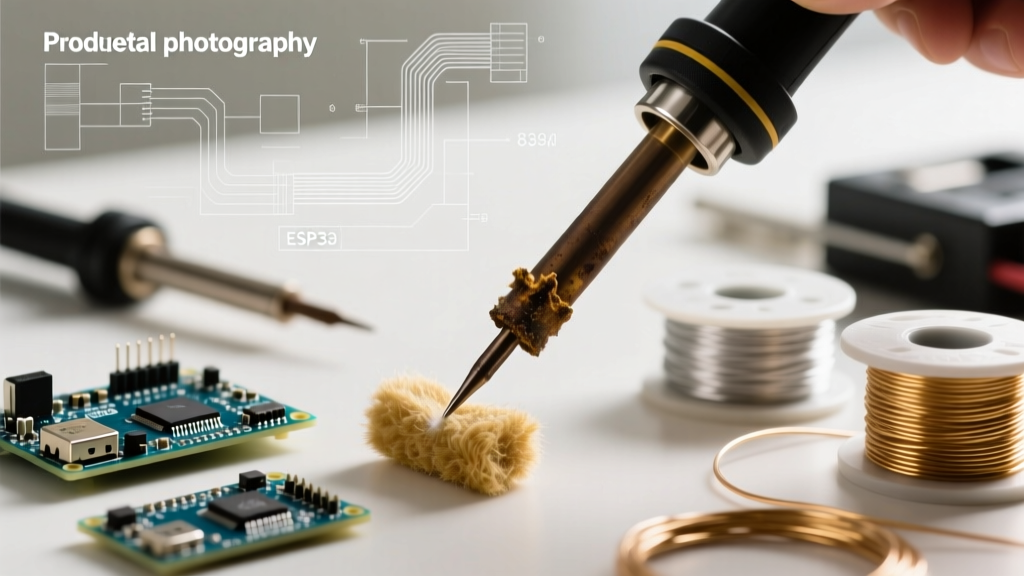
- Smoothing: Once the joint is fully packed, wipe the spade tip on a damp brass sponge, lower the temperature by 15°C, and gently glide the tip over the weld bead to smooth it out and eliminate voids.
Expert Warning: Never use a tip for electronic soldering after it has been used for plastic welding. The thermal degradation of polymers leaves a microscopic carbonized residue that permanently destroys the iron plating's ability to wet with molten solder. Always maintain a dedicated 'plastics-only' tip.
Common Failure Modes & Troubleshooting
1. The 'Cold Weld' (Delamination)
Symptom: The filler rod sticks to the surface but peels off easily under stress.
Cause: The base material was not heated to its glass transition/melt phase. The iron's thermal mass was too low, or the user moved too quickly.
Fix: Increase temperature by 15°C and hold the spade tip on the base material for 3-5 seconds before introducing the filler rod to ensure deep thermal penetration.
2. Thermal Degradation (Burnt, Brittle Joints)
Symptom: The plastic turns brown or black, emits acrid smoke, and the resulting weld shatters when bent.
Cause: Exceeding the polymer's degradation temperature. In ABS, this breaks down the styrene-acrylonitrile matrix, releasing toxic styrene gas and hydrogen cyanide.
Fix: Lower the PID setting. According to the EPA's guidelines on indoor air quality, thermal degradation of synthetic polymers releases hazardous VOCs that require immediate mitigation.
Fume Extraction & Safety Protocols
Melting plastic is fundamentally different from melting rosin-based solder flux. You are actively breaking down long-chain hydrocarbons. The National Institute for Occupational Safety and Health (NIOSH) outlines severe respiratory risks associated with inhaling thermal degradation byproducts, particularly when welding ABS, Nylon, or PVC (which releases highly toxic hydrogen chloride gas and should never be thermally welded).
For safe indoor plastic welding in 2026, a standard HEPA filter is insufficient, as it does not capture gaseous VOCs. You must use a fume extractor equipped with an activated carbon matrix. Models like the Hakko FA-400 or the Aoyue 482A+ are minimum requirements for hobbyist plastic fusion. Always weld in a cross-ventilated space and wear an N95 or P100 respirator rated for organic vapors when working with ABS or PETG.
Frequently Asked Questions
Can I use a hot glue gun instead of a soldering iron?
No. Hot glue (EVA-based) does not chemically fuse with ABS, PP, or PETG. It acts as a superficial adhesive that will fail under thermal cycling or mechanical shear. A soldering iron melts the base polymers together, creating a monolithic structure.
Why won't my soldering iron melt Polyethylene (PE)?
Polyethylene has extremely low surface energy and is highly resistant to standard thermal adhesion without specialized PE filler rods and precise temperature control. Most standard soldering irons will burn the surface before achieving a structural weld. For PE tanks, specialized hot air extrusion welders are recommended over contact irons.