
The Cordless Soldering Dilemma: Field Work vs. Bench Work
As we navigate the 2026 landscape of cordless electronics repair and field splicing, the divide between heavy-duty construction tools and precision bench-replacements has never been more stark. For years, hobbyists and professionals alike have searched for the ultimate portable soldering solution. Enter the Milwaukee soldering iron M12 (specifically Model 48-22-8712), a premium, battery-powered powerhouse that promises rapid heat-up times and rugged durability. But at a premium price point, does it make sense for the average electronics enthusiast or PCB rework technician?
In this comprehensive budget vs. premium analysis, we are putting the Milwaukee M12 up against the undisputed budget kings of cordless soldering: the Pine64 Pinecil V2 and the Miniware TS101. By examining thermal mass, power delivery ecosystems, and real-world failure modes, we will determine exactly which tool belongs in your toolkit—and more importantly, which tool will destroy your project.
The Premium Heavyweight: Milwaukee M12 (Model 48-22-8712)
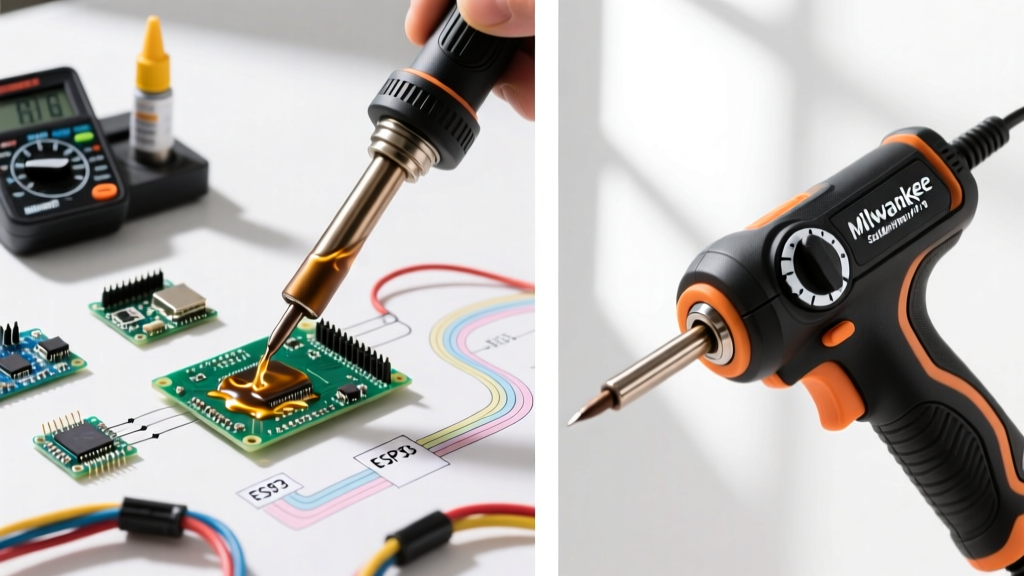
The Milwaukee 48-22-8712 is not a traditional electronics soldering iron; it is a heavy-duty field splicing tool designed for the M12 REDLITHIUM battery ecosystem. Milwaukee engineered this tool with a singular focus: driving massive amounts of thermal energy into high-thermal-mass joints.
- Heat-Up Time: Reaches 800°F (426°C) in under 18 seconds.
- Power Source: Milwaukee M12 Lithium-Ion batteries (ranging from 2.0Ah to 6.0Ah).
- Target Application: Splicing 10 AWG to 2 AWG copper wire, marine electronics, automotive harnesses, and heat-shrink tubing.
- Ergonomics: Features an integrated LED work light, a locking trigger for continuous operation, and a rugged over-molded grip.
The M12 utilizes a proprietary heavy-duty chisel tip. This tip geometry is critical. It provides a massive surface area for heat transfer, which is absolutely necessary when soldering thick battery cables. Thick copper strands act as enormous heat sinks; if your iron lacks the thermal mass and wattage to overcome this sink, the solder will simply refuse to flow, resulting in a cold, brittle joint.
The Budget Precision Kings: Pinecil V2 & Miniware TS101
On the opposite end of the spectrum are the budget-friendly, USB-C powered smart irons. The Pine64 Pinecil V2 (retailing around $26) and the Miniware TS101 (around $45) have completely disrupted the market. Instead of relying on proprietary battery ecosystems, these irons leverage the ubiquitous USB-C Power Delivery (PD) standard.
Under the Hood of the Budget Disruptors
The Pinecil V2 is powered by a 32-bit RISC-V processor running an open-source PID (Proportional-Integral-Derivative) temperature control algorithm. This allows for hyper-accurate thermal recovery. When the tip touches a cold copper pad on a printed circuit board (PCB), the processor detects the micro-drop in temperature and instantly pulses the power gates to compensate, maintaining a stable intermetallic compound (IMC) layer formation.
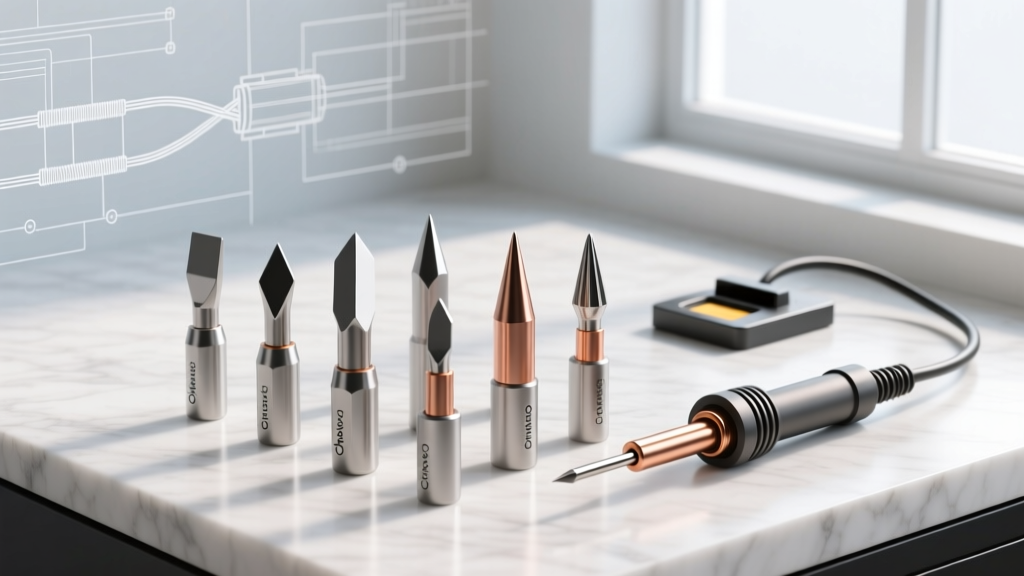
These budget irons support a vast array of interchangeable tips (compatible with the TS-B2 and Miniware ecosystems), ranging from ultra-fine 0.2mm conical tips for 0402 surface-mount device (SMD) work to wider bevel tips for through-hole components.
Thermal Mass and the Physics of Soldering
To understand why the Milwaukee soldering iron M12 is a poor choice for PCB work—and why the Pinecil is a poor choice for automotive wire splicing—you must understand thermal mass and dwell time.
The Golden Rule of Soldering: You want to reach the solder's liquidus temperature as quickly as possible to minimize thermal stress on the surrounding materials, without exceeding the thermal excursion limits defined by industry standards.
According to the IPC J-STD-001 standard for soldered electrical and electronic assemblies, excessive dwell time and overheating can lead to catastrophic board failures. The Milwaukee M12's massive chisel tip holds a tremendous amount of thermal energy. If applied to a standard 1.6mm FR4 PCB with 1oz copper, the sheer volume of heat transferred in the first second of contact can cause pad delamination, via barrel cracking, and the burning of flux cores before the joint is even wetted.
Conversely, if you attempt to solder an 8 AWG marine battery cable using a Pinecil V2 with a fine conical tip, the thermal mass of the wire will instantly drain the heat from the tip. The PID controller will max out the 65W USB-C PD input, but the physical thermal bottleneck will result in a dwell time exceeding 15 seconds. This prolonged heating oxidizes the tip, degrades the flux, and creates a porous, high-resistance cold solder joint.
Real-World Failure Modes: Mismatching the Tool
Using the Milwaukee M12 on Multilayer PCBs
- Pad Lifting: The aggressive heat transfer melts the epoxy resin binding the copper pad to the fiberglass substrate.
- Component Damage: Heat travels rapidly up the component leads, exceeding the maximum junction temperature (Tj) of sensitive silicon ICs.
- Solder Mask Scorching: The wide chisel tip inadvertently touches the surrounding solder mask, causing it to blister and off-gas toxic fumes.
Using the Pinecil V2 on Heavy Gauge Wire
- Tip Oxidation: The iron stays in contact with the wire for too long, causing the iron plating on the tip to oxidize and pit, rendering it unwettable.
- Flux Burnout: The rosin core of the solder burns away before the copper strands reach the necessary 220°C+ to accept the molten alloy.
- Power Droop: The USB-C PD charger cannot sustain the 100% duty cycle required, leading to voltage sag and temperature instability.
Head-to-Head Comparison Matrix
| Feature | Milwaukee M12 (48-22-8712) | Pine64 Pinecil V2 | Miniware TS101 |
|---|---|---|---|
| Approx. Cost (Tool Only) | $99.00 | $26.00 | $45.00 |
| Power Source | 12V M12 Li-Ion Battery | USB-C PD (12V-20V) | USB-C PD (12V-20V) |
| Max Power Draw | ~90W (Peak) | 65W - 100W | 65W |
| Best Application | 10-2 AWG Wire, Marine, Auto | SMD, PCB Rework, Drones | General PCB, Through-Hole |
| Temperature Control | Fixed / Basic Thermostat | RISC-V PID Algorithm | ARM PID Algorithm |
| Runtime | Hours (with 4.0Ah+ battery) | Depends on Power Bank | Depends on Power Bank |
Cost of Ownership and Ecosystem Lock-in
When evaluating the Milwaukee soldering iron M12, the sticker price of the bare tool is only the beginning. To make the 48-22-8712 functional, you must invest in the Milwaukee M12 ecosystem. A standard 4.0Ah REDLITHIUM battery will cost approximately $55, and a basic M12 charger adds another $30. Your total entry cost hovers around $184. For professional electricians or marine mechanics who already own a dozen M12 tools, this marginal cost is negligible, and the convenience of swapping batteries on a job site is invaluable.
However, for the electronics hobbyist, the budget alternatives offer a staggering return on investment. The Pinecil V2 costs $26. Because it utilizes a standard DC5525 to USB-C PD cable, you can power it using the 65W GaN laptop charger you already own, or a high-discharge USB-C power bank. Your total entry cost remains under $40. Furthermore, replacement tips for the Pinecil and TS101 cost between $5 and $10 each, whereas proprietary heavy-duty replacement tips for the Milwaukee can exceed $15 per unit.
Final Verdict: Matching the Tool to the Task
The debate between the Milwaukee soldering iron M12 and budget cordless alternatives is not a matter of which tool is objectively 'better'—it is a matter of application physics. The Milwaukee M12 is a phenomenal, premium-grade field tool. If your daily routine involves crawling under dashboards to splice automotive sensor wires, repairing heavy-gauge solar panel arrays, or sealing marine heat-shrink connectors in damp environments, the M12's rugged build, locking trigger, and massive thermal output justify every penny of its premium price tag.
Conversely, if your work involves repairing drones, assembling custom mechanical keyboards, reworking multilayer PCBs, or soldering delicate surface-mount components, the Milwaukee M12 is actively dangerous to your workpieces. In the electronics bench environment, the budget-friendly Pinecil V2 and Miniware TS101 are vastly superior. Their advanced PID temperature control, lightning-fast thermal recovery, and fine-tip geometries provide a level of precision that the M12 was simply never designed to achieve. Know your thermal mass, respect your dwell times, and choose the tool that matches your copper.