
The Hidden Cost of Neglected Soldering Tips
In the realm of electronics assembly and DIY prototyping, the soldering iron tip is a highly engineered consumable. Yet, it is frequently treated as an indestructible wedge of metal. When searching for the right tool for soldering iron tip maintenance, most hobbyists and even seasoned technicians overlook the complex metallurgy at play. A modern soldering tip is not a solid piece of copper; it is a multi-layered composite consisting of a high-conductivity copper core, a protective nickel barrier layer, and an outer iron plating that is typically only 0.1mm to 0.2mm thick.
Once that microscopic iron layer is compromised by oxidation, pitting, or abrasive cleaning, the molten solder dissolves the copper core in a matter of hours, rendering the tip useless. As we navigate the 2026 electronics landscape, where lead-free alloys like SAC305 (Sn96.5/Ag3.0/Cu0.5) dominate commercial and high-reliability DIY projects, operating temperatures have climbed to 350°C–380°C. At these elevated temperatures, oxidation accelerates exponentially. Selecting the correct maintenance tools is no longer optional; it is a strict requirement for thermal efficiency and joint reliability.
Metallurgy and Thermal Shock: Why Your Cleaning Tool Matters
Before evaluating specific tools, we must understand the enemy: thermal shock and oxidation. When a tip heated to 380°C contacts a room-temperature cleaning medium, the sudden drop in temperature (ΔT) causes the iron plating and the copper core to contract at different rates. Over hundreds of cycles, this induces micro-fractures in the iron layer.
Brass Wire Sponges vs. Cellulose Sponges
For decades, the wet cellulose sponge was the default tool for soldering iron tip cleaning. However, modern reliability standards strongly discourage its use for high-temperature lead-free soldering.
- Wet Cellulose Sponges: Dropping a 380°C tip into a water-laden sponge causes a thermal shock of over 150°C. Furthermore, if tap water is used instead of distilled water, the minerals and chlorides bake onto the tip, accelerating corrosion. The IPC J-STD-001 standards explicitly warn against contaminants that compromise solder wetting.
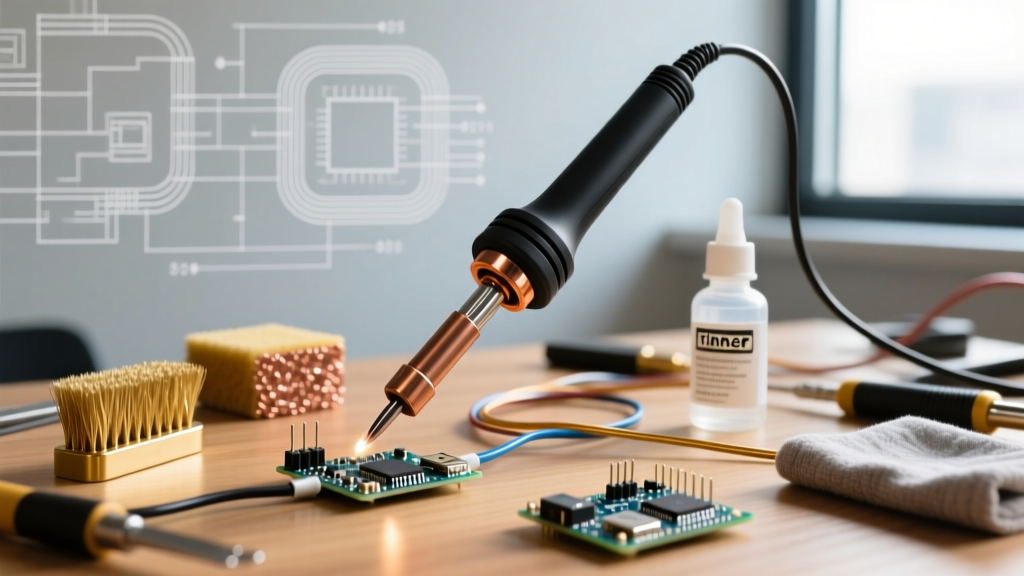
- Brass Wire Sponges (e.g., Weller WDC2, Edsyn S1000): Brass is softer than the iron plating, meaning it will scrape away oxidized solder and flux residue without gouging the tip. More importantly, brass acts as a heat sink that drops the tip temperature by only 20°C to 30°C, virtually eliminating thermal shock micro-fractures.
Tip Tinner and Activator Compounds
A brass sponge removes physical debris, but it cannot reverse heavy oxidation. For this, you need a chemical tinner. Products like the Hakko FS-100 Tip Tinner are formulated with a mixture of mild rosin-based acids and powdered solder (often SAC305 or Sn63/Pb37 depending on the variant). When an oxidized tip is plunged into the tinner, the activated flux strips the iron oxide layer, while the powdered solder immediately wets the exposed iron, creating a protective barrier against further atmospheric oxidation.
Polishing Bars and Extraction Tools
For severe cases where chemical tinning fails, mechanical abrasion is the last resort. The Hakko 484 Tip Polisher uses a specialized abrasive compound embedded in a resin bar. It physically grinds away the oxidized iron layer. However, because the iron plating is only 0.1mm thick, using a polishing bar removes a significant percentage of the tip's total lifespan. It is a rescue tool for soldering iron tip restoration, not a daily maintenance item.
Thermal Shock & Oxidation Reduction Comparison Matrix
| Maintenance Tool | Avg. Temp Drop (ΔT) | Abrasiveness to Iron Plating | Best Use Case | Approx. Cost (2026) |
|---|---|---|---|---|
| Wet Cellulose Sponge | 120°C - 160°C | Low (but high thermal shock) | Low-temp leaded soldering (under 300°C) | $2 - $5 |
| Brass Wire Sponge | 20°C - 35°C | Very Low | Daily cleaning for SAC305 / Lead-Free | $8 - $15 |
| Chemical Tip Tinner (e.g., FS-100) | N/A (Applied off-heat or low-heat) | None (Chemical reduction) | Re-tinning de-wetted or lightly oxidized tips | $9 - $14 |
| Abrasive Polishing Bar | N/A | High (Removes micron layers) | Emergency restoration of severely pitted tips | $35 - $45 |
Step-by-Step IPC-Aligned Tip Restoration Protocol
According to guidelines published by the NASA Electronic Parts and Packaging (NEPP) Program, maintaining proper wetting and preventing intermetallic compound (IMC) overgrowth requires strict adherence to thermal profiles. If your tip has turned black and refuses to accept solder, follow this exact restoration sequence:
- Cool Down Phase: Turn the station down to 150°C. Never apply chemical tinner or flux to a 380°C tip; the flux will instantly carbonize, creating a hard, black crust that is nearly impossible to remove.
- Chemical Stripping: At 150°C, dip the tip into the Hakko FS-100 tinner for 3 seconds. You will see it smoke and bubble as the mild acids dissolve the oxidation.
- Ramp Up: Increase the station temperature to 300°C. As the tip heats, the powdered solder in the tinner will melt and alloy with the iron plating.
- Brass Wipe: At 300°C, plunge the tip into a brass wire sponge 3 to 4 times to remove the flux residue and excess oxidized solder.
- Protective Tinning: Immediately apply a thick layer of fresh, high-quality SAC305 or 63/37 solder wire to the tip. This sacrificial layer will oxidize in place of the iron plating while the iron sits in the holder.
Expert Insight: 'The most common cause of premature tip failure is leaving the iron at operating temperature while not in use. At 380°C, an untinned tip will develop a thick iron oxide layer in under 120 seconds. Always tin the tip heavily before placing it in the holder.' — Adapted from Hakko's Official Tip Life Guide.
Failure Modes: When to Abandon Restoration
Not every tip can be saved. Understanding the physical failure modes of the iron plating will save you from wasting time and chemicals on dead consumables. Inspect your tip under a 10x loupe or digital microscope for the following terminal failure states:
- Pitting and Cratering: If you see deep, physical divots in the tip surface, the solder has dissolved through the iron plating and is eating into the copper core. No amount of polishing or tinning will fix this. The thermal transfer will be permanently uneven, leading to cold joints and IPC J-STD-001 compliance failures.
- Delamination: If the tip surface looks like it is flaking or peeling, the bond between the nickel barrier and the iron plating has failed due to prolonged thermal cycling. Discard immediately.
- Chromium Contamination: If you have accidentally used the tip to melt zinc-heavy or chromium-heavy alloys (or touched it to galvanized steel), the tip will suffer from severe de-wetting. Chromium acts as a surfactant that permanently alters the surface tension of the iron layer. The tip is effectively ruined.
Sourcing and Pricing Guide for 2026
When outfitting your bench, avoid counterfeit maintenance tools, which have flooded the market. Counterfeit brass sponges often use steel wire plated with brass; steel is harder than iron plating and will scratch your tips to destruction. Counterfeit tinner compounds often lack the necessary activators and are loaded with cheap, high-residue fluxes that leave corrosive salts on your iron.
Recommended Authentic Bench Setup:
- Primary Cleaner: Weller WDC2 Dry Tip Cleaner (Brass) — ~$14.00
- Chemical Activator: Hakko FS-100 Tip Tinner (Lead-Free SAC305 variant) — ~$11.50
- Emergency Polisher: Hakko 484 Tip Polisher (Keep sealed until absolute emergency) — ~$38.00
- Microscope: Andonstar AD206 1080p Digital Microscope (for inspecting tip pitting) — ~$55.00
Frequently Asked Questions
Can I use sandpaper or a Dremel to clean a soldering tip?
Absolutely not. Sandpaper, files, and rotary tools will instantly strip the 0.1mm iron plating and expose the copper core. The copper will dissolve into your solder pool within minutes, ruining both the tip and your solder joints with copper contamination.
How often should I use a tip tinner?
A chemical tinner should not be used for routine, between-joint cleaning. Use the brass sponge for routine wiping. Reserve the tip tinner for the end of your work session, or for restoring a tip that has developed a dull, grayish-black oxidized crust during use.
Why does my brass sponge leave black residue on the tip?
That black residue is oxidized solder and carbonized flux that has been scraped off the tip. If the residue is sticking to the tip rather than falling into the brass shavings, your tip temperature may be too low to properly melt the solder alloy, or your brass sponge is saturated with old debris and needs to be washed with dish soap, dried completely, and fluffed.