
The Metallurgy of Tinning: Why Your Tip is Dying
At its core, tinning a soldering iron is not merely about keeping the tip shiny; it is a critical metallurgical defense mechanism. Modern soldering tips are not solid copper. They consist of a highly conductive copper core plated with a thin layer of iron (typically 50 to 800 microns thick, depending on the manufacturer), followed by a chromium layer on the non-working surfaces to prevent solder wetting where it is not wanted. When you heat this iron plating in the presence of oxygen, it rapidly forms iron oxide. This oxide layer acts as a thermal insulator, destroying your ability to transfer heat to the joint.
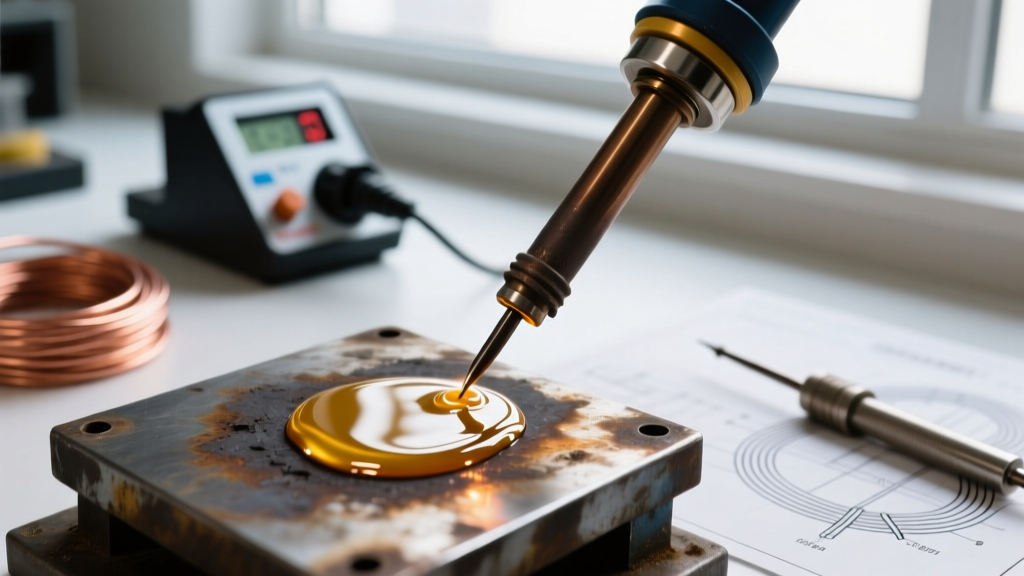
The process of tinning coats the iron plating with a sacrificial layer of solder alloy, sealing it off from atmospheric oxygen. However, the methodology, materials, and thermal management required for tinning a soldering iron differ drastically depending on whether you are using a $25 budget wand or a $400 premium digital station. In this 2026 analysis, we break down the exact protocols for both tiers to maximize tip longevity and joint reliability.
Budget Irons: Tinning the Pinecil V2 and Generic Wands
The Thermal Mass and Plating Problem
Budget soldering irons, such as the highly popular Pinecil V2 (retailing around $26) or generic 60W adjustable wands found on Amazon, have revolutionized hobbyist electronics. However, their tips (often TS100 or 900M clones) feature very thin iron plating to cut manufacturing costs. Furthermore, their PID temperature controllers, while fast on paper, often suffer from thermal overshoot and slow recovery when introduced to a large ground plane.
Because of this thin plating, budget tips are highly susceptible to leaching when used with lead-free alloys, and oxidation burnout when the temperature overshoots during idle periods.
The Budget Tinning Protocol
- Temperature Restriction: Never exceed 320°C (608°F) when tinning a budget tip. Higher temperatures will flash-burn the rosin core of your solder, leaving a carbonized residue that accelerates oxidation.
- Alloy Selection: Strictly use 63/37 Sn-Pb (Tin-Lead) eutectic solder for tinning budget tips. Its low melting point of 183°C (361°F) means the heater does not need to work as hard, preserving the thin iron plating.
- The 'Brass Wool Dunk' Technique: Avoid wet sponges entirely. The thermal shock of a wet sponge on a thin, budget tip can cause micro-fractures in the iron plating. Instead, use a dry brass wool sponge (like the Hakko 599B). Gently plunge the tip into the brass wool 2-3 times to remove old oxide, then immediately apply a thick bead of 63/37 solder.
- Flux Supplementation: Budget tips often lose their factory flux coating quickly. Keep a small pot of Kester 186 RMA liquid flux or Amtech NC-559-V2-TF tacky flux nearby. If the solder refuses to wet the tip, dip the hot tip directly into the tacky flux for 1 second, then re-apply solder.
Premium Stations: Tinning the Weller WE1010NA and JBC CD-2BQE
Active Tips and Instant Thermal Recovery
Premium stations represent a massive leap in thermal dynamics. The Weller WE1010NA (approx. $115) uses active tips where the heating element and sensor are integrated directly into the tip cartridge. The JBC CD-2BQE (approx. $385) takes this further with its proprietary cartridge system, offering thermal recovery in under 1 second. These tips feature massive, heavily reinforced iron plating designed specifically to withstand the aggressive leaching properties of modern lead-free alloys like SAC305 (Tin 96.5%, Silver 3.0%, Copper 0.5%).
The Premium Tinning Protocol
According to Adafruit's Guide to Excellent Soldering, maintaining premium tips requires respecting their advanced thermal capabilities while avoiding chemical degradation from aggressive fluxes.
- Embrace Higher Temperatures for Lead-Free: Premium tips can safely operate at 350°C to 380°C when tinning with SAC305. The instant recovery means the tip does not dwell at high heat unnecessarily; it only draws heavy wattage when thermal transfer is actively occurring.
- The 'Wipe and Coat' Method: Use a high-density cellulose sponge, but do not soak it. The sponge should be damp, not dripping. Wipe the tip at a 45-degree angle to shear off oxidized solder, then instantly feed a generous amount of SAC305 or Sn-Pb solder to the working face before returning it to the stand.
- Standby Management: JBC stations feature intelligent standby modes that drop the tip to 150°C or sleep mode when placed in the cradle. If your premium station lacks this (like older analog models), you must manually dial the temperature down to 250°C during idle periods to prevent the flux from charring and causing 'Black Tip Syndrome'.
Head-to-Head Comparison Matrix
| Feature | Budget Irons (Pinecil V2, Generic) | Premium Stations (Weller, JBC, Hakko FX-951) |
|---|---|---|
| Tip Cost | $1.50 - $4.00 per tip | $12.00 - $45.00 per cartridge |
| Plating Thickness | Thin (approx. 50-100 microns) | Thick (300-800+ microns) |
| Thermal Recovery | 4 to 12 seconds | < 1.5 seconds |
| Recommended Tinning Alloy | 63/37 Sn-Pb (Eutectic) | SAC305 or Sn-Pb (User preference) |
| Cleaning Method | Dry Brass Wool only | Damp Cellulose Sponge or Brass Wool |
| Primary Failure Mode | Pitting from lead-free leaching | Carbon buildup from burned flux |
The 2026 Solder Alloy Debate: SAC305 vs. 63/37 Sn-Pb
When tinning a soldering iron, the alloy you use to create the sacrificial layer matters immensely. The industry standard for commercial manufacturing is SAC305 (lead-free), governed by strict environmental regulations and IPC J-STD-001 standards for electronic assemblies. However, SAC305 contains 96.5% tin. Tin is highly aggressive and will actively leach (dissolve) the iron plating off your soldering tip.
If you use a budget iron with thin plating and tin it exclusively with SAC305 at 360°C, the tin will eat through the iron layer and reach the copper core in as little as 15 to 20 hours of active use. Once the copper is exposed, it dissolves rapidly into the solder pool, creating a pitted, concave tip that is entirely useless. For budget setups, tinning with 63/37 Sn-Pb is a mandatory compromise to extend tip life from a few weeks to several months. Premium tips, with their robust plating, can withstand the leaching effects of SAC305 for hundreds of hours.
Troubleshooting Edge Cases: Black Tip Syndrome and Pitting
Expert Insight: 'A black tip is not a dead tip; it is a tip suffocating under carbonized flux. Do not scrape it with a knife or sandpaper, as you will instantly destroy the iron plating and expose the copper core to catastrophic oxidation.' - SparkFun's comprehensive soldering tutorial
Fixing Black Tip Syndrome (Oxidation/Carbon Buildup)
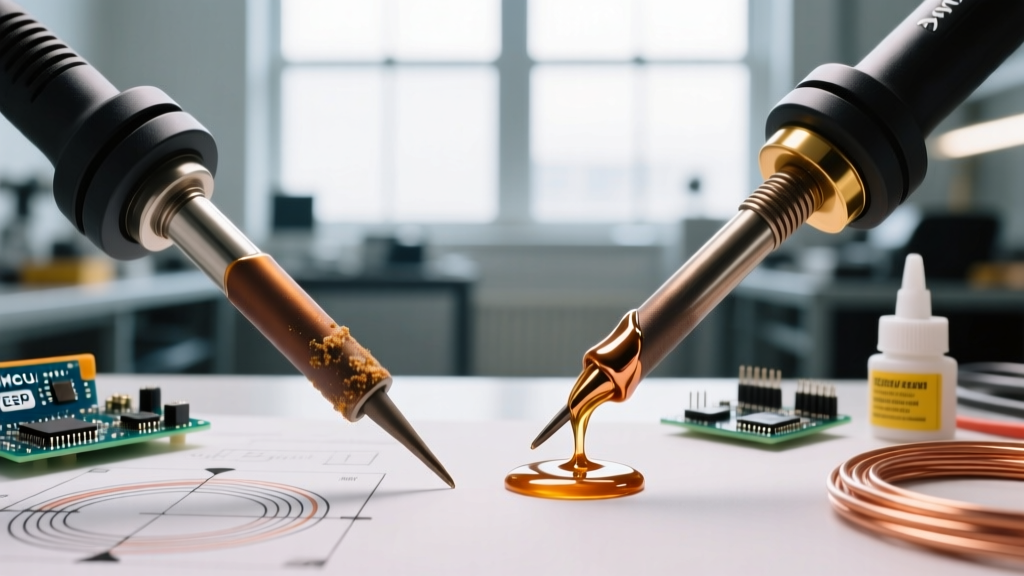
If your tip turns black and solder balls up and rolls off, the iron plating is covered in burned flux and heavy oxidation. The Rescue Protocol: 1. Turn the iron down to 250°C. 2. Apply a massive blob of Amtech NC-559-V2-TF tacky flux or a dedicated tip tinner (like Hakko FS-100) directly to the blackened area. 3. Let the chemical reducing agents in the flux break down the oxide for 10 seconds. 4. Wipe firmly on a brass sponge. 5. Immediately flood the tip with fresh 63/37 Sn-Pb solder. Repeat up to three times if necessary.
Addressing Pitting (Copper Core Exposure)
If you feel a physical crater or rough texture on the tip with your fingernail (when cold), the iron plating has been breached. There is no fix for a pitted tip. The copper core is exposed and will continue to dissolve, altering the thermal profile and potentially contaminating your PCB joints with copper inclusions. The only solution is immediate replacement. To prevent this, never use abrasive materials (files, sandpaper, steel wool) to clean a tip, and avoid using lead-free solder on unverified, ultra-cheap replacement tips.
Frequently Asked Questions
How often should I tin my soldering iron?
You should apply a fresh coat of solder to your tip every single time you place it back in its stand. Never leave a hot tip exposed to the air with only a thin, oxidized layer of old solder. The fresh solder acts as a physical oxygen barrier.
Can I use rosin-core solder wire for tinning, or do I need separate paste?
High-quality rosin-core solder wire (like Kester 44 or Multicore) is perfectly adequate for routine tinning. However, if you are actively trying to rescue a heavily oxidized budget tip, a dedicated tip tinner paste (which contains a high concentration of aggressive reducing agents and solder powder) is vastly superior.
Does the shape of the tip affect how I should tin it?
Yes. Chisel and bevel tips have a large, flat working face that is easy to flood with solder. However, ultra-fine conical tips (often used for 0402 SMD work) have very little surface area. When tinning a conical tip, you must rotate the iron slightly while feeding the solder to ensure the entire conical working surface is coated, preventing localized oxidation on the un-tinned sides.