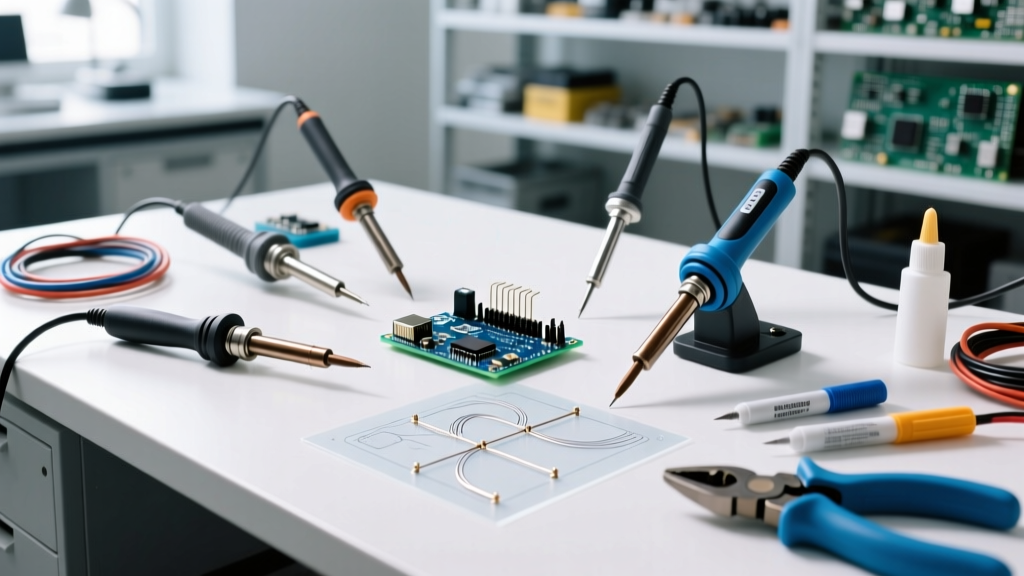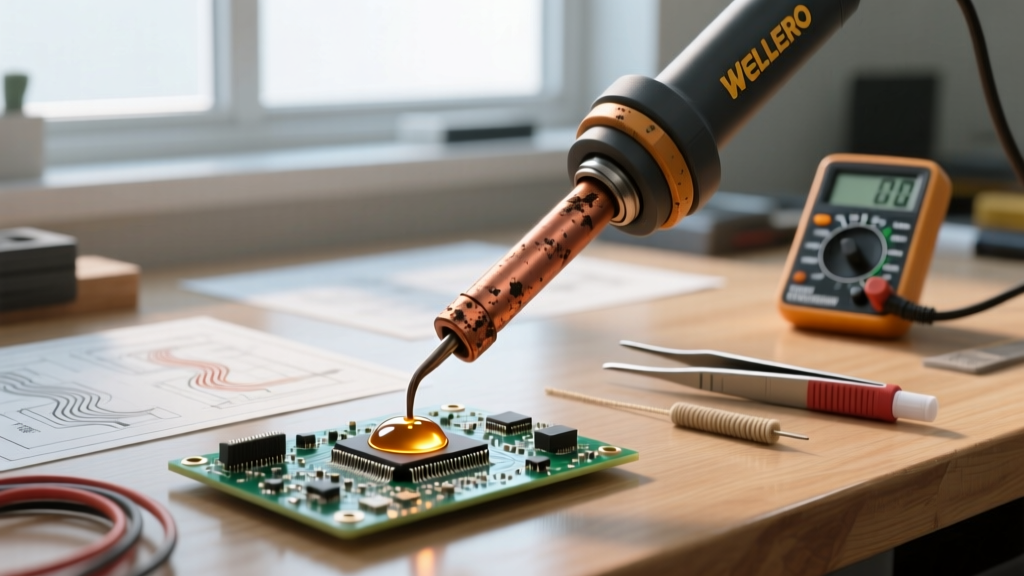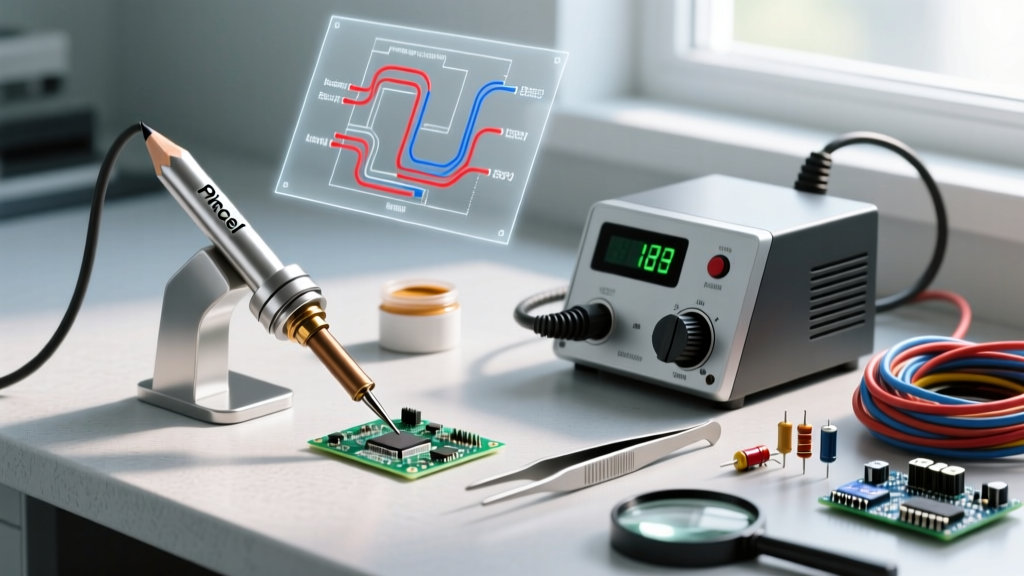

The 'Pincel' Phenomenon: Smart Pencil Irons vs. Benchtop Stations
When makers, repair technicians, and engineering students search for a pincel soldering iron, they are typically encountering a linguistic crossover or common typo for the pencil-style smart soldering iron form factor. In 2026, this market segment is entirely dominated by open-source, USB-C PD (Power Delivery) smart irons like the Pinecil V2, Sequre S60, and the Miniware TS101. These ultra-portable, pencil-shaped tools have disrupted the electronics workbench, challenging legacy benchtop stations that have reigned supreme for decades.
But does a lightweight, DC-powered pencil iron truly replace a 70W AC ceramic benchtop station like the Hakko FX-888D or Weller WE1010NA? To answer this, we must look past the marketing and dive into the thermodynamics, PID loop tuning, tip thermal mass, and ESD (Electrostatic Discharge) safety protocols required for modern PCB rework.
Head-to-Head Specification Matrix
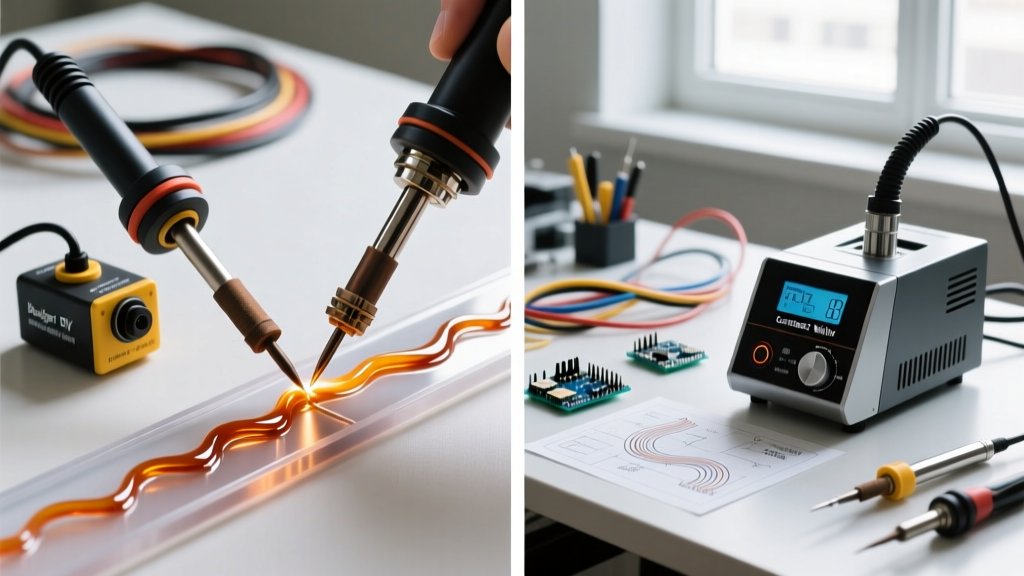
Below is a direct comparison of the leading 'pincel' (pencil-style) smart iron against the two most common traditional benchtop stations found in professional and prosumer labs today.
| Feature | Pinecil V2 (Pencil-Style) | Hakko FX-888D (Benchtop) | Weller WE1010NA (Benchtop) |
|---|---|---|---|
| Architecture | RISC-V (BL706 Chip), Open Source | Proprietary Microcontroller | Proprietary Microcontroller |
| Power Input | USB-C PD (65W-88W) / DC 5.5mm | AC 110V/220V Wall Transformer | AC 110V/220V Wall Transformer |
| Max Wattage | 65W (via 20V 3.25A PD PSU) | 70W | 70W |
| Heat-Up Time (to 320°C) | 8 - 12 Seconds | 45 - 60 Seconds | 40 - 50 Seconds |
| Tip Ecosystem | TS-B2 (Screw-in, low thermal mass) | T18 (Slide-on, high thermal mass) | ET (Screw-on, medium thermal mass) |
| Average 2026 Price | $28 - $35 (Iron only) | $115 - $130 (Kit) | $115 - $125 (Kit) |
Thermal Recovery and PID Loop Dynamics
The most critical difference between a pencil-style smart iron and a traditional station lies in how they manage thermal recovery. When you apply a 3mm chisel tip to a multi-layer PCB ground plane, the tip temperature plummets. The speed at which the iron detects this drop and injects current into the heater core determines your solder joint quality.
The Smart Iron Advantage: Direct DC Injection
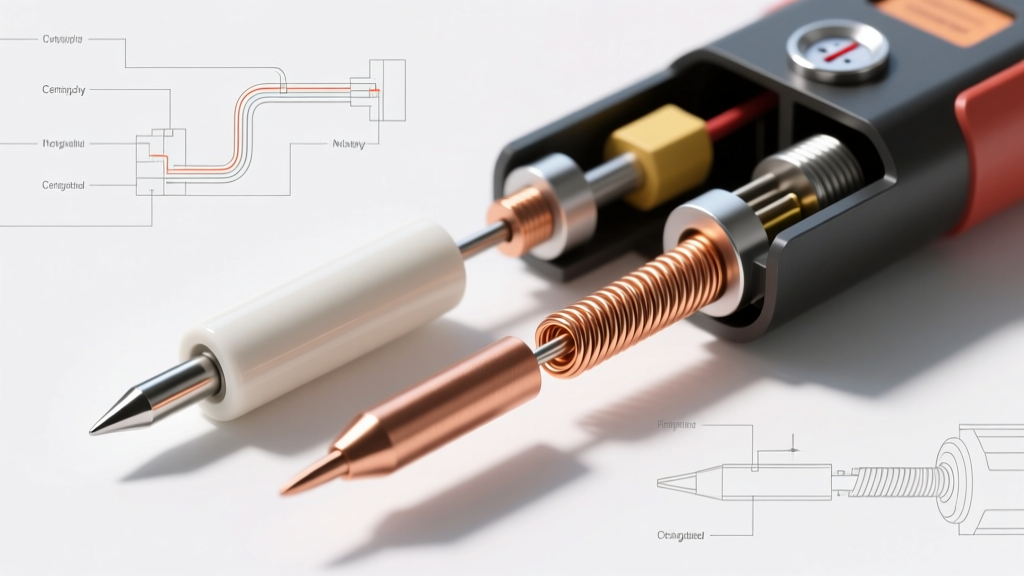
Pencil-style irons like the Pinecil V2 utilize a high-frequency PID (Proportional-Integral-Derivative) controller driven by a 32-bit RISC-V processor. Because they operate on DC voltage, the firmware can pulse the heater cartridge with extreme precision, reading the thermocouple hundreds of times per second. According to the official Pine64 hardware documentation, the V2's PID loop is tuned to aggressively over-drive the heater for milliseconds to counteract thermal drain, resulting in near-instantaneous recovery on standard SMD pads.
The Benchtop Reality: AC Ceramic Heaters
Traditional stations like the Hakko FX-888D use AC-powered ceramic heating elements. While they possess excellent sustained thermal mass, their PID loops are historically slower to react to sudden temperature drops. The thermal lag between the thermocouple (located deep inside the T18 tip sleeve) and the actual tip surface means the station often overcompensates, leading to minor temperature overshoots that can be detrimental to highly sensitive, low-temperature components.
Expert Insight: If you are exclusively soldering 0402 SMD components or fine-pitch QFP chips, the aggressive, fast-twitch PID tuning of a pencil-style smart iron will yield cleaner joints with less dwell time, reducing the risk of pad delamination.
The Ground Plane Challenge: Thermal Mass vs. Wattage
Where the traditional benchtop station fights back is sustained thermal mass. Soldering heavy-gauge wires (e.g., 12 AWG silicone wire for XT60 connectors) or through-hole components on thick copper-backed LED boards requires continuous heat transfer.
- Pencil Irons (TS-B2 Tips): The TS-B2 tips are physically smaller and lighter. They heat up incredibly fast but lack the physical copper mass to sustain heat transfer into a massive ground plane. Even at 65W, a pencil iron will stall and stick to large copper pours.
- Benchtop Stations (T18 / ET Tips): The T18 and ET tips contain significantly more copper mass. A 70W Hakko or Weller station will slowly but steadily push through heavy ground planes without stalling, making them superior for RC hobbies, automotive wiring, and heavy through-hole prototyping.
Tip Ecosystems and Longevity
The consumable cost of soldering is a major factor for high-volume workbenches. Traditional stations use slide-on or screw-on tips that are relatively thick and durable. A genuine Hakko T18 tip, when maintained with proper brass wool cleaning and regular tinning, can easily last 12 to 18 months of daily use.
Conversely, the TS-B2 tips used by most pencil-style irons are incredibly thin to facilitate rapid heat transfer. While they offer unparalleled tactile feedback and precision, the plating is thinner. Users frequently report tip degradation (pitting and de-wetting) after 4 to 6 months of heavy use, especially if exposed to lead-free, high-temperature solder pastes. However, third-party TS-B2 clones are exceptionally cheap (often under $1.50 each in bulk), offsetting the shorter lifespan.
ESD Safety and Workbench Integration
A frequently overlooked aspect of the 'pincel' vs. station debate is Electrostatic Discharge (ESD) safety. When working on bare MOSFETs, CMOS logic, or expensive microcontrollers, your soldering iron tip must be grounded to the same equipotential plane as your ESD mat and wrist strap.
Benchtop stations achieve this via a dedicated 3-prong AC grounding wire that runs directly from the station chassis to the tip sleeve. Pencil-style irons, however, rely on the grounding pin of your USB-C power supply. If you use a cheap, ungrounded, or floating USB-C laptop charger, your iron tip may carry a floating AC voltage or static charge, which can instantly destroy sensitive silicon. The ESD Association strictly mandates verified grounding paths for all soldering equipment used in professional electronics manufacturing. To use a pencil iron safely on an ESD bench, you must either use a verified grounded USB-C PSU or utilize the dedicated ground wire port found on the Pinecil V2, connecting it directly to your bench's earth ground lug.
Compliance with IPC Standards
Whether you choose a smart pencil iron or a traditional station, the ultimate metric of success is joint reliability. The IPC J-STD-001 standard for soldered electrical and electronic assemblies dictates strict requirements for wetting, fillet formation, and the absence of thermal damage to the PCB substrate. Because pencil-style irons allow for exact, per-degree temperature profiling and rapid thermal recovery, they actually make it easier for technicians to comply with IPC Class 2 and Class 3 requirements on dense SMD boards, provided the operator uses the correct flux and tip geometry.
2026 Buying Framework: Which Should You Choose?
Use this decision matrix to finalize your workbench setup based on your specific engineering or hobbyist needs.
Choose the Pincel (Pencil-Style) Smart Iron If:
- You focus on SMD and Micro-Soldering: You primarily work with 0402/0603 passives, QFN chips, and fine-pitch connectors.
- You value Portability: You do field repairs, drone racing pit work, or travel to hackathons and need a kit that fits in a jacket pocket.
- You want Open-Source Customization: You enjoy flashing custom IronOS firmware, tweaking PID parameters, and creating custom boot logos.
- You are on a strict budget: You already own a high-quality 65W USB-C PD laptop charger and just need the $30 iron handpiece.
Choose the Traditional Benchtop Station If:
- You solder heavy-gauge wires and large connectors: You build RC vehicles, repair automotive harnesses, or solder thick copper bus bars.
- You require strict, plug-and-play ESD compliance: You run a professional repair shop where verified, continuous grounding is a liability requirement.
- You prefer high thermal mass: You frequently work on multi-layer boards with massive internal ground planes that drain heat from smaller tips.
- You want a unified, all-in-one package: You want a single box that includes the iron, stand, sponge, and power supply without hunting for compatible USB-C bricks.
Frequently Asked Questions
Can a pencil-style iron melt lead-free solder?
Yes. By setting a smart pencil iron to 360°C - 380°C and utilizing a high-quality, no-clean or rosin-based flux, you can easily melt SAC305 lead-free solder. However, the thinner TS-B2 tips will degrade faster at these elevated temperatures compared to the thicker T18 tips on a Hakko station.
Is the 'pincel' search term referring to a specific brand?
No. 'Pincel' is Spanish and Portuguese for 'brush', but in the context of English electronics searches, it is almost universally a typo or phonetic spelling of 'pencil' (referring to the pencil-grip form factor) or a direct misspelling of the 'Pinecil' brand by Pine64. The advice in this guide applies to the entire category of USB-C smart pencil irons.
Do I need a special power supply for a USB-C soldering iron?
You need a USB-C Power Delivery (PD) 3.0 or 3.1 charger capable of outputting 20V at 3.25A (65W) to unlock the full thermal potential of the iron. Standard 5V/2A phone chargers will limit the iron to 10W, rendering it useless for anything other than the smallest SMD jumper wires.