
The 'Soldering Iron With Flux' Misconception
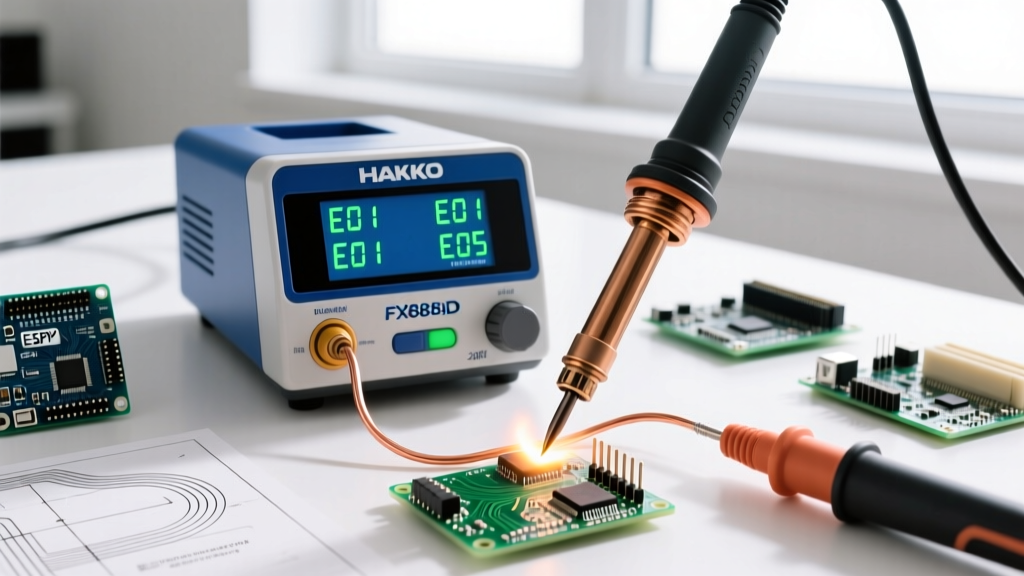
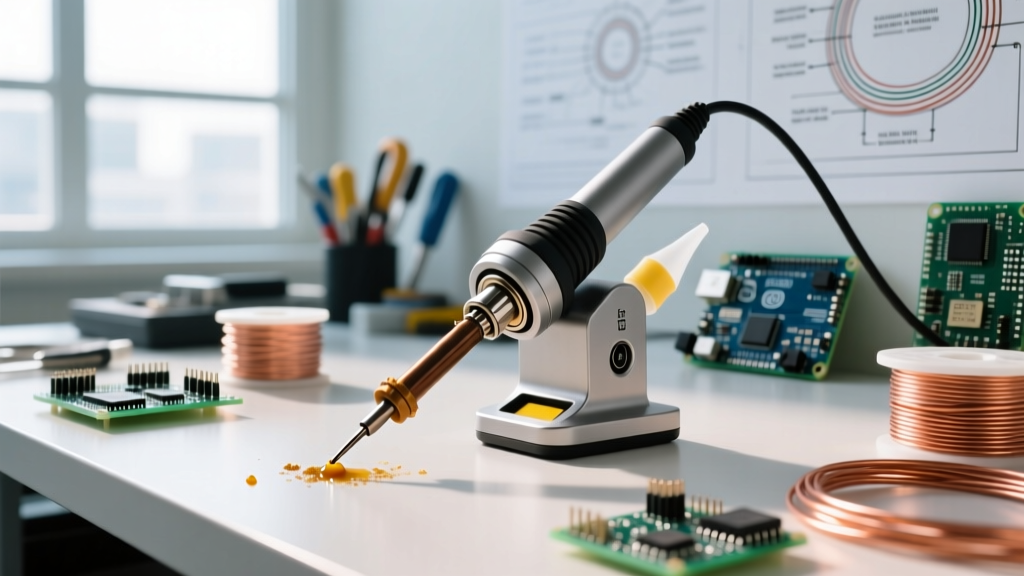
When beginners and hobbyists search for a soldering iron with flux, they are usually envisioning a magical tool that automatically dispenses flux directly from the tip alongside the solder. In reality, 99% of electronic soldering relies on a flux delivery ecosystem rather than an integrated tool. The flux is either embedded inside the solder wire (rosin core) or applied externally via gels, liquids, or pastes.
Expert Insight: True integrated flux-feed soldering irons do exist, but they are highly specialized tools reserved for BGA rework pens or heavy-duty plumbing/HVAC applications. For standard PCB assembly and microelectronics, your 'flux system' is dictated by the chemistry of your solder wire core and your external flux supplements.
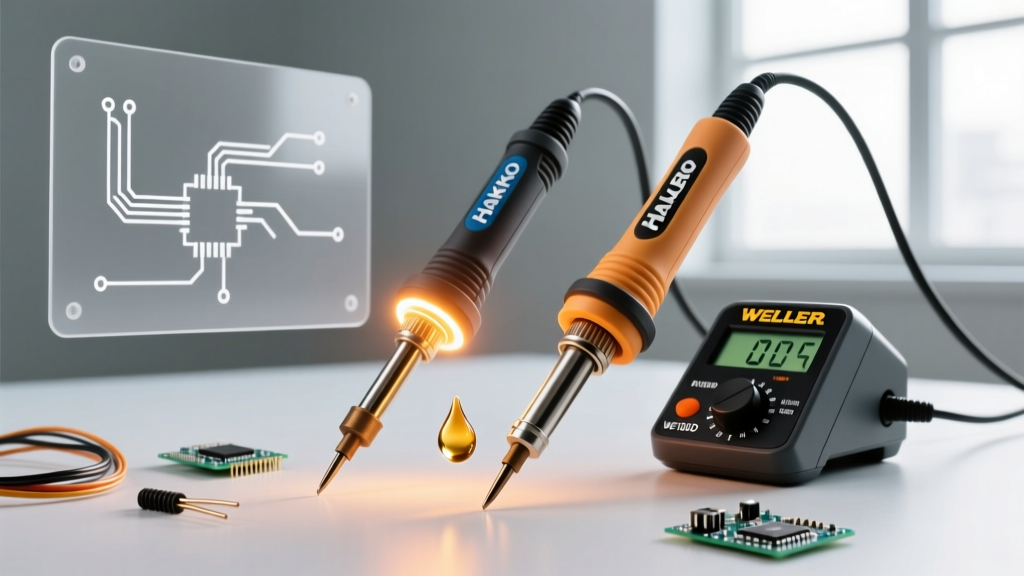
In this 2026 analysis, we break down the budget versus premium flux delivery ecosystems. We will examine the exact hardware, chemical classifications, and real-world failure modes you will encounter at both price points, helping you decide where to invest your money.
Budget Tier Analysis: The Sub-$75 Flux Ecosystem
The budget tier is dominated by capable open-source hardware and generic, mass-produced solder wires. While you can achieve functional joints, the chemistry and thermal limitations introduce specific edge cases that require manual compensation.
The Budget Loadout & Pricing
- The Iron: Pine64 Pinecil V2 ($26) or a generic 60W adjustable ceramic heater iron ($25). The Pinecil V2 offers exceptional value with its RISC-V processor and rapid thermal recovery.
- The Solder (Flux Core): Generic 60/40 (Sn60/Pb40) Rosin Core Wire, 0.8mm ($12 for 100g). Often uses a basic ROL1 (Rosin, Mildly Activated) flux core.
- External Flux Supplement: MG Chemicals 8341 No-Clean Liquid Flux Pen ($9).
- Total Ecosystem Cost: ~$47.00
Real-World Failure Modes & Edge Cases
When using budget liquid flux pens alongside cheap rosin-core wire, the primary failure mode is flux splatter and localized boiling. Budget liquid fluxes often use aggressive alcohol-based solvents that boil violently at 78°C. When a 350°C iron tip touches the flux, it micro-explodes, sending sticky, mildly acidic droplets across your PCB.
Furthermore, budget 60/40 solder wire often suffers from inconsistent core extrusion. You may find sections of the wire with zero flux, followed by sections with too much, leading to erratic wetting and cold joints on thermal-heavy ground planes. To mitigate this, budget users must manually pre-tin pads and rely heavily on 99% isopropyl alcohol (IPA) and a stiff brush to clean the conductive residues left behind by ROL1 fluxes.
Premium Tier Analysis: The $400+ Precision Setup
The premium tier shifts the focus from mere melting to precise chemical activation and thermal stability. High-end stations pair with aerospace-grade solder alloys and thixotropic gel fluxes that adhere to IPC J-STD-004B standards for high-reliability assemblies.
The Premium Loadout & Pricing
- The Iron: JBC CD-2BE Precision Station ($395). Features a cartridge-based tip system where the heater is integrated directly into the tip, offering near-instantaneous thermal recovery.
- The Solder (Flux Core): Chip Quik SMD4300AX10 SN63/Pb37 Eutectic Wire ($35). Features a highly consistent, no-clean ROL0 flux core.
- External Flux Supplement: Amtech NC-559-V2-TF No-Clean Tack Flux Gel ($28). Amtech (owned by Indium Corporation) provides industry-leading thixotropic gel fluxes.
- Total Ecosystem Cost: ~$458.00
The Chemistry & Thermal Advantage
The defining feature of the premium tier is the use of thixotropic gel fluxes. Unlike budget liquids, Amtech NC-559-V2-TF does not run or boil. It stays exactly where you dispense it. Its activators are engineered to remain dormant until they reach the precise reflow temperature of the solder alloy (183°C for SN63/Pb37, or 217°C for SAC305 lead-free).
When paired with a JBC station, the iron's microprocessor detects the thermal load of a multi-layer PCB and injects maximum wattage only when needed. This prevents the 'scorching' of premium no-clean fluxes. If you burn a no-clean flux by leaving a budget iron on it for too long, the flux turns into a hard, dark amber shell that is nearly impossible to remove and can trap corrosive activators against the copper pad. The JBC's precise temperature profiling prevents this chemical degradation entirely.
Head-to-Head Comparison Matrix
| Feature | Budget Ecosystem (<$75) | Premium Ecosystem ($400+) |
|---|---|---|
| Iron Thermal Recovery | Moderate (Ceramic heater, 2-4 sec delay) | Instantaneous (Cartridge integrated heater) |
| Flux State | Liquid / Basic Rosin Core | Thixotropic Gel / ROL0 Core |
| Boil/Splatter Risk | High (Aggressive solvents) | Negligible (Controlled activation) |
| IPC Classification | Often ROL1 (Requires cleaning) | ROL0 (True No-Clean) |
| Shelf Life (Opened) | 6-12 months (Solvent evaporation) | 24+ months (Gel stability) |
| Best Use Case | Through-hole, basic wire splicing | 0402 SMD, BGA, QFN, multi-layer PCBs |
The Exception: True Integrated Flux-Feed Irons
To fully address the soldering iron with flux keyword, we must acknowledge the tools that actually do integrate flux into the handpiece. These are not used for standard electronics.
1. BGA Rework Flux Pens
Tools like the Pace or specialized JBC BGA pens feature a hollow tip connected to a syringe barrel filled with liquid or gel flux. By pressing a trigger on the pen, the operator can flood a BGA footprint with flux without lifting the tool. This is critical for reballing microprocessors where lifting the pen to dip into a flux jar would disrupt the thermal profile and risk shifting the component.
2. Plumbing and HVAC Flux-Feed Irons
For copper pipe soldering, tools like the Lenox or specialized Worthington propane-trigger irons feature a solid flux core inside a thick solder rod, or an external flux-paste reservoir. The high temperatures (up to 600°F) and massive thermal mass of copper pipes require aggressive, acid-based fluxes (like zinc chloride) that would instantly destroy electronic PCBs. Never use plumbing flux or plumbing flux-feed irons on electronics.
Actionable Decision Framework: Which Setup Do You Need?
Choosing between budget and premium flux ecosystems comes down to your component density and reliability requirements.
Choose the Budget Setup If:
- You are soldering through-hole components (DIP ICs, capacitors, pin headers).
- You are doing basic wire harness splicing or RC hobby electronics.
- You are comfortable cleaning your PCBs with IPA and a toothbrush after every session.
- Your budget strictly caps at $75.
Choose the Premium Setup If:
- You are working with SMD components smaller than 0805 (e.g., 0402, 0201).
- You are drag-soldering QFP chips or reflowing QFN/BGA pads.
- You require IPC-A-610 Class 2 or Class 3 reliability standards.
- You want a true 'no-clean' workflow where the flux residue is cosmetically acceptable and non-conductive, saving you hours of cleaning time.
Frequently Asked Questions
Can I use plumbing flux paste with my electronics soldering iron?
Absolutely not. Plumbing fluxes are typically inorganic acid (IA) based. While they clean oxidized copper pipes beautifully, they will cause rapid galvanic corrosion and dendrite growth on PCB traces, leading to short circuits and board death within weeks.
Why does my budget solder wire spit and pop?
This is caused by the rapid expansion of the solvent inside the flux core. Budget wires often use cheaper, highly volatile solvents. To minimize this, lower your iron temperature to the minimum required to melt the alloy (around 320°C for 60/40) and apply the solder to the pad and lead, not directly to the iron tip.
Does premium no-clean flux really not need cleaning?
According to Kester and IPC guidelines, true ROL0 no-clean fluxes are designed to be left on the board. The residue is inert and non-conductive. However, if you plan to apply a conformal coating over the PCB later, you must clean the no-clean residue, as the coating will not adhere properly to the flux film.