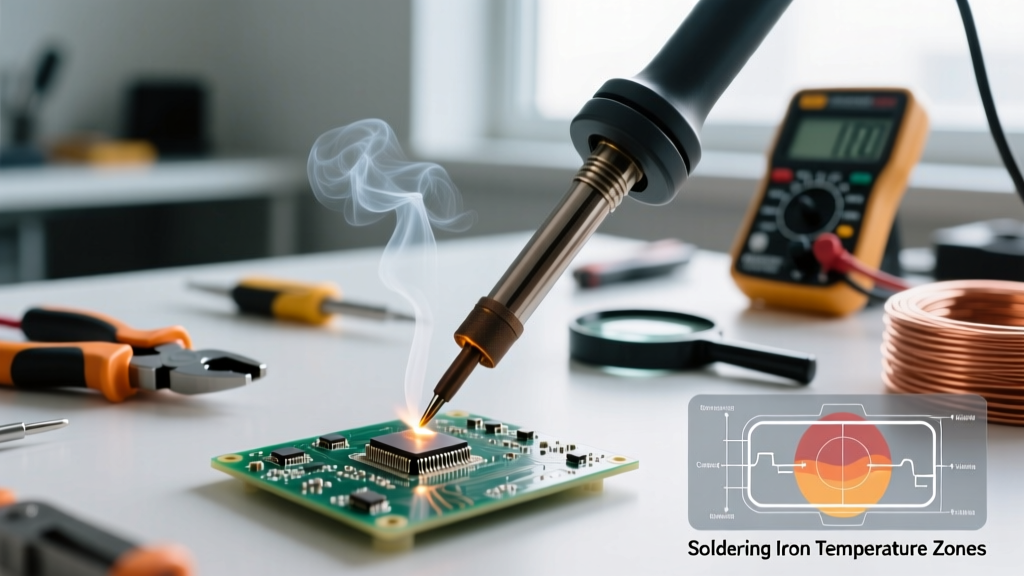

The Benchmark of the Hobbyist Workbench
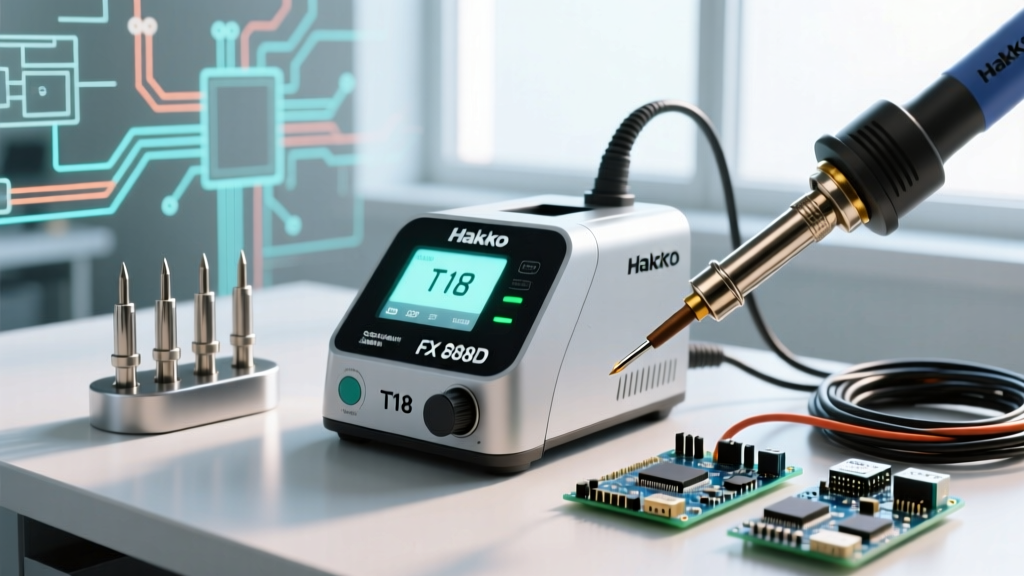
Since its transition from the analog FX-888 to the digital domain, the Hakko soldering station FX 888D has remained a dominant force on electronics workbenches worldwide. As of 2026, the market is heavily saturated with USB-C PD portable irons and T12 clone stations, yet the FX-888D retains a fiercely loyal following among professionals and serious hobbyists. Why? The answer lies in its heavy-duty transformer architecture, unmatched T18 tip ecosystem, and long-term repairability.
In this feature deep dive, we bypass the marketing copy and tear into the actual engineering of the FX-888D. We will examine its thermal recovery metrics, decode the digital interface's hidden calibration features, and identify the specific hardware failure modes that plague units after years of heavy use.
Digital Interface & Control Logic
The most obvious upgrade over its predecessor was the dual-LED digital display and the two-button interface. However, the true value of this digital frontend is not just readability; it is precision calibration.
Offset Mode and IPC Compliance
For technicians working to IPC J-STD-001 standards, tip temperature verification is mandatory. The FX-888D features a hidden 'Offset Mode' that allows you to calibrate the station's internal thermocouple reading against an external K-type thermocouple placed on the tip.
- Entering Offset Mode: Hold the 'UP' arrow while powering on the station.
- Calibration Range: ±50°C (±90°F).
- Password Lock: The station includes a 3-digit password lock to prevent unauthorized technicians from altering the offset on a production floor.
Expert Insight: Never use the Offset Mode to 'boost' the temperature beyond the station's safe limits to compensate for a heavily oxidized tip. Offset is strictly for sensor drift calibration. If your tip reads 40°C lower than the set point, replace the tip and clean the ceramic heater shaft.
Thermal Dynamics: 70W Transformer vs. Modern PD Stations
In 2026, a 65W USB-C PD iron like the Pinecil V2 can match the FX-888D's heat-up time (roughly 22 seconds to 350°C). So why choose a bulky, 2.2 lb station? The answer is Electromagnetic Interference (EMI) and sustained thermal mass recovery.
The FX-888D utilizes a traditional 70-watt iron-core step-down transformer rather than a high-frequency switching power supply. While this makes the unit heavy, it produces virtually zero high-frequency EMI noise on the AC mains or the DC heater line. When soldering sensitive RF circuits, high-impedance audio preamps, or precision analog sensors, the clean DC output of the FX-888D prevents the ground-bounce and noise injection commonly caused by cheap switching power supplies found in budget T12 clones.
The T18 Tip Ecosystem: Matching Geometry to Thermal Mass
The Hakko T18 series is arguably the most successful soldering tip line in history. The FX-888D's 70W heater can drive the entire range, but selecting the wrong tip geometry is the number one cause of 'cold joint' complaints. Below is a practical selection matrix for common PCB tasks.
| Tip Model | Geometry | Best Application | Thermal Mass |
|---|---|---|---|
| T18-B | Conical | Fine-pitch 0402 SMD (Not recommended for general use due to poor thermal transfer) | Low |
| T18-D24 | Chisel (2.4mm) | Through-hole, 0805/0603 SMD, general wire tinning | Medium |
| T18-K | Knife | Drag soldering SOIC/QFP chips, cleaning up solder bridges | Medium-High |
| T18-D52 | Heavy Chisel (5.2mm) | Large ground planes, thick gauge wire (12-14 AWG), XT60 connectors | High |
Real-World Failure Modes and Teardown Insights
Despite its reputation for bulletproof reliability, the FX-888D is not immune to wear. Based on years of teardowns and bench repairs, here are the specific components that fail and how to address them.
1. The Rotary Encoder 'Jump' Issue
The digital interface relies on a mechanical rotary encoder for temperature adjustment. Over time, vaporized flux and dust infiltrate the unsealed encoder housing, causing the temperature setting to 'jump' erratically when turned.
The Fix: Open the station (4 Phillips screws on the bottom), locate the encoder on the blue control PCB, and apply a single drop of DeoxIT D5 contact cleaner. Rotate the shaft 20 times to distribute the fluid. In severe cases, desolder and replace the encoder with a standard 20-pulse Alps mechanical encoder.
2. Sleep Mode Reed Switch Degradation
The included FX-8801 handle features a built-in sleep mode triggered by a magnet and a glass reed switch inside the station's cradle. If your station randomly drops to 200°C (sleep mode) while you are actively soldering, the reed switch glass capsule has likely developed a micro-fracture, or the internal contacts have welded together from inductive kickback.
The Fix: Disable sleep mode in the station's settings menu (hold 'UP' and 'DOWN' while powering on, navigate to the sleep timer, and set to 'OFF'). Alternatively, replace the reed switch on the main transformer PCB.
2026 Market Context: FX-888D vs. Modern Alternatives
How does the legendary Hakko soldering station FX 888D stack up against modern alternatives in the current market? Retailing between $105 and $115 USD, it occupies a specific niche.
| Feature | Hakko FX-888D | Pinecil V2 (USB-C PD) | Quicko T12 Clone |
|---|---|---|---|
| Power Source | 120V AC Transformer (70W) | 65W USB-C PD / DC 12-24V | 24V DC Switching PSU (72W) |
| Heat-up Time (350°C) | ~22 Seconds | ~18 Seconds | ~11 Seconds |
| EMI Output | Extremely Low | Low (depends on PD brick) | Moderate to High |
| Tip Cost (Genuine) | $8 - $12 (T18) | $3 - $5 (TS100/Pine) | $15 - $25 (Hakko T12) |
| Repairability | Excellent (Standard components) | Poor (SMD RISC-V SoC) | Moderate (STM32 clones) |
Authenticating Your Station: The Counterfeit Epidemic
Because of its massive success, the FX-888D is one of the most counterfeited tools in electronics. According to Hakko USA's counterfeit warnings, fake units often use substandard heating elements that can overheat, melt the handle, or deliver lethal AC mains voltage to the user if the transformer insulation fails.
How to spot a fake in 2026:
- The PCB Color: Genuine FX-888D control boards are distinctly blue. Many older or cheaper counterfeits use green or brown PCBs.
- The Transformer: A genuine 70W iron-core transformer is heavy. If the station feels suspiciously light (under 1.5 lbs), it likely contains a cheap switching power supply.
- The Heater Core: Genuine Hakko B2032 ceramic heaters have a specific dark grey finish with crisp white printing. Fakes often have a chalky, light-grey appearance and are prone to snapping when changing tips.
Final Verdict
The Hakko soldering station FX 888D is no longer the fastest iron on the market, nor is it the most portable. However, its heavy transformer architecture provides a level of EMI cleanliness and long-term mechanical reliability that modern switching stations struggle to replicate. For permanent bench setups, educational labs, and technicians working on sensitive analog or RF hardware, it remains an indispensable, repairable workhorse that justifies its $110 price tag through sheer longevity.