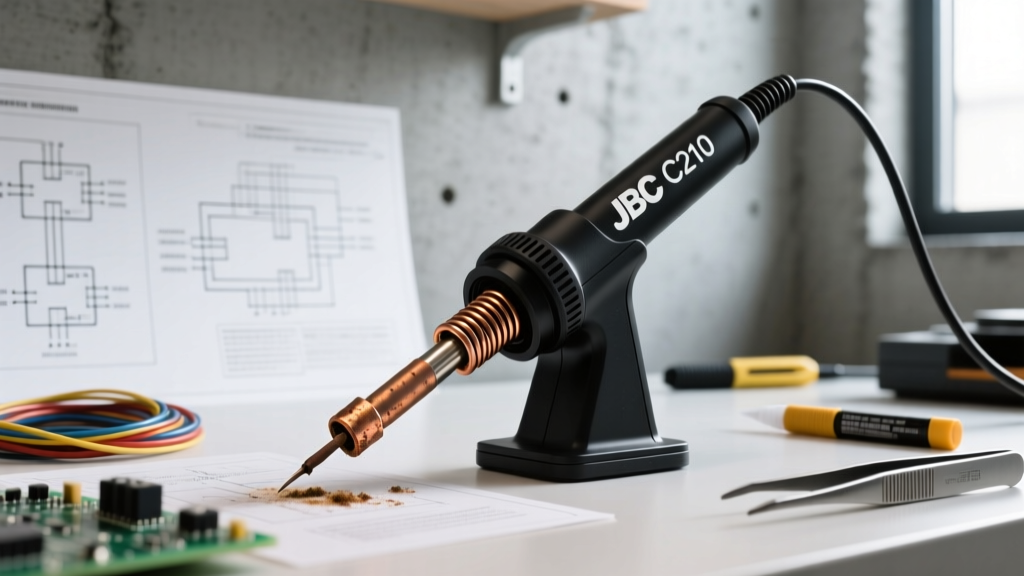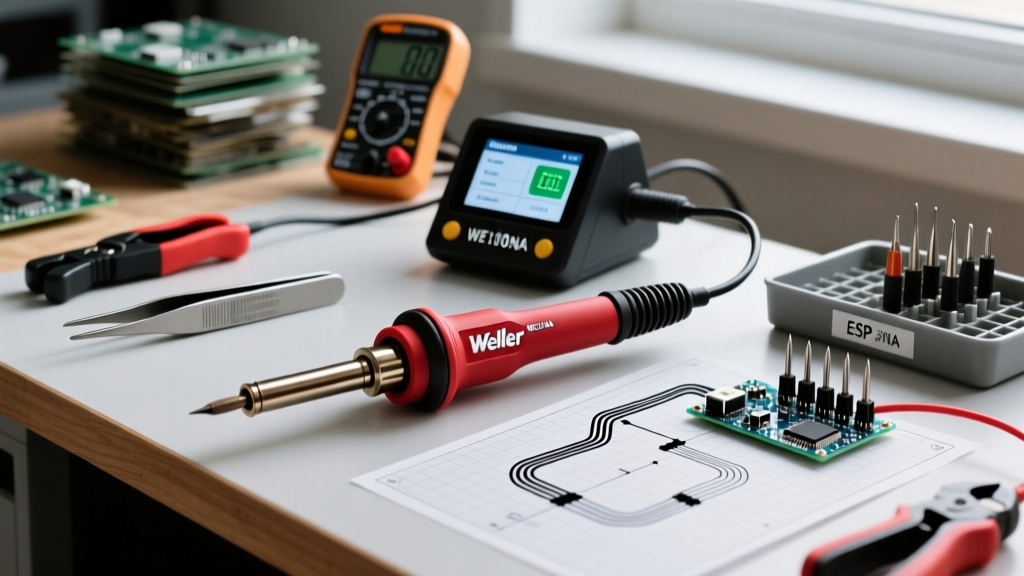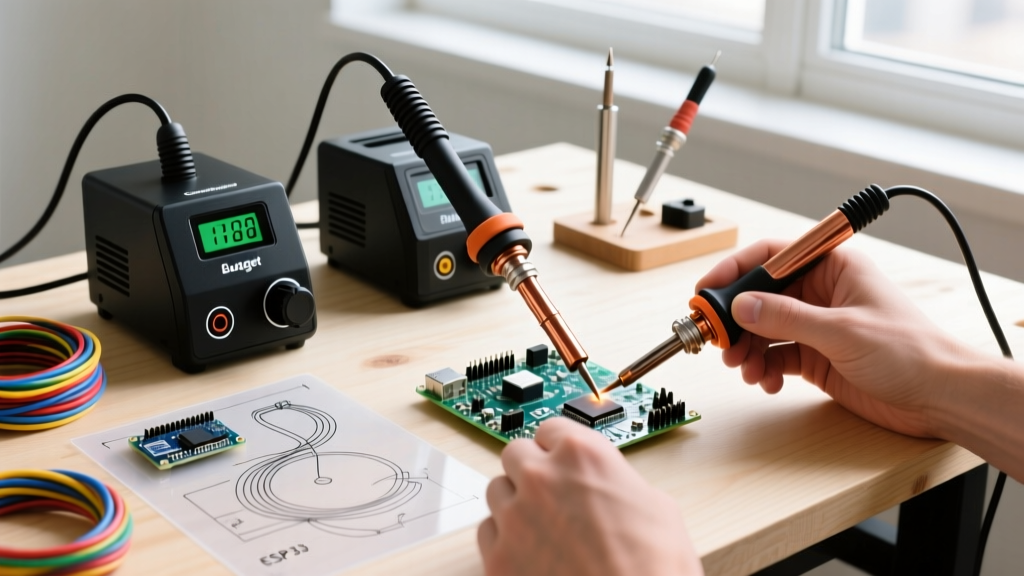

When engineers and hobbyists discuss soldering iron uses, the conversation often defaults to basic through-hole component assembly. However, in 2026, the reality of electronics fabrication and repair spans a massive thermal spectrum. From reworking microscopic 0201 surface-mount devices (SMD) to soldering heavy-gauge 8 AWG silicone wires for high-discharge RC LiPo batteries, the thermal requirements vary drastically. Choosing between a budget-friendly portable iron and a premium benchtop station is not merely a matter of brand prestige; it is a fundamental decision that dictates which soldering iron uses are actually viable for your workflow.
This analysis breaks down the most demanding soldering iron uses and evaluates how budget tools (under $100) and premium stations ($300 to $900+) handle the thermal dynamics, tip longevity, and precision required for modern electronics.
The Core Soldering Iron Uses in Modern Electronics
Before comparing hardware, we must categorize the primary soldering iron uses encountered in contemporary DIY and professional environments. Each use case demands a specific thermal mass and recovery time.
- Micro-SMD & BGA Rework: Soldering 0402 or 0201 components, QFN chips, and fine-pitch LQFPs. Requires pinpoint accuracy, low thermal mass tips, and rapid temperature stabilization to prevent pad lifting.
- Standard PCB Assembly & Prototyping: Through-hole resistors, DIP ICs, and standard 0805/1206 SMD passives. The most common soldering iron use, requiring moderate thermal mass and consistent baseline temperatures.
- High-Mass Ground Planes & RF Shields: Soldering connectors to multi-layer boards with heavy internal copper pours. Requires massive thermal delivery to overcome the board's heat-sinking effect.
- Heavy-Gauge Wiring & Automotive: Tinning 10 AWG to 8 AWG wires, soldering XT90/AS150 connectors, and automotive grounding lugs. Demands high continuous wattage and large chisel tips.
Application Matrix: Budget vs. Premium Tool Performance
The following table maps specific soldering iron uses to recommended budget and premium tiers, highlighting the real-world performance gaps based on current 2026 market pricing and thermal testing.
| Primary Soldering Iron Use | Budget Tier (Under $100) | Premium Tier ($300+) | Thermal Reality & Failure Modes |
|---|---|---|---|
| 0402 SMD & QFN Rework | Pinecil V2 ($28) / KSGER T12 ($55) | JBC CD-2BQE ($680) / Hakko FX-951 ($330) | Budget tools suffer from 2-3 second thermal lag on ground pins, risking cold joints. Premium JBC C245 tips recover in <0.5 seconds. |
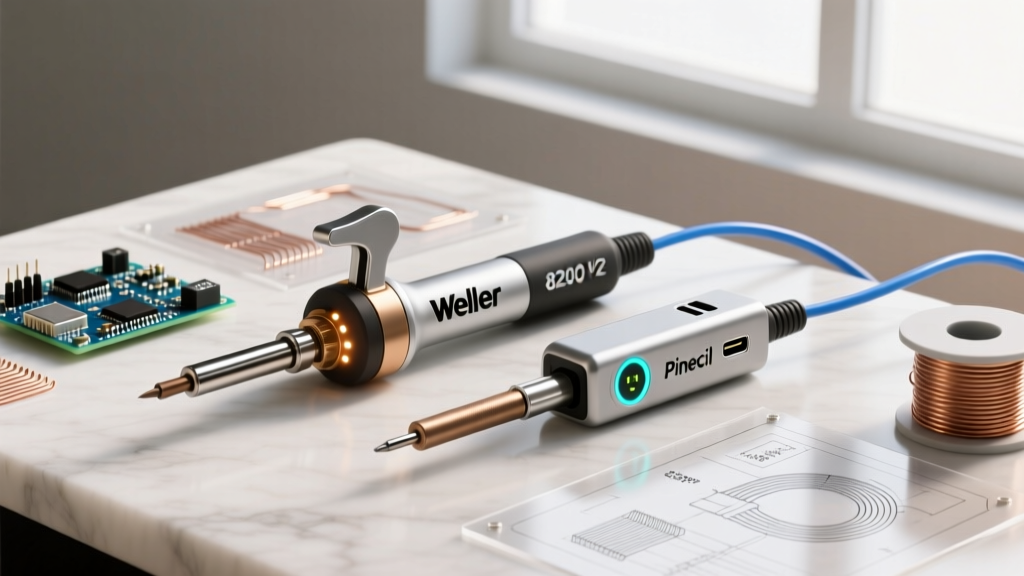
| Standard Through-Hole | Hakko FX-888D ($115) / Pine64 ($28) | Weller WE1010NA ($125) / Metcal MX-5200 ($850) | Budget tools perform adequately here. Premium tools offer ergonomic advantages and longer tip life, but ROI is marginal for casual use. |
| Heavy Copper Pour / RF Shields | Generic 60W-80W Irons ($20) | Metcal MX-5200 / JBC DDSE (High Power) | Budget irons experience thermal runaway and stall, dropping tip temp by >150°F. Metcal's SmartHeat RF induction delivers continuous power directly to the joint. |
| RC Battery Tabs (8 AWG) | Weller WLC100 ($55) | Hakko FX-951 with heavy chisel / American Beauty Irons | Budget stations cannot maintain 400°C under heavy load, resulting in oxidized, brittle solder joints. Premium stations sustain high-amperage heat transfer. |
Deep Dive: High-Precision Micro-Soldering
When your primary soldering iron uses involve modern microelectronics, thermal management becomes a science. According to the IPC J-STD-001 standards for soldered electrical and electronic assemblies, achieving proper metallurgical wetting requires precise temperature control without exceeding the thermal degradation limits of the FR-4 substrate or the component's epoxy body.
The Budget Experience: T12 and Pinecil V2
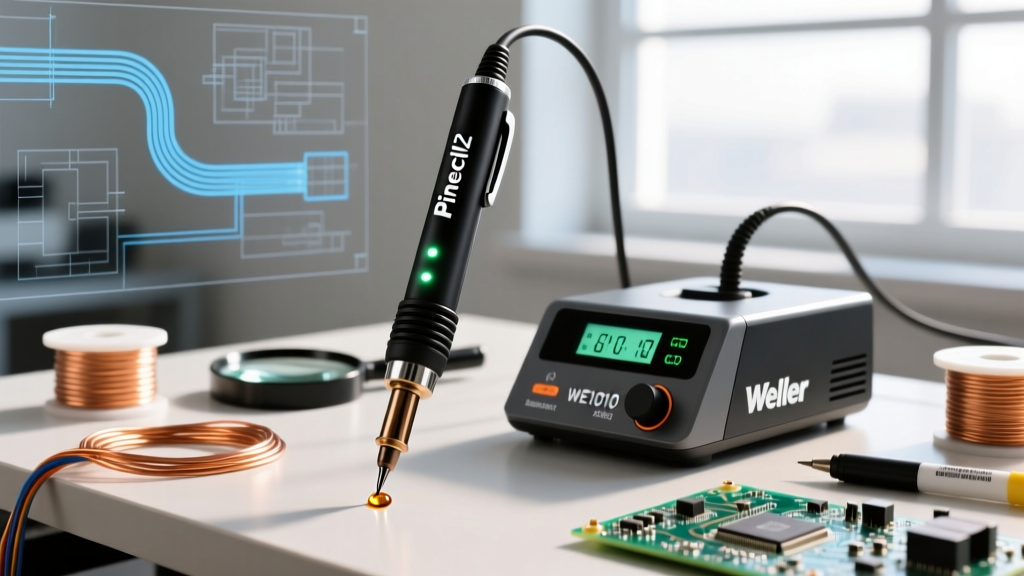
For hobbyists, the Pinecil V2 (running RISC-V architecture and USB-C PD power) and generic T12 stations represent a revolution. At $28 to $55, they offer digital temperature control and rapid heat-up times (reaching 320°C in roughly 8 seconds). However, when tackling a 48-pin QFP chip with ground pads, the thermal mass of the T12 tip drops significantly. The PID controller compensates, but the physical distance between the heater element and the tip apex introduces a 1.5 to 3-second lag. This lag forces users to dwell longer on pads, increasing the risk of delamination.
The Premium Experience: JBC and Hakko
Premium stations like the Hakko FX-951 or the JBC CD-2BQE utilize integrated heater-sensor-tip cartridges. In the JBC ecosystem, the thermocouple is situated millimeters from the tip apex. When the tip touches a heat-sinking ground pad, the station detects the micro-drop in temperature and dumps up to 130W of power instantaneously. The recovery time is virtually imperceptible to the user, ensuring every joint meets IPC Class 2 or Class 3 reliability standards without manual temperature compensation.
Heavy-Duty Applications: Overcoming Thermal Mass
One of the most punishing soldering iron uses is connecting heavy-gauge silicone wires to high-current connectors like the Amass XT90 or QS8. These connectors act as massive heat sinks.
Expert Insight: A common failure mode among beginners using budget 45W-60W irons for RC battery connectors is 'cold-flow' soldering. The iron melts the 63/37 Sn/Pb solder, but the copper connector never reaches the eutectic transition temperature. The result is a dull, grainy joint with high electrical resistance that will melt under a 90A load.
To execute heavy-duty soldering iron uses effectively, you need raw thermal delivery. The Metcal MX-5200 utilizes Radio Frequency (RF) induction heating. The tip itself is a ferromagnetic element; the RF field induces eddy currents directly within the tip's skin depth. When the tip hits a massive copper lug and begins to cool below the Curie point of its alloy core, the magnetic permeability shifts, and the station automatically drives maximum current into the tip. No PID tuning, no thermal lag—just pure, physics-driven heat transfer.
The Hidden Costs of Budget Tools in Professional Environments
If your soldering iron uses transition from weekend projects to daily professional repair or manufacturing, the economics of budget tools shift dramatically.
- Tip Oxidation and Degradation: Budget irons often suffer from poor thermal regulation, leading to temperature overshoot. Sustained temperatures above 400°C rapidly oxidize the iron plating on standard tips. A premium station with tight PID control and sleep modes (like the Weller WE1010) extends tip life by 300% to 400%.
- Downtime and Rework: In high-reliability sectors, such as aerospace or medical device fabrication, adherence to strict guidelines like NASA-STD-8739.3 is mandatory. This standard dictates rigorous visual inspection criteria for solder wetting and fillet formation. Budget irons, prone to micro-fluctuations and tip degradation, yield a higher rate of marginal joints that fail inspection, resulting in costly rework cycles.
- ESD Safety: Premium stations are engineered with strict grounding pathways and isolated transformers to prevent Electrostatic Discharge (ESD) from damaging sensitive MOSFETs and CMOS logic gates. Many ultra-cheap, unbranded irons lack true earth grounding, posing a lethal threat to $500 FPGAs and microcontrollers.
Decision Framework: Matching Your Budget to Your Uses
Do not buy premium gear for basic uses, and do not use budget gear for advanced applications. Use this framework to allocate your capital:
Tier 1: The Hobbyist & Student (Budget: $25 - $60)
Best Tools: Pinecil V2, Miniware TS101, or a basic KSGER T12 station.
Target Uses: Through-hole kits, Arduino/ESP32 wiring, basic 0805 SMD, and household wire splicing.
Verdict: Unbeatable value. The Pinecil V2's ability to run off a 65W USB-C laptop charger makes it the ultimate portable tool for field technicians and students.
Tier 2: The Serious Maker & Freelance Repair Tech (Budget: $110 - $250)
Best Tools: Hakko FX-888D, Weller WE1010NA, or Pinecil V2 with a high-quality power supply and premium T12 tips.
Target Uses: Frequent PCB prototyping, drone repair, automotive sensor splicing, and standard SMD rework.
Verdict: The sweet spot for reliability. The Hakko FX-888D remains an industry workhorse in 2026 due to its robust analog-to-digital thermal stability and massive aftermarket tip ecosystem.
Tier 3: The Professional Lab & High-Volume Rework (Budget: $350 - $900)
Best Tools: JBC CD-2BQE, Hakko FX-951, Metcal MX-5200.
Target Uses: Multi-layer BGA rework, micro-soldering (0201), high-current EV/RC battery assembly, and IPC/NASA-compliant aerospace manufacturing.
Verdict: Mandatory for professionals. The time saved on thermal recovery, combined with the elimination of cold joints and pad-lifting, pays for a JBC or Metcal station within the first few months of commercial use.
Conclusion
Understanding the true spectrum of soldering iron uses is the first step toward building an efficient workbench. While a $30 smart-iron is a marvel of modern open-source hardware for basic tasks, the laws of thermodynamics cannot be bypassed. When your work demands rapid thermal recovery on ground planes, micro-precision on BGA pads, or sheer brute force for heavy-gauge wiring, investing in a premium station with integrated cartridge tips or RF induction is not a luxury—it is a fundamental requirement for reliable, professional-grade electronics assembly.