
The Fundamental Purpose of a Soldering Iron
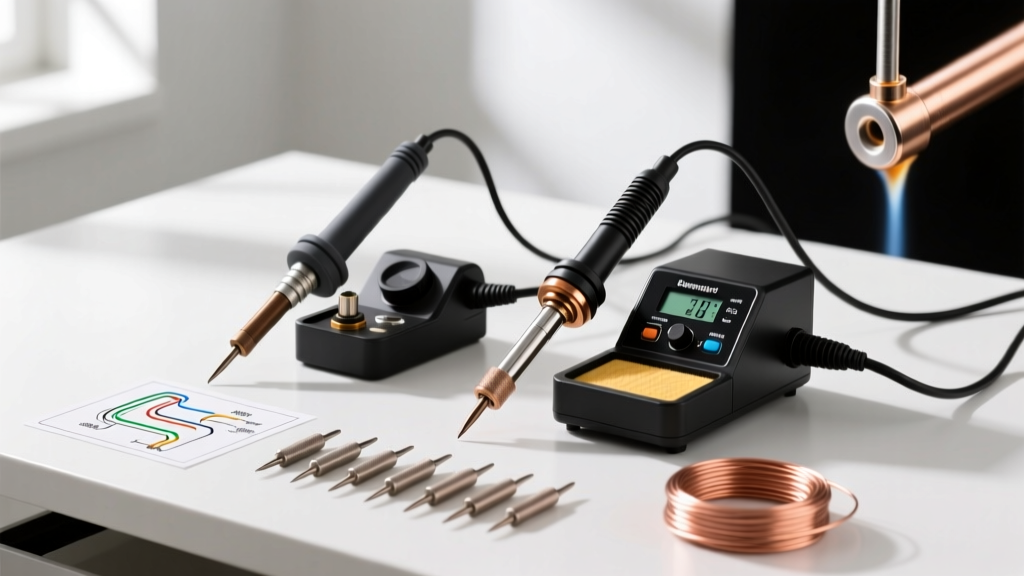
When beginners ask, 'what is a soldering iron used for?' the most common answer is 'joining electronic components.' While true, this barely scratches the surface. Fundamentally, a soldering iron is a localized thermal transfer tool designed to melt a filler metal (solder) to create a metallurgical bond between two or more workpieces without melting the base metals themselves.
However, the thermal requirements for joining a 0402 surface-mount resistor to a printed circuit board (PCB) are vastly different from sweating a 3/4-inch copper water pipe. Using the wrong tool for the job doesn't just yield poor results; it destroys components, creates structural hazards, and ruins expensive equipment. In this 2026 best-of comparison guide, we break down the primary uses for soldering irons and match each application with the exact tools, wattages, and tip geometries required for professional-grade results.
Tier 1: PCB Assembly & Microelectronics (The Precision Tier)
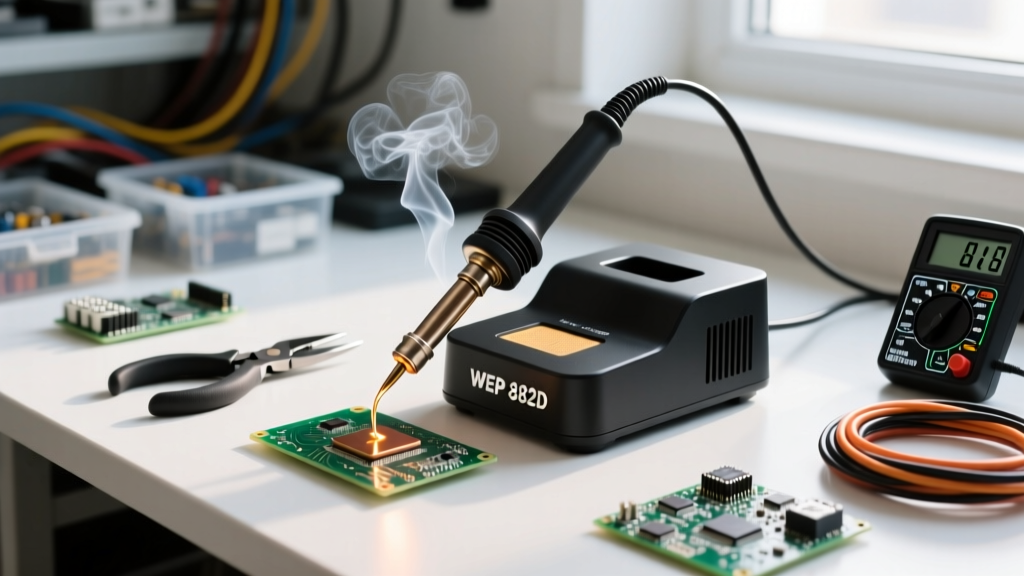
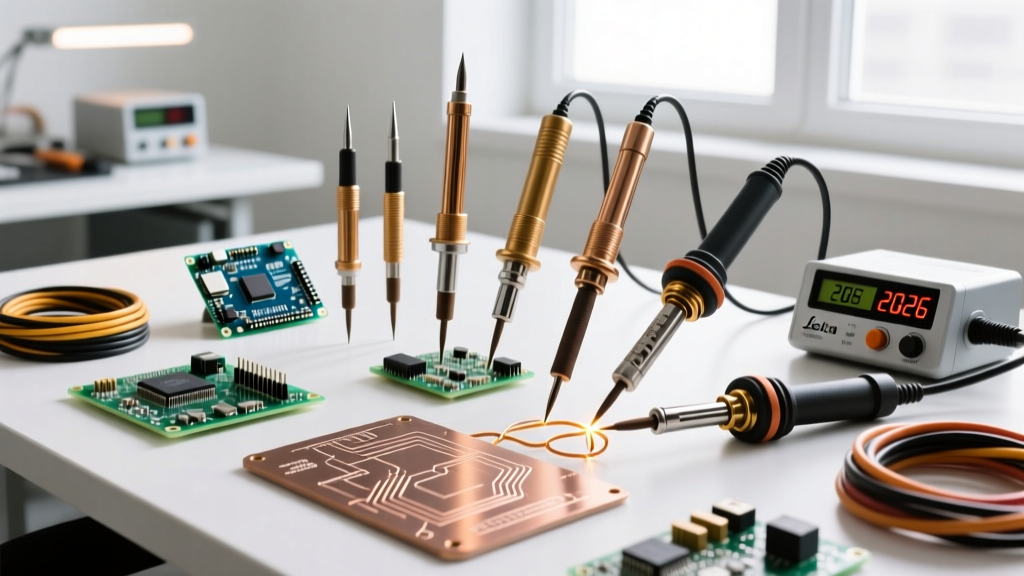
In microelectronics, a soldering iron is used for through-hole component insertion, surface-mount device (SMD) rework, and jumper wire installation. The primary challenge here is thermal sensitivity. Modern FR4 fiberglass boards have a Glass Transition Temperature (Tg) typically between 130°C and 170°C. Applying excessive heat or lingering too long will delaminate the board, lift copper pads, and destroy sensitive silicon dies.
For electronics, you need an iron with rapid thermal recovery, precise digital temperature control, and low thermal mass tips. According to the workmanship standards outlined by IPC (Association Connecting Electronics Industries), a proper Class 2 or Class 3 solder joint requires specific wetting angles and fillet shapes, which are impossible to achieve with an unregulated iron.
Best Tools for Electronics in 2026
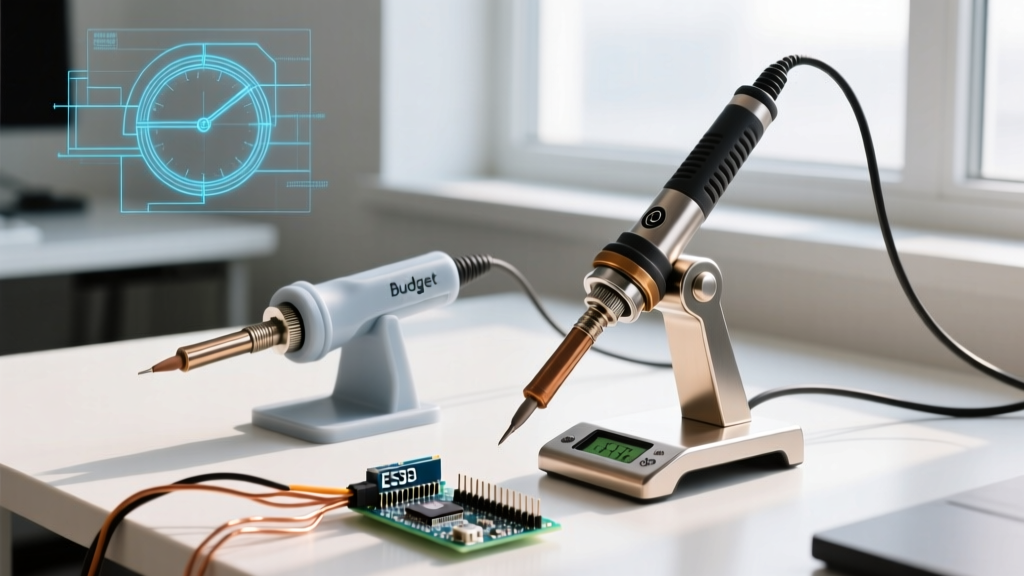
- Pinecil V2 ($26 - $35): The undisputed king of budget smart irons. Powered by a RISC-V processor, it supports USB-C Power Delivery (PD 3.0) up to 65W. It heats to 320°C in under 8 seconds and offers customizable PID curves. Ideal for hobbyists and field repair techs.
- Hakko FX-888D ($115 - $130): The industry-standard benchtop station. It delivers 70W via a ceramic heating element and uses the ubiquitous T18 tip series. Its digital lockout feature prevents unauthorized temperature changes in production environments.
Tier 2: Heavy-Gauge Wiring & Automotive (The Thermal Mass Tier)
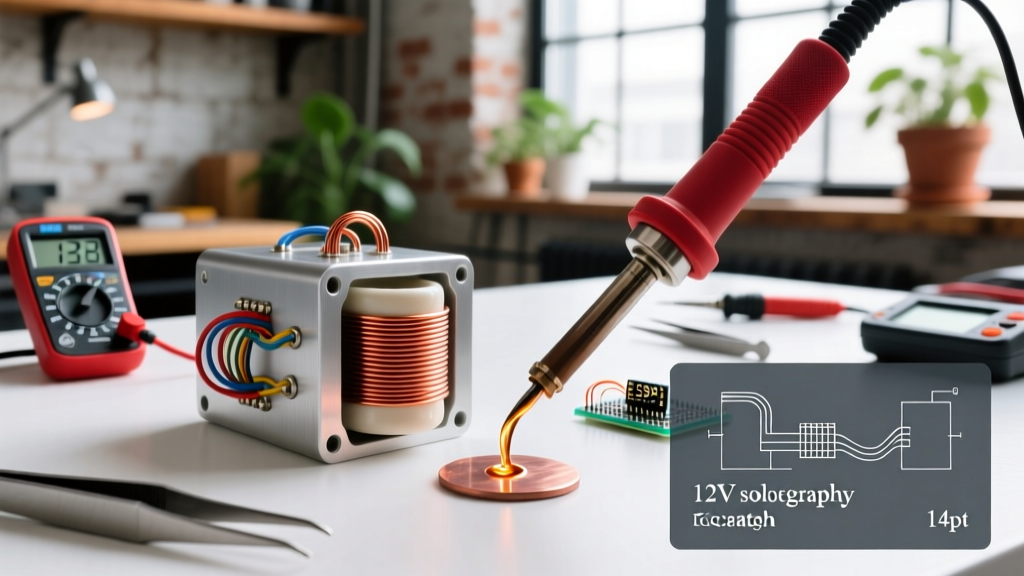
What is a soldering iron used for in automotive and RC hobbies? It is used for terminating heavy-gauge silicone wires (10 AWG to 4 AWG), attaching XT60/XT90 battery connectors, and soldering large ring terminals.
The enemy here is heat sinking. A thick copper wire acts as a massive thermal conductor, pulling heat away from the joint faster than a standard 40W electronics iron can replenish it. If the iron stalls and drops below the solder's liquidus temperature, you get a 'cold joint'—a grainy, high-resistance connection that will fail under high current loads and cause voltage drops or fires.
Best Tools for Heavy Wiring
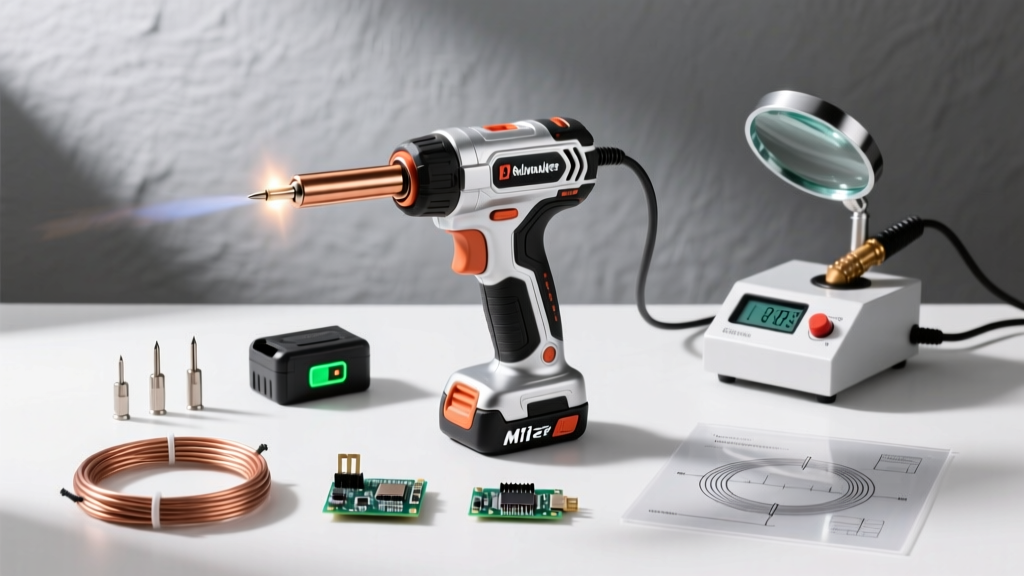
- Weller W100PG 100W Soldering Iron ($95): A heavy-duty, line-voltage iron that utilizes CT6 series tips. The massive thermal mass of the 1/4-inch chisel tip stores enough kinetic heat energy to push through 8 AWG wire without stalling.
- TS101 with 100W GaN PSU ($75 total): For those who prefer portability, pairing a TS101 smart iron with a 100W GaN laptop charger provides enough wattage to handle 10 AWG wire, provided you use a large bevel (C4) tip to maximize surface contact area.
Tier 3: Copper Plumbing & HVAC (The High-Heat Tier)
In plumbing and HVAC, a soldering iron (or more accurately, a soldering gun or torch) is used to create watertight, pressure-rated seals in copper piping. This process, known as 'sweating,' requires heating the copper fitting to roughly 450°F (232°C) so that lead-free silver-bearing solder is drawn into the joint via capillary action.
Standard electronics irons are entirely useless here. The thermal mass of a 1/2-inch copper pipe and brass valve will instantly absorb the heat of a 60W iron. For plumbing, technicians rely on high-wattage soldering guns or open-flame propane/MAPP torches.
Best Tools for Plumbing & Heavy Metal
- Weller D550 Soldering Gun ($55 - $65): Outputting a massive 260W/200W on the primary and secondary triggers, this gun uses a loop-style copper tip that generates heat via electrical resistance. It is perfect for soldering thick grounding wires to copper water pipes (a common NEC requirement for residential grounding).
- Bernzomatic TS8000 Torch ($75): While not an 'iron,' this is the standard for actual pipe sweating. It runs on MAPP gas, burning at 3,730°F, allowing for rapid heating of large-diameter copper fittings.
Master Comparison Matrix: Matching the Tool to the Task
| Application | Recommended Tool | Wattage | Ideal Tip Geometry | Target Temp | Est. Price (2026) |
|---|---|---|---|---|---|
| PCB / SMD Rework | Pinecil V2 | 65W (PD) | Conical / Micro-Chisel | 320°C - 350°C | $28 |
| Production Benchtop | Hakko FX-888D | 70W | T18-D (Chisel) | 330°C | $119 |
| 10-4 AWG RC Wiring | Weller W100PG | 100W | Heavy Bevel / Screwdriver | 380°C - 400°C | $95 |
| Grounding / Plumbing | Weller D550 Gun | 260W | Loop / Spade | N/A (Max Heat) | $59 |
Critical Failure Modes: The Cost of the Wrong Tool
Understanding what a soldering iron is used for also means understanding how it fails when misapplied. NASA's Electronic Parts and Packaging Program (NEPP) extensively documents soldering defects in high-reliability aerospace hardware. Here are the most common failure modes caused by tool mismatch:
- Pad Delamination (Electronics): Using a plumbing torch or an unregulated 100W iron on a PCB. The epoxy resin in the FR4 board vaporizes, causing the copper trace to peel away from the substrate.
- Cold Joints (Wiring): Using a 40W micro-iron on an XT60 connector. The solder cools before fully wetting the copper strands, resulting in a high-resistance joint that will melt under a 60A load.
- Tip Oxidation & Pitting: Leaving a chisel tip set to 400°C idle on a bench. The iron plating oxidizes rapidly, turning black and refusing to transfer heat. Expert Tip: Always leave a thick blob of rosin-core solder on the tip when turning the station off.
- Flux Entrapment: Using plumbing acid flux on electronics. The corrosive zinc chloride flux will eat through the copper traces and cause short circuits within weeks. Always use Rosin (RMA) or No-Clean flux for PCBs.
Expert Solder Alloy Matching
The iron is only half the equation. The EPA's guidelines on lead safety and modern RoHS directives have shifted how we select solder alloys. Match your alloy to your iron's use case:
- Sn63/Pb37 (63/37 Leaded): Eutectic alloy. Melts sharply at 183°C (361°F). Best for DIY electronics and prototyping due to its shiny finish and low wetting angle. Requires basic ventilation.
- SAC305 (Lead-Free): 96.5% Tin, 3% Silver, 0.5% Copper. Melts at 217°C - 220°C. Mandatory for commercial electronics manufacturing. Requires an iron with higher thermal recovery (like the Hakko FX-888D) to compensate for the higher melting point and poor wetting characteristics.
- 95/5 Tin-Silver (Plumbing): Melts around 221°C - 254°C. NSF-approved for potable water lines. Never use this on PCBs; the high temperatures and lack of rosin flux will destroy electronic components.
Final Verdict: Buy for Your Specific Use Case
There is no single 'universal' soldering iron. If your primary use case is repairing drones, building keyboards, or assembling Arduino projects, the Pinecil V2 or Hakko FX-888D will serve you flawlessly. If you are building FPV racing drones and soldering 12 AWG battery leads, invest in the Weller W100PG. By matching the tool's thermal mass and wattage to the specific physics of your application, you guarantee strong, reliable, and safe metallurgical bonds every time.