
The Evolution of the Weller Soldering Iron Kit in 2026
For over eight decades, Weller has remained a cornerstone of electronics manufacturing and DIY prototyping. Whether you are assembling delicate surface-mount PCBs or repairing heavy-duty wire harnesses, selecting the right Weller soldering iron kit is critical for achieving reliable, IPC-compliant joints. In 2026, Weller's lineup spans from entry-level analog workstations to high-end, IoT-connected digital stations that integrate seamlessly into modern production floors.
This comprehensive buying guide dissects the technical specifications, thermal recovery metrics, and real-world failure modes of the most popular Weller models available today. We will also cover tip metallurgy and maintenance protocols to ensure your investment lasts for years.
Why Choose a Weller Soldering Iron Kit?
Weller's dominance in the soldering industry is not merely a result of brand legacy; it is driven by rigorous adherence to thermal stability standards. According to the IPC J-STD-001 requirements for soldered electrical and electronic assemblies, maintaining strict temperature tolerances is mandatory to prevent thermal damage to sensitive components and pad lifting on FR-4 boards. Weller stations consistently deliver a temperature stability of ±5°C (±9°F), making them a staple for Class 2 and Class 3 aerospace and medical electronics manufacturing.
2026 Weller Soldering Iron Kit Comparison Matrix
| Model | Power Output | Temp Range | Tip Series | Est. Price (2026) | Best Application |
|---|---|---|---|---|---|
| Weller WLC100 | 40W | 200°C - 450°C | ETA | $45 - $55 | Hobbyists, basic through-hole |
| Weller WE1010NA | 70W | 100°C - 450°C | ETA | $110 - $130 | Prosumers, SMD, advanced DIY |
| Weller WT1012 | 95W | 50°C - 450°C | RT / WDH | $320 - $360 | Production, heavy ground planes |
Deep Dive: Weller WLC100 Analog Workstation
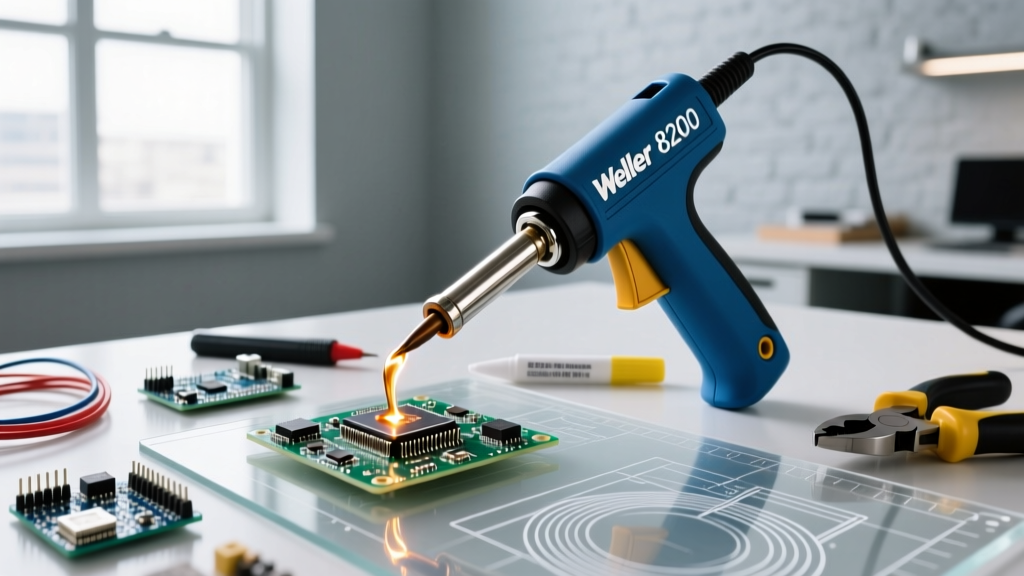
The WLC100 is the quintessential entry-level Weller soldering iron kit. It utilizes a traditional nichrome-wound heating element with a variable power dial. While it lacks digital precision, it is a workhorse for basic through-hole soldering, wire tinning, and educational labs.
Pros and Cons of the WLC100
- Pros: Extremely affordable, replacement ETA tips are cheap and universally available, rugged foam grip, simple operation.
- Pros: Zero setup time; plug in and turn the dial.
- Cons: Slow thermal recovery when applied to large ground planes.
- Cons: Analog potentiometer failure mode (see maintenance section).
Deep Dive: Weller WE1010NA Digital Station
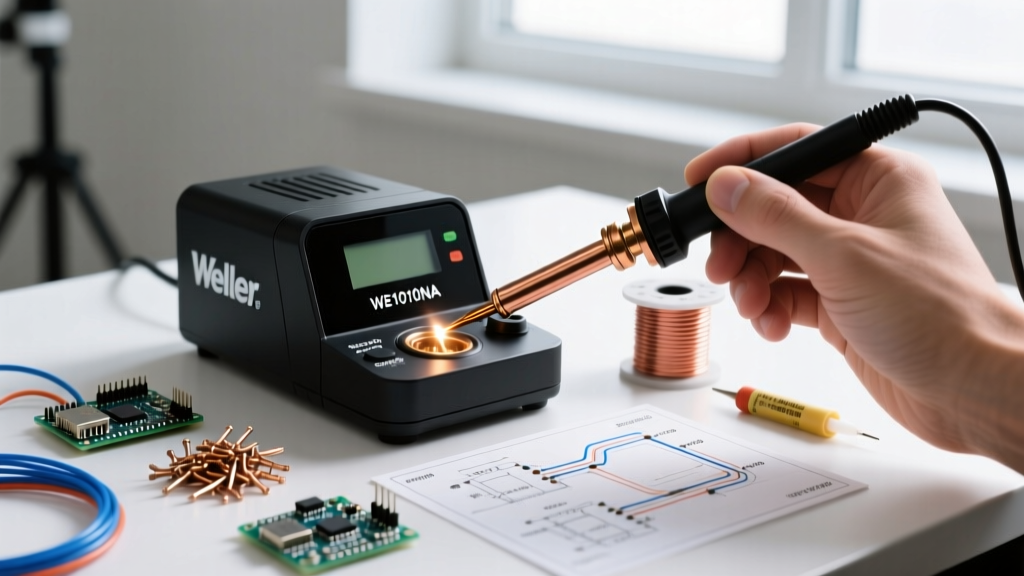
The WE1010NA represents the sweet spot for 90% of electronics engineers and serious hobbyists. It features a 70-watt ceramic heating element that pushes the ETA tip series to new thermal limits. The digital LCD provides exact temperature readouts, and the station utilizes zero-crossing switching to extend the life of the heating element.
Expert Insight: The WE1010NA reaches 350°C in approximately 18 seconds from a cold start. When soldering 0805 SMD components, this rapid thermal response prevents the need to dwell on the pad, significantly reducing the risk of tombstoning or pad delamination.
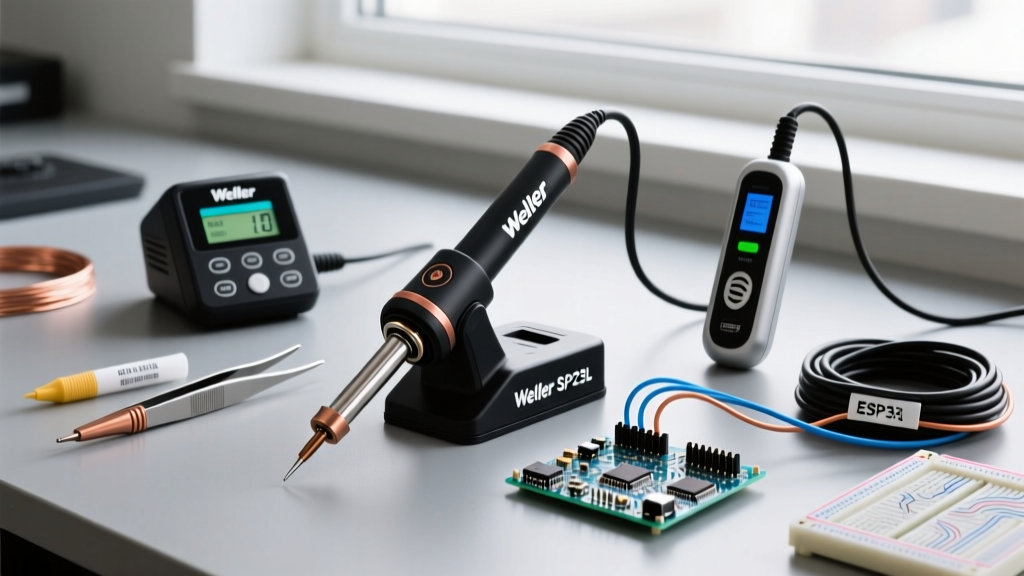
The kit includes the WPH80 soldering iron, which is ergonomically balanced and features a silicone burn-resistant cord. The WDH10T safety rest includes a dry brass wool cleaner, which is vastly superior to traditional damp sponges for preserving tip life.
Deep Dive: Weller WT1012 Professional ESD-Safe Kit
For production environments and high-mass thermal applications, the WT1012 is the undisputed champion. Operating at 95 watts, it utilizes the low-thermal-mass RT tip series. Unlike older stations that used 80W to heat a massive copper core, the WT1012 uses 95W to heat a microscopic heating element embedded directly inside the tip bevel. This results in instantaneous thermal transfer.
The WT1012 base station features an NFC-enabled menu system, USB ports for firmware updates and data logging, and full ESD (Electrostatic Discharge) grounding compliance. If you are soldering multi-layer boards with heavy copper pours (e.g., 4oz copper on power supply boards), the WT1012 will maintain a steady 380°C without stalling.
Understanding Weller Tip Metallurgy and Selection
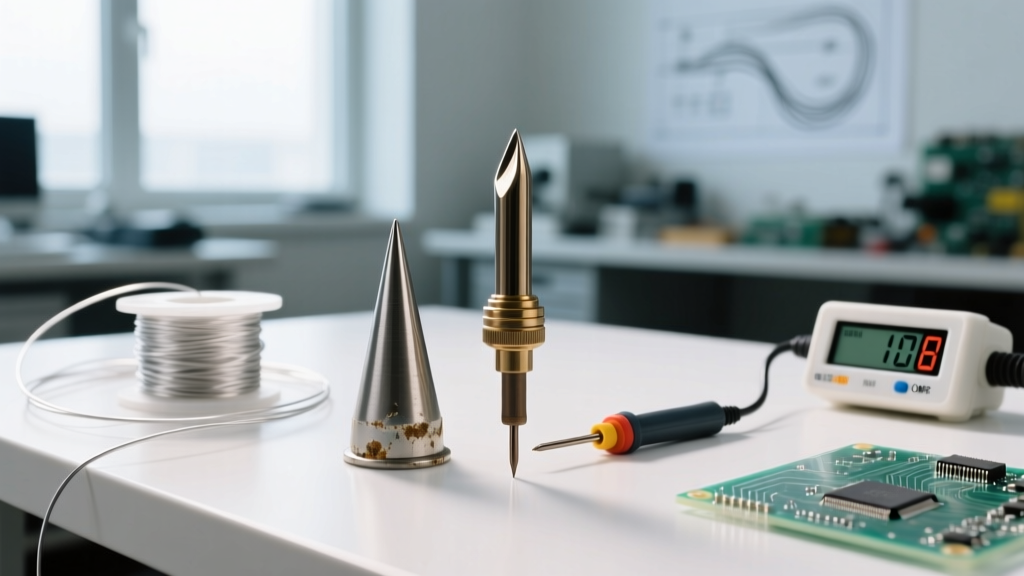
Choosing the right tip is just as important as the station itself. Weller tips are manufactured using a complex metallurgical process. The core is high-conductivity copper, which is then plated with iron to resist solder erosion, and finally coated with chromium to prevent solder from climbing up the non-working surfaces.
Tip Series Breakdown
- ETA Series (for WLC100 & WE1010NA): Standard screw-on tips. Excellent for general-purpose work. The ETA-A (conical) and ETA-S (screwdriver/chisel) are the most versatile for 0.1-inch pitch headers and standard SMD passives.
- RT Series (for WT1 & WT1012): Ultra-fast, low-mass tips. The heating element and sensor are integrated into the tip itself. Ideal for 0402 and 0201 SMD components, as well as QFN drag soldering.
- LT Series (Legacy/Heavy Duty): Used on older WES51 models (now largely discontinued but still found in legacy kits). Thicker copper core for heavy wire and large terminal lugs.
Troubleshooting and Maintenance Matrix
Even the best Weller soldering iron kit will fail prematurely if subjected to poor maintenance practices. Below is a troubleshooting guide for common issues encountered in the field.
| Symptom | Root Cause | Corrective Action |
|---|---|---|
| Solder balls up and rolls off the tip | Severe tip oxidation due to running at max temp (400°C+) while idle. | Use a brass wool sponge and specialized tip tinner (e.g., Weller WDC2). Lower idle temp to 250°C. |
| WLC100 temperature fluctuates wildly | Carbon buildup inside the analog variable power potentiometer. | Unplug the unit, open the base, and apply electronic contact cleaner to the dial mechanism. |
| Station displays 'Sensor Error' (WE1010NA) | Thermocouple wire break inside the handpiece cord or oxidized connector pins. | Clean the 3-pin DIN connector with isopropyl alcohol. If the cord is internally fractured, replace the WPH80 iron. |
| Micro-cracking on the iron plating | Thermal shock from using a soaking wet cellulose sponge. | Switch exclusively to dry brass wool. If using a sponge, ensure it is only slightly damp with distilled water. |
Safety and Fume Extraction Compliance
When operating any soldering equipment, managing flux fumes is a critical health and safety requirement. Rosin-based fluxes (colophony) release volatile organic compounds and particulate matter that can cause occupational asthma. According to guidelines from organizations like the Occupational Safety and Health Administration (OSHA), local exhaust ventilation (LEV) should be used at the source of soldering operations.
While the standard Weller kits do not include built-in fume extractors, Weller offers the WFE and WFE-P series extraction units that pair perfectly with their soldering irons. For hobbyists, investing in a desktop HEPA and activated carbon filter fan is a non-negotiable safety measure when using ROL1 or water-soluble fluxes.
Final Verdict: Which Weller Kit Should You Buy?
If you are a student or casual DIYer repairing basic audio gear or Arduino projects, the Weller WLC100 remains a budget-friendly, reliable choice. However, for anyone serious about PCB design, SMD rework, or professional prototyping, the Weller WE1010NA is the definitive Weller soldering iron kit to purchase in 2026. Its 70W digital precision, ESD-safe design, and rapid thermal recovery offer a professional experience at a prosumer price point. For high-volume production lines and heavy aerospace applications, the WT1012 justifies its premium cost through unmatched speed and data-logging capabilities.
For more information on industry soldering requirements and certification, refer to the official Weller Tools resource center and ensure your processes align with current IPC standards.