
The Reality of an Oxidized Soldering Iron Tip
There is a distinct, frustrating moment every electronics engineer and DIY enthusiast faces: you touch your solder wire to the iron, and instead of flowing smoothly, the molten solder beads up and rolls right off. If your soldering iron tip oxidized during a previous session or from prolonged idle heat, you are dealing with a layer of iron oxide (Fe2O3) that completely blocks thermal transfer and prevents solder wetting. In 2026, with the industry's heavy reliance on high-temperature lead-free alloys like SAC305, tip oxidation remains the number one cause of premature tool failure and defective solder joints.
This comprehensive guide moves beyond basic advice. We will dissect the metallurgical failure modes of modern soldering tips, provide a step-by-step chemical recovery protocol, and review the best anti-oxidation products and stations available on the market today.
The Science: Why Modern Tips Oxidize Faster
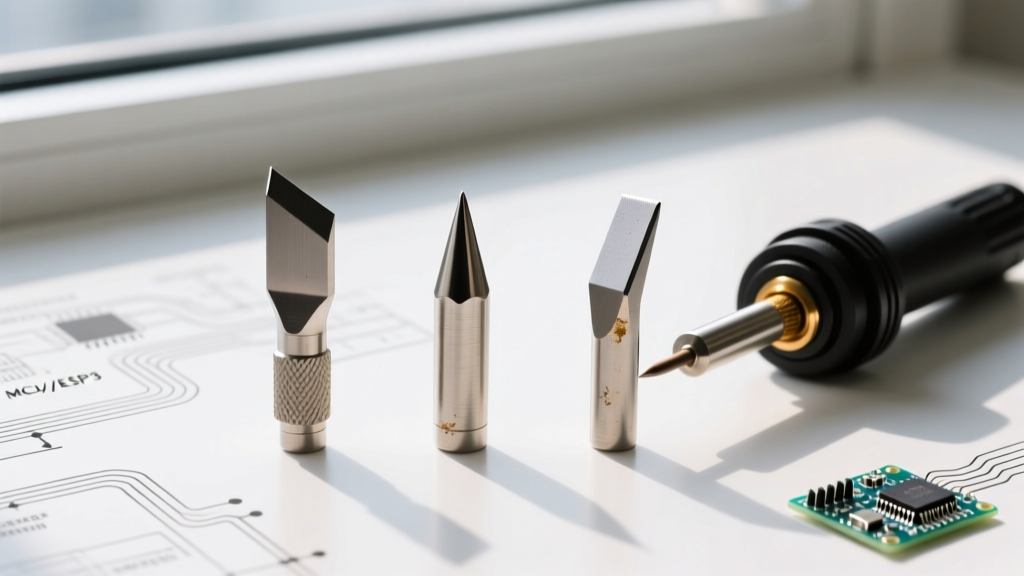
A standard soldering tip is not solid copper. It consists of a copper core for thermal conductivity, electroplated with a microscopically thin layer of iron (typically 0.10mm to 0.15mm thick) to resist solder erosion, and finally coated in chromium and tin for wetting. Oxidation occurs when the protective tin layer burns off, exposing the underlying iron plating to oxygen and aggressive flux residues at high temperatures.
Expert Insight: The rate of oxidation roughly doubles for every 15°C increase above 350°C. When transitioning from traditional Sn63/Pb37 (melting at 183°C) to lead-free SAC305 (melting at 217°C), operators are forced to run stations at 360°C–380°C. This 100°C delta is why standard tips that lasted for years in the 1990s now degrade in weeks without strict maintenance protocols.
Surface Oxidation vs. Plating Breach: The Diagnostics
Before attempting recovery, you must determine if the tip is merely oxidized or structurally compromised. Attempting to clean a breached tip will destroy it entirely.
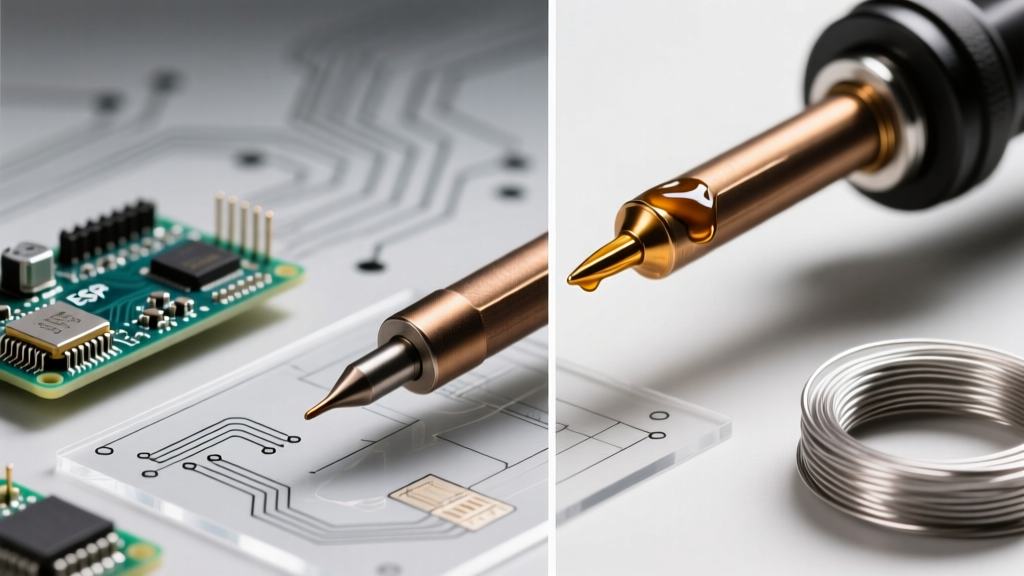
- Surface Oxidation (Recoverable): The tip appears black, dark blue, or crusty. Solder balls up, but the physical shape of the tip (chisel, conical) remains perfectly smooth and intact.
- Plating Breach (Fatal): You see pitting, craters, or a distinct copper-colored spot on the working surface. The molten solder and flux have eaten through the iron plating and are dissolving the copper core. No chemical cleaner can fix this. The tip must be replaced immediately to prevent copper contamination in your PCB vias.
The Recovery Protocol: How to Fix an Oxidized Tip
If your tip is structurally intact but heavily oxidized, do not reach for sandpaper or a steel file. Abrasives will instantly strip the 0.15mm iron plating, ruining a $15 to $50 cartridge. Instead, follow this chemical reduction protocol.
Step 1: Thermal Preparation
Set your station to 350°C. Do not exceed this temperature during the cleaning process, as excessive heat will cause the cleaning chemicals to flash-boil and splatter.
Step 2: Mechanical Debridement (Brass Wool)
Plunge the hot tip into a Hakko 599B Tip Cleaner (a coiled brass wire sponge). The brass is softer than the iron plating but harder than the oxide layer. Twist the tip gently for 3 to 5 seconds to knock off the bulk carbonized flux crust.
Step 3: Chemical Reduction (Tip Tinner)
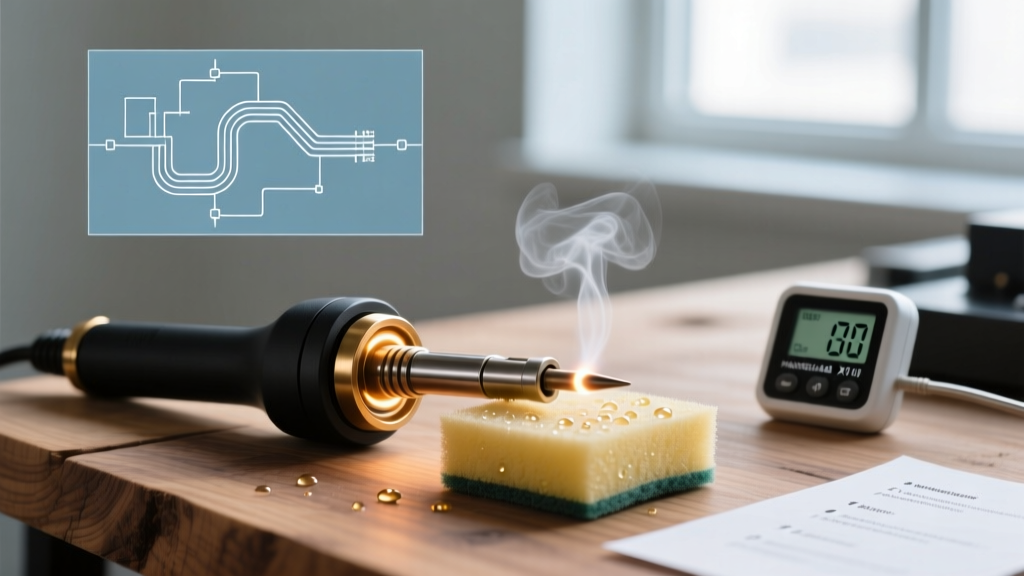
This is the critical step. Use a dedicated tip tinner like MG Chemicals 4901-113G. Dip the hot, wiped tip directly into the tinner paste for exactly 2 to 3 seconds. The paste contains phosphoric acid (which chemically strips the iron oxide) and suspended tin powder. You will see a brief flare of smoke as the acid reacts. Withdraw the tip and immediately wipe it on a damp cellulose sponge or brass wool to reveal a pristine, silver-tinned surface.
Step 4: Immediate Re-tinning
The moment the tip is clean, apply a generous amount of high-quality 63/37 rosin-core solder to the working face. Never leave a freshly cleaned tip exposed to the air, even for a few seconds.
Product Comparison: 2026 Anti-Oxidation Cleaners & Tinners
| Product | Type | Best Application | Est. Price (2026) | Plating Wear Risk |
|---|---|---|---|---|
| Hakko 599B Tip Cleaner | Brass Wire Sponge | Daily maintenance; removing carbonized flux crust. | $14.50 | Low (if used correctly) |
| MG Chemicals 4901-113G | Chemical Tip Tinner | Severe oxidation recovery; re-tinning dried-out tips. | $12.00 | Zero (Chemical process) |
| Edsyn TS-1000 Tip Saver | Ammonia-free Paste | Mild oxidation; extending tip life between deep cleans. | $18.50 | Zero |
| Chemtronics Solder Wick | Copper Braid + Flux | Removing heavily oxidized solder bridges from the tip. | $9.00 | Low |
Buying Guide: Soldering Stations Engineered to Resist Oxidation
If you are constantly battling a soldering iron tip oxidized beyond repair, your hardware might be the culprit. Standard stations with slow thermal recovery force operators to leave the iron at maximum temperature, accelerating oxidation. In 2026, smart thermal management and advanced tip geometries are the standard for professional labs.
1. JBC CD-2BQE with C245 Cartridges (The Gold Standard)
Price: ~$485.00
Why it prevents oxidation: JBC utilizes an integrated heater-sensor cartridge where the heating element is millimeters from the tip face. It reaches 350°C in under 2 seconds. More importantly, the JBC stand features an aggressive magnetic sleep mode that instantly drops the tip temperature to 180°C when holstered. At 180°C, oxidation virtually halts, but the thermal mass allows the tip to snap back to 350°C the millisecond you pick it up. This eliminates the "idle burn" that destroys standard tips.
2. Weller WE1010NA with RTW (Heavy Duty) Tips
Price: ~$115.00 (Station) / $12.00 (per tip)
Why it prevents oxidation: For budget-conscious labs, the Weller WE1010NA is a workhorse. The secret weapon here is the RTW (Heavy Duty) tip series. While standard RT tips feature a 0.15mm iron plating, the RTW series boasts a reinforced 0.25mm iron plating. This extra 0.10mm of iron acts as a sacrificial buffer against highly acidic water-soluble fluxes and high-temperature lead-free soldering, effectively doubling the tip's lifespan in harsh environments.
3. Hakko FX-951 with T15 Composite Cartridges
Price: ~$330.00
Why it prevents oxidation: The FX-951 uses T15 cartridges, which feature a ceramic heating element wrapped directly in a composite shield. The station's proprietary sleep/timeout functions, combined with Hakko's exceptionally smooth chrome plating on the non-working surfaces of the tip, prevent flux creep. Flux creep—where liquid flux wicks up the side of the tip and burns onto the heating sensor—is a hidden cause of station failure that the T15 design mitigates brilliantly.
Preventative Maintenance: The 2026 IPC-Aligned Protocol
According to the guidelines established by IPC standards for electronic assemblies, maintaining proper thermal profiles is just as critical to tool longevity as it is to joint reliability. Furthermore, NASA workmanship training protocols emphasize that operator handling directly dictates the mean-time-between-failures (MTBF) of soldering equipment. Implement these rules in your lab:
- Match Temperature to Alloy: Never run SAC305 at 400°C to compensate for a poor thermal ground plane. Instead, use a larger chisel tip to increase surface area contact. Keep lead-free stations strictly between 350°C and 365°C.
- The "Solder Blob" Storage Method: Before placing the iron in the holder, melt a large, golf-ball-sized blob of cheap 63/37 solder onto the working face. This sacrificial blob will oxidize instead of your tip's iron plating. Wipe it off and apply fresh solder when you resume work.
- Audit Your Flux Chemistry: Water-soluble (OA) fluxes contain aggressive organic acids designed to be washed off with deionized water. If left on a hot tip, they will etch through iron plating in hours. If you use OA flux, you must wipe the tip with a damp cellulose sponge every 3 joints. For maximum tip life, switch to No-Clean (RMA) fluxes, which are far less corrosive to iron plating.
- Use Damp Sponges Correctly: A soaking wet cellulose sponge will drop the tip temperature by 100°C instantly, causing thermal shock that micro-fractures the iron plating. Squeeze the sponge until it is merely damp to the touch.
Final Verdict
Dealing with a soldering iron tip oxidized beyond recognition is a solvable problem if caught early. By keeping a chemical tip tinner like MG Chemicals 4901 on your bench and upgrading to smart-sleep stations like the JBC CD-2BQE or heavy-duty plated tips from Weller, you can reduce your annual tip replacement budget by up to 80%. Treat your tip's iron plating as a precision optical surface, and it will deliver flawless, wettable thermal transfer for thousands of joints.