
Beyond the Dictionary: The Modern Soldering Iron Meaning
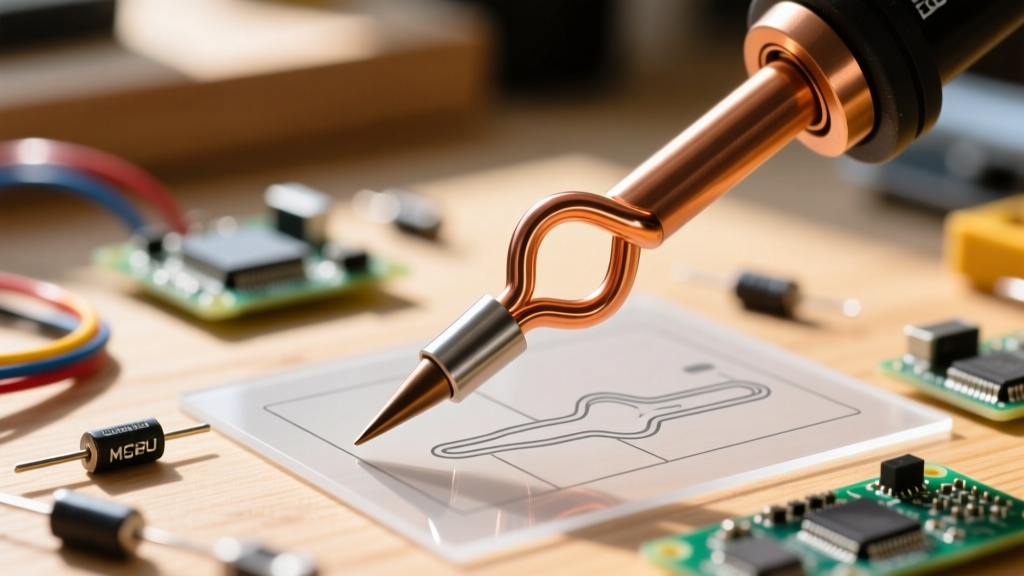
When beginners first search for the soldering iron meaning, they usually encounter a simplistic dictionary definition: a hand tool with a heated metal tip used to melt solder alloy and join electronic components. However, in the context of modern electronics manufacturing and advanced DIY engineering in 2026, this definition is woefully inadequate. Today, the true meaning of a soldering iron encompasses closed-loop thermal management, microcontroller-driven temperature profiling, and strict adherence to Electrostatic Discharge (ESD) safety protocols.
Understanding this evolved definition is the first step in making an informed purchasing decision. A soldering iron is no longer just a 'hot stick'; it is a precision instrument designed to deliver exact thermal energy to a specific mass of copper and silicon without causing thermal shock or pad delamination. In this comprehensive guide, we will decode the practical meaning of soldering terminology, explore the physics of heat transfer, and review the best tools on the market that define the modern standard.
The Physics of Soldering: Thermal Mass vs. Wattage
To truly grasp the soldering iron meaning from an engineering perspective, you must understand the difference between wattage and thermal mass. Wattage dictates the rate at which the heating element can generate energy, while thermal mass refers to the physical volume of the tip that stores and transfers that energy to the PCB pad.
- High Wattage, Low Thermal Mass: A 65W smart iron with a needle-thin conical tip will struggle to solder a large ground plane. The tip lacks the physical mass to transfer heat faster than the copper plane dissipates it, resulting in a cold solder joint.
- Moderate Wattage, High Thermal Mass: A 40W iron equipped with a wide, heavy chisel tip will easily solder thick through-hole joints because the bulk of the copper tip acts as a thermal reservoir, dumping stored heat directly into the joint upon contact.
According to NASA's Workmanship Training guidelines for soldering, proper wetting and intermetallic compound (IMC) formation requires the joint to reach the solder's liquidus temperature within 2 to 4 seconds. If your tool's thermal dynamics are mismatched to the joint, you will exceed this dwell time, risking severe thermal damage to the component or the FR4 fiberglass substrate.
Iron vs. Station: Decoding Market Terminology
The market often conflates 'irons' and 'stations,' but their meanings are distinctly different in a professional context:
1. The Standalone Soldering Iron
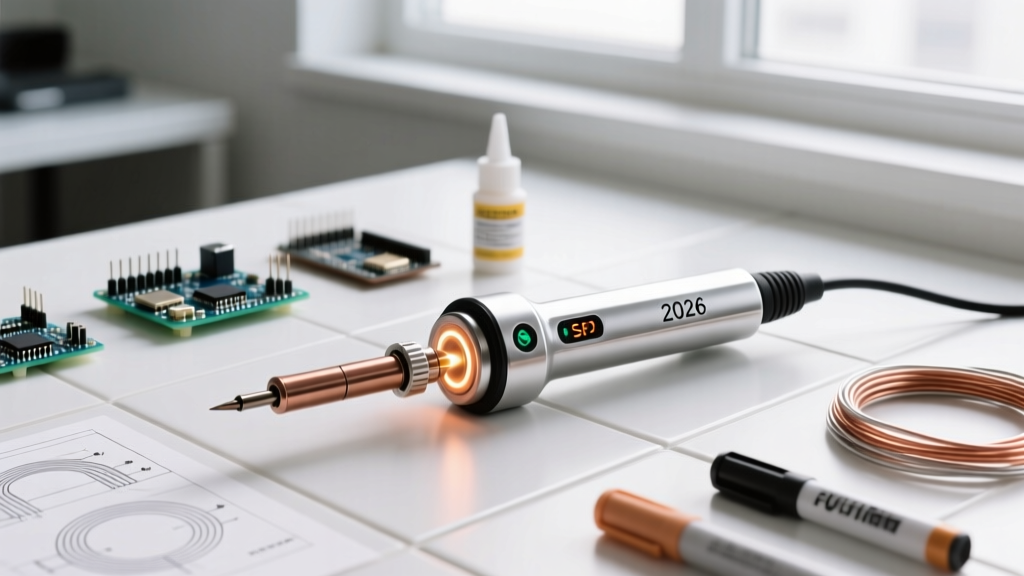
Traditionally, this refers to a single, wand-style tool that plugs directly into a wall outlet or a USB-C power delivery (PD) brick. Historically, these were unregulated, cheap tools that overheated and oxidized rapidly. However, the 2026 market has been disrupted by 'smart irons' featuring internal RISC-V or ARM processors that regulate temperature via PID algorithms, entirely redefining what a standalone iron can achieve.
2. The Soldering Station
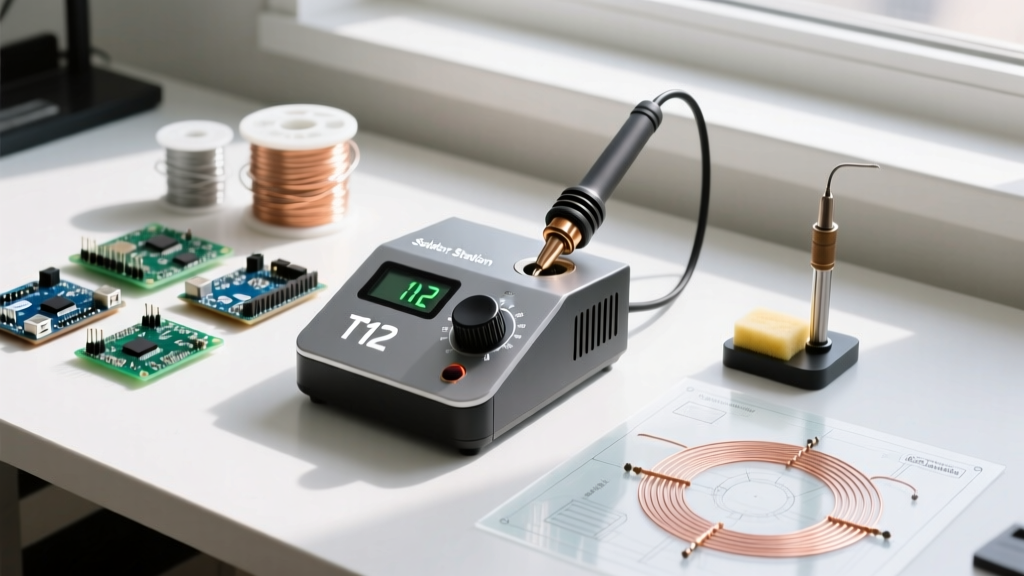
A station consists of a separate base unit containing a step-down transformer, a digital controller, and a wand connected via a flexible, heat-resistant silicone cable. The primary meaning and advantage of a station is galvanic isolation and ESD safety. When working with sensitive MOSFETs, CMOS logic, or bare microcontrollers, a stray voltage spike from a non-isolated iron can instantly destroy a silicon die. Professional stations comply with strict safety frameworks, such as the ANSI/ESD S20.20 standard, ensuring the tip is grounded to the same potential as the workbench mat and the operator's wrist strap.
2026 Buying Guide: Tools That Define the Modern Standard
Based on the modern interpretation of thermal control and safety, here are the top three tools that represent the best value and performance in 2026.
1. Pine64 Pinecil V2 (The Smart Disruptor)
Best for: Hobbyists, field repair technicians, and drone builders.
Price: ~$26 - $30 (Wand only)
The Breakdown: The Pinecil V2 has completely shattered the idea that you need a $100 station for precision work. Powered by a 32-bit RISC-V processor, it supports both USB-C PD (up to 65W) and DC barrel inputs (12V-24V). The open-source IronOS firmware allows you to set exact PID tuning parameters, configure sleep timeouts, and even calibrate the tip resistance via the OLED screen. While it lacks the galvanic isolation of a transformer-based station, its thermal recovery on standard TS100/Pinecil tips is astonishingly fast, rivaling much more expensive units.
3. Hakko FX-888D (The Reliability Benchmark)
Best for: Educational labs, production line rework, and traditionalists.
Price: ~$105 - $115
The Breakdown: If you ask a veteran engineer for the quintessential soldering station meaning, they will likely point to the Hakko FX-888D. It delivers 70W of power and utilizes the widely available T18 tip series. The interface is deliberately simple—a single digital display and two buttons. It excels in continuous, heavy-duty through-hole soldering where its high-capacity heating element provides endless thermal recovery. Its main drawback in 2026 is its bulky footprint and the lack of advanced telemetry found in smart irons.
3. Weller WE1010NA (The ESD-Safe Professional)
Best for: Professional PCB designers, SMD rework, and sensitive IC handling.
Price: ~$120 - $135
The Breakdown: The Weller WE1010NA is a 70W digital station that prioritizes safety and precision. It features a grounded tip design that keeps leakage voltage well below the millivolt threshold required for sensitive semiconductor handling. The ETA and ETL tip series offer excellent surface area contact for 0805 and 0603 surface-mount components. The station also features a programmable standby temperature drop, which extends tip life by reducing oxidation when the iron is resting in its holder.
Comparative Specification Matrix
| Model | Type | Max Wattage | Controller / Processor | Tip Series | ESD Safe | Est. Price (2026) |
|---|---|---|---|---|---|---|
| Pine64 Pinecil V2 | Smart Iron | 65W (via PD) | 32-bit RISC-V (IronOS) | TS100 / Pine64 | No | $26 - $30 |
| Hakko FX-888D | Station | 70W | Analog-style Digital PID | Hakko T18 | Yes (Grounded) | $105 - $115 |
| Weller WE1010NA | Station | 70W | Digital Microcontroller | Weller ET / ETL | Yes (Certified) | $120 - $135 |
Edge Cases and Thermal Failure Modes
Understanding the meaning of your tool also means understanding how it fails. Here are the most common edge cases encountered when thermal dynamics are mismanaged:
- The 'Cold' Solder Joint: Often caused by using a conical tip on a large ground plane. The tip touches the pad, but the thermal mass is too low to melt the flux core and allow the solder to flow. The resulting joint looks dull and grainy, violating IPC J-STD-001 reliability standards for proper wetting.
- Pad Lifting and Delamination: Occurs when an operator uses an iron set too high (e.g., 420°C) to compensate for a lack of thermal mass. The extreme heat degrades the epoxy resin in the PCB, causing the copper pad to peel away from the fiberglass substrate.
- Accelerated Tip Oxidation: Leaving a traditional iron at 380°C while idle causes the iron plating on the tip to react with oxygen and flux residues, forming a black, non-conductive crust. Smart irons mitigate this by utilizing accelerometer-based auto-sleep features.
FAQ: Clarifying the Soldering Iron Meaning
Does a higher wattage mean the iron gets hotter?
No. Wattage determines how fast the iron can replenish lost heat (thermal recovery), not the maximum temperature. A 40W iron and a 70W iron can both be set to exactly 350°C. The 70W iron will simply maintain that 350°C more effectively when touching a large, heat-sinking component.
What does 'ESD Safe' actually mean for a soldering station?
ESD (Electrostatic Discharge) safety means the station's transformer provides galvanic isolation from the mains AC power, and the soldering tip is physically wired to a ground point. This ensures that static electricity from your body or the tool cannot arc through a sensitive microchip and destroy its internal silicon gates.
Why do modern smart irons use USB-C?
The USB-C Power Delivery (PD) protocol allows for negotiation of high voltage and current (up to 20V/3.25A or higher). This enables a portable, pocket-sized iron to draw 65W of power from a standard laptop charger, completely eliminating the need for a heavy, dedicated benchtop transformer.
Final Verdict
The true soldering iron meaning in 2026 is rooted in precision, thermal physics, and material safety. If you are a hobbyist building drones or repairing consumer electronics, the Pine64 Pinecil V2 offers unmatched versatility and smart features for under $30. However, if you are designing professional PCBs, handling bare silicon, or running a production rework bench, investing in an ESD-safe station like the Weller WE1010NA or the industry-standard Hakko FX-888D is non-negotiable for protecting your components and ensuring IPC-compliant reliability.