
The Hidden Economics of Tip Maintenance
In high-volume PCB assembly and precision DIY electronics, the consumable costs of soldering tips can silently drain your budget. Premium micro-tips like the JBC C245 series retail for $40 to $55 each, while standard Weller RT and Hakko T18 tips range from $10 to $15. When a tip oxidizes or suffers thermal shock, the iron plating degrades, leading to dewetting (solder refusal) and catastrophic joint failures. A high-quality soldering iron cleaning kit is not just an accessory; it is a critical metallurgical intervention that extends tip lifespan by 300% to 500%.
According to the NASA Workmanship Training standards for soldered electrical assemblies, proper tip maintenance and cleaning are mandatory to prevent oxide inclusions in solder joints. This guide breaks down the exact components, protocols, and failure modes associated with professional tip cleaning.
Anatomy of a Professional Soldering Iron Cleaning Kit
A commercial-grade cleaning kit relies on three distinct mechanisms: mechanical abrasion, thermal regulation, and chemical reduction. Understanding how these interact with the 100-micron iron plating on modern copper-core tips is essential.
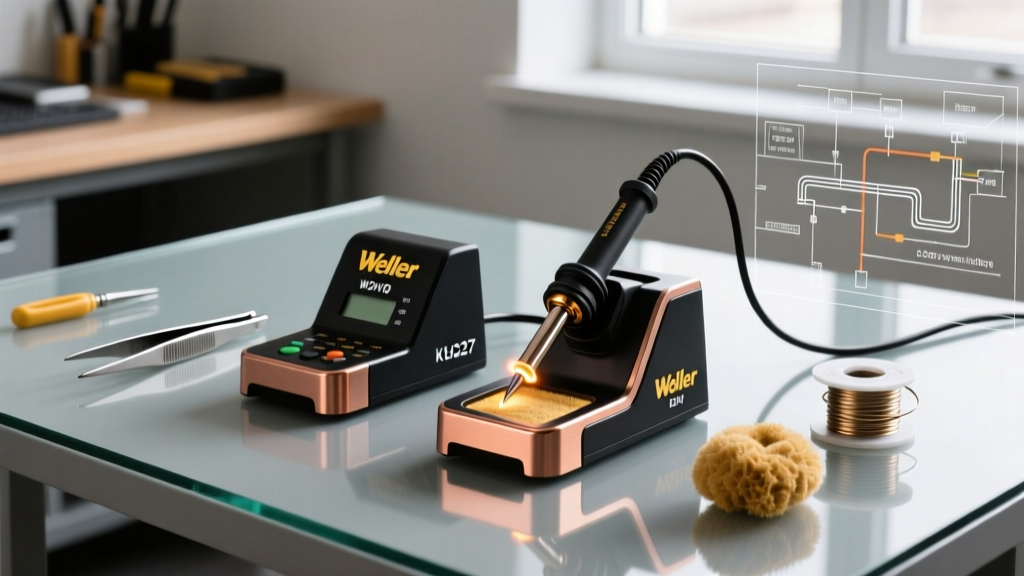
Brass Wire Sponge vs. Cellulose Sponge
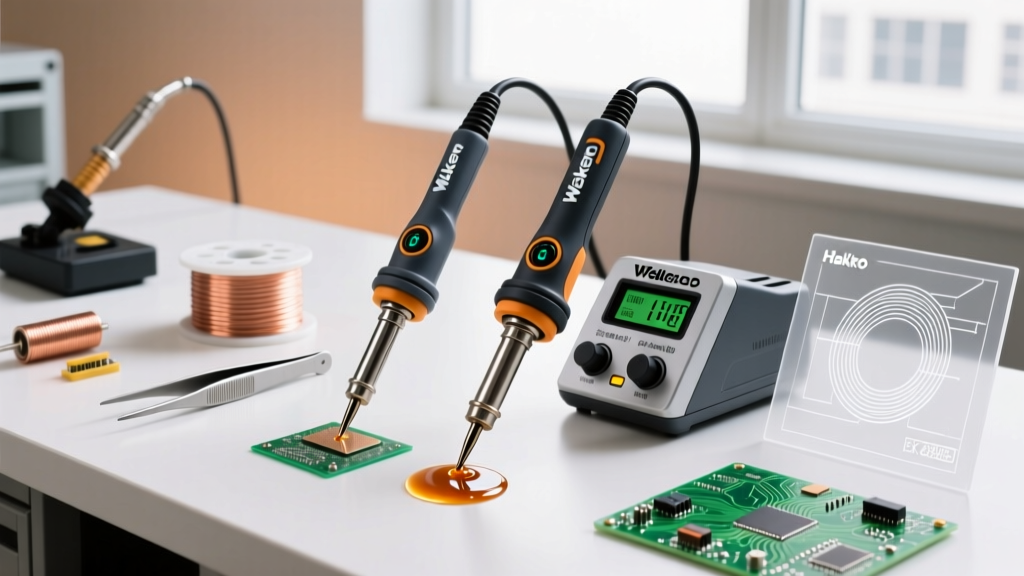
The debate between brass wool and wet sponges is rooted in thermodynamics. A wet cellulose sponge drops the tip temperature from 350°C to under 100°C in milliseconds. While effective at removing bulk carbonized flux, this rapid quenching induces thermal shock, causing micro-fissures in the iron plating over time. Conversely, brass wire sponges (like those found in the Hakko 599B) clean mechanically without dropping the tip temperature below the solder's liquidus phase, preserving the iron crystalline structure. Crucially, the wire must be brass (softer than iron plating); steel wool will gouge the plating and expose the copper core.
Chemical Tip Tinner and Activators
When a tip suffers severe oxidation (black crust), mechanical wiping is insufficient. Tip tinner is a eutectic mixture of tin powder, rosin flux, and mild reducing agents like ammonium chloride. Dipping a blackened tip into tinner at 250°C triggers an exothermic chemical reaction that strips iron oxides and instantly re-tins the surface.
Media Comparison Matrix: Which Cleaner Should You Use?
| Cleaning Medium | Thermal Shock Risk | Abrasiveness | Best Use Case | Example Product |
|---|---|---|---|---|
| Brass Wire Sponge | Very Low | Low (Safe for Iron) | Daily maintenance, lead-free soldering | Hakko 599B, Edsyn TWCP |
| Cellulose Sponge (Distilled H2O) | High (Rapid Quench) | None | Removing bulk flux residue, leaded solder | Weller WDC2 Sponge |
| Chemical Tip Tinner | None (Applied at low heat) | Chemical Etching | Restoring heavily oxidized/dead tips | MG Chemicals 4901 |
| Fiberglass Scratch Pen | None | Extreme (Destructive) | Last resort for pitted tips (voids warranty) | Generic Abrasive Pens |
The Expert 3-Step Maintenance Protocol
To align with IPC Standards for reliable soldered assemblies, implement this strict cleaning protocol during your workflow:
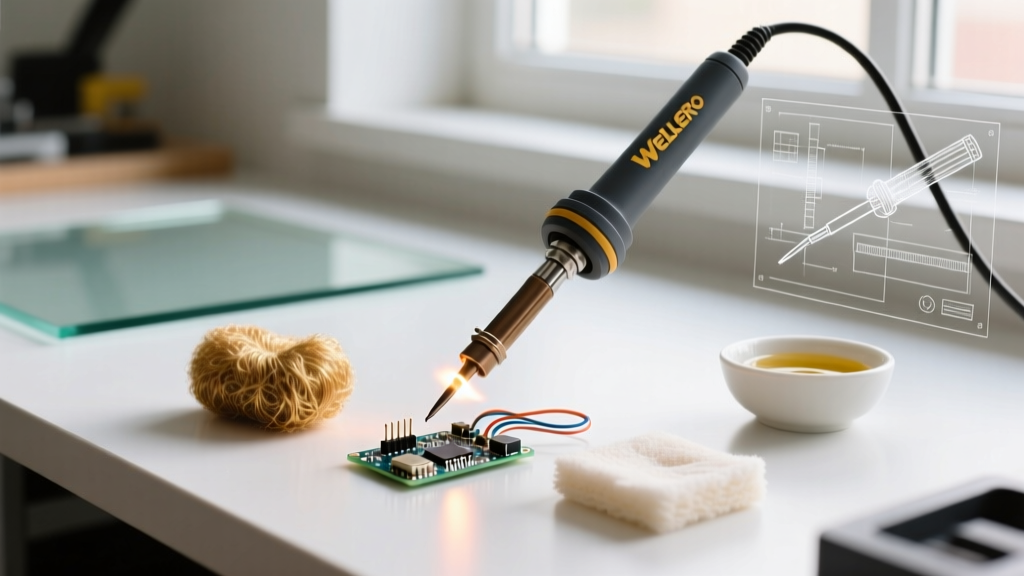
- The Pre-Wipe (Figure-8 Motion): Before applying fresh solder to a joint, wipe the tip in a figure-8 motion through a brass sponge. This removes oxidized solder without stripping the protective rosin layer. Never plunge the tip straight down into the sponge, as this can bend delicate micro-tips (e.g., JBC 105 or Weller RT1).
- The Working Tinning: Immediately after wiping, apply a small amount of fresh solder to the tip. This creates a sacrificial oxidation layer. When you wipe before the next joint, you remove the oxidized sacrificial layer, leaving pristine, active solder for the joint.
- The Post-Solder Quench & Cap: When powering down the station, do not just turn it off. While the tip is still at 250°C, apply a massive blob of 63/37 rosin-core solder to completely encapsulate the working end. This thick solder cap prevents atmospheric oxygen from reaching the iron plating as it cools.
Metallurgical Failure Modes: How Improper Cleaning Destroys Tips
Ignoring the nuances of your soldering iron cleaning kit leads to specific, irreversible failure modes:
- Iron Plating Dissolution: Using lead-free SAC305 solder at 380°C with a wet sponge causes rapid thermal cycling. The expansion and contraction crack the iron plating, allowing molten tin to dissolve the underlying copper core, resulting in pitted, cratered tips.
- Mineral Baking (Tap Water Error): Wetting a cellulose sponge with tap water introduces calcium and magnesium. At 350°C, these minerals bake onto the tip, forming an insulating ceramic-like crust that ruins thermal transfer.
- Flux Carbonization: Failing to clean no-clean flux residues before they cross their activation temperature threshold leaves a hard, black carbon shell. This shell acts as a thermal insulator, forcing the operator to increase station temperature, which accelerates tip death.
2026 Market Leaders: Top Kits for Precision Work
Hakko 599B Tip Cleaner
Featuring a coiled brass wire sponge and a specialized solder splash guard, the 599B remains the industry benchmark. The brass is specifically alloyed to be softer than Hakko's proprietary iron plating. Retailing around $14, it is an essential upgrade for any FX-888D or FX-951 station.
Weller WDC2 Dry Sponge Cleaner
Weller's approach utilizes a specialized compressed cellulose sponge housed in a stainless steel tray. It is designed to be dampened only with distilled water. The WDC2 is ideal for high-volume through-hole work where heavy flux residues require the aggressive wiping action that only a sponge can provide.
MG Chemicals 4901 Tip Tinner
While not a standalone "kit," this $12 tin of chemical activator is the secret weapon of master technicians. It contains a precise ratio of ammonium chloride to reduce stubborn oxides without eating away the base iron layer. It should be used once a week for heavy users, or immediately if a tip accidentally overheats and turns blue/black.
Expert FAQ
Q: Can I use sandpaper or a file to clean a completely dead, blackened tip?
Expert Answer: Absolutely not. Modern soldering tips are not solid iron; they are copper cores electroplated with a microscopic layer of iron (typically 100 to 150 microns thick) to resist solder dissolution. Sandpaper, files, or steel wool will instantly strip this plating, exposing the copper. Once copper is exposed to molten solder, it will dissolve into the solder pool within minutes, permanently ruining the tip's geometry and thermal transfer capabilities. Always use chemical tip tinner for dead tips.
Q: Why does my brass sponge leave tiny wire fragments on my PCB?
This occurs when using low-quality, generic brass sponges with poor alloy formulations or when the sponge is packed too tightly. High-quality kits like the Hakko 599B use a specific wire gauge and tension that prevents shedding. If you experience shedding, discard the sponge immediately, as embedded brass fragments on a PCB can cause catastrophic short circuits in high-impedance analog circuits.