
The Short Answer: Soldering Iron Temperature Ranges
When beginners ask, "how hot does a soldering iron get," the literal answer is between 150°C (302°F) and 480°C (896°F). However, treating maximum temperature as a primary buying metric is a fundamental mistake in electronics assembly. A cheap 40W iron might advertise a peak of 450°C, but the moment its tip touches a copper ground plane, the actual working temperature plummets to 200°C due to poor thermal recovery. Conversely, a high-end active-tip station might max out at 450°C but will hold a stable 350°C even when soldering heavy gauge wire.
In this guide, we break down the actual thermal dynamics of soldering irons, map temperatures to specific solder alloys, and review the best temperature-controlled stations on the market to help you buy the right tool for your workbench.
Mapping Temperature to Solder Alloys and Applications
The ideal soldering iron temperature is dictated by the melting point of your solder alloy plus an offset for thermal transfer efficiency. According to the IPC J-STD-001 standards for soldered electrical assemblies, the goal is to reach the solder's liquidus state quickly without exceeding the thermal limits of the PCB substrate or components.
| Solder Alloy | Melting Point | Ideal Iron Temp (°C) | Primary Application |
|---|---|---|---|
| Sn63/Pb37 (Eutectic) | 183°C (361°F) | 300°C - 330°C | General DIY, Through-hole, Prototyping |
| SAC305 (Lead-Free) | 217°C - 220°C | 350°C - 380°C | Commercial PCB Repair, SMD Rework |
| Sn96.5/Ag3/Cu0.5 | 217°C (423°F) | 360°C - 390°C | High-Reliability Automotive/Aerospace |
| High-Temp (Sn95/Sb5) | 235°C - 240°C | 380°C - 420°C | Step-soldering, Heavy Ground Planes |
Wattage vs. Temperature: The Thermal Recovery Factor
The question "how hot does a soldering iron get" is incomplete without asking "how fast does it recover that heat?" This is where wattage and thermal mass come into play.
- Low Wattage (15W - 30W): Common in cheap, unregulated irons. They can technically reach 400°C in free air, but lack the thermal mass to transfer heat into a joint. Expect severe temperature drops when touching copper.
- Medium Wattage (40W - 65W): The sweet spot for standard soldering stations (e.g., Hakko FX-888D). These use closed-loop thermocouple feedback to pulse power and maintain a stable 350°C during standard PCB work.
- High Wattage / Active Tips (120W - 200W+): Found in premium stations like JBC or Weller WX series. The heating element is integrated directly into the tip cartridge, reducing thermal resistance to near zero. They recover from a 50°C drop in under 2 seconds.
Top Temperature-Controlled Soldering Stations Reviewed
Based on thermal stability, temperature range, and real-world recovery times, here are the top stations to consider for your bench.
1. Hakko FX-888D: The Industry Benchmark
The Hakko FX-888D remains the gold standard for hobbyists and mid-level professionals. It features a digital interface and a robust 65W ceramic heater.
- Temperature Range: 120°C to 480°C (250°F to 896°F)
- Thermal Recovery: Recovers to 350°C in approximately 6 seconds after touching a standard through-hole pad.
- Price (2026): ~$125 USD
- Best For: General PCB assembly, through-hole components, and wire tinning.
Proper tip care is critical when running the FX-888D at its maximum 480°C. As noted in the Hakko official tip care guide, leaving the station at max temperature while idle will oxidize the iron plating in minutes, rendering the tip useless.
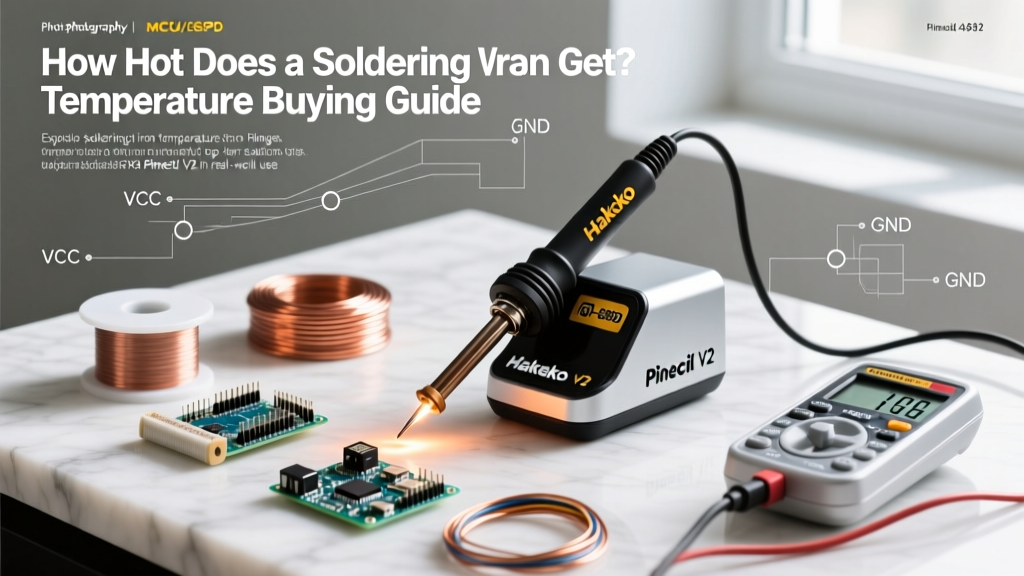
2. Pinecil V2: The Smart, Portable Powerhouse
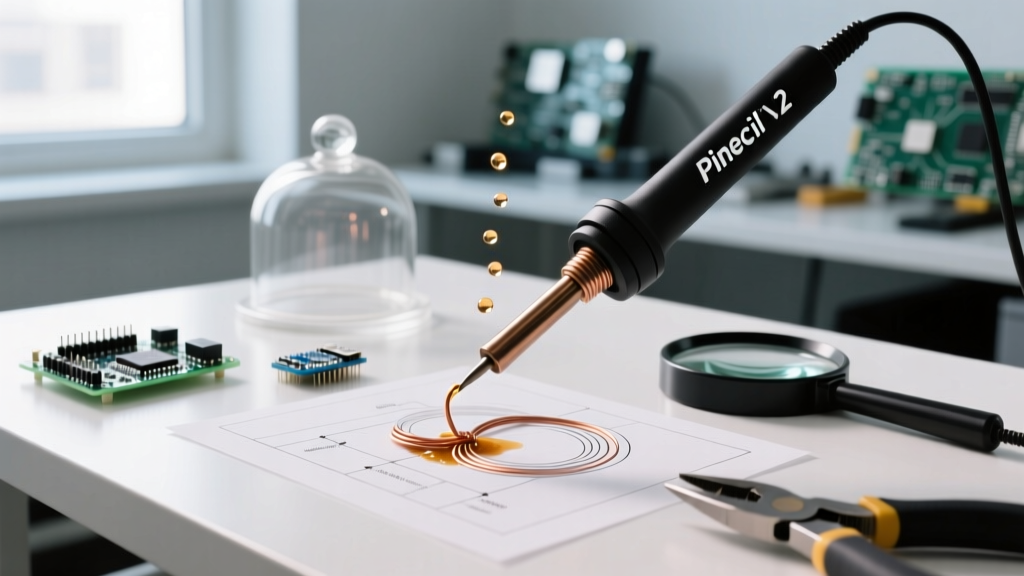
Powered by a RISC-V processor, the Pinecil V2 is a USB-C PD soldering iron that punches far above its weight class, utilizing a 3-second sleep/wake sensor and highly customizable firmware.
- Temperature Range: 100°C to 450°C (212°F to 842°F)
- Thermal Recovery: Exceptionally fast (approx. 3-4 seconds) when powered by a 65W USB-C PD power brick.
- Price (2026): ~$29 USD (Iron only)
- Best For: Field repairs, drone builders, and budget-conscious engineers who need precise temperature profiling.
According to the Pine64 Pinecil Wiki, the V2's PID controller can be manually tuned via its open-source IronOS firmware, allowing advanced users to adjust the thermal aggression based on the specific thermal mass of the installed tip (e.g., TS-B2 vs. TS-J02).
3. Weller WES51: The Analog Workhorse
For those who prefer tactile dials over digital buttons, the analog Weller WES51 is a legendary, ESD-safe station built for continuous daily abuse.
- Temperature Range: 177°C to 454°C (350°F to 850°F)
- Thermal Recovery: Steady and reliable, utilizing a 50W heater with a heavy-duty ET series tip.
- Price (2026): ~$135 USD
- Best For: Manufacturing environments, heavy wire soldering, and users who want zero menu-diving.
Critical Failure Modes: When Your Iron Gets *Too* Hot
Setting your iron to 450°C to "make the solder melt faster" is a fast track to ruined projects. Here is what happens when you exceed optimal thermal thresholds:
- Flux Burn-Off and Splatter: Rosin-based fluxes activate between 150°C and 180°C. If your iron is at 400°C+, the flux boils and vaporizes instantly upon contact, causing dangerous splatter and leaving you with a dry, oxidized joint (a "cold" joint, ironically caused by too much heat).
- Pad Delamination: Standard FR-4 PCB material has a Glass Transition Temperature (Tg) of roughly 130°C to 170°C. Prolonged exposure to a 400°C iron causes the epoxy resin to soften and expand, literally ripping the copper pads off the fiberglass substrate.
- Tip Oxidation: Above 380°C, the iron plating on your tip reacts rapidly with oxygen in the air, forming a black, crusty layer of iron oxide. Solder will not wet to this surface, effectively killing the tip's thermal transfer capabilities.
FAQ: Soldering Iron Temperature Nuances
Can I use a plumbing soldering iron for electronics?
No. Plumbing irons (like the 100W+ Weller SP series) are designed to reach massive thermal masses to heat 1/2-inch copper pipes. They often lack precise temperature regulation and can easily exceed 500°C, which will instantly destroy delicate PCB traces and silicon components.
Why does my solder ball up and refuse to stick to the tip?
This is almost always a temperature and oxidation issue. If your iron is set too hot (above 380°C) and left idle, the tip oxidizes. Turn the iron down to 300°C, clean the tip on a damp brass sponge, and immediately re-tin it with fresh, flux-cored solder to create a protective barrier.
What temperature should I use for SMD (Surface Mount) soldering?
For fine-pitch SMD work using SAC305 lead-free paste or wire, set your station to 340°C - 360°C. Use a micro-pencil tip (like the Hakko T18-I) to concentrate the thermal energy strictly on the pad and lead, avoiding the plastic body of the IC.