
"I will stab you in the face with a soldering iron!" — A visceral threat occasionally heard in the darker corners of thriller, horror, and cyberpunk cinema.
The Cinematic Trope vs. Thermal Physics
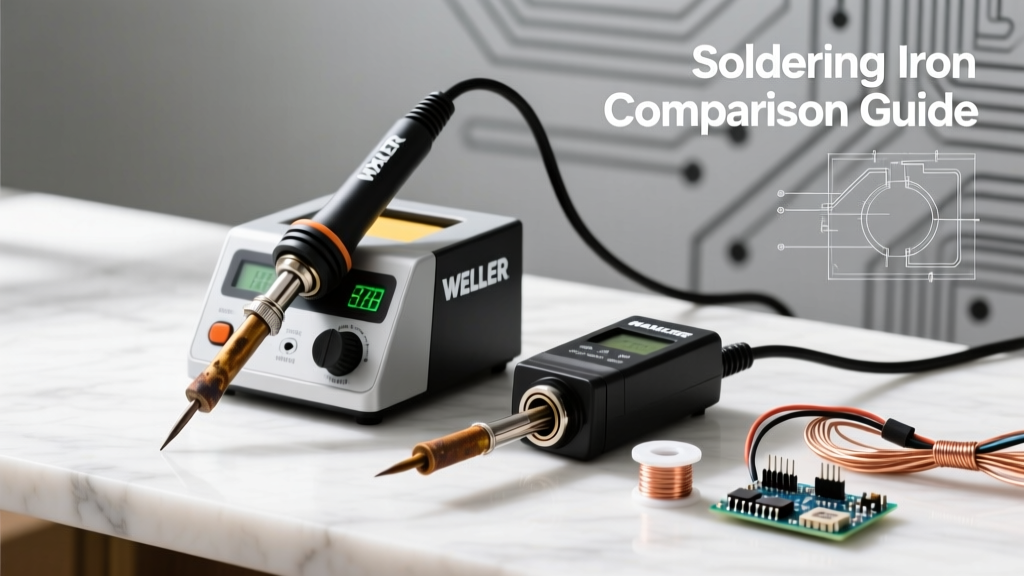
When discussing the stab you in the face with a soldering iron movie trope, we must first separate Hollywood dramatization from the actual physics of thermal tools. In cinema, a villain wielding a glowing soldering iron is depicted as holding an improvised, flesh-melting dagger. But what happens if you attempt this in reality with a professional station like the Hakko FX-888D or the Weller WE1010NA?
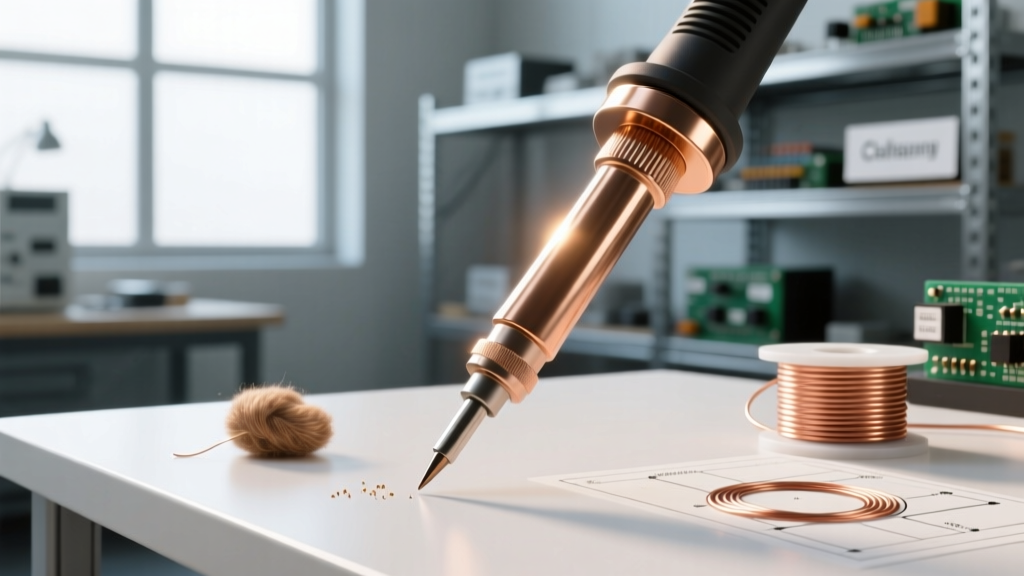
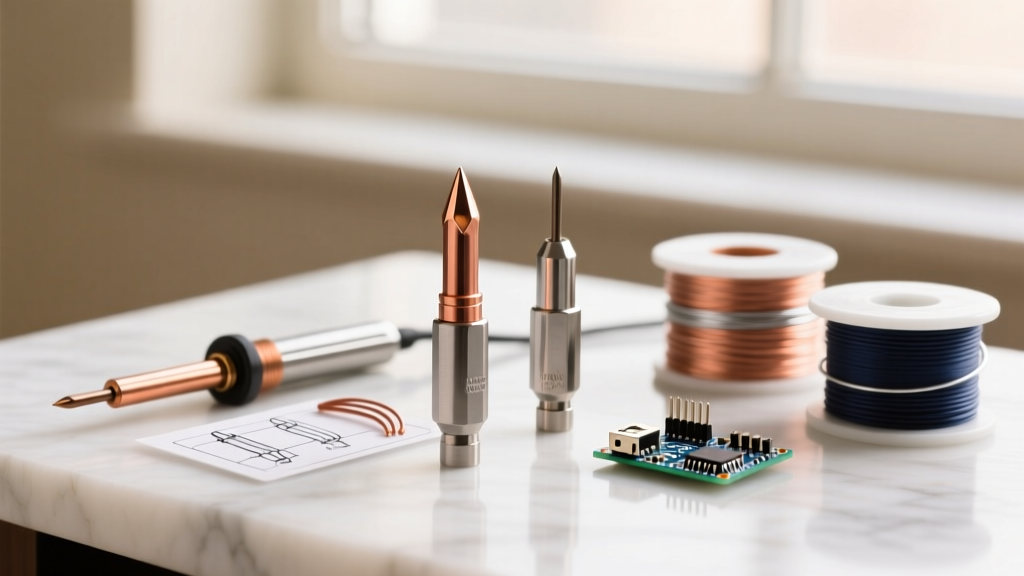
From a metallurgical and mechanical standpoint, the cinematic face-stab fails entirely. Standard soldering tips, such as the Hakko T18-B (conical) or Weller ETA (chisel), are constructed from a high-conductivity copper core plated with a thin layer of iron to resist solder erosion. They are not hardened steel. If you apply the mechanical force required to puncture human skin and underlying bone, the tip will not penetrate cleanly. Instead, the iron plating will shatter, the copper core will bend or mushroom, and the internal ceramic heating element (like the Hakko A1321) will instantly crack, rendering the tool useless.
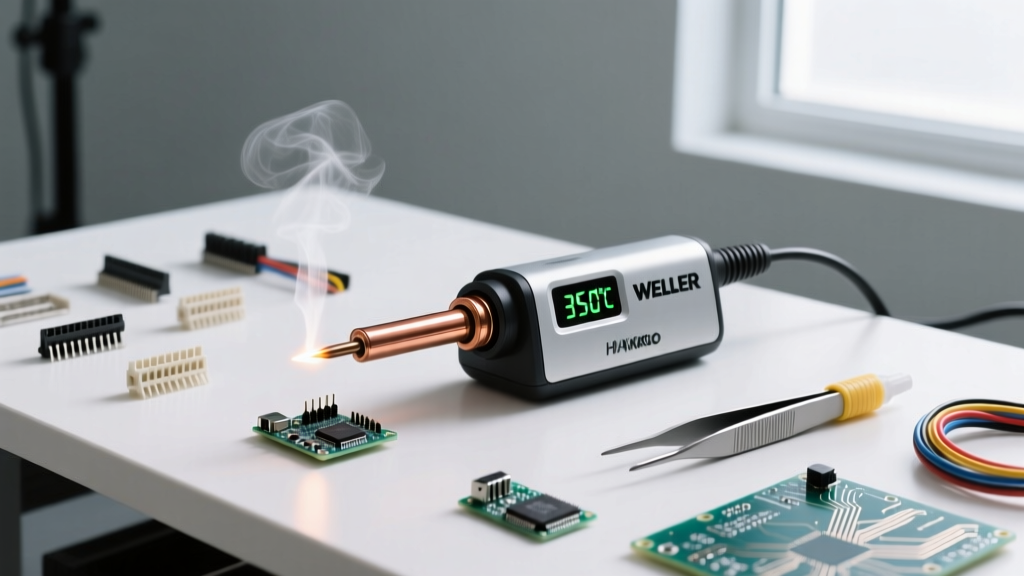
Furthermore, while the tip operates at 350°C to 400°C (662°F to 752°F), its thermal mass is incredibly low. A momentary puncture would cause a severe, localized third-degree burn and immediately cauterize the wound, but it lacks the sustained joule transfer of a heavier heated blade. The true danger of the soldering iron is not as an improvised weapon, but as a precision tool that demands respect for its actual hazards.
The Real Facial Threats in Electronics Work
While the stab you in the face with a soldering iron movie scene is pure fiction, facial and ocular injuries in the workshop are very real. They do not come from malicious stabbings; they come from physics and chemistry.
1. Flux Spatter and Micro-Explosions
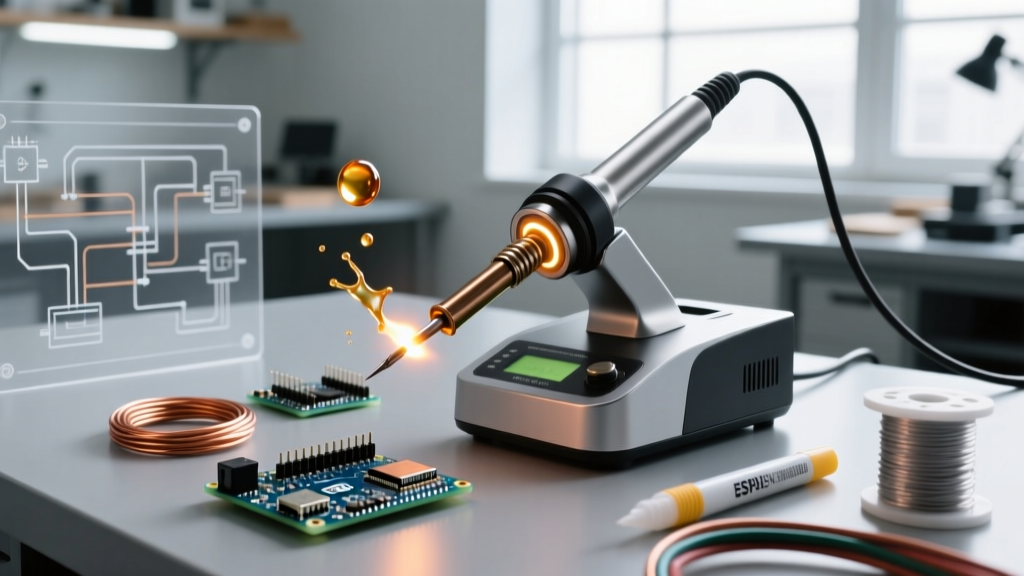
The most common cause of facial injury is flux spatter. When using rosin-core solder (like Kester 44) or no-clean fluxes (like Amtech NC-559-V2-TF), the flux contains solvents and activators. If the iron is applied to a joint with trapped moisture, or if the flux boils too rapidly, it micro-explodes. This sends droplets of 250°C (482°F) molten rosin and acidic activators flying toward the operator's face and eyes.
2. The Slip-and-Slide Trauma
Applying excessive mechanical pressure to a stubborn through-hole joint often leads to the iron slipping off the pad. If your face is positioned directly over the workbench (a common mistake among beginners), a slip can result in the hot iron grazing your cheek or forehead, causing deep thermal lacerations.
3. Toxic Fume Inhalation
According to the UK Health and Safety Executive (HSE), colophony (rosin) fumes are a known respiratory sensitizer. Prolonged exposure without extraction can lead to occupational asthma, chronic bronchitis, and severe allergic reactions, effectively damaging your internal anatomy even if your face remains untouched.
Hazard Comparison: Hollywood vs. Reality
| Parameter | Cinematic Myth (The Face Stab) | Real Workshop Hazard |
|---|---|---|
| Primary Mechanism | Mechanical puncture + thermal burn | Chemical spatter + thermal splash |
| Tool Integrity | Remains intact as a weapon | Tip plating shatters; heater cracks |
| Injury Type | Deep penetrating cauterized wound | Corneal burns, skin blistering, asthma |
| Prevention Method | Disarming the attacker | ANSI Z87.1+ eyewear, fume extraction |
Advanced Handling Techniques to Prevent Slips and Splashes
To ensure your soldering iron stays on the PCB and away from your face, you must adopt professional handling and stabilization techniques.
The Ergonomic Pencil Grip
Never use a "dagger" or "fist" grip for precision electronics work. The dagger grip is reserved for heavy plumbing tasks using 100W+ irons (like the Weller W100PG). For PCB work, use the pencil grip, holding the iron between your thumb, index, and middle fingers. This provides fine motor control and limits the forward travel distance if the iron slips.
Workpiece Stabilization Protocol
Never hold a PCB in one hand while soldering with the other. A sudden reflex jerk can send the iron flying. Follow this stabilization flow:
- Secure the Base: Mount the PCB in a Panavise, a magnetic PCB holder, or heavy-duty "helping hands" with alligator clamps.
- Optimize the Angle: Tilt the workpiece 15 to 30 degrees away from your body. This ensures that if flux spatters, gravity directs it downward toward the bench, not upward toward your chin.
- Anchor Your Wrist: Rest the heel of your soldering hand on the workbench edge to create a stable pivot point, eliminating hand tremors.
Essential PPE and Fume Management
As highlighted by MIT Environment, Health and Safety (EHS) guidelines, proper personal protective equipment (PPE) is non-negotiable in any modern electronics lab.
Eye Protection Standards
Standard reading glasses are insufficient. You must wear safety glasses rated ANSI Z87.1+ (the "+" denotes high-impact resistance). Organizations like Prevent Blindness emphasize that polycarbonate lenses with side shields are critical for blocking lateral flux spatter. Wrap-around styles prevent molten rosin from curling around the frame and entering the eye.
Respiratory Defense and Extraction
Relying on a desktop fan to blow fumes away is a dangerous amateur practice; it simply disperses colophony across the room. You need localized source extraction. Use a HEPA and activated carbon fume extractor like the Hakko FA-400 or the Weller WFE-2X. Position the extraction hood exactly 2 to 4 inches from the solder joint to capture the thermal plume before it rises into your breathing zone.
Frequently Asked Questions (FAQ)
Can a soldering iron tip penetrate skin if pushed hard enough?
While it can cause a severe burn and break the skin surface, standard iron-plated copper tips are relatively blunt and lack the structural rigidity of steel. Pushing hard will usually bend the tip, crack the internal ceramic heater, and result in a shallow, cauterized burn rather than a deep puncture wound.
What should I do if molten flux splashes into my eye?
Immediately flush the eye with lukewarm water or sterile saline for at least 15 to 20 minutes. Do not rub the eye, as the hardened rosin can scratch the cornea. Seek emergency medical attention immediately, as flux activators can contain mild acids that cause chemical burns.
Does using lead-free solder increase the risk of facial splatter?
Yes, indirectly. Lead-free alloys (like SAC305) require higher melting temperatures (around 217°C to 227°C) compared to leaded solder (183°C). To compensate, operators often set their stations to 380°C or higher. This excessive heat causes the flux to boil more violently, significantly increasing the frequency and velocity of micro-splatters.