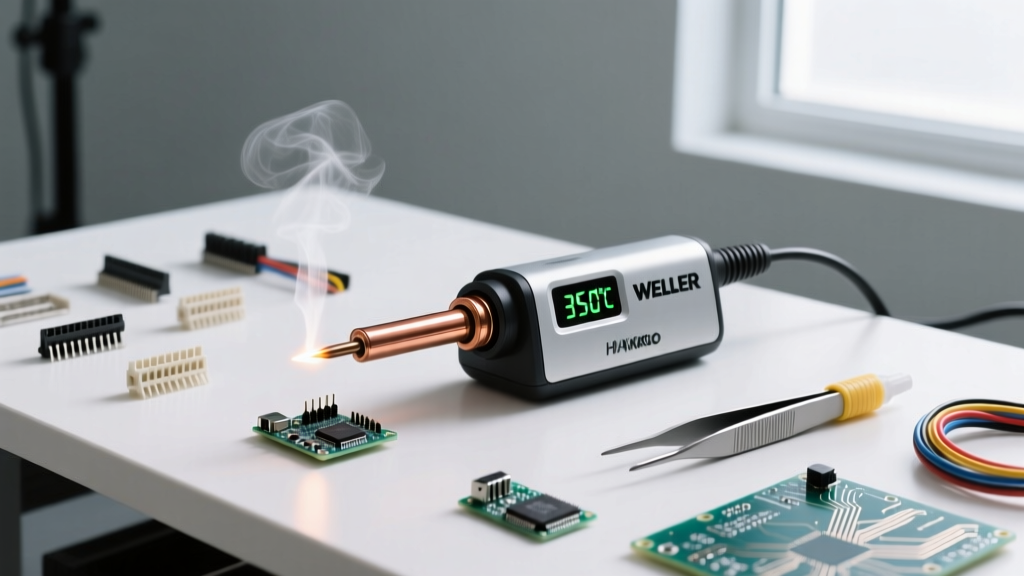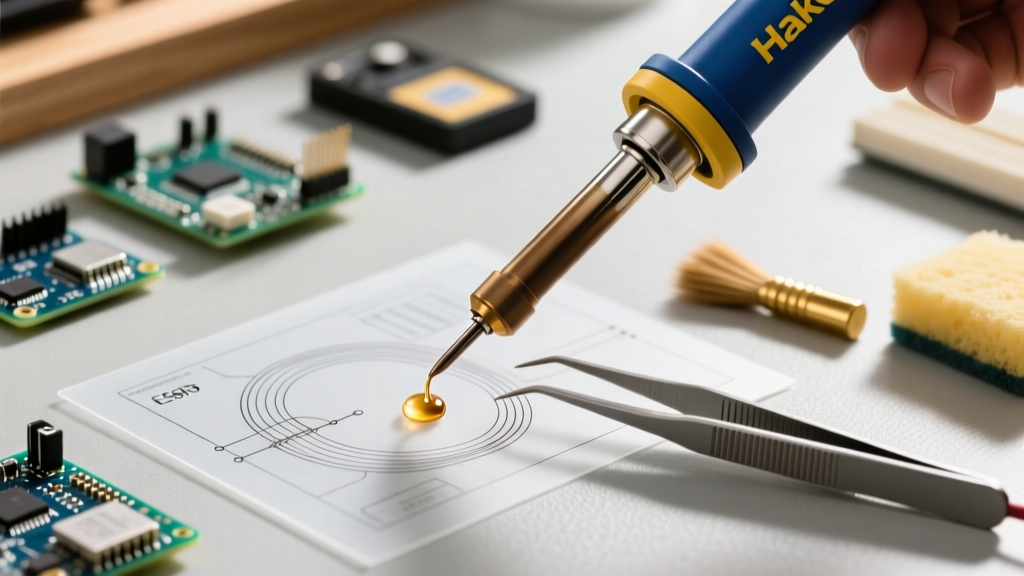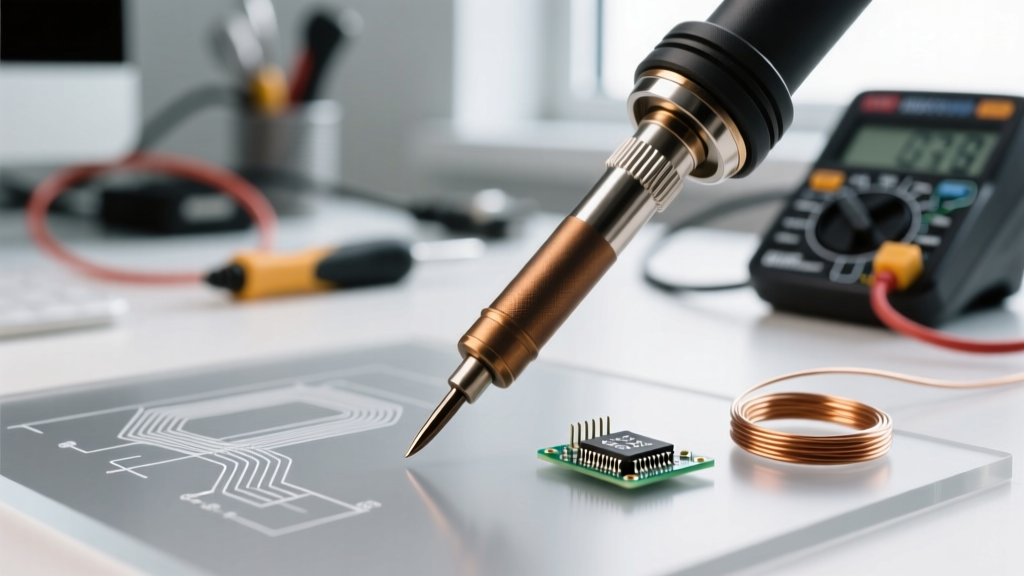

The Anatomy of a Soldering Iron Blade Tip
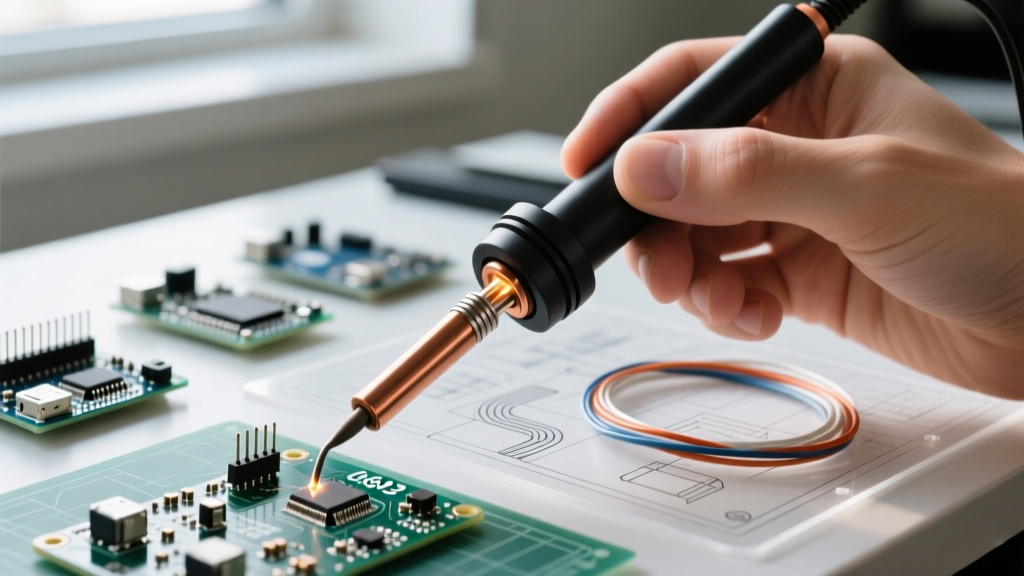
In the realm of surface-mount device (SMD) assembly and precision rework, the soldering iron blade tip—frequently referred to as a knife tip or K-tip—is an indispensable tool. Unlike standard conical or chisel tips that offer a single primary contact geometry, a blade tip features an asymmetrical, angled edge that provides a broad 'belly' for thermal transfer and a sharp 'toe' for pinpoint accuracy. This dual-nature geometry makes it the undisputed champion for drag soldering fine-pitch integrated circuits (ICs), cleaning oxidized PCB pads, and reworking QFN (Quad Flat No-leads) packages.
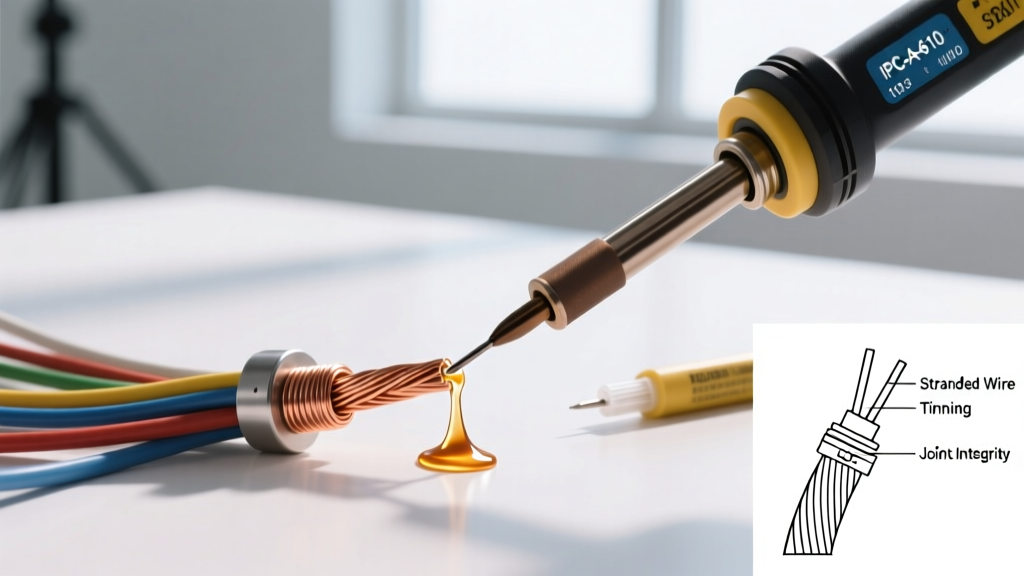
According to the IPC J-STD-001 standard for soldered electrical assemblies, maintaining proper thermal profiles and wetting angles is critical for reliable solder joints. A high-quality blade tip facilitates this by allowing the operator to dynamically adjust the contact surface area simply by rotating the iron handle, thereby modulating heat transfer without altering the station's temperature dial.
Why the K-Shape Dominates Surface Mount Work
The standard blade tip is ground at a 45-degree angle. When held parallel to a row of IC pins, the broad edge bridges multiple pads simultaneously, enabling the 'drag soldering' technique. When rotated 90 degrees, the sharp point acts like a micro-conical tip, perfect for touching up individual pins or routing jumper wires in 0402 and 0201 component territories. This versatility eliminates the need to swap tips constantly during complex rework sessions, reducing the risk of thermal shock to the tip's iron plating.
Top Soldering Iron Blade Tip Reviews for 2026
The market for replacement tips has evolved significantly, with cartridge-based systems largely overtaking traditional ceramic heater-in-handle designs for professional use. Below, we evaluate the top soldering iron blade tip models available in 2026 based on thermal recovery, plating longevity, and edge-case performance.
1. Hakko T18-K & T18-KU: The Budget Workhorse
The Hakko T18 series remains the most ubiquitous tip format globally, primarily due to the massive install base of the FX-888D station. The T18-K features a standard 45-degree blade with a 2.5mm width, while the T18-KU offers a slightly wider 3.5mm profile.
- Price Range: $8.50 - $12.00 (Genuine Hakko)
- Thermal Recovery: Moderate. The heater is located in the handle, separated from the tip by a metal sleeve and air gap. This introduces thermal lag when dragging across heavy ground planes.
- Plating Longevity: Excellent, provided it is not abused with lead-free alloys at excessive temperatures (above 380°C).
- Verdict: Ideal for hobbyists and light SMD work. However, for high-density 0.5mm pitch TQFP chips, the thermal lag can result in cold solder joints if the operator moves too quickly.
2. JBC K115 / K110: The Premium Cartridge Standard
JBC Tools revolutionized precision soldering with their integrated cartridge system, where the heating element, thermocouple, and tip are a single unit. The K115 (1.5mm width) and K110 (1.0mm width) are designed for the T245 handle. As detailed in the JBC cartridge heating technology documentation, this design reduces the distance between the heat source and the PCB pad to mere millimeters.
- Price Range: $48.00 - $55.00 per cartridge
- Thermal Recovery: Instantaneous. The station detects heat loss and pumps up to 130W directly into the tip in milliseconds.
- Plating Longevity: Superior. JBC's proprietary iron plating resists the corrosive effects of modern halogen-free, no-clean fluxes far better than standard tips.
- Verdict: The absolute gold standard for professional rework. The K115 is perfectly sized for 0.5mm pitch QFPs and 0.4mm pitch BGA edge pads. The high upfront cost is offset by the elimination of ruined PCBs and reduced rework time.
3. Pine64 Pinecil C245-K: The Portable Contender
For field technicians and budget-conscious makers, the Pinecil V2 portable soldering iron utilizes C245-compatible clone tips. The C245-K blade tip mimics the JBC geometry at a fraction of the cost.
- Price Range: $4.99 - $6.99
- Thermal Recovery: Fast, powered by a 65W USB-C PD power delivery profile.
- Plating Longevity: Fair. The tip plating is noticeably thinner than genuine JBC or Hakko offerings. It is prone to pitting if left idle at 350°C for more than 15 minutes.
- Verdict: Unbeatable value for portable SMD repair kits. Keep a spare in your bag, but ensure you utilize the Pinecil's aggressive sleep mode settings to preserve the tip's lifespan.
Comparative Matrix: Blade Tips at a Glance
| Model | System Compatibility | Blade Angle | Edge Width | Est. Price (2026) | Best Application |
|---|---|---|---|---|---|
| Hakko T18-K | FX-888D, FX-601 | 45° | 2.5mm | $9.50 | General SMD, pad tinning |
| JBC K115 | T245 Handle (CD-2BQE) | 45° | 1.5mm | $52.00 | 0.5mm pitch TQFP/QFP drag |
| JBC K110 | T245 Handle | 45° | 1.0mm | $52.00 | Micro-SMD, 0402/0201 routing |
| Pinecil C245-K | Pinecil V2, C245 Stations | 45° | 1.5mm | $5.50 | Field repair, budget SMD |
| Weller RT4 | Weller WXmicro, RT | 40° | 1.6mm | $38.00 | Micro-soldering, fine pitch |
Buying Guide: How to Choose the Right Blade Geometry
Selecting the correct soldering iron blade tip requires matching the tip's physical dimensions to your specific PCB density and thermal requirements.
1. Match Width to IC Pitch
The most common mistake beginners make is purchasing a blade tip that is too wide for their target IC. For drag soldering a chip with a 0.5mm pin pitch (like a standard ATmega328P-AU TQFP-32), a blade width between 1.2mm and 1.6mm is optimal. If the blade is wider than 2.5mm, the solder's surface tension will bridge across three or more pins simultaneously, creating massive shorts that require extensive solder wick to clean up.
2. Cartridge vs. Heater-in-Handle
If you are exclusively working with leaded solder (Sn63/Pb37) on simple 2-layer boards, a traditional heater-in-handle system like the Hakko FX-888D with a T18-K is perfectly adequate. However, if you are working with SAC305 (lead-free) alloys, or soldering components attached to multi-layer boards with internal ground planes, you must invest in a cartridge system (JBC or Weller WXmicro). Heavy ground planes act as massive heat sinks; a standard ceramic heater will stall and drop below the 217°C liquidus threshold of lead-free solder, resulting in dull, grainy, and mechanically weak joints.
Pro Techniques: Drag Soldering with a K-Tip
Mastering the blade tip requires a departure from traditional through-hole soldering habits. Follow this framework for flawless drag soldering on a 0.5mm pitch QFP-44 chip:
- Prep and Flux: Apply a generous amount of high-tack, no-clean flux (e.g., Amtech NC-559-V2-TF) to the bare PCB pads. Tack down two diagonal corners of the IC using a standard chisel tip to ensure perfect alignment.
- Load the Belly: Melt a small bead of 63/37 solder onto the broad 'belly' of the blade tip. The flux will help the solder wet evenly across the angled edge.
- The 45-Degree Drag: Hold the iron so the blade is parallel to the row of pins, tilted at a 45-degree angle to the board. Gently touch the tip to the first pin and slowly drag it across the row at a rate of roughly 1mm per second.
- Solder Management: If the solder accumulates at the end of the row, lift the iron, clean the tip on brass wool, and drag back in the opposite direction. The surface tension of the flux-coated pads will naturally pull the exact right amount of solder into each joint.
Expert Warning: Never press down hard during a drag. The weight of the iron handle alone provides the necessary contact pressure. Excessive downward force will scrape the microscopic iron plating off the blade edge, exposing the copper core to rapid oxidation and permanently ruining the tip.
Common Failure Modes & Maintenance
Blade tips are uniquely susceptible to specific failure modes due to their elongated edge geometry. Understanding these will save you hundreds of dollars in replacement costs.
The 'Dry Edge' Syndrome
Because the blade edge is thin, it has lower thermal mass than the thick 'belly' of the tip. If left idle in a holder at 350°C, the flux residues on the sharp edge burn into a hard, black carbon crust. This crust prevents solder from wetting the edge, rendering the tip useless for precision work. Solution: Always tin the sharp edge with a blob of fresh solder before placing the iron in its holder. This sacrificial solder layer oxidizes instead of the iron plating.
Thermal Shock from Cellulose Sponges
Many older soldering stations come with damp yellow cellulose sponges. Wiping a 350°C blade tip across a wet sponge causes an instantaneous temperature drop of up to 80°C. Over time, this rapid expansion and contraction causes micro-fractures in the tip's iron coating, leading to pitting and solder erosion. According to best practices outlined in the Hakko official tip geometry guide, operators should exclusively use dry brass wire wool (curly brass shavings) to clean blade tips. Brass is softer than the iron plating, effectively scraping away carbon buildup without damaging the tip or causing severe thermal shock.
Frequently Asked Questions (FAQ)
Can I use a blade tip for cutting plastic or desoldering braid?
While the sharp edge of a K-tip can technically melt through plastic zip-ties or cut excess component leads, doing so will instantly destroy the solder-wetting plating. Furthermore, dragging a blade tip over copper desoldering wick (braid) can snag and tear the delicate wire mesh, pulling the tip plating off with it. Use dedicated flush cutters and a standard chisel tip for wick removal.
Why is my blade tip leaving solder bridges between pins?
Solder bridges with a blade tip are almost always caused by one of three issues: insufficient flux, a tip temperature that is too low (preventing proper wetting and flow), or a blade width that is too wide for the IC pitch. Ensure your flux is active and bubbling; if it is not, your temperature is too low or the flux has expired.
Are third-party clone tips worth the risk?
For casual hobbyists using leaded solder, third-party C245 or T18 clone tips (often found in multi-packs online for under $15) offer 80% of the performance of genuine tips at 20% of the cost. However, for professional environments requiring IPC-compliant reliability, genuine tips are mandatory. Clone tips often suffer from inconsistent thermal coupling and thinner plating that degrades rapidly when exposed to aggressive lead-free fluxes.