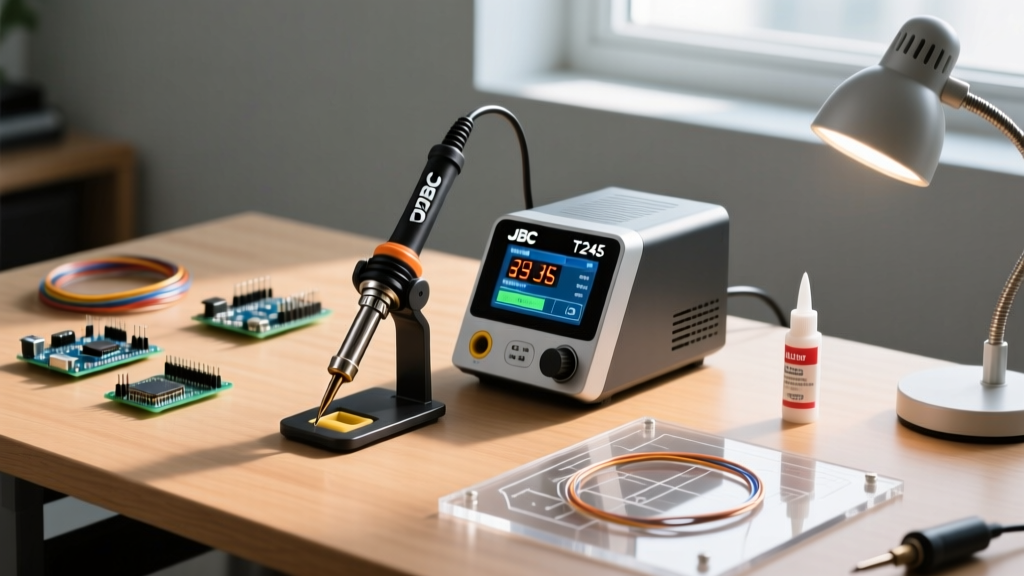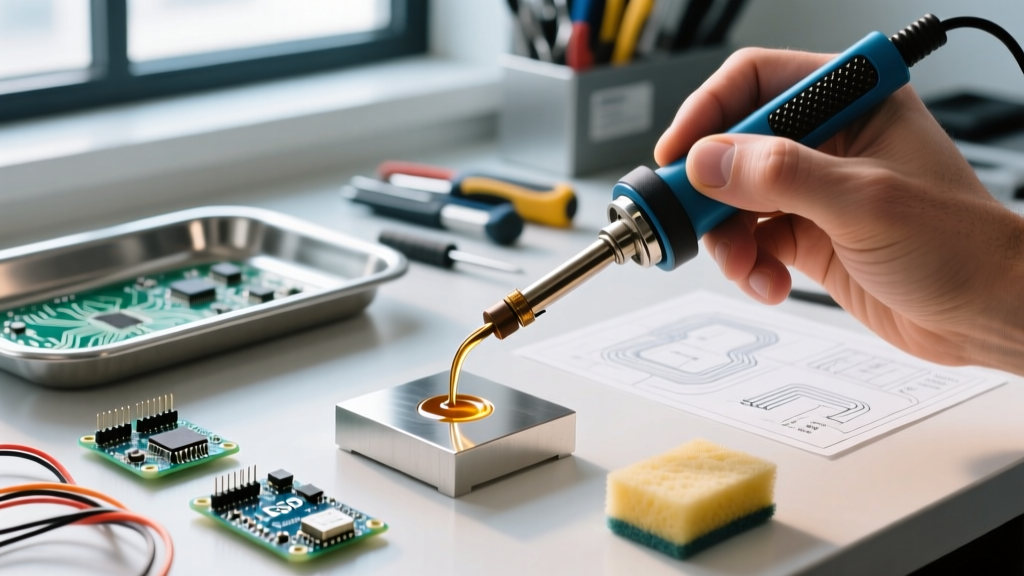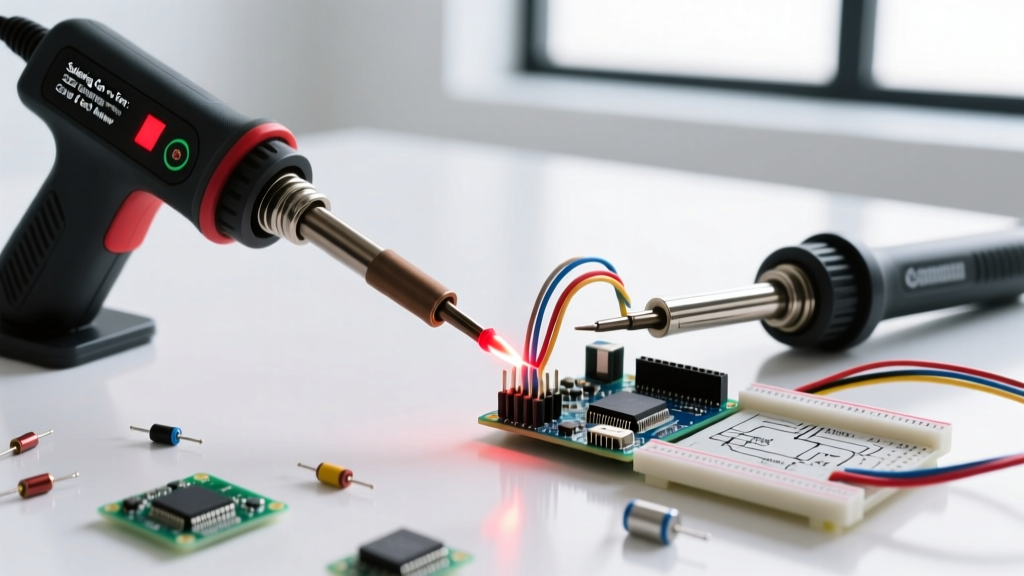

The Fundamental Divide: Transformer vs. Heating Element
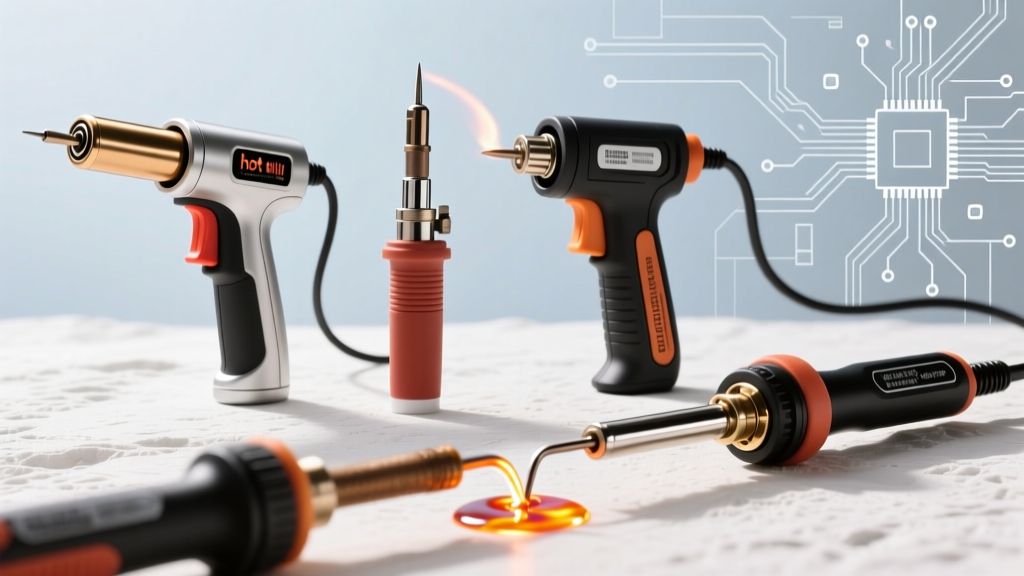
When evaluating a soldering gun vs iron, you are not merely choosing between two different form factors; you are choosing between two entirely different methods of thermal generation. Understanding the underlying physics is the first step in making an informed purchasing decision for your workbench in 2026. While both tools melt solder, their internal engineering dictates their specific use cases, limitations, and potential risks to your components.
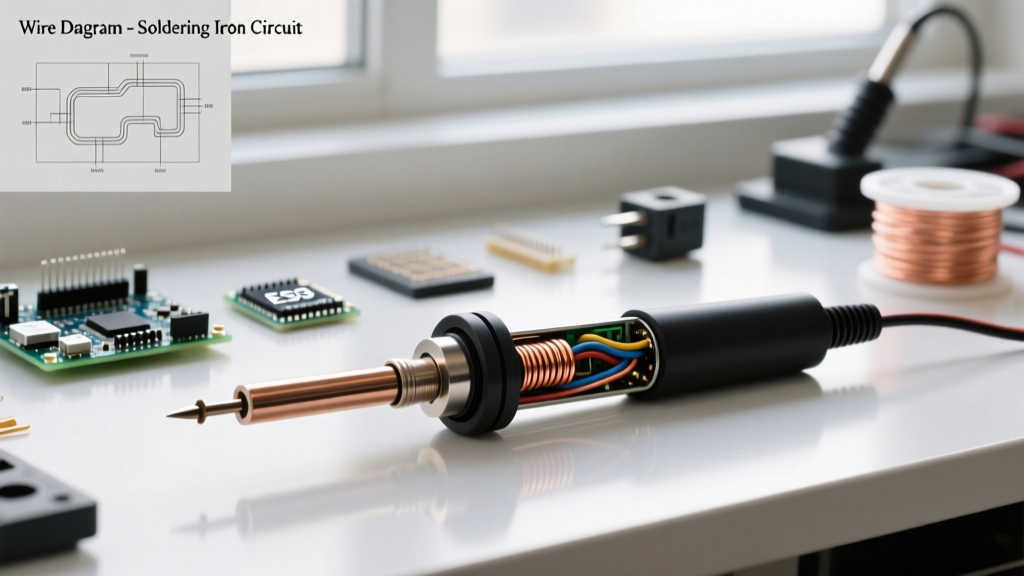
A traditional soldering gun utilizes a step-down transformer. When you pull the trigger, mains voltage is stepped down to a fraction of a volt, while current is simultaneously stepped up to hundreds of amps. The copper tip itself acts as a single-turn secondary winding. This high current rapidly heats the copper loop via resistive heating. Conversely, a soldering iron relies on a dedicated heating element—typically a ceramic core wrapped in nichrome wire or a thick-film resistor—that transfers heat conductively to a removable copper tip.
Expert Insight: The thermal mass of a soldering gun tip is massive compared to an iron. While a gun can deliver 150W+ of instantaneous power, it takes 4 to 8 seconds just to overcome the thermal inertia of the thick copper loop and reach 230°C. A modern 65W smart iron can hit 300°C in under 8 seconds due to low thermal mass and rapid PID algorithm tuning.
Head-to-Head Specification Matrix
To ground our comparison in real-world data, let us look at three distinct archetypes dominating the market: the classic transformer gun, the reliable analog/digital bench iron, and the modern USB-C PD smart iron.
| Feature | Weller D550PK (Gun) | Hakko FX-888D (Iron) | Pinecil V2 (Smart Iron) |
|---|---|---|---|
| Power Output | 120W / 170W (Dual Trigger) | 70W (Continuous) | 65W (via USB-C PD) |
| Thermal Recovery | Slow (High Thermal Mass) | Moderate (Ceramic Heater) | Instantaneous (RISC-V PID) |
| Weight | ~2.4 lbs (Heavy, causes fatigue) | ~1.8 oz (Handpiece only) | ~1.0 oz (Ultra-lightweight) |
| EMI / EMF Risk | High (AC Magnetic Field) | None (Shielded) | None (DC Powered) |
| Tip Replacement Cost | ~$8 - $12 per loop | ~$6 - $9 per T18 tip | ~$3 - $5 per TS100/Pine tip |
| 2026 Avg. Price | $119 - $139 | $115 - $135 | $26 - $35 |
When to Deploy a Soldering Gun (Heavy-Duty Scenarios)
Soldering guns are brute-force instruments designed for high-thermal-mass connections. If you are working with thick copper that acts as a massive heatsink, a standard soldering iron will suffer from thermal droop, resulting in cold, crystalline joints.
Ideal Applications for Guns:
- Heavy Gauge Wiring: Soldering 10 AWG to 4 AWG silicone or PVC wires, such as XT90 or AS150 connectors used in high-discharge LiPo battery packs and e-bikes.
- Large Lug Terminals: Attaching ring terminals to heavy-duty ground straps or automotive starter motor connections.
- Stained Glass & Plumbing: Sweeping large beads of 60/40 solder along copper foil tape or joining copper pipe joints where continuous high heat is mandatory.
The Hidden Danger: Electromagnetic Interference (EMI)
The most critical, yet frequently overlooked, factor in the soldering gun vs iron debate is electromagnetic interference. Because the gun's tip is a single-turn secondary winding carrying hundreds of amps of alternating current, it generates a localized, fluctuating AC magnetic field. If you bring an active soldering gun near an unpowered printed circuit board (PCB), this magnetic field can induce an electromotive force (EMF) in the board's copper traces. This induced voltage spike can easily exceed the gate-source breakdown voltage of sensitive MOSFETs or latch up CMOS inputs, instantly destroying microcontrollers and logic ICs. Never use a transformer gun on populated PCBs.
When to Choose a Soldering Iron (Precision Electronics)
For 90% of electronics hobbyists, engineers, and repair technicians, a temperature-controlled soldering iron is the mandatory choice. Modern irons provide the precision required to meet the stringent thermal profiling requirements outlined by the Association Connecting Electronics Industries (IPC) in their J-STD-001 soldering standard.
Ideal Applications for Irons:
- Through-Hole PCB Assembly: Soldering resistors, capacitors, and DIP ICs without lifting the copper pads due to excessive dwell time.
- Surface Mount Devices (SMD): Working with 0805, 0603, or even 0402 components requires a fine chisel or conical tip and precise thermal control to prevent solder bridging.
- Microcontroller Programming Headers: Attaching delicate 0.050-inch pitch SWD or JTAG headers to development boards without melting the plastic insulator.
According to reliability data published by the NASA Electronic Parts and Packaging (NEPP) Program, excessive dwell times and thermal shock are primary drivers of latent solder joint failures and pad delamination. A quality iron with a ceramic heater and active PID temperature control ensures the tip stays within a tight ±5°C window of your target temperature, protecting both the component and the FR-4 fiberglass substrate.
The 2026 Market Shift: Cordless Guns vs. USB-C Smart Irons
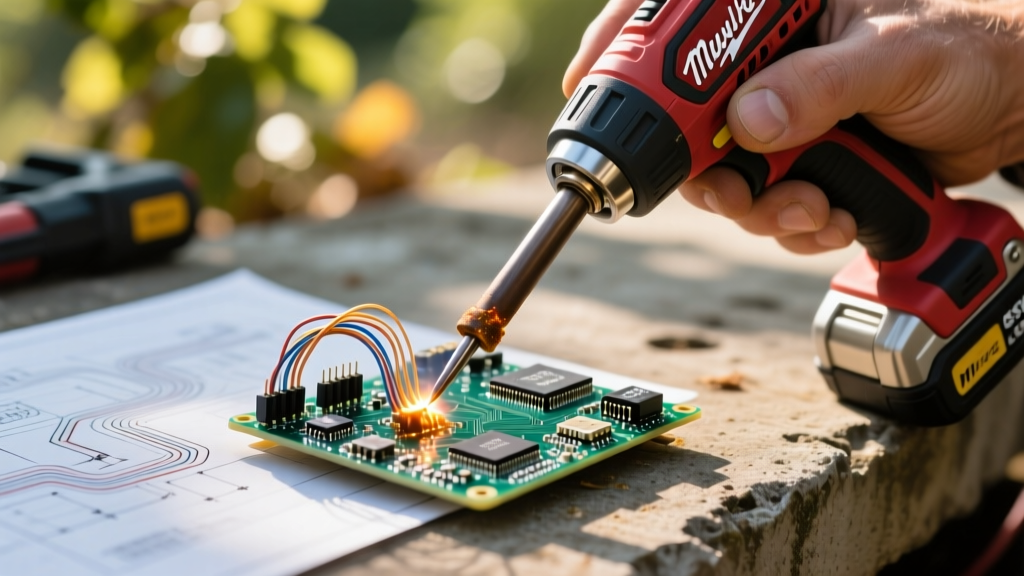
The traditional landscape has been heavily disrupted by portable power technology. On the gun side, cordless options like the Milwaukee M18 Soldering Gun offer immense portability for field technicians working on automotive wiring or HVAC systems without access to AC mains. However, they remain heavy and suffer from the same EMI risks as their corded counterparts.
On the iron side, USB-C Power Delivery (PD) has revolutionized the bench. Smart irons like the Pinecil V2 or Sequre S60 leverage a RISC-V microcontroller to sample the tip temperature up to four times per second. Powered by a standard 65W laptop charger, these irons offer thermal recovery rates that rival $300 benchtop stations, completely blurring the line between budget and professional gear. For intricate PCB work, a USB-C smart iron is the undisputed champion of the modern workbench.
Actionable Buying Framework
Use this decision matrix to finalize your purchase based on your primary workload:
- Buy a Soldering Gun IF: Your work consists of 80% heavy-gauge wire, battery tabs, automotive harnesses, or stained glass. Recommendation: Weller D550PK or a cordless 18V equivalent.
- Buy a Bench Iron IF: You need a reliable, always-on station for mixed through-hole and basic SMD work, and you prefer the ergonomics of a traditional silicone-grip handpiece. Recommendation: Hakko FX-888D or Weller WE1010NA.
Buy a Smart USB-C Iron IF: You work exclusively on delicate PCBs, SMD components, drones, or microcontrollers, and you value rapid heat-up times and portability. Recommendation: Pinecil V2 or Pine64 Sequre S60.
Frequently Asked Questions
Can I use a soldering gun to solder a circuit board?
Technically yes, but practically no. The heavy tip makes precision work nearly impossible, and the AC magnetic field generated by the transformer loop can induce voltage spikes that will destroy sensitive semiconductors, MOSFETs, and microcontrollers on the board.
Why does my soldering gun tip degrade and pit so quickly?
Gun tips suffer from high-current arcing and pitting. Because the tip is part of the electrical circuit, any carbon buildup from burned flux creates a high-resistance barrier. This causes localized micro-arcing, which literally vaporizes microscopic divots into the copper. Always keep the tip heavily tinned and clean it with a damp brass sponge, never dry abrasives.
What solder alloy should I use with these tools?
For general DIY and plumbing with a gun, 60/40 or 63/37 leaded rosin-core solder is ideal due to its low 183°C melting point. For PCB work with an iron, especially in commercial or RoHS-compliant environments, SAC305 (Sn96.5/Ag3.0/Cu0.5) lead-free solder is the standard, requiring tip temperatures around 320°C to 350°C for optimal wetting.
For further reading on safe soldering practices and fume extraction, always consult your local occupational safety guidelines and manufacturer technical documentation from brands like Weller Tools.