
The True Cost of Soldering: Beyond the Sticker Price
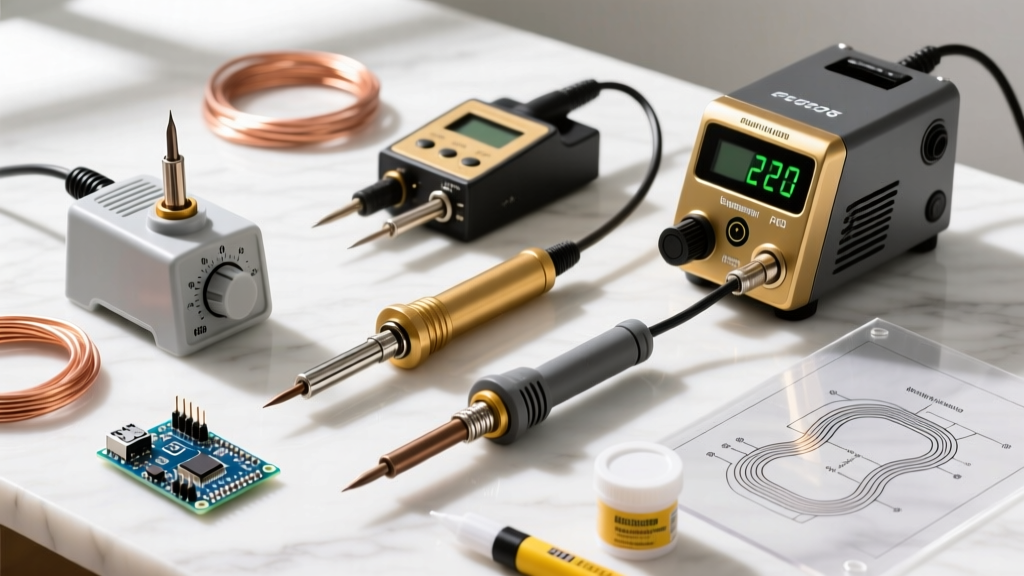
When makers and technicians ask, "how much is a soldering iron?" the answer ranges anywhere from $12 for a generic plug-in wand to over $600 for a production-grade smart station. While both extremes will technically melt 63/37 tin-lead solder at 183°C, the physics of thermal transfer, PID controller responsiveness, and long-term consumable costs are vastly different. In 2026, the market has bifurcated sharply: USB-C PD smart irons have completely disrupted the budget tier, while induction and direct-cartridge heaters dominate the premium space. Understanding where your money actually goes requires looking past the initial hardware cost and analyzing thermal recovery, tip oxidation rates, and cost-per-joint economics.
Tier 1: The Budget Segment ($15 – $40)
The budget category is no longer the wasteland of unregulated, transformer-heavy 60W wands that burn through tips in a week. The introduction of RISC-V microcontrollers and USB-C Power Delivery (PD) has revolutionized entry-level soldering. The undisputed king of this tier in 2026 remains the Pine64 Pinecil V2, typically priced around $28 (without power supply). When paired with a 65W GaN charger, it delivers exceptional performance for through-hole and basic surface-mount device (SMD) work.
However, budget irons still rely on traditional ceramic heating elements where the thermocouple is separated from the tip by an air gap or thermal paste. This creates thermal lag.
- Strengths: Unbeatable portability, open-source firmware (IronOS), and ultra-low entry cost.
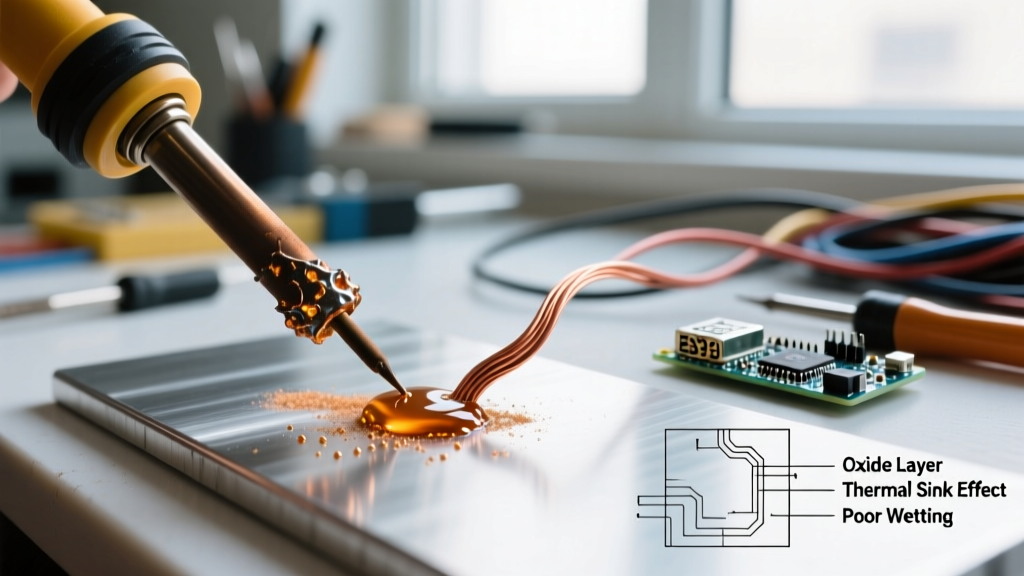
- Weaknesses: Severe thermal droop when touching large ground planes. The PID loop struggles to push current through the high-resistance ceramic element fast enough to compensate for massive heat sinks.
- Failure Mode Edge Case: Attempting to solder a 14-pin connector to a multi-layer motherboard ground plane with a 65W budget iron often results in 'pad lifting.' The iron dwells on the pad for 10+ seconds trying to reach reflow temperature, baking the FR4 substrate and delaminating the copper.
Tier 2: The Professional Mid-Range ($120 – $250)
This is the sweet spot for serious hobbyists, repair technicians, and small-batch assembly. The Hakko FX-888D (approx. $115) and the Weller WE1010NA (approx. $140) dominate this space. These stations utilize 70W to 75W dedicated transformers and high-grade ceramic heaters.
The primary advantage here is sustained thermal mass. When you touch a cold, heavy component lead, the station's microcontroller detects the voltage drop across the thermocouple and immediately floods the heater with current. Thermal recovery times drop from the 8-12 seconds seen in budget irons down to roughly 3-5 seconds.
According to the IPC J-STD-001 standard for soldered electrical and electronic assemblies, strict thermal profiling and dwell-time limits are critical to prevent thermal damage to PCB pads and sensitive semiconductor packages. Mid-range stations provide the stability required to meet these compliance thresholds consistently.
As noted in Hackaday's technical teardown of the Pinecil V2, while budget smart irons use rapid PID tuning to simulate thermal mass, they are still bound by the physical limits of low-wattage USB-C power delivery compared to the dedicated 70W AC transformers found in the Hakko FX-888D.
Tier 3: Premium & Production-Grade ($350 – $650+)
When you step into the premium tier, you are paying for a fundamental change in hardware architecture: the integrated cartridge tip. Brands like JBC (e.g., CD-2BQF at ~$450) and Pace (e.g., ADS200 at ~$350) place the heating element and the thermocouple directly inside the consumable tip itself, mere millimeters from the solder joint.
This eliminates the thermal bottleneck of the air gap. When a JBC C245 cartridge tip touches a massive copper pour, the integrated sensor registers the temperature drop in milliseconds, and the 130W base station dumps maximum current directly into the tip. Thermal recovery is practically instantaneous (under 1 second).
- Sleep/Wake Automation: Premium stations feature magnetic hall-effect sensors in the handle cradle. The iron drops to standby (150°C) the millisecond you set it down, extending tip life by 400%.
- Tip Cost: JBC C245 cartridge tips cost roughly $45 to $55 each, compared to $7 for a standard Hakko T18 tip.
The Hidden Economics: Cost-Per-Joint Analysis
To truly answer how much a soldering iron costs, you must calculate the cost-per-joint over a two-year period. A common misconception is that budget irons are cheaper to maintain because their tips cost less. In reality, cheap tips suffer from rapid iron plating degradation and oxidation.
The NASA Workmanship Training Manual emphasizes that soldering iron dwell time should ideally not exceed 2 to 3 seconds per joint to prevent flux burn-off and intermetallic compound overgrowth. Because premium cartridge irons complete joints in 1.5 seconds, the tip is exposed to atmospheric oxygen and molten flux for a fraction of the time. A $50 JBC cartridge tip will routinely outlast ten $7 generic tips, while simultaneously reducing the scrap rate of damaged PCBs to near zero.
Comparison Matrix: Budget vs. Mid-Range vs. Premium
| Feature | Budget (Pinecil V2) | Mid-Range (Hakko FX-888D) | Premium (JBC CD-2BQF) |
|---|---|---|---|
| Initial Cost (2026) | $28 - $45 | $115 - $140 | $450 - $550 |
| Max Wattage | 65W (via USB-C PD) | 70W | 130W |
| Thermal Recovery | 8 - 12 seconds | 3 - 5 seconds | < 1 second |
| Heater Architecture | Ceramic (Separated) | Ceramic (Separated) | Cartridge (Integrated) |
| Replacement Tip Cost | $8 - $12 | $7 - $10 | $45 - $55 |
| Best Use Case | Drones, basic SMD, travel | General repair, through-hole | Heavy ground planes, BGA, production |
Frequently Asked Questions
Is a $15 soldering iron from an online marketplace worth buying?
For a single, emergency wire splice, yes. For electronics, absolutely not. Unregulated $15 irons lack basic thermal fuses, posing a severe fire hazard, and their tips are often made of soft copper with a microscopic flash of iron plating that dissolves into the solder pool within hours, ruining both the tip and your joints.
Do I need a premium JBC station for home hobby projects?
Unless you are exclusively repairing modern gaming consoles, automotive ECUs, or multi-layer server boards with heavy copper ground planes, a premium station is overkill. A mid-range Hakko or a USB-C Pinecil V2 will handle 95% of hobbyist tasks, including 0402 SMD components, provided you use high-quality flux and appropriately sized tip geometries.
Why do premium soldering tips cost so much more?
Premium cartridge tips are not just shaped copper; they are complex electromechanical assemblies. The heater coil, the thermocouple sensor, and the copper core are manufactured as a single, hermetically sealed unit. This eliminates the thermal interface resistance found in traditional screw-on tips, which is why the manufacturing cost—and subsequent retail price—is significantly higher.