
The Allure of the Snap-On Truck: Is the Premium Justified?
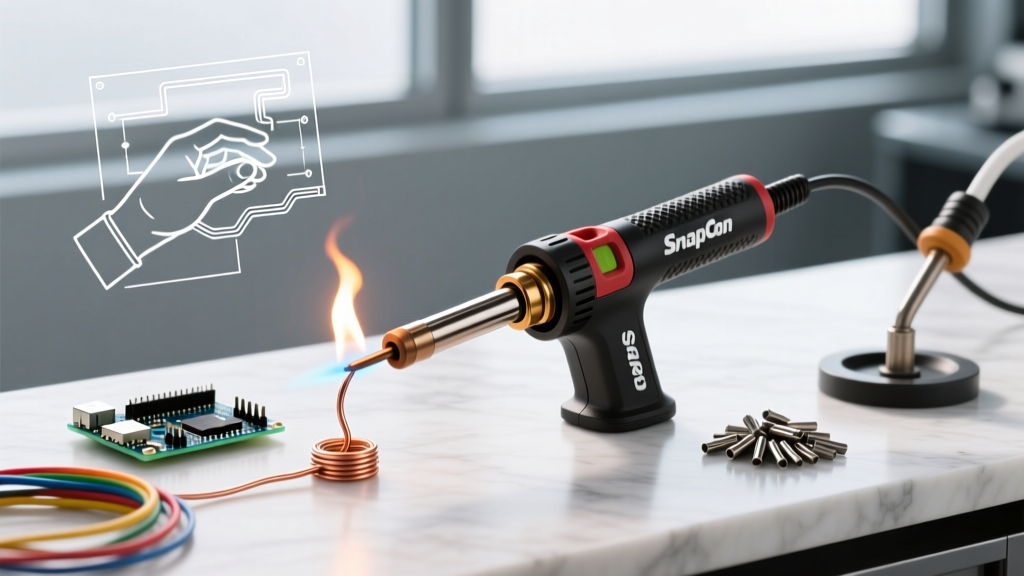
For field service technicians, automotive electricians, and HVAC specialists, the Snap-On tool truck is a weekly ritual. Among the most coveted cordless tools is the Snap On butane soldering iron, often sold as part of a comprehensive cordless heat and soldering kit. Priced anywhere from $165 to over $210 depending on the franchisee and current 2026 promotions, it represents a significant investment compared to hardware store alternatives. But when you are stranded on a rooftop in December or troubleshooting a heavy-duty relay in a dimly lit mechanical room, cordless reliability is paramount.
In this best-of comparison, we put the Snap On butane soldering iron head-to-head against its most formidable market alternatives: the Master Appliance UltraTorch UT-100SiK, the Weller Pyropen WP25, and the Blazer GB2001. We will dissect thermodynamics, catalytic tip longevity, and the open secret of OEM manufacturing to help you decide where your money belongs.
2026 Cordless Butane Iron Comparison Matrix
| Feature | Snap-On Cordless Kit (PT100/UT Equiv) | Master Appliance UT-100SiK | Weller Pyropen WP25 | Blazer GB2001 |
|---|---|---|---|---|
| Avg. Street/Truck Price | $165 - $210 | $75 - $85 | $45 - $55 | $60 - $70 |
| Watt Equivalent | 100W - 125W | 100W - 125W | 75W - 100W | 125W+ |
| Max Tip Temp | 1,300°F (704°C) | 1,300°F (704°C) | 1,050°F (565°C) | 1,300°F (704°C) |
| Piezo Ignition | Yes (Heavy-duty) | Yes (Standard) | No (Manual valve) | Yes (Standard) |
| Catalytic Tip Tech | Platinum/Palladium Mesh | Platinum/Palladium Mesh | Standard Catalytic | Flame & Catalytic Hybrid |
| Run Time (Full Tank) | ~60-90 Minutes | ~60-90 Minutes | ~45-60 Minutes | ~45 Minutes |
Deep Dive: The Snap-On Butane Soldering Iron Experience
The Snap-On branded butane iron is engineered for the rigors of daily professional abuse. The chassis is typically constructed from high-impact, chemical-resistant polymers designed to survive drops onto concrete shop floors and exposure to aggressive solvents like brake cleaner and dielectric grease removers.
Where the Snap-On Excels
- Piezo Igniter Durability: The internal piezoelectric crystal and striker mechanism in the Snap-On unit are calibrated for a heavier, more definitive strike. Cheaper models often suffer from misaligned flints or weak crystal outputs after 500 strikes; the Snap-On maintains consistent spark gap alignment well past 2,000 ignitions.
- O-Ring and Valve Seals: The most common failure point on any butane tool is the fuel valve O-ring. Snap-On utilizes high-durometer Viton or equivalent fluorocarbon seals that resist degradation from the hydrocarbon fuel, drastically reducing the likelihood of pocket leaks or tank depressurization.
- Warranty & Replacement: If your catalytic tip fails prematurely or the igniter dies, resolving it through the Snap-On truck warranty is instantaneous compared to shipping a Weller or Blazer unit back to an online retailer.
The Drawbacks
The primary drawback is undeniably the cost. You are paying a 100% to 150% premium for the brand name, the truck delivery ecosystem, and the warranty convenience. Furthermore, the physical footprint of the Snap-On kit case takes up valuable drawer space in a service van compared to the blister-pack footprint of the Weller Pyropen.
The OEM Secret: Snap-On vs. Master Appliance
Experienced tool buyers know that Snap-On rarely manufactures every tool they sell; they partner with top-tier OEMs. The Snap-On cordless butane soldering iron shares a nearly identical DNA—and in many cases, the exact same internal catalytic chamber and valve assembly—as the Master Appliance UltraTorch series.
Master Appliance, based in Racine, Wisconsin, has been the gold standard for industrial heat tools for decades. The UT-100SiK kit offers the exact same 1,300°F maximum temperature, the same 100W-125W thermal output equivalent, and the same interchangeable tip ecosystem (including the hot air deflector and shrink tube nozzles) as the Snap-On version.
Expert Insight: If you are an independent contractor buying your own tools and do not have a corporate account with the Snap-On truck, purchasing the Master Appliance UT-100SiK will save you roughly $100 while delivering 95% of the exact same field performance. The only sacrifice is the Snap-On cosmetic branding and the immediate over-the-counter warranty swap.
Thermodynamics and the Danger of Flux Poisoning
To master any butane soldering iron, you must understand catalytic thermodynamics. Unlike a standard torch that uses an open flame, a soldering tip on these units relies on a platinum and palladium catalyst mesh. When butane gas passes through this heated mesh, it undergoes a flameless oxidation reaction, generating intense, localized heat.
According to the thermal profiles required for proper wetting and intermetallic compound formation outlined in the IPC J-STD-001 soldering standards, maintaining a stable tip temperature is critical to prevent cold solder joints or thermal damage to PCB pads. The Snap-On and Master Appliance units excel here, holding a steady 750°F to 850°F at the working face when adjusted correctly.
The Flux Poisoning Failure Mode
The greatest threat to your $200 Snap-On iron is 'catalyst poisoning.' When rosin-based or water-soluble flux splatters and boils up onto the porous catalytic mesh near the base of the tip, the carbon and chemical residues clog the microscopic pores. Once the platinum/palladium mesh is coated in carbon, the flameless oxidation stops. The tip will fail to heat, even if gas is flowing freely.
Step-by-Step Recovery Protocol for Poisoned Tips
- Cool and Disconnect: Turn off the gas valve completely and allow the tool to cool for 10 minutes.
- Remove the Tip: Unscrew the catalytic tip from the burner head using a heat-resistant glove or pliers if still warm.
- Solvent Bath: Submerge ONLY the catalytic mesh section in a small glass jar of high-purity isopropyl alcohol (99% IPA) for 15 minutes. Do not use acetone, as it can leave a heavier polymer residue.
- Thermal Burn-Off: Reattach the tip. Turn the gas valve to the lowest setting and ignite. Allow the tool to run at its lowest heat setting for 3 minutes in a well-ventilated area. The residual alcohol and light carbon will burn off, restoring the catalyst's porosity.
Winter Field Operations: The Butane Vapor Pressure Problem
A common complaint on forums regarding the Snap On butane soldering iron—and all butane tools—is 'sputtering' or failure to ignite in cold weather. This is not a defect of the Snap-On tool; it is a law of physics.
Butane has a boiling point of approximately 31°F (-0.5°C). As ambient temperatures drop toward freezing, the vapor pressure inside the tool's fuel tank plummets. There is simply not enough gaseous pressure to push the fuel through the micro-valve and into the catalytic chamber. If you are working on an outdoor telecom cabinet or an unheated agricultural facility in January, your iron will die prematurely.
The Field Tech Workaround: Keep the butane iron in an inner jacket pocket close to your body heat when not in use. Warming the fuel tank to 70°F restores the internal pressure to roughly 30 PSI, ensuring a steady, uninterrupted flow of gas to the catalytic tip. Never use an external heat gun or lighter to warm the tank, as this violates basic OSHA hazard communication and safety protocols regarding pressurized hydrocarbon vessels.
The Importance of 5x Refined Fuel
Never fill your Snap-On or Master Appliance iron with cheap, hardware-store brand butane. Lower-grade butanes contain trace amounts of oils, mercaptans (odorants), and other hydrocarbon impurities. When these impurities pass through the catalytic mesh, they instantly carbonize, permanently ruining a $25 replacement tip in a matter of hours.
Always invest in 5x or 7x refined butane (brands like Colibri, Newport, or Zippo Premium). The multi-stage distillation process removes the heavy oils, ensuring that only pure isobutane and n-butane reach the catalyst, extending the life of your tips from a few months to several years.
Final Verdict: Which Should You Buy in 2026?
The decision ultimately comes down to your purchasing ecosystem and workflow demands.
Buy the Snap-On Butane Soldering Iron If:
- You have a corporate account or expense card that absorbs the $180+ price tag.
- You require immediate, over-the-counter warranty replacements from the truck to minimize downtime.
- You demand the absolute highest durability for O-rings and piezo igniters in a high-abuse environment (e.g., heavy machinery repair, mining equipment maintenance).
Buy the Master Appliance UT-100SiK If:
- You are an independent contractor, AV installer, or freelance electronics tech paying out of pocket.
- You want the exact same 1,300°F catalytic performance and tip ecosystem for under $85.
- You are comfortable ordering online and waiting 2 days for shipping rather than waiting for Tuesday's truck route.
Buy the Weller Pyropen WP25 If:
- You only need occasional cordless capability for light-gauge automotive wire splicing or quick RC hobby repairs.
- You are on a strict sub-$50 budget and do not require the heavy-duty thermal mass needed for 10 AWG wires or large ground planes.
Ultimately, the Snap On butane soldering iron remains a top-tier, professional-grade instrument. It is not a gimmick; it is a highly refined thermal tool that, when fed pure fuel and maintained properly, will outlast the vehicles and equipment you use it to repair.