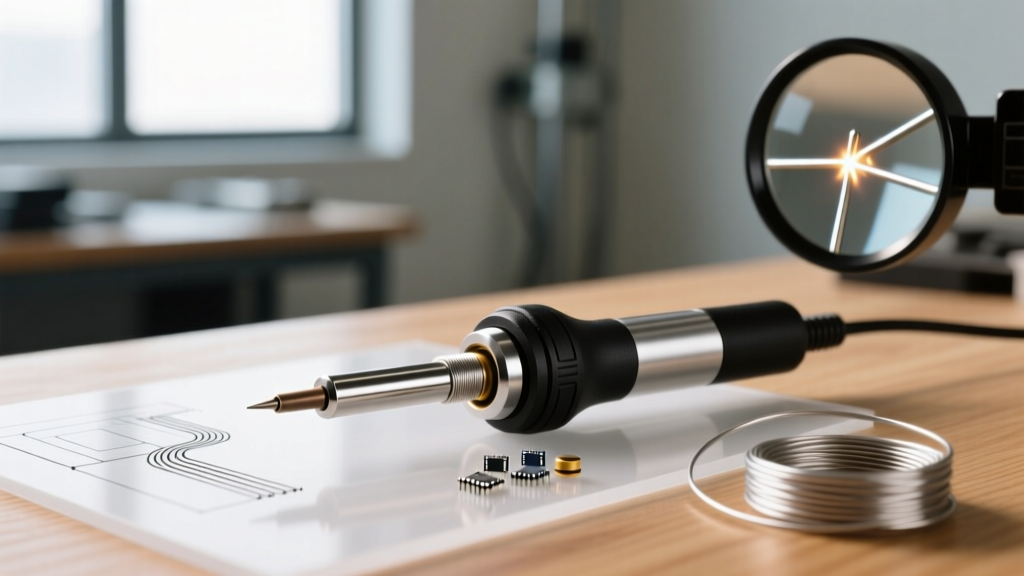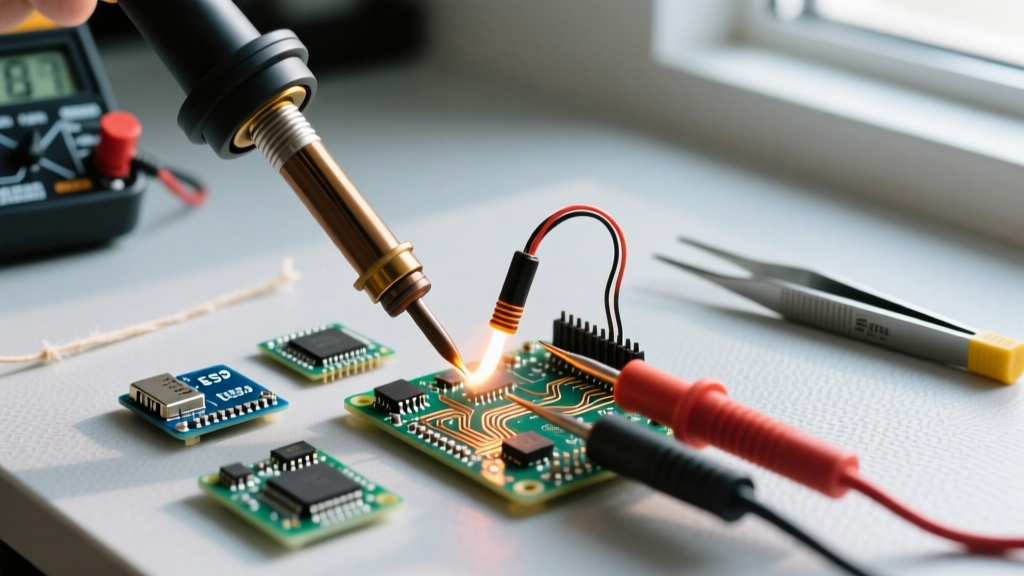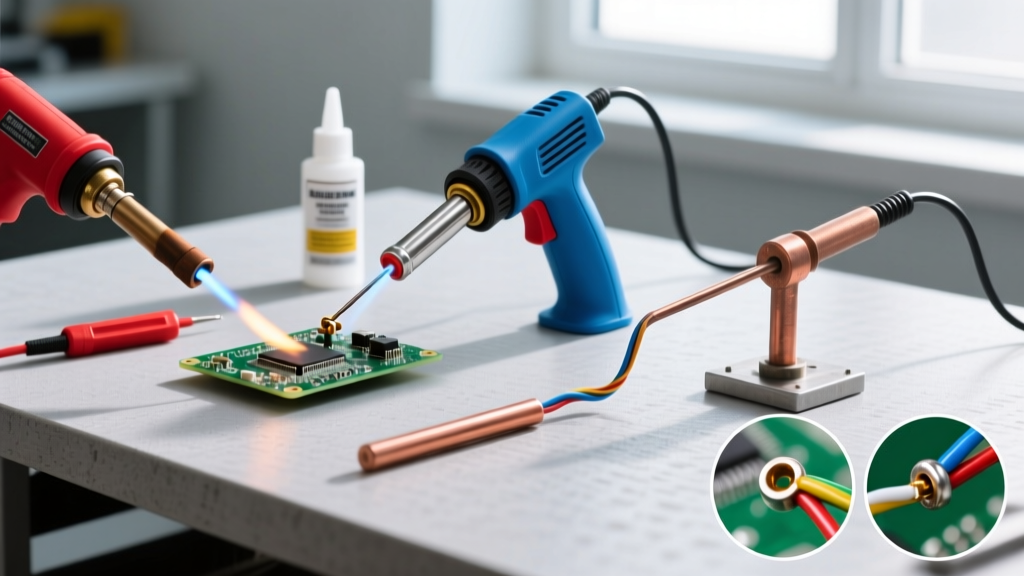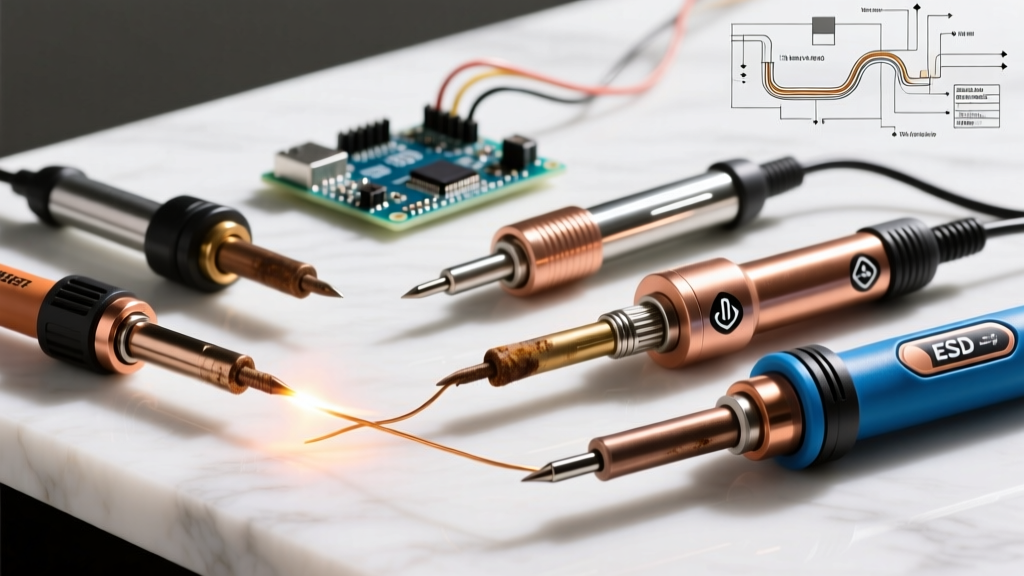

The Cordless Soldering Revolution: Understanding Your Ryobi Iron
Transitioning from a traditional benchtop station to a cordless setup is a milestone for many DIY electronics enthusiasts and automotive wire harness builders. The Ryobi 18V ONE+ Cordless Soldering Iron (models P3100 and the updated P3105) has become a staple in 2026 for its portability and integration into the massive ONE+ battery ecosystem. However, beginners quickly discover that cordless soldering introduces unique thermal challenges. Unlike a 60W wall-powered Weller or Hakko station that can draw infinite current to recover heat, your Ryobi iron relies on a finite lithium-ion battery. This makes your choice of Ryobi soldering iron tips the single most critical factor in your soldering success, battery life, and joint quality.
In this comprehensive beginner guide, we will decode tip compatibility, map tip geometries to specific wire gauges, and provide actionable maintenance protocols to ensure your cordless iron performs flawlessly whether you are splicing 14 AWG silicone wire in an RC car or tinning a PCB pad.
Decoding Ryobi Soldering Iron Tip Compatibility
The most common hurdle for beginners is realizing that Ryobi soldering irons do not use the industry-standard Hakko T18 or Weller ET series tips. The Ryobi P3100 and P3105 utilize a proprietary collet and nut retention system designed to secure tips with a specific shaft diameter.
The 1/4-Inch (6.35mm) Shank Standard
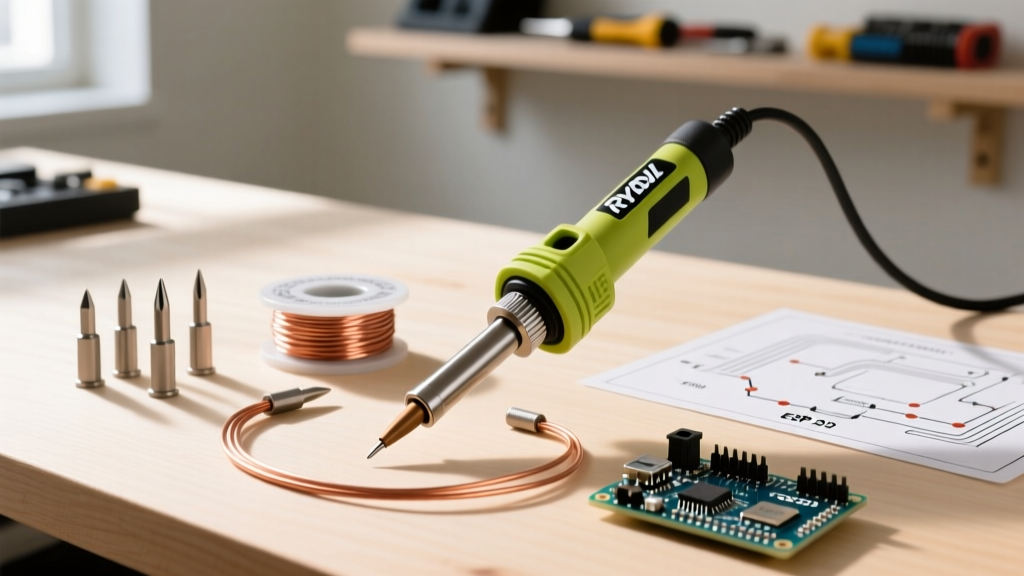
Ryobi's cordless irons accept tips with a 1/4-inch (6.35mm) cylindrical shank. While Ryobi sells official replacement tip kits (often bundled with the tool or available via special order under part numbers like 681329001), the broader electronics market offers hundreds of generic 6.35mm shank tips that fit perfectly. When shopping for third-party Ryobi soldering iron tips, you must filter for '6.35mm shank' or '1/4 inch shaft' to ensure the collet nut can physically clamp down on the tip without it slipping out during use.
Expert Warning: Never attempt to force a smaller shank (like a 3/16-inch tip) into the Ryobi collet by wrapping it in foil or wire. The thermal transfer will be severely bottlenecked by the air gaps, and the tip can eject when hot, posing a severe burn hazard.
Tip Geometry Matrix: Matching Shape to Application
Because cordless irons have a slower thermal recovery rate than plugged-in stations, selecting the right tip geometry is about maximizing surface area contact. According to the IPC J-STD-001 soldering standards, proper wetting requires the tip to transfer enough heat to melt the flux and alloy within 2 to 4 seconds. Using a tip that is too small will result in 'cold joints' as the battery voltage sags under the thermal load.
| Tip Shape | Shank / Tip Width | Best Application | Ideal AWG Wire Range | Battery Impact |
|---|---|---|---|---|
| Chisel (Standard) | 2.4mm to 3.2mm | General through-hole, PCB pads, automotive splices | 22 AWG - 16 AWG | Moderate (Best balance of heat transfer and battery drain) |
| Wide Chisel | 4.0mm to 6.0mm | Heavy gauge wire, XT60/XT90 connectors, large ground planes | 14 AWG - 8 AWG | High (Draws max current to maintain thermal mass) |
| Conical (Point) | 1.0mm to 1.6mm | Fine-pitch SMD work, 0805 resistors, delicate jumper wires | 28 AWG - 30 AWG | Low (But poor thermal transfer on large pads) |
| Bevel (Scoop) | 3.0mm | Drag soldering, tinning multiple stranded wires quickly | 20 AWG - 14 AWG | Moderate to High |
The Cordless Thermal Challenge: Battery Chemistry vs. Tip Mass
When you trigger the Ryobi P3105, the internal heating element ramps up to approximately 350°C (662°F) in about 60 to 90 seconds. However, the moment you touch a cold copper wire, the tip temperature plummets. In a wall-powered iron, the thermocouple instantly tells the controller to dump more wattage into the heater. In a cordless Ryobi, the tool's internal protection circuitry limits current draw to prevent overheating the 18V battery cells.
This is why tip mass is your best friend. A heavier, wider chisel tip stores more thermal energy (Joules) while sitting idle. When you touch it to a 12 AWG wire, the stored heat in the metal tip does the heavy lifting before the battery has to work hard to recover the temperature. As noted in Adafruit's Guide to Excellent Soldering, matching the tip's thermal mass to the joint's heat sink properties is the hallmark of a professional soldering technician.
Solder Alloy Considerations for Ryobi Users
- 63/37 Sn/Pb (Eutectic): Melts at 183°C. This is the absolute best choice for Ryobi cordless irons. It requires less thermal energy, flows beautifully, and preserves your ONE+ battery life for longer sessions.
- SAC305 (Lead-Free): Melts at 217°C - 220°C. Requires significantly higher tip temperatures and dwell times. Using lead-free solder with a small conical tip on a Ryobi iron will almost guarantee cold, grainy joints and rapid battery depletion.
Step-by-Step: Changing and Tinning Your Ryobi Tip
Proper installation and initial tinning are critical to prevent the copper core of the tip from oxidizing and pitting. Follow this exact sequence when swapping your Ryobi soldering iron tips:
- Power Down and Cool: Turn off the iron and remove the 18V battery. Wait at least 8 minutes for the collet nut to drop below 100°C. Never use pliers on a hot collet; the metal is soft and will deform.
- Loosen the Collet Nut: Use the integrated wrench (often stored in the handle cap of the P3100) or a small 8mm spanner to loosen the retaining nut.
- Insert the New Tip: Slide the 6.35mm shank into the heater cavity. Push it all the way in until it bottoms out, then pull it back exactly 1mm to allow for thermal expansion.
- Tighten Securely: Tighten the collet nut firmly, but do not over-torque. A snug fit ensures maximum surface contact for heat transfer.
- Pre-Tin Before Heating: This is the most crucial step. Before turning the iron on, coat the working end of the cold tip with a generous layer of rosin-core solder. As the iron heats up over the next 60 seconds, the flux will activate and the solder will melt, creating an immediate protective barrier against oxidation.
Troubleshooting Common Ryobi Tip Failures
1. The 'Black Tip' Syndrome (Oxidation)
If your tip turns dark blue or black and solder balls up and rolls off, the iron has oxidized. This happens frequently with cordless irons if they are left on the workbench while the user searches for parts. The Fix: Turn off the iron. While the tip is still warm (around 150°C), use a brass wire sponge (never sandpaper or a file, which will destroy the iron plating) and a specialized tip tinner paste (like Amtech or MG Chemicals) to chemically reduce the oxidation and re-tin the surface.
2. Solder Pitting and Craters
Pitting occurs when the molten solder dissolves the iron plating on the tip, exposing the copper core beneath. This is usually caused by using highly acidic plumbing fluxes on electronics, or leaving the Ryobi iron on its maximum heat setting for hours. The Fix: Once a tip is pitted, it cannot be repaired. The thermal transfer is permanently compromised. Discard the tip and switch to a milder ROL0 (Rosin, Low Activity) flux for your electronics work.
3. Intermittent Heating / Tool Shutoff
If the Ryobi iron shuts off mid-solder, it is likely triggering the battery's BMS (Battery Management System) low-voltage cutoff. This happens when using a massive 6mm chisel tip on a small 1.5Ah compact battery. The Fix: Upgrade to a 4.0Ah or 8.0Ah ONE+ HP battery. The higher cell count and thicker internal wiring of the larger batteries can sustain the high amperage spikes required for heavy thermal recovery without tripping the voltage sag protection.
Frequently Asked Questions
Can I use Hakko T18 tips on my Ryobi P3100?
No. Hakko T18 tips are designed for the FX-888D and similar stations. They feature a completely different hollow-shank design that slides over a ceramic heating element. The Ryobi uses a solid shank that inserts into a tubular heater. They are mechanically and thermally incompatible.
How long do Ryobi soldering iron tips typically last?
With proper maintenance—meaning you never wipe the tip on a cold wet sponge (which causes micro-fractures in the plating) and always leave a blob of solder on the tip before powering down—a high-quality 6.35mm shank tip can easily last through 500+ solder joints. For hobbyists, this often translates to several years of use.
Is the Ryobi cordless iron good for delicate PCB repair?
While it excels at automotive wiring, RC hobbies, and field repairs, the Ryobi P3105 lacks the micro-temperature precision and ultra-fast recovery of a dedicated $300 benchtop station like a JBC or Metcal. For 0402 SMD components or multi-layer motherboard repair, a benchtop station is recommended. However, for 90% of DIY through-hole and wire-splicing tasks, the Ryobi is more than capable when paired with the correct chisel tip and 63/37 solder.