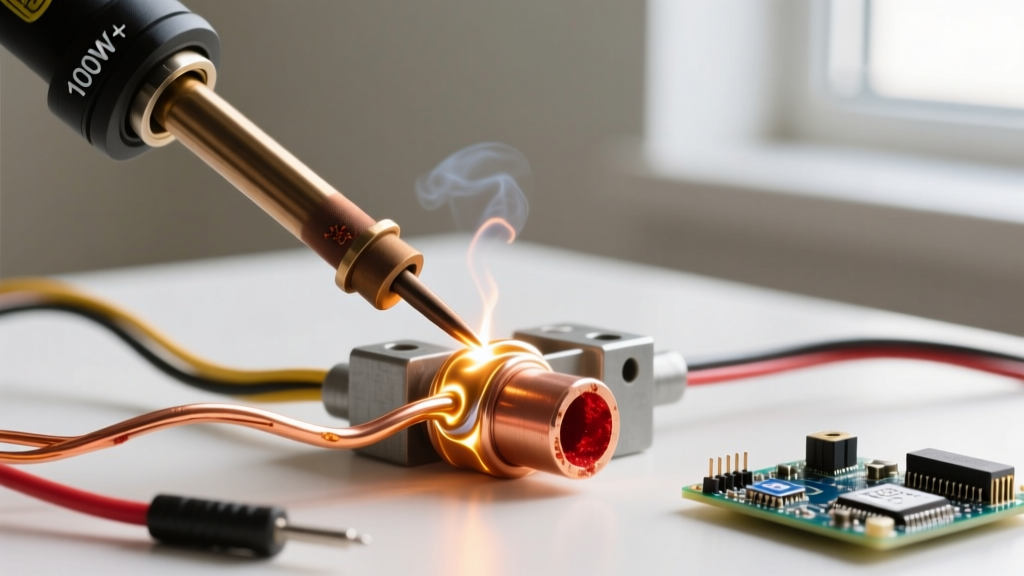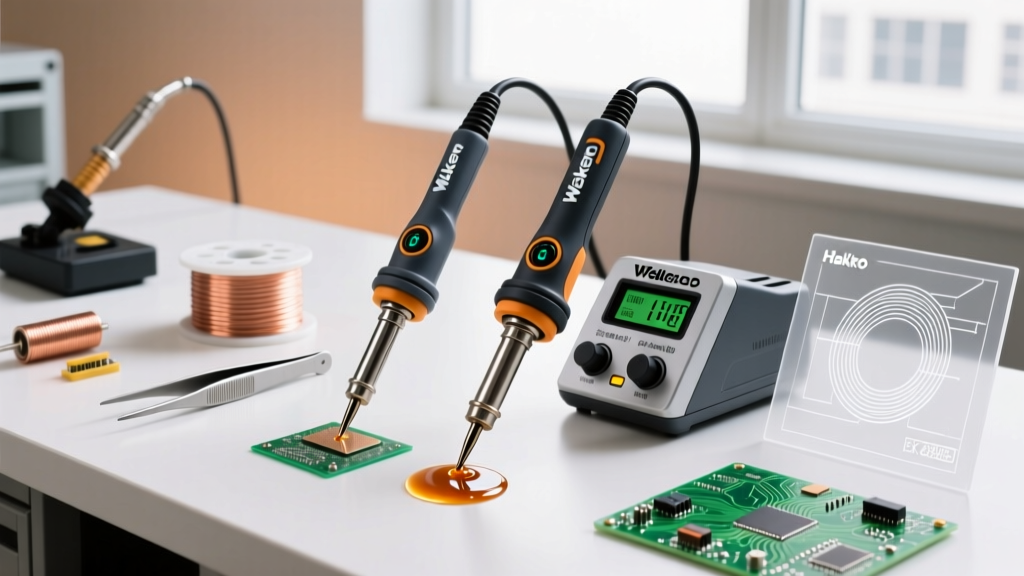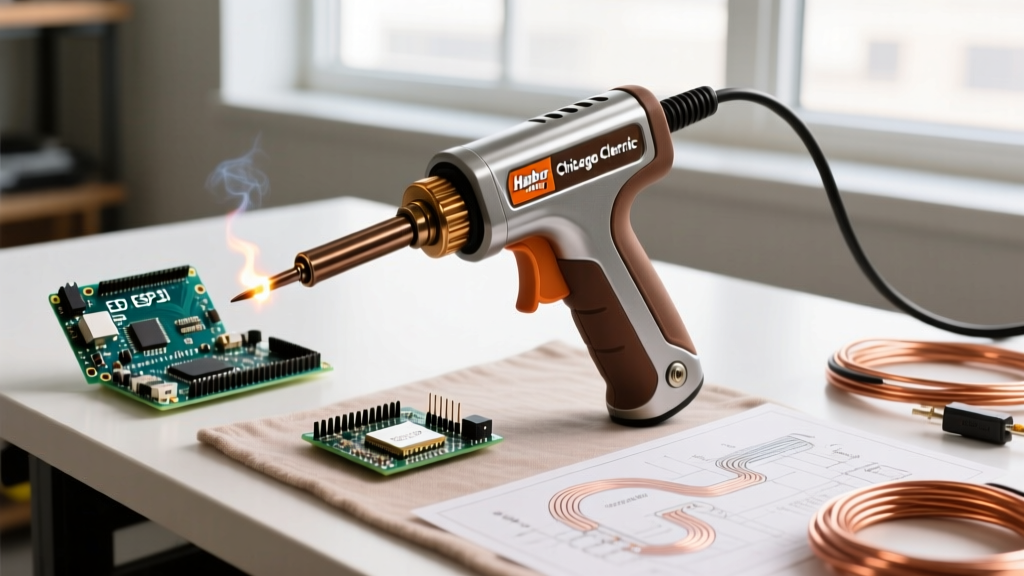

The Reality of Budget Soldering Guns in 2026
Walk into any Harbor Freight store in 2026, and you will inevitably spot the Chicago Electric and Pittsburgh Pro soldering guns sitting in the aisle, usually priced between $17.99 and $29.99. For hobbyists, automotive technicians, and DIY plumbers, the allure is obvious: a massive 140W to 200W thermal output for a fraction of the cost of a professional Weller or Hakko station. But is a soldering gun at Harbor Freight actually worth your money, or is it a false economy that will ruin your workpieces?
The short answer is yes, but only if you understand the physics of transformer-based soldering tools and apply strict operational discipline. Unlike a standard ceramic-core soldering iron that relies on steady-state thermal conduction, a soldering gun uses a step-down transformer to generate massive electrical current at the tip. When used correctly, these budget tools can effortlessly solder 8 AWG battery cables, stained glass foil, and heavy plumbing joints. When used incorrectly, they will pit the tip, scorch the flux, and induce electromagnetic interference (EMI) into sensitive circuits.
Chicago Electric vs. Pittsburgh Pro: 2026 Model Breakdown
Harbor Freight typically rotates inventory between two primary in-house brands for heavy-duty soldering. Here is how the current lineup stacks up for high-mass thermal applications.
| Model / Brand | Wattage | 2026 Street Price | Best Use Case | Heat-Up Time (to 350°C) |
|---|---|---|---|---|
| Chicago Electric Dual-Heat (Item 60492) | 100W / 140W | $17.99 | 10-14 AWG wire, stained glass, XT90 connectors | ~4 seconds |
| Pittsburgh Pro Heavy-Duty (Item 61694) | 200W | $26.99 | 8 AWG+ battery cables, copper plumbing, lugs | ~3 seconds |
The Physics: Why They Work (and Why They Fail)
To master a Harbor Freight soldering gun, you must understand its internal architecture. According to technical overviews from Electronics Notes, these tools utilize a primary coil of thin wire wrapped around a laminated iron core, coupled with a secondary coil consisting of a single, massive turn of copper or aluminum bus bar.
This configuration steps down the 120V AC mains to roughly 0.2V to 0.5V, but spikes the amperage to hundreds of amps. The high resistance of the copper tip causes it to heat up rapidly via I²R (current squared times resistance) losses.
The EMI Danger Zone
Because of the massive alternating current flowing through the secondary loop, these guns generate a powerful, localized alternating magnetic field. Never use a transformer-based soldering gun on live microcontrollers, unshielded PCBs, or sensitive CMOS logic. The induced voltage spike from the magnetic field can instantly blow out MOSFET gates or fry microprocessor I/O pins. Reserve the Harbor Freight gun for passive, high-mass components like mechanical switches, heavy gauge wiring, and RC vehicle battery plugs.
Expert Techniques for Maximizing Longevity
The most common complaint about budget soldering guns is rapid tip degradation. The tips provided in the box are typically bare copper or feature a microscopically thin, low-quality iron plating. To prevent the tip from dissolving into the solder (a process known as leaching), follow these expert protocols:
Pro Tip: Never file or sand a soldering gun tip to clean it. Filing removes the protective iron plating, exposing the raw copper core to immediate dissolution by the molten tin. Always use a damp cellulose sponge or brass wire shavings.
1. The 'Cold Tin' Initialization
Before you pull the trigger for the first time, wrap 63/37 eutectic rosin-core solder around the cold tip. As you pull the trigger and the gun heats up, the solder will melt and immediately alloy with the copper, creating a protective barrier before oxygen can cause oxidation.
2. The 60-Second Transformer Rule
Budget soldering guns are not designed for continuous duty cycles. The internal transformer lacks active cooling and will overheat if the trigger is held down for extended periods. Prolonged heat degrades the enamel insulation on the primary windings, leading to shorted turns and eventual tool death.
- Pulse the trigger: Apply full power (140W/200W) for 3-4 seconds to heat the joint, then release the trigger or drop to the low setting (100W) while applying solder.
- Rest intervals: Allow the gun to cool for 30 seconds after every 60 seconds of cumulative trigger time.
3. High-Solid Flux Selection
High-mass joints act as massive heat sinks. By the time a 10 AWG wire reaches the 183°C melting point of eutectic solder, standard low-solid flux will have burned off and turned into a useless, charred residue. For heavy-duty work with a Harbor Freight gun, use a high-activity, high-solid flux like Kester 186 or a dedicated plumbing-grade tinning flux. This ensures the joint remains chemically clean during the extended thermal soak required for thick copper.
Common Failure Modes and Field Fixes
Even with careful use, the mechanical and electrical components of a $20 tool will eventually show wear. Here is how to diagnose and fix the most common issues encountered with the Chicago Electric and Pittsburgh models.
Loose Terminal Connections (The 'Cold Gun' Syndrome)
Symptom: The trigger is pulled, the internal light turns on, but the tip barely gets warm.
Root Cause: The secondary bus bar is connected to the tip via two hex nuts. The extreme thermal expansion and contraction cycles of heavy soldering cause these nuts to loosen over time. This introduces high contact resistance at the joint, meaning the heat is generated at the tool's faceplate rather than the tip.
The Fix: Unplug the gun. Remove the plastic faceplate and use a small socket wrench to tighten the hex nuts securing the tip. Apply a dab of high-temperature anti-seize compound to the threads to prevent future seizing.
Micro-Switch Arcing
Symptom: The trigger feels sticky, or the gun stutters when switching between the 100W and 140W stages.
Root Cause: The internal trigger switch handles the full inductive load of the transformer primary. Over time, inductive kickback causes arcing across the switch contacts, pitting the metal and increasing resistance.
The Fix: Open the clamshell housing and inspect the switch. If pitted, replace it with a heavy-duty, high-amperage micro-switch (rated for at least 10A at 125VAC) from an electronics supplier like Mouser or Digi-Key. A standard 3A switch will fail within a week.
When to Abandon the Budget Gun and Upgrade
While a soldering gun at Harbor Freight is an exceptional value for automotive, plumbing, and heavy RC work, it fundamentally violates the thermal profiling requirements set forth by standards like IPC J-STD-001 for electronic assemblies.
If your workflow shifts toward surface-mount devices (SMD), multi-layer PCBs, or delicate 24 AWG telemetry wiring, the thermal inertia and lack of closed-loop temperature control of a transformer gun will result in lifted pads and thermal damage to components. At that stage, it is time to retire the Chicago Electric gun to the heavy-duty toolbox and invest in a closed-loop, thermocouple-driven station like the Weller WE1010 or the Hakko FX-888D, which can maintain a precise ±5°C tolerance.
Final Verdict for the DIYer
For under $30 in 2026, a Harbor Freight soldering gun is an indispensable tool for high-current, high-mass soldering tasks—provided you respect its limitations. By managing the transformer duty cycle, maintaining the tip metallurgy, and keeping it far away from sensitive logic boards, you can easily extract years of reliable service from these budget-friendly workhorses. Always prioritize proper ventilation, as the high heat of these guns will vaporize flux aggressively; refer to OSHA guidelines on hand and power tools for proper PPE and fume extraction protocols when working with heavy soldering equipment.