
Beyond the Needle: Redefining Precision in 2026
In the landscape of modern electronics repair and high-density PCB assembly, component miniaturization has aggressively pushed standard 0402 and 0201 packages into obsolescence for flagship devices. Today, rework technicians routinely handle 01005 (0.4mm x 0.2mm) and emerging 008004 metric passives, alongside ultra-fine-pitch micro-BGAs. Reworking these microscopic architectures requires vastly more than a steady hand and a magnifying glass; it demands a precise soldering iron engineered for sub-second thermal recovery, advanced metallurgy, and microscopic tip geometry. This feature deep dive dissects the internal mechanics, thermal dynamics, and ergonomic factors that separate a true precision instrument from a standard hobbyist tool.
The Thermal Feedback Loop: Integrated vs. Separated Sensors
The defining characteristic of a precise soldering iron is its ability to maintain a stable tip temperature under varying thermal loads. Legacy soldering stations, such as the classic Hakko 936 architecture, utilize a separated sensor paradigm. In these designs, the thermocouple is located inside the heating element within the handpiece, often two to three inches away from the actual working edge of the tip. When the tip contacts a ground plane, the temperature at the working edge drops instantly, but the sensor does not register this loss immediately. This thermal lag causes the controller to overshoot, pumping excessive wattage into the element and potentially frying temperature-sensitive silicon or delaminating the PCB substrate.
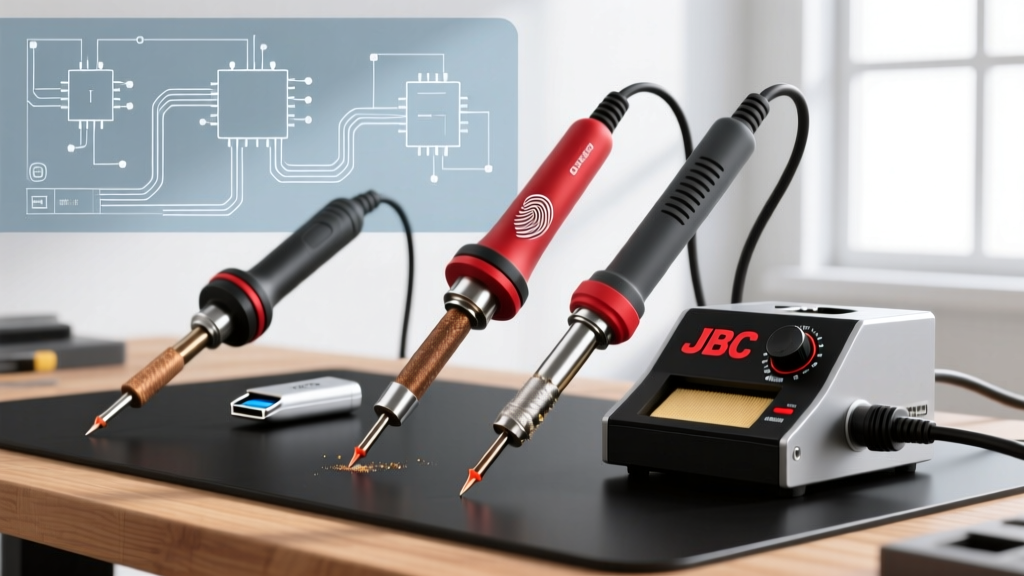
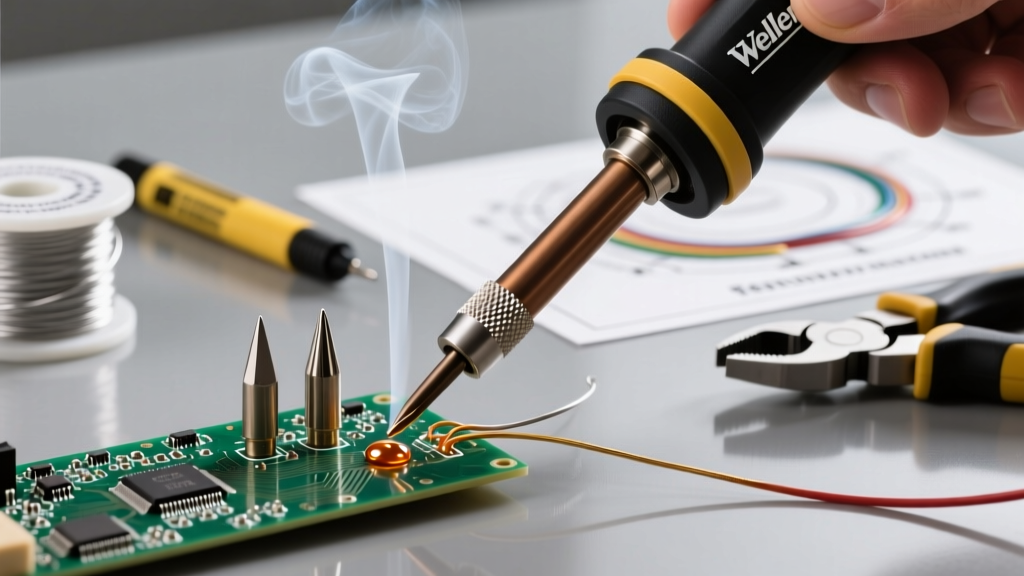
Modern precision architectures, pioneered by brands like JBC and Weller, utilize a cartridge-style integrated sensor. In systems like the JBC T245-C or the Weller WXMP, the thermocouple is embedded mere microns from the working edge of the tip, and the heating element is housed directly inside the consumable cartridge itself. This closed-loop feedback allows the station's microprocessor to detect a thermal drop and deliver a burst of current in milliseconds. According to manufacturer telemetry, advanced cartridge tips can recover from a 50°C drop to a target of 350°C in under 1.5 seconds, ensuring that the solder paste achieves proper liquidus without prolonged heat exposure.
Tip Geometry: Debunking the Conical Myth
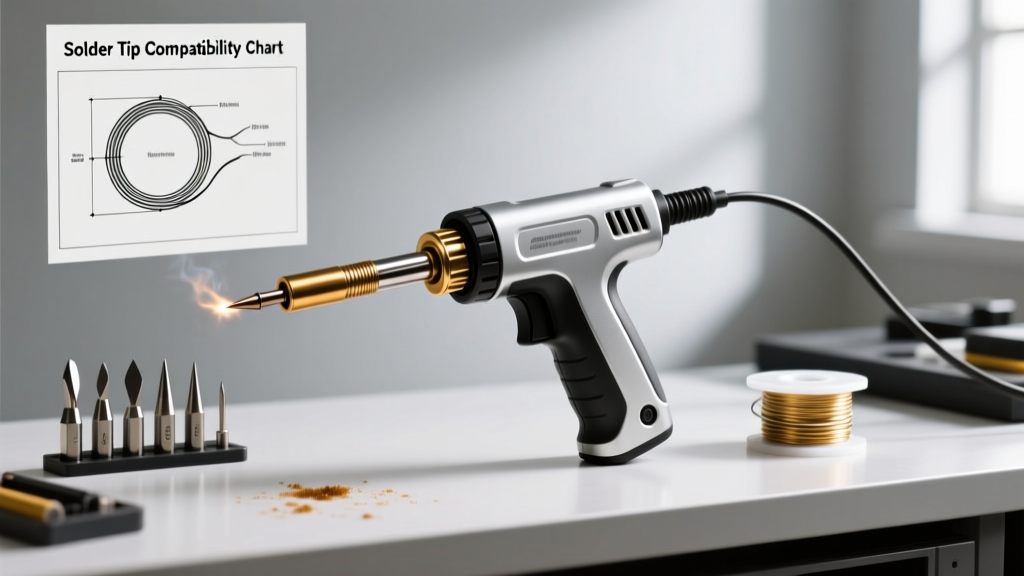
A common misconception among junior technicians is that a 'precise' tool requires a needle-sharp conical tip. From a thermodynamic perspective, conical tips are highly inefficient for micro-SMD work. The contact area with a component pad is reduced to a single microscopic point, resulting in terrible thermal mass transfer and poor capillary action.
Optimal Geometries for Micro-Pitch Components
- Micro-Chisel (e.g., JBC C245-945 or Weller RTW008 S X): Features a flat, angled working edge measuring between 0.4mm and 0.8mm. This provides a line-contact that maximizes surface area, allowing flux to activate evenly and solder to flow via capillary action across 0.4mm pitch QFN pads.
- Micro-Knife Blade (e.g., Pace 1124-0008-P1): Ideal for drag-soldering fine-pitch SOIC or TQFP chips. The sharp point can be used for microscopic spot rework, while the broad edge of the blade carries a thermal reservoir for dragging.
- Micro-Spatula / Gull-Wing: Specifically designed for reflowing leads on QFP packages without bridging adjacent pins, utilizing a hollowed-out face to contain molten solder.
Metallurgy and Nano-Coating Technologies
At the microscopic scale, tip oxidation is a catastrophic failure mode. Standard iron-clad copper tips oxidize rapidly when exposed to temperatures above 380°C, forming an insulating layer of iron oxide that completely halts heat transfer. Furthermore, modern no-clean fluxes (such as Kester 959T or Amtech NC-559-V2-TF) contain aggressive activators that can corrode standard tip plating.
Leading manufacturers now employ proprietary multi-layer metallurgy. For instance, advanced tips feature a high-purity copper core for rapid thermal conductivity, electroplated with an iron layer for durability, and finished with a specialized chromium or nickel nano-coating. This outer layer prevents the molten solder from wetting the sides of the tip, restricting the solder bead strictly to the working edge. This localized wetting is critical when working near adjacent 01005 components, where an errant solder ball could cause a latent short circuit.
Ergonomics: Cable Drag and Hand Tremor Mitigation
Precision is not solely about the iron's tip; it is about the biomechanics of the user. When working under a 40x trinocular microscope, any mechanical resistance in the handpiece cable translates directly into hand tremors. Older stations utilize heavy, stiff PVC or braided cables that create a 'spring-back' effect, forcing the user's wrist to fight the cable's memory.
A true precise soldering iron utilizes a low-friction, burn-resistant silicone sleeve over highly flexible PTFE internal wiring. The Weller WXMP handpiece, for example, weighs a mere 62 grams (excluding the cable) and features an ultra-low-drag silicone cord. This ergonomic design drastically reduces fatigue-induced micro-tremors during multi-hour BGA rework sessions, allowing the technician to maintain sub-millimeter positional accuracy.
Feature Comparison Matrix: Top Precise Handpieces
The following table compares the benchmark precision handpieces dominating the professional rework sector in 2026. Pricing reflects professional-tier market averages and may vary by distributor.
| Model / System | Tip Architecture | Thermal Recovery (to 350°C) | Avg. Tip Cost | Station Price Range |
|---|---|---|---|---|
| JBC T245-C (CD-2BQE) | C245 Cartridge (Integrated) | < 2.0 seconds | $48 - $65 | $650 - $780 |
| Weller WXMP (WX2 Station) | RT / RTW Cartridge | < 2.5 seconds | $40 - $55 | $900 - $1,100 |
| Pace ADS200 (TD-200) | TD-200 Cartridge | ~ 3.0 seconds | $35 - $45 | $550 - $650 |
| Hakko FM-206 (NT115) | NT115 Integrated | ~ 2.2 seconds | $45 - $60 | $700 - $850 |
Critical Failure Modes in Micro-Soldering
Even with the most advanced equipment, improper technique with a precise soldering iron can lead to catastrophic, often invisible, component failures.
Thermal Shock to MLCCs
Multilayer Ceramic Capacitors (MLCCs) are constructed from alternating layers of barium titanate dielectric and metal electrodes. They are highly susceptible to thermal gradients. If a technician applies a 380°C precise iron directly to one termination pad of an 0201 MLCC while the opposite pad remains at ambient room temperature, the severe Coefficient of Thermal Expansion (CTE) mismatch induces immense mechanical shear stress. This results in micro-cracking within the dielectric layers, leading to latent short circuits that may only manifest months after the device leaves the bench. Solution: Always utilize a precise iron with rapid, localized heating, and preheat the PCB substrate to 90°C - 110°C to minimize the thermal delta.
Polyimide Delamination on Flex PCBs
Flexible printed circuits utilize polyimide substrates (like Kapton) and acrylic or epoxy-based adhesives. These adhesives have a relatively low glass transition temperature (Tg). Applying a high-wattage iron to force heat into a ground plane pad on a flex circuit will rapidly exceed the adhesive's Tg, causing the copper trace to delaminate and lift from the substrate. When working on flex assemblies, technicians must pair their precise soldering iron with localized hot-air preheating, keeping the iron's contact time under 1.5 seconds per joint.
Aligning with Industry Standards
The use of precision thermal control is not merely a preference; it is a requirement for meeting stringent industry acceptability standards. The IPC-7711/7721 standard for the rework, modification, and repair of electronic assemblies dictates strict criteria for solder fillet wetting, cleanliness, and the absence of thermal damage to the PCB laminate. Furthermore, high-reliability sectors, such as aerospace and medical devices, rely on guidelines established by the NASA Electronic Parts and Packaging (NEPP) program, which extensively documents the metallurgical requirements of solder joints in extreme environments. Achieving Class 3 compliance on 0.3mm pitch micro-BGA pads is physically impossible without the sub-second thermal recovery and exact tip geometries provided by modern precision cartridge systems.
Summary: The ROI of Precision
Investing $600 to $1,200 in a top-tier precise soldering iron system is a non-negotiable requirement for modern electronics repair facilities. The transition from legacy handle-sensor architectures to integrated cartridge systems eliminates thermal lag, protects sensitive MLCCs from thermal shock, and ensures compliance with IPC Class 3 rework standards. By prioritizing integrated thermocouples, optimized micro-chisel geometries, and low-drag ergonomics, technicians can confidently navigate the sub-millimeter challenges of 2026's densest PCB architectures.