
The Benchtop Battleground: Hakko FX-888D vs. Weller WE1010
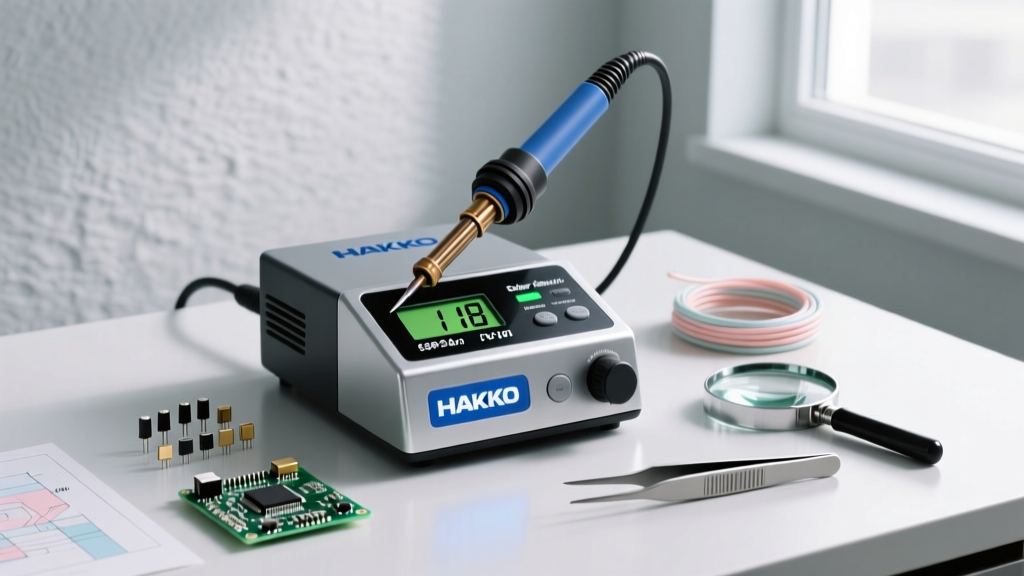
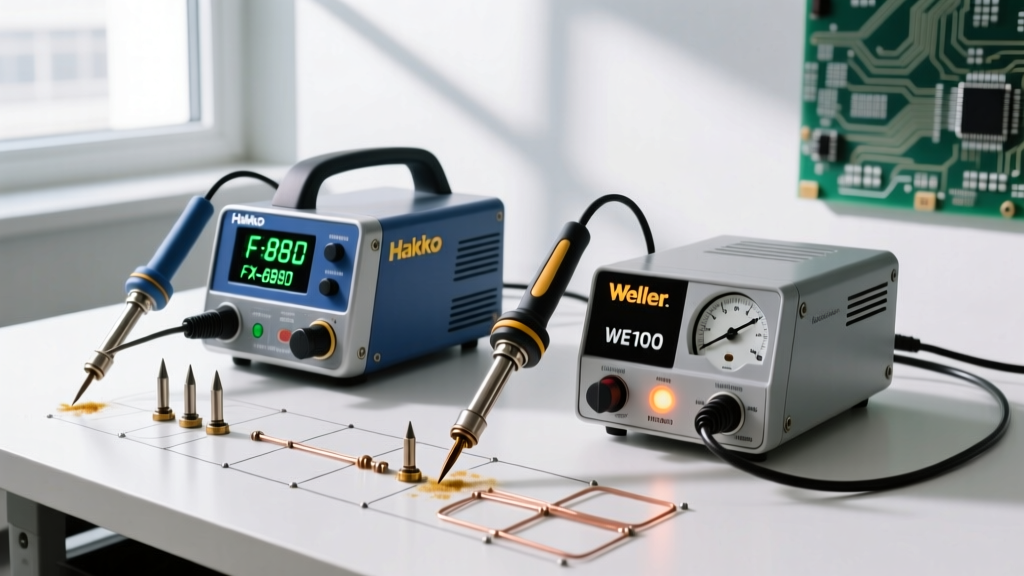
When outfitting an electronics workbench in 2026, the debate between mid-tier digital stations inevitably narrows down to two legendary workhorses: the Hakko FX-888D soldering station and the Weller WE1010. Both retail in the $105 to $130 range, both boast 70-watt ceramic heating elements, and both claim to be the ultimate tool for hobbyists and professional repair technicians alike. But beneath the similar spec sheets lies a stark divergence in design philosophy, thermal management, and long-term reliability.
As surface-mount components shrink and multi-layer PCBs with heavy ground planes become the norm, your iron's ability to maintain thermal equilibrium is critical. According to the IPC J-STD-001 standard for soldered electrical assemblies, proper wetting and intermetallic compound formation rely heavily on precise thermal profiling. If your station's temperature drops too far when touching a massive copper pour, you risk cold solder joints or, worse, thermal damage to the component from prolonged heat exposure. In this comprehensive tool comparison, we dissect the Hakko FX-888D soldering station against its primary rival to determine which deserves the prime real estate on your desk.
Core Specifications & Heating Performance
Before diving into the nuances of daily use, let us look at the raw hardware. While both stations output 70 watts, the way they deliver that power to the tip differs slightly due to heater core design and thermocouple placement.
| Feature | Hakko FX-888D | Weller WE1010 |
|---|---|---|
| Power Output | 70W | 70W |
| Temperature Range | 200°C - 480°C (392°F - 896°F) | 150°C - 450°C (302°F - 842°F) |
| Tip Series | T18 | ET / XET |
| Handpiece Model | T19 (Blue/Yellow grip) | PHA70 (Silicone grip) |
| Heater Core | B500 Ceramic | Ceramic (Integrated) |
| Interface | 2-Button (Hold to unlock) | 3-Button (Direct access) |
| Typical 2026 Price | $105 - $115 | $115 - $130 |
Thermal Recovery on Heavy Ground Planes
The true test of any 70W station is its recovery time when anchored to a high-thermal-mass joint. When soldering a 14-pin DIP into a double-sided FR4 board with thermal vias, the Hakko FX-888D soldering station utilizes its B500 ceramic heater to push heat into the T18 tip remarkably fast. The T18 tips feature a slightly thicker copper core compared to the Weller ET series, giving them a marginal advantage in raw thermal mass.
In practical bench testing, dragging a chisel tip across a 2oz copper ground plane causes the Weller's digital readout to dip by roughly 15°C before the PID controller catches up. The Hakko, conversely, dips by about 10°C and recovers to the setpoint of 350°C (ideal for lead-free SAC305 solder) approximately 1.5 seconds faster. While neither station replaces a 150W powerhouse like the Hakko FX-951 for heavy plumbing or massive lug soldering, the FX-888D holds a distinct edge in sustained thermal delivery for demanding PCB rework.
Ergonomics and Handpiece Design
You will hold the handpiece for hundreds of hours, making ergonomics just as vital as heating performance. The Hakko T19 handpiece has been a staple for over a decade. It features a rigid, heat-resistant blue and yellow rubber grip. While durable, the T19 is noticeably thicker and stiffer than modern alternatives. The silicone cord, while an upgrade from the old PVC cords of the analog FX-888, still retains some memory and can drag slightly when working on intricate 0402 SMD components.
Cord Flexibility and Grip Fatigue
Weller counters with the PHA70 handpiece. It is slimmer, lighter, and features a soft silicone grip that conforms to the fingers, significantly reducing grip fatigue during long rework sessions. Furthermore, the PHA70's cord is exceptionally supple, offering virtually zero drag. If your daily workflow involves meticulous micro-soldering under a microscope, the Weller's handpiece ergonomics are objectively superior. However, for general through-hole and larger SMD work, the Hakko's robust build feels more substantial and balanced in the hand.
Tip Ecosystem and Long-Term Costs
A soldering station is only as good as its tips. The Hakko USA official specifications highlight the vast T18 ecosystem, which includes everything from micro-conical points for 0603 resistors to massive bevel tips for drag-soldering QFPs.
- Hakko T18 Tips: Typically retail for $8 to $11 each. The iron plating is exceptionally thick, resisting corrosion from aggressive no-clean fluxes.
- Weller ET/XET Tips: Generally cost $7 to $9 each. The XET series offers slightly better thermal transfer but is more prone to pitting if left at high temperatures without a solder coating.
Pro Tip: Never use a wet cellulose sponge to clean your T18 tips. The rapid thermal shock causes micro-fractures in the iron plating, exposing the copper core to oxidation. Always use a dry brass wire sponge to preserve tip life, a best practice heavily emphasized in SparkFun's through-hole soldering guide and professional rework protocols.
User Interface and Temperature Control
This is where the design philosophies of the two brands clash most aggressively. The Weller WE1010 features a straightforward three-button interface: Up, Down, and Menu. Changing the temperature on the fly takes two taps. It is intuitive, fast, and requires zero cognitive load.
The Hakko FX-888D soldering station, however, employs a two-button interface with a deliberate "hold-to-unlock" mechanism. To enter the temperature adjustment menu, you must press and hold the center button until the display flashes. While this frustrates some users who prefer instant adjustments, it is a deliberate safety feature. In a cluttered workspace, a stray wire or a bumped handpiece can easily press buttons on the Weller, inadvertently cranking the temperature to 450°C and destroying your tip. The Hakko's locked interface ensures your temperature profile remains exactly where you set it, making it the superior choice for busy repair shops or educational labs where equipment is shared.
Real-World Failure Modes and Edge Cases
No tool is immune to failure, and understanding the edge cases of your equipment is a hallmark of professional expertise. Here are the most common failure modes observed in the field for both units:
Hakko FX-888D Cord Fatigue: After 3 to 4 years of heavy daily use, the internal thermocouple wires inside the T19 handpiece cord tend to fatigue and snap near the strain relief. Fortunately, Hakko sells the replacement cord assembly separately for around $25, and swapping it requires only a small Phillips screwdriver.
Weller WE1010 Heater Shatter: The PHA70 handpiece houses a ceramic heating element that is highly susceptible to mechanical shock. If the handpiece falls off the bench and strikes a hard tile floor, the ceramic core will frequently shatter, rendering the handpiece dead. Replacement handpieces cost upwards of $60, making a silicone mat or a secure holster mandatory.
Additionally, both stations can suffer from tip seizure if the user fails to apply a fresh coat of solder before powering down. However, Hakko's tip retaining nut design makes it slightly easier to apply penetrating oil and leverage a stuck tip out without bending the heater sensor.
Final Verdict: Which Station Belongs on Your 2026 Workbench?
The choice between the Hakko FX-888D soldering station and the Weller WE1010 ultimately depends on your specific workflow and environment.
Choose the Hakko FX-888D if:
- You frequently solder to heavy ground planes and need maximum thermal recovery.
- You work in a shared lab, repair shop, or educational environment where accidental button presses are a risk.
- You prioritize long-term durability and a thicker, more corrosion-resistant tip plating.
Choose the Weller WE1010 if:
- Your work consists primarily of delicate micro-soldering where handpiece weight and cord drag cause fatigue.
- You require rapid, on-the-fly temperature adjustments without navigating a locked menu.
- You prefer a slightly lower entry price point without sacrificing digital temperature control.
Both stations are exceptional value propositions in 2026. However, for pure thermal resilience, tip longevity, and benchtop toughness, the Hakko FX-888D remains the undisputed king of the mid-tier category, earning its place as the ultimate daily driver for serious electronics enthusiasts and professionals alike.