
Cordless Soldering in 2026: The Budget Contender Meets the Pros
For field technicians, automotive electricians, and off-grid DIYers, being tethered to a wall outlet is a luxury they cannot afford. Cordless butane soldering irons bridge the gap between portability and thermal mass. Among the most heavily debated tools in this space is the Lexivon butane soldering iron (specifically the popular LZ-1100 58-piece kit). Priced aggressively, it promises professional-grade heat without the professional-grade price tag.
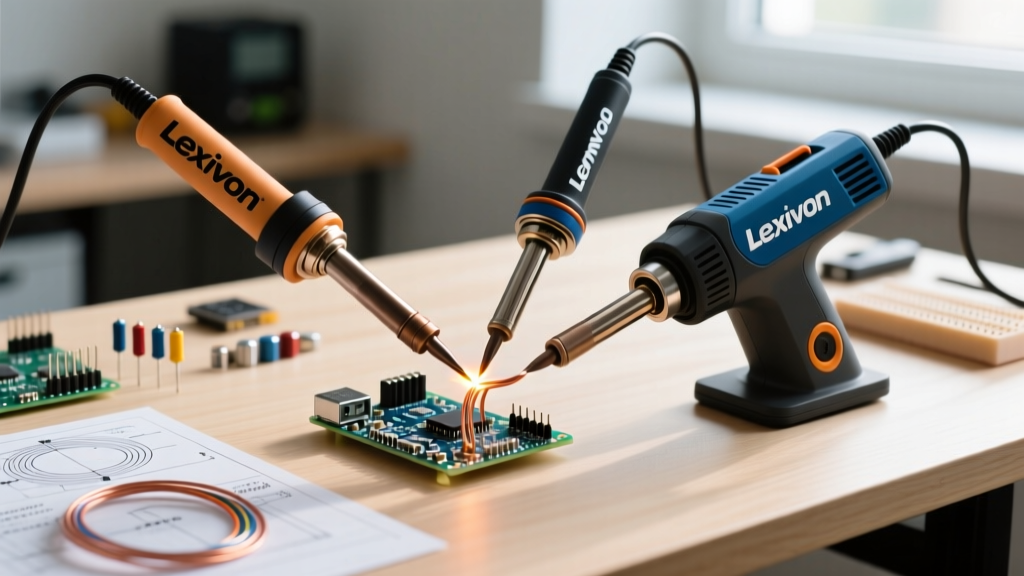
But how does the Lexivon actually perform when pushed to its thermal limits? In this best-of comparison, we put the Lexivon LZ-1100 head-to-head against the premium Blazer Big Shot GT 8000 and the multi-purpose Dremel 2000 VersaFlame. We will explore catalytic mesh failure modes, exact thermal recovery times, and real-world PCB rework strategies to help you decide which cordless iron belongs in your toolkit.
Lexivon LZ-1100: Deep Dive & Real-World Performance
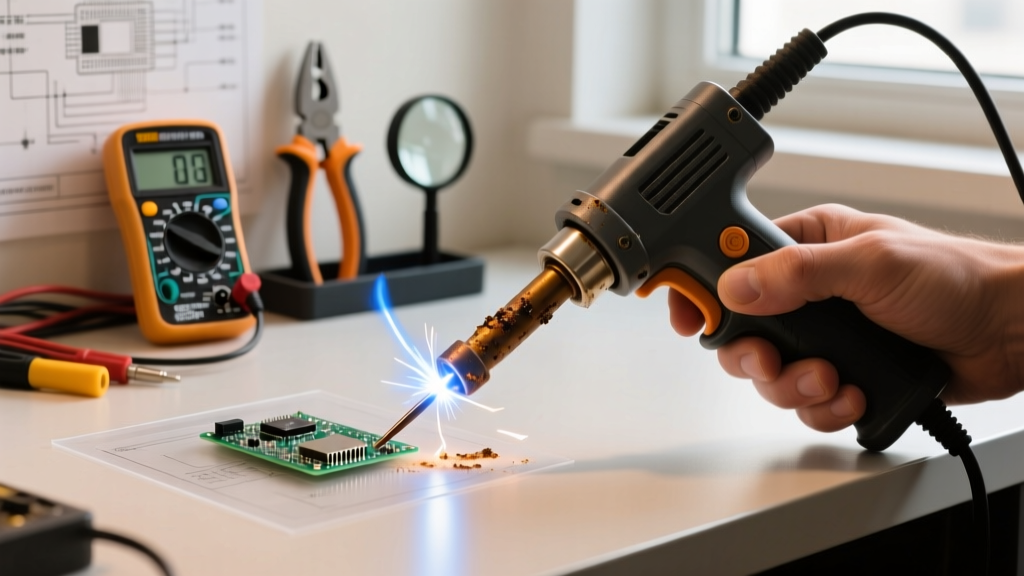
The Lexivon LZ-1100 operates on a catalytic heating principle. Unlike traditional resistive irons that use an electrical heating element, the Lexivon passes butane gas through a platinum-coated catalytic mesh. When the gas meets ambient oxygen at the mesh, a flameless exothermic reaction occurs, heating the copper-core soldering tip to operational temperatures.
Thermal Mass and Recovery
Out of the box, the Lexivon's standard chisel tip reaches 350°C (662°F) in approximately 45 seconds. When applied to a heavy ground plane on a double-sided PCB, the thermal recovery time—the time it takes for the tip to return to 350°C after dropping in temperature—averages 4.2 seconds. This is adequate for standard 63/37 Sn/Pb through-hole work, but it struggles slightly with high-thermal-mass automotive wiring (e.g., 10 AWG battery terminals) compared to resistive stations.
Kit Versatility
The 58-piece kit is where Lexivon justifies its purchase for generalists. It includes a soldering tip, a hot air deflector (for heat shrink tubing), a cutting knife, and a pinpoint blowtorch nozzle. The blowtorch attachment easily hits 1000°C (1832°F), making it highly effective for silver-soldering small jewelry or loosening rusted hardware.
The Contenders: Head-to-Head Matrix
To understand where the Lexivon sits in the 2026 market, we must compare its specifications and field performance against its closest rivals.
| Feature | Lexivon LZ-1100 | Blazer Big Shot GT 8000 | Dremel 2000 VersaFlame |
|---|---|---|---|
| 2026 Street Price | $28 - $32 | $50 - $58 | $40 - $45 |
| Max Soldering Temp | 450°C (842°F) | 450°C (842°F) | 400°C (752°F) |
| Burn Time (Soldering) | ~45 minutes | ~35 minutes | ~75 minutes |
| Ignition Type | Piezo (Push-button) | Piezo (Trigger) | Manual / Flint |
| Anti-Flare Tech | No | Yes (Brass Frame) | No |
| Flame Lock | Yes (Slider) | No (Requires holding) | Yes (Lock button) |
| Best Use Case | Budget Field Repair / DIY | Daily Professional Use | Crafts / Heat Shrinking |
Analysis of the Matrix
The Blazer GT 8000 wins on build quality and safety. Its brass-frame anti-flare technology prevents the tool from igniting into a dangerous blowtorch flame if tilted past 45 degrees—a common hazard with budget butane irons. However, the Blazer lacks a flame lock, meaning your hand fatigues during long heat-shrink sessions. The Dremel 2000 offers the longest burn time due to a larger internal reservoir, but its lower max temperature and lack of specialized soldering tips make it a poor choice for precision electronics. The Lexivon strikes the ultimate balance for hobbyists: it features a flame lock for continuous use and delivers adequate heat for 90% of standard DIY soldering tasks at half the price of the Blazer.
Critical Failure Modes: Catalytic Mesh & O-Ring Degradation
To truly master the Lexivon butane soldering iron, you must understand its two primary failure points. Many users discard these tools after six months, claiming they 'stop getting hot enough.' This is rarely a defect; it is a maintenance failure.
The Catalytic Mesh Carbonization Problem
The catalytic mesh relies on a precise chemical reaction. If you use standard, cheap lighter fluid (which is often a mix of butane, isobutane, and trace olefins/oils), the heavier hydrocarbons fail to vaporize completely. These oils carbonize directly onto the platinum mesh. Within 20 hours of use, the carbon buildup blocks oxygen flow, dropping the maximum tip temperature from 450°C to roughly 200°C. At 200°C, the iron cannot melt modern SAC305 lead-free solder (which requires a minimum of 217°C, practically 250°C for proper wetting).
Expert Fix: Always use 5x or 11x refined butane (such as Colibri or Zippo premium). The multi-stage distillation removes the olefins that destroy catalytic meshes, extending the life of your Lexivon iron by up to 300%.
O-Ring Micro-Leaks
The Lexivon's fill valve utilizes a standard Buna-N rubber O-ring. The internal tank capacity is strictly 24ml (approx. 11g). Users who attempt to 'force' more butane into the tank by holding it upside down for too long cause liquid butane to pool against the fill valve. Over time, this degrades the O-ring, leading to micro-leaks. If you smell butane when the tool is off, the O-ring has failed, and the tool is a severe fire hazard.
Step-by-Step: Optimizing the Lexivon for PCB Rework
Because butane irons lack the digital closed-loop temperature control of a Hakko FX-888D or Weller WE1010, technique is paramount. According to the NASA-STD-8739.3 Soldering Workmanship Standard, proper wetting and joint formation rely heavily on flux and thermal equilibrium. Here is how to adapt the Lexivon for precision PCB work:
- Prep the Tip: Ignite the Lexivon on a medium-low setting (slider at 40%). Allow 60 seconds for the catalytic mesh to fully stabilize. Tin the tip immediately with rosin-core solder to prevent oxidation.
- Apply External Flux: Because you cannot instantly dial up the heat to burn through oxidation, apply a generous amount of tacky flux (e.g., Amtech NC-559) to the joint. The flux will chemically clean the pad, reducing the required thermal dwell time.
- The 3-Second Rule: Apply the tinned Lexivon tip to the component lead and pad simultaneously. Count to three. If the solder does not flow smoothly by second three, remove the iron. Prolonged contact with a butane iron risks delaminating the PCB's copper trace due to unregulated thermal bleed.
- Thermal Throttling: When moving from a large ground plane to a delicate 0805 SMD resistor, physically blow on the catalytic housing (not the tip) to cool the mesh slightly, or adjust the slider down to 25% to prevent scorching the smaller component.
Safety and Ventilation Protocols
Working with open-flame or catalytic butane tools indoors requires strict adherence to safety guidelines. Butane is heavier than air and will pool in low-lying areas if a leak occurs. According to the NIOSH Pocket Guide to Chemical Hazards, n-Butane has a Lower Explosive Limit (LEL) of 1.8% in air. Furthermore, the OSHA Chemical Data for Butane emphasizes that incomplete combustion in poorly ventilated areas can produce carbon monoxide. Always operate the Lexivon in a space with active cross-ventilation or under a fume extractor, and never leave the tool unattended while the catalytic mesh is hot.
Pros and Cons of the Lexivon Butane Soldering Iron
Pros
- Exceptional Value: At roughly $30 in 2026, the 58-piece kit offers unmatched versatility for the price.
- True Cordless Freedom: 45 minutes of continuous soldering time is enough for most automotive wiring harness repairs.
- Flame Lock Mechanism: Reduces hand fatigue during extended heat-shrink tubing applications.
- Rapid Heat-Up: Reaches working temperature in under 45 seconds from a cold start.
Cons
- No Anti-Flare Protection: Tilting the iron past 45 degrees while the gas is flowing can result in a dangerous open flare.
- Imprecise Temperature Control: The physical slider is vague; finding the exact 'sweet spot' for sensitive SMD work requires trial and error.
- O-Ring Vulnerability: The fill valve O-ring is prone to degradation if the 24ml tank is overfilled.
Final Verdict: Who Should Buy the Lexivon?
The Lexivon butane soldering iron is an outstanding entry-level and DIY cordless tool. If you are an automotive enthusiast splicing wires in a driveway, a hobbyist building off-grid solar setups, or a homeowner needing a versatile tool for both electronics and light heat-shrinking, the Lexivon LZ-1100 is the undisputed champion of budget cordless irons.
However, if you are a daily field technician repairing telecom lines, or a professional who requires absolute thermal precision for multi-layer PCB rework, the lack of anti-flare technology and closed-loop temperature control means you should invest the extra $25 into the Blazer Big Shot GT 8000. For everyone else, keep your Lexivon filled with highly refined butane, respect the fill line, and it will serve as a reliable, untethered workhorse for years to come.