
The Craft Store Dilemma: Can You Use a Hobby Lobby Soldering Iron for Electronics?
Walking into a craft store to buy your first electronics tools is a common beginner mistake. You spot a cheap, boxed kit on the shelf, and it seems like the perfect entry point. But if you are specifically looking for a hobby lobby soldering iron to build Arduino circuits, repair drones, or solder printed circuit boards (PCBs), you need to understand the fundamental difference between craft soldering and electronics soldering. As of 2026, the market for entry-level electronics tools has evolved dramatically, making the compromises of craft store irons more glaring than ever.
This guide breaks down exactly what you will find in the craft aisle, the physics of why these tools struggle with modern electronics, and the precise alternatives you should buy instead to ensure your first soldering experience is a success rather than a lesson in melted plastic and lifted copper pads.
What Exactly Are Hobby Lobby Soldering Irons?
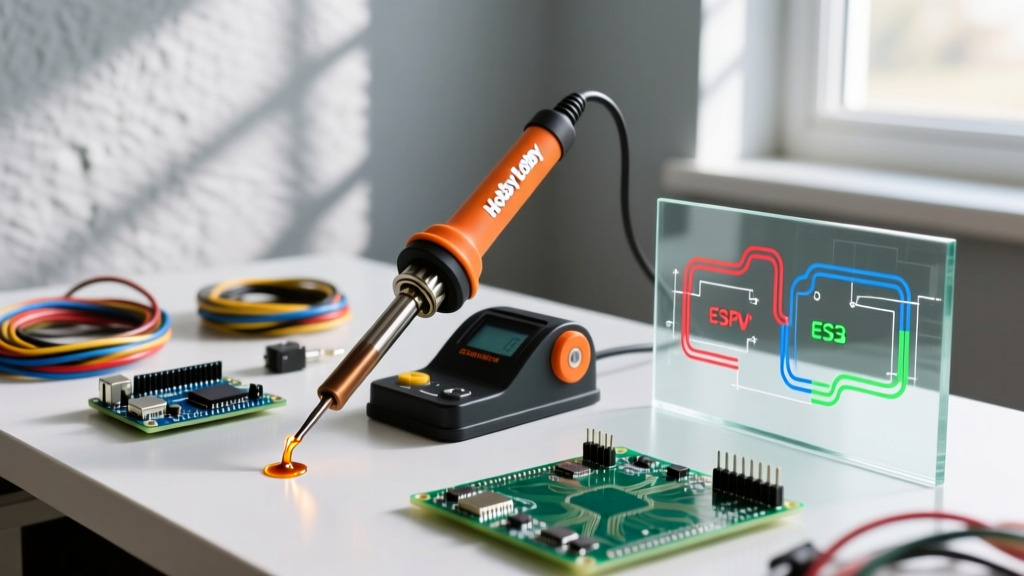
Hobby Lobby and similar craft retailers primarily stock soldering irons designed for stained glass, copper foil jewelry, and heavy wire crafts. You will typically find unbranded 60W to 80W fixed-temperature irons, or specialized brands like Grobet and Master's Touch. These kits usually retail between $14.99 and $24.99 and include a heavy iron, a wide chisel tip, and a small tube of acidic or generic rosin flux.
Key Characteristics of Craft Store Irons
- Fixed High Temperature: Most plug directly into the wall and heat up to 450°C (842°F) or higher, with no dial to adjust the thermal output.
- Massive Thermal Mass: The tips are thick, often 1/4-inch or 3/16-inch chisels, designed to transfer massive amounts of heat into thick copper foil or 12AWG wires.
- Lack of ESD Safety: They are not grounded, meaning they can carry stray voltages that will instantly destroy sensitive MOSFETs or microcontrollers.
The Craft vs. Electronics Divide: A 2026 Comparison
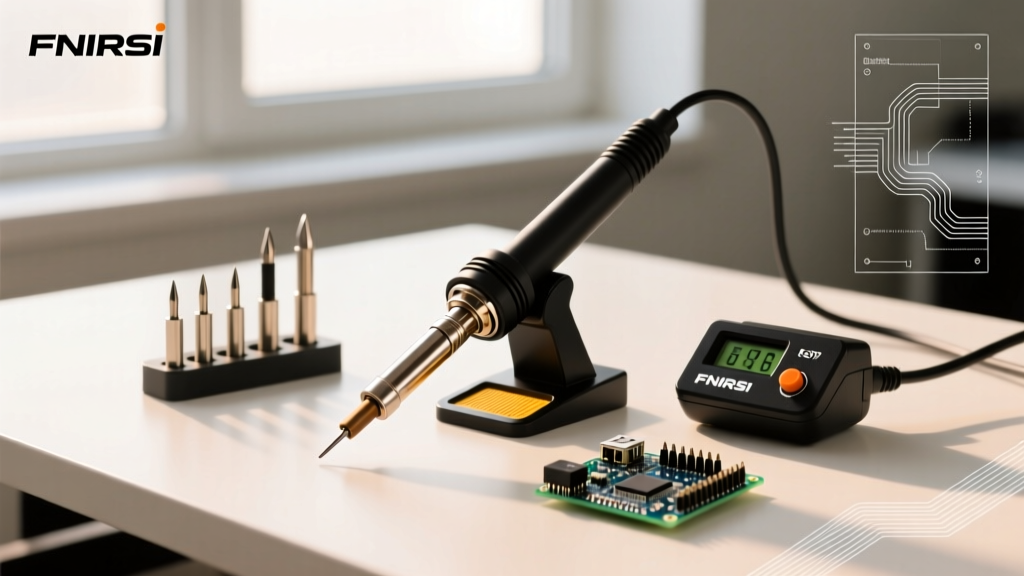
To understand why a hobby lobby soldering iron is the wrong tool for PCBs, compare it to a modern entry-level electronics station.
| Feature | Typical Craft Store Iron (60W) | Entry Electronics Station (e.g., Pinecil V2) |
|---|---|---|
| Temperature Control | Fixed (Usually 450°C+) | Digital PID (50°C to 450°C) |
| Tip Thermal Mass | High (Thick chisel/cone) | Low to Medium (Interchangeable) |
| Heat-Up Time | 60 to 120 seconds | 6 to 12 seconds | ESD Safe / Grounded | No | Yes (via USB-C PD ground) |
| Best Application | Stained glass, 10AWG wire | PCBs, 22AWG-30AWG, SMD |
| Approx. 2026 Price | $15.00 - $25.00 | $26.00 (Pine64 Pinecil V2) |
The Thermal Problem: Why Fixed-Temp Irons Destroy PCBs
The standard substrate for almost all hobbyist and commercial circuit boards is FR4 fiberglass. The Glass Transition Temperature (Tg) of standard FR4 is roughly 130°C to 140°C. When you apply a fixed-temperature craft iron hovering at 450°C to a delicate through-hole pad, the extreme thermal shock causes the epoxy resin in the FR4 to soften and expand rapidly.
Expert Insight: Applying a 450°C chisel tip to a 0.1-inch header pad for more than three seconds will frequently cause 'pad lifting'—where the copper trace physically peels away from the fiberglass substrate, permanently ruining the board.
Furthermore, modern lead-free solder alloys (like SAC305) require specific thermal profiles to wet properly without burning the flux core. According to the Adafruit Guide to Excellent Soldering, precise temperature control is mandatory to prevent oxidizing the solder joint before the flux can clean the metal. A hobby lobby soldering iron will instantly char the rosin flux, leaving a black, non-conductive carbon residue that prevents the solder from flowing, resulting in a 'cold' or brittle joint.
Safety and Fumes: The Hidden Cost of Cheap Irons
Soldering generates fumes, primarily from the vaporized flux core inside the solder wire, not the metal itself. When rosin-based flux is heated past 350°C, it releases colophony fumes, which are known respiratory sensitizers and can trigger occupational asthma. Because craft irons run excessively hot by default, they vaporize flux violently, creating dense, acrid smoke.
The National Institute for Occupational Safety and Health (NIOSH) explicitly warns that prolonged exposure to rosin flux fumes without local exhaust ventilation can lead to severe respiratory issues. Craft store kits never include fume extractors, and their unregulated heat makes fume generation significantly worse than a properly tuned electronics station running at 320°C.
When SHOULD You Buy a Soldering Iron from Hobby Lobby?
We are not saying these irons are useless. A hobby lobby soldering iron is actually the correct tool if your project falls into these specific categories:
- Stained Glass & Copper Foil: The massive thermal mass is required to heat wide copper foil tape and melt 60/40 solid wire solder.
- Jewelry Making: Heavy silver or brass components act as massive heat sinks; a 100W craft iron (like a Weller SP80 equivalent) is necessary to get the metal up to melting temperature.
- Thick Gauge Wire Splicing: If you are soldering 10AWG to 14AWG silicone wires for RC car battery connectors (like XT60 or XT90 plugs), a high-wattage craft iron will perform adequately.
The 2026 Beginner Alternatives: What to Buy Instead
If your goal is to solder wires to a switch, build a guitar pedal, or assemble an Arduino kit, skip the craft store. Here are the exact tools domain experts recommend for beginners in 2026:
1. The Budget King: Pine64 Pinecil V2 ($26)
Powered by a standard USB-C laptop charger (65W PD or higher), the Pinecil V2 features a digital display, precise PID temperature control, and uses cheap, interchangeable Hakko T12-style tips. It heats up in 8 seconds and is entirely ESD-safe if your charger is grounded.
2. The Traditional Starter: Weller WLC100 ($55)
A classic 40W analog station with a dial. It lacks digital precision but offers vastly better thermal recovery and tip longevity than a direct-mains craft iron. It is a staple in high school robotics labs.
3. The Professional Entry: Hakko FX888D ($115)
If you have the budget, this is the industry standard. It features digital lockout, ceramic heating elements, and will easily last a decade of daily use. As noted in the SparkFun Through-Hole Soldering Tutorial, investing in a quality station drastically reduces the learning curve by eliminating variables like tip oxidation and thermal lag.
Step-by-Step: Safely Using a Craft Iron for Heavy Wire
If you already own a hobby lobby soldering iron and strictly need to solder heavy 12AWG wires for a drone or RC car, follow this procedure to avoid melting the wire insulation:
- Prep the Tip: While the iron heats, coat the tip in a thick layer of cheap, leaded 60/40 solder to prevent immediate oxidation.
- Strip and Twist: Strip exactly 1/4 inch of insulation. Twist the copper strands tightly so they act as a single solid core.
- Pre-Tin Both Wires: Apply a small amount of flux to the bare copper. Touch the iron to the wire, then feed solder into the wire, not the iron tip, until the copper turns shiny silver.
- The Splice: Cross the pre-tinned wires in an 'X' shape. Apply the iron directly to the joint. Because both wires are pre-tinned, they will melt together in 2-3 seconds without needing excessive dwell time.
- Protect: Slide a piece of adhesive-lined heat shrink tubing over the joint and apply heat.
Frequently Asked Questions
Can I solder a circuit board with a 60W Hobby Lobby iron?
Technically, yes, but it is highly discouraged. The lack of temperature control and the thick tip make it incredibly easy to lift PCB pads, melt plastic connector housings, and destroy sensitive silicon chips via thermal shock or ESD.
Why does my craft iron tip turn black and stop melting solder?
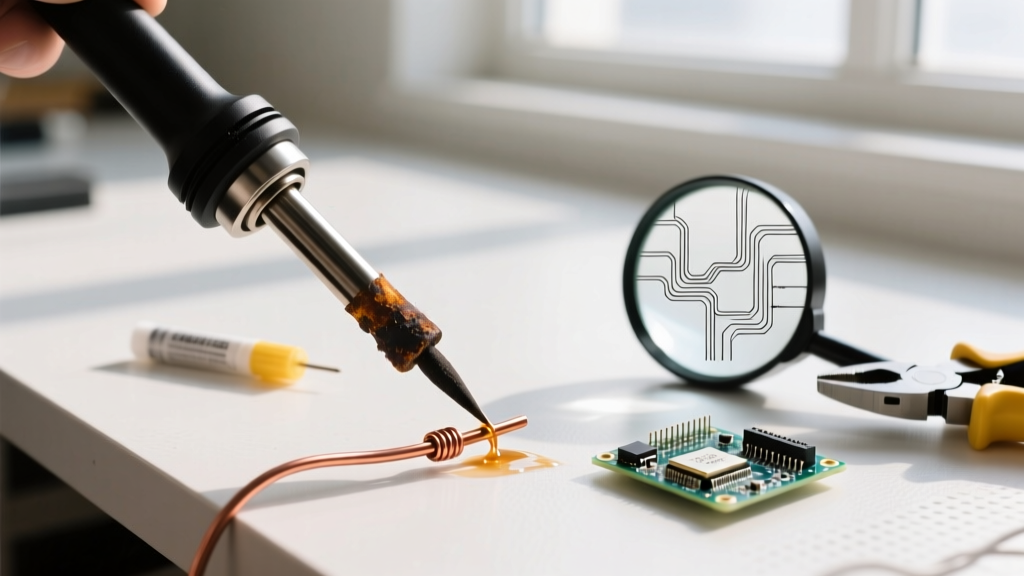
This is called 'oxidation.' Because craft irons run at extreme, unregulated temperatures, the iron plating on the tip reacts with oxygen in the air, forming a black crust that repels molten solder. Never use sandpaper or a file to clean it; use a damp brass sponge and immediately re-tin the tip with fresh solder.
Do I need lead-free solder for hobby electronics?
No. For home hobbyist electronics, 63/37 (eutectic) or 60/40 leaded rosin-core solder is vastly superior. It melts at a lower temperature (183°C), flows better, and creates shinier, more reliable joints, which is especially helpful when learning with less-than-ideal equipment.