
The Bench Staple Under Siege: Is the FX-888D Still Relevant?
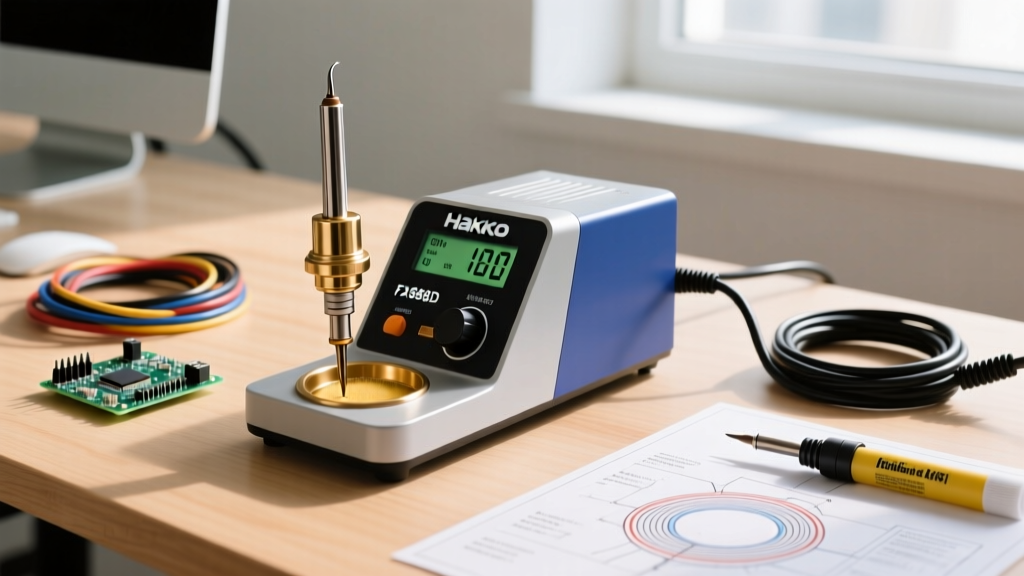
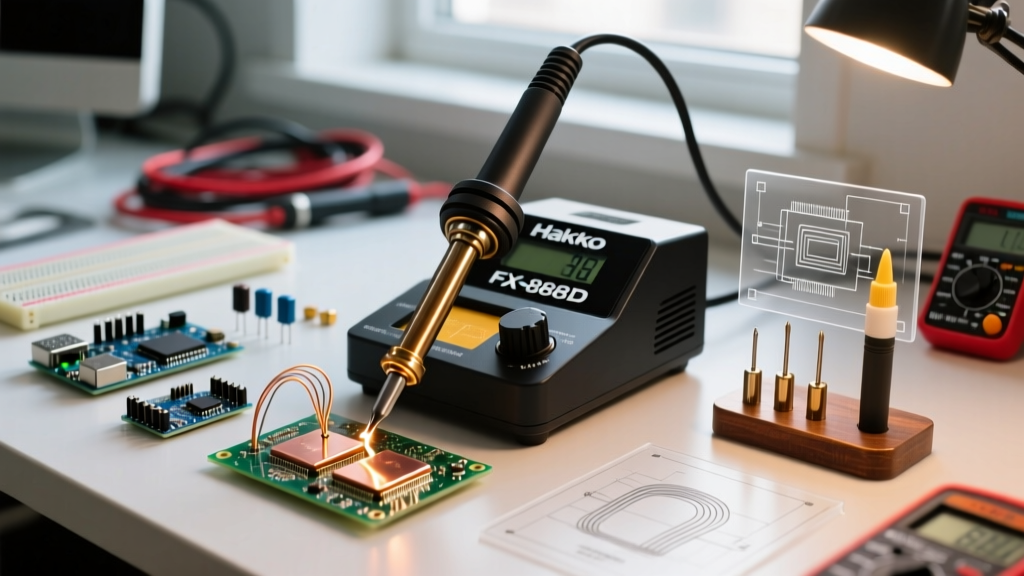
For over a decade, the Hakko FX-888D digital soldering station has been the undisputed champion of the hobbyist, repair technician, and light-production bench. Priced consistently around the $105 to $115 mark, it offers reliable transformer-based power and a massive ecosystem of aftermarket tips. However, the soldering landscape in 2026 looks vastly different. Ultra-budget USB-C PD smart irons (like the Pinecil V2) now offer active-tip technology for under $30, while premium workstations from JBC and Metcal dominate the high-end repair and manufacturing spaces with prices exceeding $600.
This leaves the Hakko FX-888D in a precarious middle ground. Is it still the best value proposition for electronics engineers, or has the thermal performance gap between budget passive irons and premium active-cartridge systems widened to the point where an upgrade is mandatory? In this budget vs. premium analysis, we dissect the thermal physics, real-world failure modes, and cost-of-ownership metrics of the FX-888D against its high-end competitors.
Thermal Physics: The T18 Passive Tip Limitation
To understand where the Hakko FX-888D digital soldering station wins and loses, you must understand its thermal architecture. The FX-888D utilizes the T18 tip series. In this passive design, the ceramic heating element and the thermocouple sensor are housed inside the iron's handpiece (the FX-951 style handle). The tip itself is essentially a hollow copper sleeve with an iron plating, which slides over the heater.
The Thermal Lag Problem
Because the temperature sensor is located at the base of the heater rather than at the working end of the tip, a physical gap exists between the sensor and the solder joint. When you apply a T18-D12 (1.2mm chisel) tip to a heavy ground plane on a 4-layer PCB, the copper tip rapidly transfers heat into the board. The tip's working end cools down instantly, but the thermal lag delays the sensor's detection of this temperature drop. By the time the FX-888D's microcontroller registers the drop and pulses the 70W transformer to compensate, the joint has already suffered a thermal excursion, risking a cold solder joint or component damage.
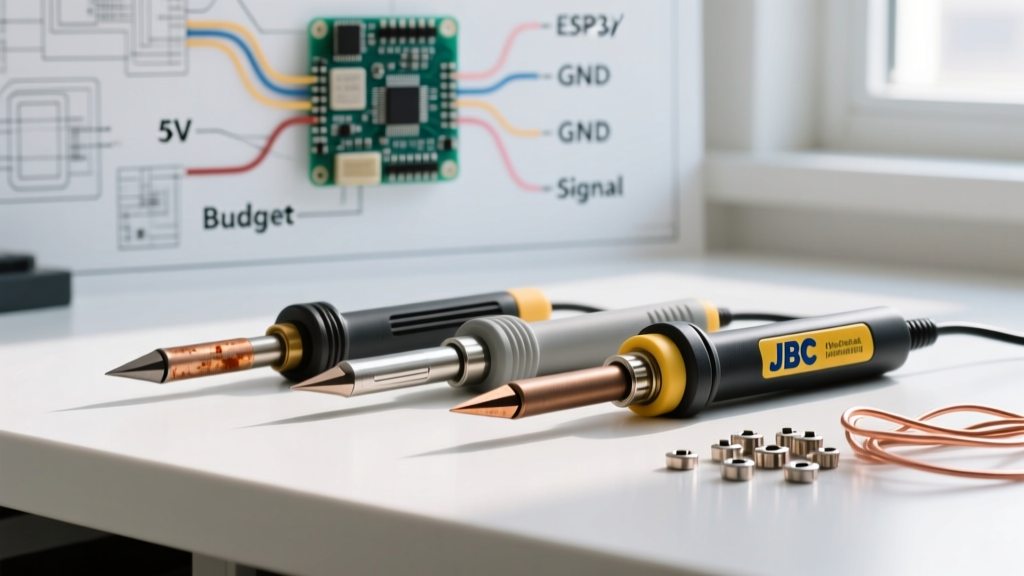
Premium stations, such as those utilizing JBC's C245 cartridges, solve this by integrating the heater and the thermocouple directly inside the tip's working end. This active-tip technology allows the station to detect a temperature drop in milliseconds and deliver localized heat precisely where it is needed, strictly adhering to the thermal limits outlined in IPC J-STD-001 standards for electronic assemblies.
Comparison Matrix: Budget vs. Mid-Tier vs. Premium
Below is a technical comparison of the FX-888D against a mid-tier cartridge system and a top-tier active-tip system. Pricing reflects average market rates in 2026.
| Feature | Hakko FX-888D (Budget/Mid) | Weller WE1010NA (Mid-Tier) | JBC CD-2BQF (Premium) |
|---|---|---|---|
| Heating Tech | Passive (Heater in Handle) | Cartridge (Heater + Sensor in Base) | Active (Heater + Sensor at Tip End) |
| Peak Wattage | 70W | 70W | 130W |
| Heat-Up Time | ~20-30 seconds | ~10-15 seconds | < 2 seconds |
| Tip Cost (Avg) | $6 - $9 (T18 Series) | $12 - $18 (ETA/RT Series) | $45 - $60 (C245 Series) |
| Station Price | $105 - $115 | $115 - $130 | $550 - $620 |
| Heavy Ground Planes | Poor (Severe Thermal Lag) | Moderate | Excellent (Zero Lag) |
Real-World Failure Modes & Edge Cases
While the Hakko FX-888D is renowned for its durability, it is not immune to the physical realities of bench work. Understanding its specific failure modes is critical for maximizing its lifespan.
- "Black Tip" Oxidation Syndrome: The iron plating on T18 tips is highly susceptible to oxidation if left idling above 350°C (662°F). In 2026, with lead-free SAC305 solder requiring higher baseline temperatures, users frequently leave the iron at 380°C. Over time, flux vapors and oxygen degrade the plating, resulting in a black, non-wetting tip. Solution: Always utilize the station's digital sleep mode (set to 5 minutes) and drop the idle temperature to 250°C.
- Membrane Keypad Fatigue: The FX-888D uses a tactile membrane keypad for temperature adjustments. In high-volume production environments, the 'UP' and 'DOWN' micro-switch domes can fatigue and fail to register presses after 4 to 5 years of heavy use. Replacing the membrane requires basic through-hole soldering skills and a $15 OEM part from Hakko's official parts distributors.
- Transformer Hum and Triac Clicking: Unlike high-frequency switching power supplies found in premium units, the FX-888D uses a traditional laminated core transformer. When driving heavy thermal loads, the physical expansion and magnetic forces can cause an audible 60Hz hum and clicking from the internal triac. This is normal operational behavior, not a defect.
SMD Optimization Protocol for the FX-888D
Can a budget passive station handle modern 0402 and 0201 surface-mount components? Yes, but only if you abandon the "turn up the heat" mentality. High temperatures destroy the flux core before the joint reaches reflow, leading to bridging and tombstoning. Follow this strict protocol for SMD work with the FX-888D:
- Tip Selection: Discard the stock T18-B (conical) tip immediately. Conical tips have terrible thermal mass transfer for SMD pads. Switch to the T18-D08 (0.8mm micro chisel) or T18-BC1 (1mm bevel). The flat geometry maximizes surface area contact with the component lead.
- Temperature Calibration: Set the station to 320°C (608°F) for standard 63/37 leaded solder, or 340°C (644°F) for lead-free pastes. Do not exceed 350°C.
- External Flux Application: Never rely solely on the flux core inside your solder wire. Apply a high-quality no-clean tacky flux (such as Amtech NC-559-V2-TF) directly to the pads before tinning. This lowers the surface tension and drastically reduces the dwell time required from the iron.
- Preheating (For Multi-Layer Boards): If soldering a 0402 capacitor over a solid copper pour, the FX-888D will stall. Use an external PCB preheater (like an 853D hot air station set to 120°C from below) to bring the board's ambient temperature up, reducing the thermal delta the soldering iron must overcome.
Expert Insight: "The biggest mistake I see junior technicians make with the FX-888D is treating it like a JBC. When the solder doesn't melt instantly on a ground pad, they crank the dial to 420°C. This instantly burns the flux, oxidizes the T18 tip, and delaminates the PCB pad. The FX-888D requires patience and proper flux chemistry, not brute force."
The Hidden Costs of Ownership
When analyzing budget vs. premium, the initial hardware cost is only half the equation. The Hakko FX-888D wins decisively on consumable costs. A genuine Hakko T18 tip costs roughly $7, and high-quality third-party clones (like those from KSGER or YIHUA) can be found for under $2 each. While premium JBC C245 tips offer unparalleled thermal performance, they cost upwards of $50 per tip and have a finite lifespan of roughly 40,000 to 60,000 solder joints before the internal heater element degrades. For a hobbyist or a repair shop doing general through-hole and large SMD work, the FX-888D's consumable economics are impossible to beat.
Final Verdict: Who Should Buy the FX-888D in 2026?
The Hakko FX-888D digital soldering station remains a highly capable, robust, and economically sound investment for specific user profiles.
Buy the FX-888D if:
- You are a hobbyist, student, or audio technician working primarily with through-hole components, wires, and large SMD parts (SOIC, TQFP, 0805+).
- You require a rugged, transformer-based station that can survive being knocked off a bench without shattering a digital screen or fragile handpiece.
- You want to minimize long-term consumable costs.
Upgrade to a Premium Station (JBC/Metcal) if:
- Your daily work involves micro-soldering, 0201/01005 passives, or BGA rework.
- You frequently solder multi-layer PCBs with heavy internal ground planes where thermal lag causes cold joints.
- Time is money, and the 2-second heat-up time and zero-lag thermal recovery of active tips directly impact your hourly output.
Ultimately, while the premium market has pushed the boundaries of thermal physics, the Hakko FX-888D digital soldering station holds its ground as the most reliable, cost-effective workhorse for 80% of general electronics tasks.