
The Definitive Guide to Soldering Iron Solder Alloys in 2026
Choosing the right soldering iron solder is just as critical as the station itself. In 2026, the electronics repair and DIY landscape has shifted heavily toward specialized lead-free alloys for commercial compliance, while hobbyists and aerospace technicians continue to rely on traditional eutectic leaded solders for their unmatched wetting properties. Whether you are dragging solder on 0402 SMD pads or tinning heavy 10 AWG silicone wires for drone ESCs, the alloy composition, flux core chemistry, and wire diameter will dictate your joint reliability.
Below, we break down the best soldering iron solder wires available this year, analyzing their metallurgical profiles, optimal iron temperatures, and specific use cases based on rigorous bench testing and IPC standards compliance.
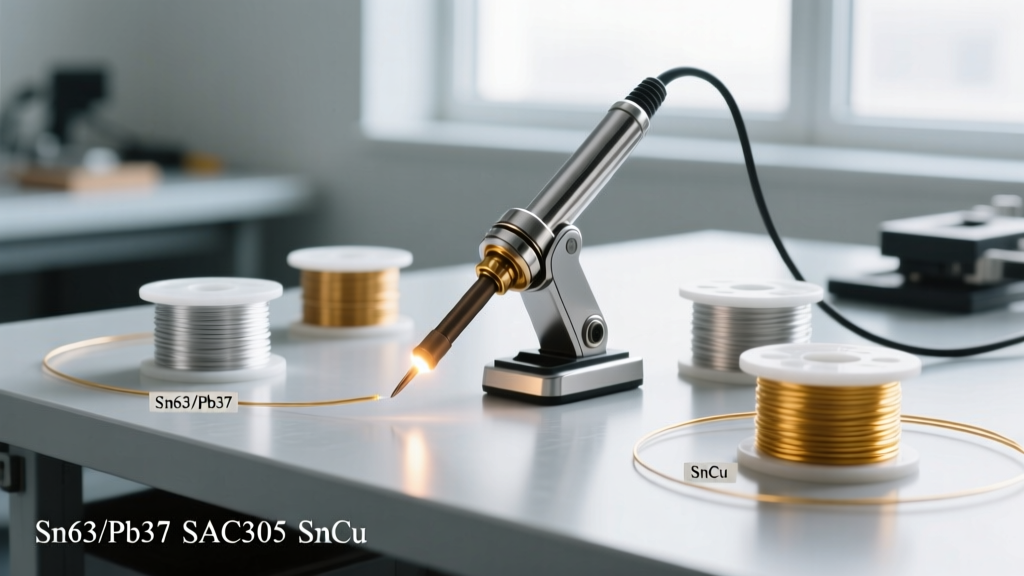
Quick Comparison Matrix: Top Soldering Iron Solder Wires
| Product / Alloy | Melt Point | Flux Type | Best Application | Avg. Price (1lb) |
|---|---|---|---|---|
| Kester 331 (Sn63/Pb37) | 183°C (361°F) | RA (Rosin Activated) | Through-hole, hobbyist, repair | $45 - $55 |
| Senju ECO RA-10 (SAC305) | 217°C - 220°C | Low-Solids No-Clean | Commercial SMD, BGA rework | $110 - $130 |
| Alpha Metals Sn99.3Cu0.7 | 227°C (441°F) | Water-Washable | Heavy gauge wires, plumbing | $40 - $50 |
| MG Chemicals 4895 (Sn60/Pb40) | 183°C - 190°C | No-Clean | Quick prototyping, audio gear | $35 - $45 |
The Best Soldering Iron Solder Alloys Reviewed
1. Kester 331 (Sn63/Pb37) – Best Overall for Through-Hole & Hobbyists
Kester 331 remains the gold standard for general-purpose electronics soldering. The Sn63/Pb37 ratio is eutectic, meaning it transitions directly from solid to liquid at exactly 183°C without passing through a plastic (semi-solid) phase. This eliminates 'disturbed joints'—a common failure mode where the component moves while the solder is cooling, resulting in a grainy, high-resistance connection.
- Optimal Iron Temperature: 300°C - 330°C (572°F - 626°F).
- Flux Core: 50/50 Rosin Activated (RA). Provides aggressive wetting but requires isopropyl alcohol (IPA) cleaning post-soldering to prevent long-term dendritic growth.
- Recommended Diameter: 0.031' (0.8mm) for standard DIP ICs and through-hole capacitors; 0.020' (0.5mm) for tighter PCB pads.
- The Verdict: If you are not bound by RoHS commercial manufacturing restrictions, this is the most forgiving soldering iron solder available.
2. Senju ECO Solder RA-10 (SAC305) – Best Lead-Free for SMD
SAC305 (96.5% Tin, 3.0% Silver, 0.5% Copper) is the industry-standard lead-free alloy. Senju's ECO RA-10 features a proprietary halogen-free no-clean flux core that minimizes spitting and leaves a hard, transparent residue that does not interfere with in-circuit testing (ICT). However, SAC305 requires significantly more thermal energy to flow properly.
- Optimal Iron Temperature: 350°C - 380°C. Using lower temperatures causes the flux to burn before the alloy melts, resulting in cold, balling joints.
- Failure Mode Warning: The high silver content and required temperatures accelerate the dissolution of standard copper-plated soldering iron tips. You must use specialized lead-free tips (e.g., Hakko T18-D24 or Weller RTW032 series) with thicker iron plating to prevent pitting.
- The Verdict: Essential for commercial SMD assembly and BGA rework, provided your soldering station can sustain high thermal recovery rates.
3. Alpha Metals Sn99.3Cu0.7 (SnCu) – Best Budget Lead-Free
Often referred to as 'poor man's SAC', this Tin-Copper alloy lacks silver, making it significantly cheaper while remaining fully RoHS compliant. It melts slightly higher at 227°C. Because it lacks the wetting agents found in silver-bearing alloys, it requires a highly active flux core to achieve acceptable joint fillets.
- Best For: Tinning heavy 12 AWG to 8 AWG wires, soldering XT90 connectors, and basic plumbing or chassis grounding where fine-pitch SMD precision is not required.
- Flux Note: Alpha typically packages this with a water-washable organic acid (OA) flux. You must wash the board or joint with distilled water after use, as OA flux is highly corrosive and will eat through copper traces within months if left uncleaned.
4. MG Chemicals 4895 (Sn60/Pb40) – Best No-Clean Leaded Option
While Sn63/Pb37 is eutectic, Sn60/Pb40 has a slight plastic range (183°C to 190°C). MG Chemicals pairs this alloy with an advanced synthetic no-clean flux. This is ideal for audio enthusiasts and quick prototyping where washing the PCB with solvents is impractical or could damage sensitive components like electret microphones or unsealed potentiometers.
Expert Insight: According to the NASA Workmanship Training Manual, operators must hold the joint completely still until the solder drops below 183°C when using non-eutectic 60/40 alloys to avoid microscopic fracturing in the crystalline structure during the plastic phase.
How to Choose the Right Soldering Iron Solder
1. Wire Diameter: Matching Gauge to Your Iron's Tip
Using a solder wire that is too thick for your iron tip causes the wire to act as a massive heat sink, dropping the tip temperature below the alloy's melting point. Conversely, wire that is too thin requires excessive feeding, increasing the chance of burning the flux before the joint is heated.
- 0.010' - 0.015' (0.25mm - 0.4mm): Use with micro-pencil tips for 0402/0603 SMD components and fine-pitch QFPs.
- 0.020' - 0.025' (0.5mm - 0.6mm): The versatile middle-ground for 0805 SMD, SOIC ICs, and standard 2.54mm header pins.
- 0.031' - 0.040' (0.8mm - 1.0mm): Best for large through-hole capacitors, power jacks, and general wiring.
- 0.050' - 0.062' (1.2mm - 1.5mm): Reserved for heavy battery tabs, thick gauge wire tinning, and large ground planes.
2. Flux Core Chemistry Decoded
The flux is what actually does the work by removing oxidation from the copper pad and component lead. The IPC J-STD-004 standard classifies fluxes by resin type and activity level:
- Rosin (R) / RMA (Rosin Mildly Activated): Traditional pine-sap based. Safe, low corrosion, but leaves a sticky residue that attracts dust and can interfere with high-impedance circuits.
- Rosin Activated (RA): Contains halide activators for superior wetting on slightly oxidized boards. Mandatory to clean with IPA or specialized flux removers.
- No-Clean (NC): Synthetic resins designed to burn off or leave a hard, inert, glass-like shell. Ideal for modern automated and manual SMD work where washing is skipped.
- Water-Soluble (OA): Highly active organic acids. Excellent for heavily oxidized pads and thick wires, but strictly requires a heated distilled water wash post-soldering.
Common Soldering Iron Solder Failure Modes
Even with premium solder, improper technique leads to distinct metallurgical failures. Recognizing these is key to diagnosing your process:
- Tombstoning (Drawbridging): Occurs almost exclusively with SAC305 and other lead-free alloys on small SMD passives. Caused by uneven heating of the two pads, resulting in one side melting and pulling the component upright due to surface tension. Fix: Use a pre-heater or hot air to equalize pad temperatures before applying the iron.
- De-wetting: The solder balls up and refuses to spread across the pad, exposing the bare copper. This indicates severe oxidation on the pad or an exhausted flux core. Fix: Apply external liquid tacky flux (e.g., Chip Quik SMD291) before reapplying heat.
- Flux Spitting / Exploding: Happens when the iron tip is too hot (>400°C), instantly vaporizing the solvents inside the flux core. This shoots microscopic beads of sticky flux across your PCB. Fix: Lower the station temperature and allow the iron to heat the joint for 1 second before feeding the wire.
Expert Tips for Extending Solder Shelf Life
Soldering iron solder does expire. Over time, the flux core dries out, and the solder wire surface oxidizes. To maximize the lifespan of your $100+ spools of SAC305 or Kester 331:
Storage Protocol: Store solder spools in a sealed ziplock bag with a silica gel desiccant pack in a cool, dry environment (ideally below 25°C / 77°F). Avoid storing solder in unheated garages or sheds where high humidity and temperature swings will rapidly degrade the flux activators and promote surface oxidation on the tin alloy. For detailed shelf-life data sheets, always refer to the Kester technical resources library.Frequently Asked Questions
Can I use plumbing solder for electronics?
No. Plumbing solder is typically a 50/50 or 95/5 Tin/Antimony alloy designed for copper pipes, often using highly corrosive acid paste fluxes that will destroy PCB traces and component leads. Furthermore, plumbing solder lacks a rosin or no-clean core, meaning you would have to apply external flux, which rarely yields reliable electrical connections on microelectronics.
Why is my soldering iron solder not sticking to the tip?
This is a sign of tip oxidation, not a problem with the solder wire itself. If the iron tip is black or dark blue, the solder will roll right off. You must re-tin the tip using a brass wire sponge and fresh leaded solder, or use a tip tinner/activator compound to strip the oxidation layer and re-coat the tip with a layer of molten solder.
Is silver solder the same as soldering iron solder?
No. 'Silver solder' (often used in jewelry and HVAC) requires temperatures exceeding 600°C to 800°C and can only be melted with a butane or oxy-acetylene torch. While electronics solder like SAC305 contains a small percentage of silver (3%) to improve joint strength and lower the melt point, it is fundamentally different from brazing alloys and cannot be used with a standard soldering iron.