
The Anatomy of a Professional Air Soldering Gun
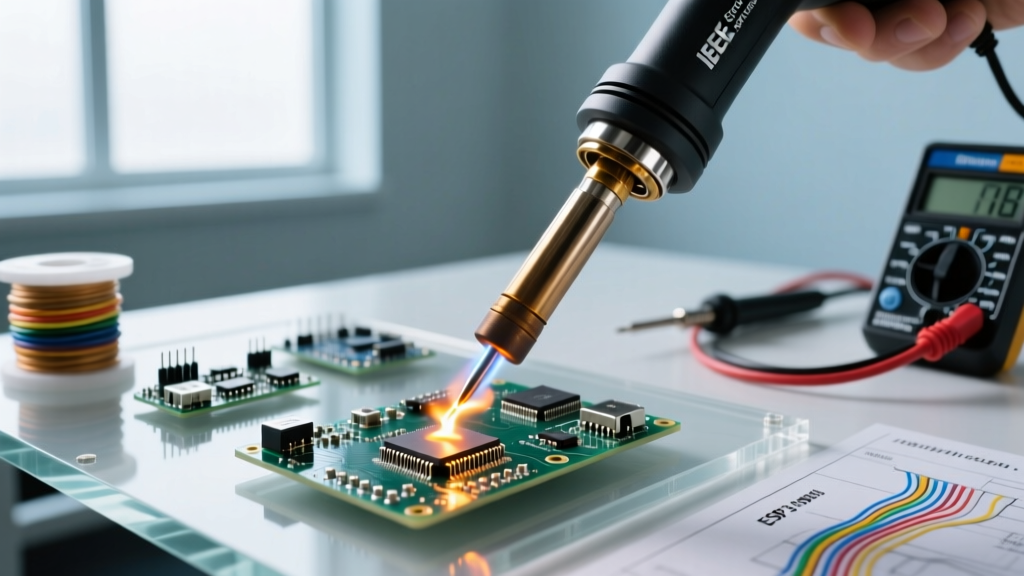
When electronics technicians, board-level repair specialists, and advanced DIYers refer to an air soldering gun, they are almost exclusively talking about a hot air rework station. Unlike traditional pneumatic tools used in heavy plumbing, the modern electronics air soldering gun is a precision thermal instrument designed to melt solder paste, reflow surface-mount devices (SMDs), and manipulate heat-shrink tubing without damaging delicate silicon dies or lifting PCB pads.
In 2026, the market is flooded with sub-$50 clone stations, but professional laboratories rely on engineered systems that cost between $180 and $800. This feature deep dive dissects the internal architecture, fluid dynamics, and thermal algorithms that separate a professional-grade air soldering gun from a hobbyist toy.
Terminology Clarification: Hot Air vs. Pneumatic
While the term "air soldering gun" is widely used in search queries and repair forums, the industry-standard nomenclature is Hot Air Rework Station. True pneumatic soldering tools (which use compressed air to feed solder wire) are largely obsolete in microelectronics. This guide focuses entirely on convective thermal rework tools used for SMD and BGA (Ball Grid Array) applications.
Core Feature 1: Airflow Generation and Fluid Dynamics
The most critical differentiator in an air soldering gun is how it moves air. Consistent, laminar airflow is required to evenly distribute heat across a multi-pin IC. If the airflow is turbulent or pulsating, you risk localized overheating, which leads to pad delamination or silicon thermal shock.
Diaphragm Pumps vs. Brushless Fan Motors
Cheaper stations utilize a diaphragm pump housed in the base unit, pushing air through a flexible silicone hose to the handpiece. This design introduces severe vibration, audible pulsing, and a drop in air pressure when the hose is bent. Furthermore, the air must travel through a heating element inside the wand, which limits the maximum safe wattage to prevent the hose from melting.
Professional units, such as the industry-standard Quick 861DW or the Hakko FR-830, employ a brushless DC fan motor integrated directly into the handpiece. This design offers several distinct advantages:
- Zero Vibration: Eliminates hand fatigue and prevents micro-movements that could bridge fine-pitch SMD pins during reflow.
- Instant Airflow Response: Brushless motors spool up and down in milliseconds, allowing for precise thermal profiling.
- Laminar Flow: Advanced impeller designs push air smoothly through the ceramic heating core, ensuring the temperature at the nozzle tip matches the sensor reading within a 2°C margin.
Feature Comparison: Top-Tier Air Soldering Guns (2026 Market)
| Model | Motor Type | Max Wattage | Airflow (L/min) | Temp Range | Est. Price (2026) |
|---|---|---|---|---|---|
| Quick 861DW | Brushless (In-Handle) | 1000W | 120 L/min | 100°C - 500°C | $190 - $220 |
| Hakko FR-830 | Brushless (In-Handle) | 600W | 50 L/min | 100°C - 480°C | $280 - $320 |
| Weller WHA900 | Brushless (Base/Tube) | 900W | 100 L/min | 50°C - 550°C | $650 - $750 |
Core Feature 2: PID Temperature Control and Thermal Recovery
An air soldering gun must compensate for the massive heat sink effect of multi-layer PCBs (especially those with heavy ground planes). When cold air enters the heating chamber, the temperature drops. A basic thermostat simply turns the heater on and off, resulting in a "sawtooth" temperature wave that can overshoot the target by 30°C or more, easily destroying moisture-sensitive components.
High-end stations use a Proportional-Integral-Derivative (PID) algorithm. The thermocouple, located millimeters from the nozzle exit, polls the temperature up to 100 times per second. The PID controller calculates the exact voltage required to maintain the target temperature, adjusting the heating element in real-time. This ensures that when you move the gun from a small 0402 resistor to a massive QFN chip, the thermal recovery is instantaneous and overshoot is kept under ±2°C.
Expert Insight: Never trust the digital display on budget air soldering guns. A display reading 350°C on a $40 clone station often means the heating element is at 350°C, but the air exiting the nozzle has cooled to 260°C due to poor thermal coupling and slow airflow. Always profile your specific station with a K-type thermocouple taped to a scrap PCB before attempting live rework.
Core Feature 3: Nozzle Aerodynamics and Thermal Profiling
The nozzle is the final interface between the air soldering gun and the PCB. The shape of the nozzle dictates the velocity and spread of the convective heat.
Choosing the Right Nozzle Geometry
- Round / Concentrator Nozzles: Best for targeted heat on single components, SOT-23 transistors, or melting heat-shrink tubing. They restrict airflow, increasing velocity and localized pressure.
- Square / Rectangular Nozzles: Designed to match the footprint of QFP (Quad Flat Package) and SOIC chips. They allow the technician to apply uniform heat to all leads simultaneously, preventing the "tombstoning" effect where one side of a component reflows before the other, pulling the component upright.
- BGA / Halo Nozzles: Feature a hollow center to direct heat to the perimeter of a Ball Grid Array package, preventing the center of the silicon die from overheating while the outer solder spheres reflow.
Compliance with Industry Rework Standards
Professional rework must adhere to strict thermal profiles to prevent intermetallic compound (IMC) overgrowth or pad cratering. According to the IPC-7711/7721 standard for rework and modification, the reflow process must mimic the original SMT reflow oven profile: Pre-heat, Soak, Reflow, and Cooling. An advanced air soldering gun allows technicians to manually execute these phases by adjusting the airflow (L/min) and temperature dynamically, or by using programmable thermal profiles stored in the station's memory.
Smart Features: Auto-Sleep and Magnetic Hall Sensors
Leaving an air soldering gun idling at 400°C degrades the ceramic heating element and oxidizes the nozzles. Modern stations incorporate Hall effect sensors in the handpiece cradle. When the magnetic handle is placed in the holder, the station instantly drops the temperature to a standby mode (usually 150°C) and shuts off the fan. Picking up the handle triggers an aggressive ramp-up sequence, returning the gun to working temperature in under 15 seconds. This feature extends the lifespan of a $30 nozzle from a few weeks to several years.
Safety Integration: Fume Extraction and ESD Grounding
Soldering, particularly with flux-cored wires or liquid fluxes used in SMD rework, generates volatile organic compounds (VOCs) and particulate matter. While the air soldering gun itself does not filter air, premium base units feature a synchronized 12V output port designed to trigger an external fume extractor the moment the fan spools up. Furthermore, the handpiece and nozzles of professional stations are hard-wired to the station's earth ground, ensuring that static discharge (ESD) is safely routed away from sensitive MOSFETs and microcontrollers. For comprehensive safety protocols, technicians should always consult NIOSH recommendations for ventilation and respiratory protection in electronics manufacturing environments.
Troubleshooting Common Air Soldering Defects
Even with a high-end air soldering gun, poor technique leads to catastrophic board damage. Here is a diagnostic matrix for common SMD rework failures:
- Tombstoning: Caused by uneven heating. Fix: Use a square nozzle and apply heat from above, not at a severe angle. Ensure flux is applied evenly to both pads.
- Pad Lifting / Delamination: Caused by excessive localized heat or prying the chip before the solder is fully liquid. Fix: Increase airflow to distribute heat, lower the temperature slightly, and let surface tension do the work. Never force a component off the board.
- Solder Wicking / Bridging: Caused by too much flux or excessive dwell time. Fix: Clean the area with isopropyl alcohol (IPA), apply fresh tack flux, and use a desoldering braid to reset the pads before attempting reflow again.
- Popcorning (BGA Cracking): Caused by moisture trapped inside the IC package expanding rapidly. Fix: Bake moisture-sensitive components in a dedicated drying oven at 125°C for 4-8 hours prior to using the air soldering gun, as recommended by the NASA Electronic Parts and Packaging (NEPP) program for high-reliability assemblies.
Final Verdict: Investing in Precision
The air soldering gun is the cornerstone of modern PCB repair and prototyping. While budget models may suffice for occasional heat-shrink tasks or through-hole desoldering, anyone working with 0402 passives, QFN ICs, or multi-layer motherboards requires the laminar airflow, PID stability, and brushless reliability found in professional stations. Understanding the engineering behind your tool is the first step toward mastering the art of SMD rework.