
The Heavy-Duty Dilemma: Why 100W Matters in 2026
When transitioning from delicate surface-mount work to high-current power electronics, RF shielding, or thick-gauge automotive wiring, standard 65W stations hit a thermal wall. In 2026, the widespread adoption of high-reliability lead-free alloys like SAC305 and SAC405 demands rigorous thermal management. These alloys melt around 217°C, but achieving proper wetting on massive ground planes requires tip temperatures of 350°C to 380°C. If your iron lacks the wattage to replenish lost heat, you risk cold joints, pad delamination, or violating the maximum dwell times outlined in IPC standards.
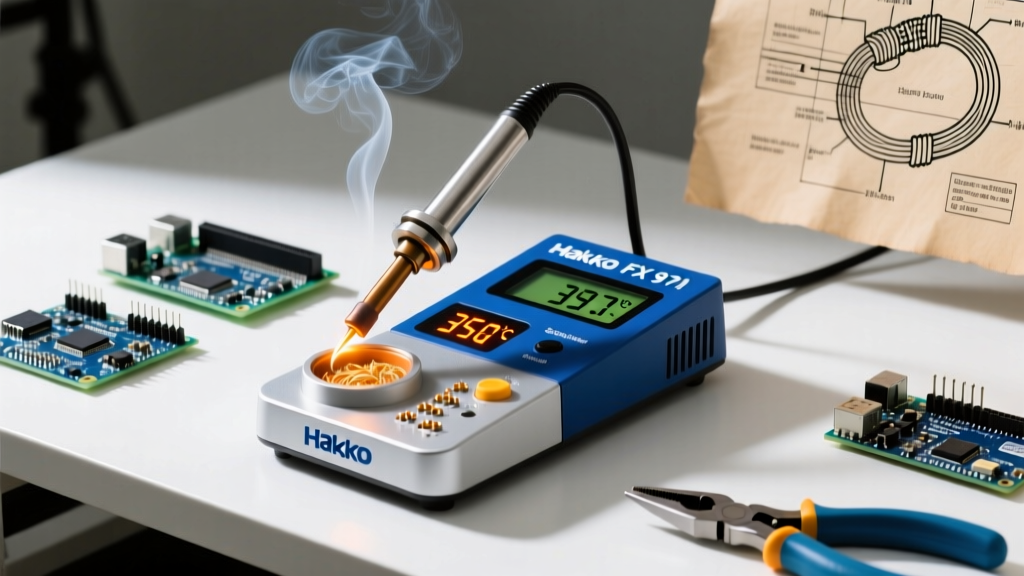
This is where the Hakko FX 971 soldering station enters the conversation. Positioned as a 100W heavy-duty workhorse, it promises rapid thermal recovery without the four-figure price tag of premium smart stations. But how does it stack up against modern titans like JBC and Weller?
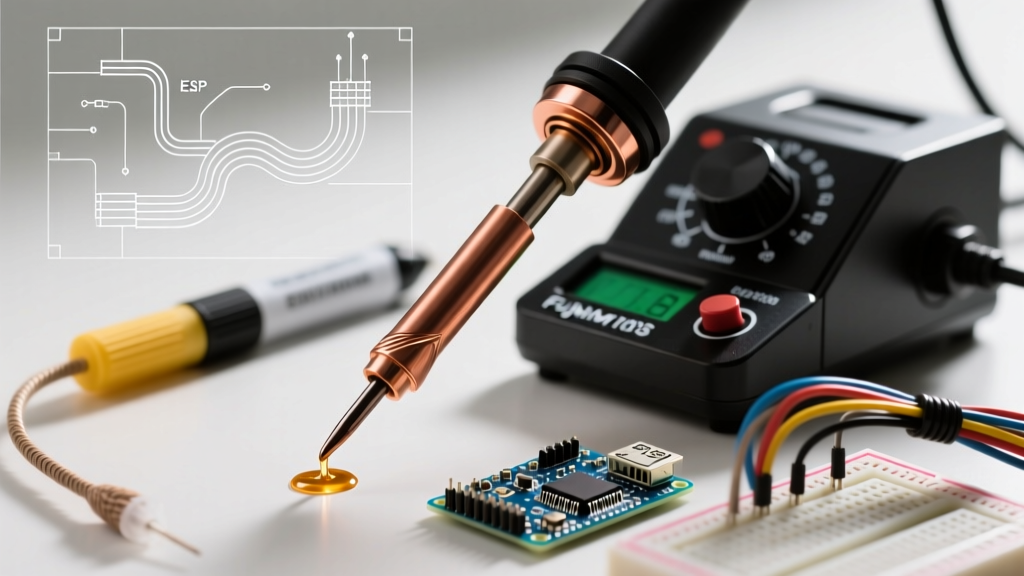
Hakko FX 971 Soldering Station: Architecture & Performance
The FX-971 utilizes Hakko's proven composite ceramic heater technology. Unlike older wire-wound heaters, the ceramic element wraps around the tip sleeve, providing a 100W continuous output that stabilizes temperature within seconds of contacting a high-mass joint. The station operates across a range of 120°F to 896°F (50°C to 480°C) and features a digital offset calibration function, allowing technicians to adjust for ambient variances or aging thermocouples.
Tip Ecosystem and Cost of Ownership
The FX-971 uses the ubiquitous T18 series tips. For heavy-duty applications, technicians typically reach for the T18-D52 (a massive 5.2mm chisel) or the T18-K (a broad knife tip for drag soldering thick connector pins). The most significant advantage here is economics: genuine T18 tips cost between $8 and $12 each. In high-volume production environments where tips are discarded weekly due to lead-free flux corrosion, this low cost of ownership is a massive operational benefit.
The 2026 Heavy-Duty Competitor Matrix
To understand the FX-971's market position, we must compare it against the industry's premier heavy-duty alternatives. Below is a structural breakdown of the top 100W+ stations available today.
| Feature | Hakko FX-971 | JBC CD-2BQF (C245) | Weller WX 1010 + WXP 120 |
|---|---|---|---|
| Max Power Output | 100W | 130W | 120W (Iron) / 200W (Station) |
| Heater Technology | Ceramic Sleeve | Integrated Tip Heater | Meatra (Silver Alloy) Core |
| Heat-Up Time (to 350°C) | ~22 Seconds | < 2 Seconds | ~9 Seconds |
| Avg. Tip Cost | $9 - $12 | $45 - $55 | $25 - $35 |
| Smart/Connected Features | No (Standalone) | No (Standalone) | Yes (IoT, User Profiles, USB) |
| Approx. 2026 Price | $270 | $585 | $750+ |
Real-World Thermal Stress Test: 12 AWG to Brass Spade
Spec sheets only tell half the story. To evaluate the FX 971 soldering station, we conducted a physical stress test: soldering a 12 AWG silicone-stranded wire to a heavy 1/4-inch brass spade connector using SAC305 paste.
The Physics of the Joint: Brass is an exceptional heat sink. The moment the iron touches the connector, the thermal mass aggressively pulls heat away from the tip. A 65W iron will drop to 250°C instantly, resulting in a dull, grainy cold joint as the flux burns off before the alloy can flow.
The Hakko FX-971 Result: The 100W ceramic heater experienced a brief temperature drop to 310°C upon contact but recovered to the 360°C setpoint within 3.5 seconds. The solder flowed cleanly into the wire strands, achieving a proper fillet without exceeding the 5-second maximum dwell time recommended by NASA's Electronic Parts and Packaging (NEPP) guidelines for thermal stress mitigation.
The JBC CD-2BQF Result: Because JBC integrates the heater and thermocouple directly into the tip's surface, the C245-945 heavy chisel didn't drop below 355°C. The joint was completed in 1.8 seconds. However, this blistering speed comes at a premium: you just consumed $50 worth of tip life for a fraction of a second's work.
Edge Cases & Failure Modes
No tool is perfect. When deploying the Hakko FX-971 in demanding environments, be aware of these specific edge cases:
1. Multi-Layer PCB Ground Plane Starvation
If you are soldering a thick through-hole component to a 6-layer PCB with internal copper pours, the thermal mass may exceed the 100W continuous delivery limit of the FX-971. In these extreme edge cases, the station's digital readout will flash, indicating thermal lag. Solution: Pre-heat the PCB from the bottom using an IR preheater (like a Hakko FR-830) to 120°C before applying the iron. This reduces the delta-T and allows the FX-971 to maintain wetting temperature.
2. Tip Oxidation in High-Temp Standby
Lead-free soldering often pushes tip temperatures to 400°C. If the FX-971 is left on without utilizing its programmable auto-sleep function, the iron plating will oxidize and pit within 48 hours of continuous use. Solution: Always set the sleep timer to 10 minutes and the drop-temp to 200°C. Never leave a tinned tip exposed to ambient air at 400°C.
3. Handle Ergonomics for Microsurgery
The FX-971 handpiece is slightly thicker and heavier than the FX-951 due to the heavier gauge wiring required for 100W delivery. While perfect for gripping and applying mechanical pressure to thick wires, it induces fatigue during 8-hour shifts of mixed SMD and THT work.
Maintenance and Sensor Calibration Protocol
Over time, the thermocouple embedded in the FX-971's ceramic heater will experience minor drift, especially if frequently subjected to thermal shock (e.g., plunging a 400°C tip into room-temperature flux). To maintain IPC compliance, technicians should verify tip temperature monthly using a Hakko 191 or equivalent tip thermometer. If the variance exceeds ±5°C, use the station's offset calibration mode: hold the UP and DOWN arrows while powering on, then adjust the digital offset to match your physical thermometer reading. This simple 60-second procedure ensures your heavy-duty joints never suffer from invisible under-heating.
Final Verdict: Who Should Buy the FX-971?
The Hakko FX 971 soldering station remains an undisputed champion of the mid-tier heavy-duty category in 2026. It is not designed for 0201 SMD rework, nor does it feature the IoT connectivity of the Weller WX series. Instead, it is a purpose-built thermal hammer.
- Buy the Hakko FX-971 if: You build power supplies, repair automotive wiring harnesses, assemble RF amplifiers, or run a production line where tip replacement costs must remain under $10 per unit.
- Upgrade to JBC if: You require sub-2-second thermal recovery for mixed-technology prototyping and your budget easily absorbs $50 per consumable tip.
- Choose Weller WX if: You manage a fleet of technicians and require software-locked temperature profiles to ensure IPC compliance across a smart factory floor.
For the vast majority of advanced DIYers, aerospace technicians, and independent repair shops, the FX-971 delivers 90% of the performance of a $700 smart station at a fraction of the lifetime cost.