
The Butane Reality: Understanding the Dremel VersaTip and VersaFlame
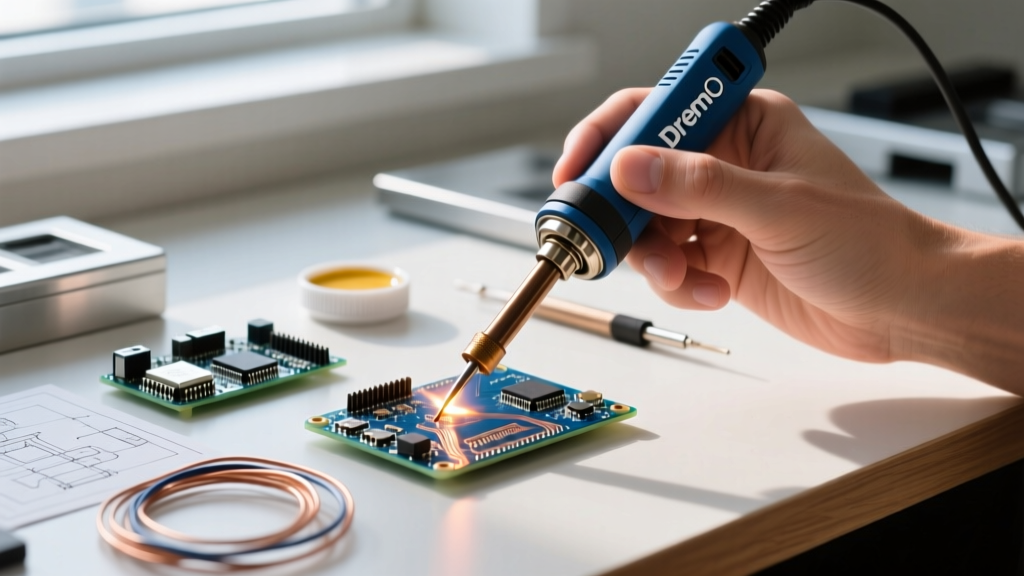
When makers, HVAC technicians, and field engineers refer to a "Dremel soldering iron," they are almost exclusively talking about the brand's butane-powered lineup—specifically the Dremel VersaTip (2000-01) and the VersaFlame (2200-01). Unlike traditional electric ceramic or mica-wound soldering stations, these tools rely on a catalytic reaction between butane gas and a platinum-coated mesh to generate heat. Because the underlying technology is fundamentally different, applying standard electric soldering iron troubleshooting steps to a Dremel butane iron will lead to frustration and potentially damaged equipment.
As of 2026, the VersaTip kit retails between $45 and $55, making it an affordable, highly portable solution for off-grid electronics repair, automotive wire splicing, and heat-shrink applications. However, the trade-off for cordless portability is a complex fuel and ignition system that requires specific maintenance. This guide provides deep-dive troubleshooting protocols for ignition failures, gas flow restrictions, and catalytic tip degradation.
Diagnostic Matrix: Symptom to Solution
Before dismantling your tool, use this rapid-diagnostic table to identify the root cause of your Dremel soldering iron's failure.
| Symptom | Probable Cause | Targeted Fix |
|---|---|---|
| Audible click, but no ignition | Spark gap misaligned or gas valve closed | Adjust piezo electrode to 2-3mm; verify gas dial is open |
| No audible click when pressing igniter | Jammed piezo button or dead crystal | Clear debris from button housing; replace piezo assembly |
| Ignites but tip never reaches soldering temp | Carbon fouling on catalytic mesh | Burn off carbon or replace tip (Part #201/202) |
| Hissing sound, smell of gas, no flame | Blown O-ring or cracked fuel reservoir | Replace fill-valve O-rings; retire tool if tank is cracked |
| Tool sputters and dies after 30 seconds | Vapor lock from un-purged air in tank | Purge tank completely and refill with 5x refined butane |
Deep Dive 1: Piezoelectric Ignition Failures
The Dremel VersaTip utilizes a piezoelectric igniter. When you press the button, a spring-loaded hammer strikes a quartz crystal, generating a high-voltage spark that jumps from an electrode to the metal burner guard. If your tool clicks but fails to light, the issue is rarely the crystal itself; it is almost always a geometry or fuel-delivery problem.
Adjusting the Spark Gap
Over time, the metal electrode wire can bend due to thermal expansion and contraction, or from accidental bumps when changing tips. For reliable ignition, the spark must jump exactly 2 to 3 millimeters from the electrode to the grounded brass burner assembly.
- If the gap is too wide (>4mm): The voltage will not arc, and the spark will seek a different path to ground, often internally shorting against the plastic housing.
- If the gap is too narrow (<1mm): The spark will occur, but it will lack the thermal energy required to ignite the butane-oxygen mixture.
Fix: Use a pair of non-marring nylon-jaw pliers or a small flathead screwdriver to gently bend the electrode wire until the 2-3mm gap is restored. Always perform this adjustment with the gas flow dial set to the "Off" position.
Deep Dive 2: Catalytic Tip Degradation and Carbon Fouling
The most misunderstood component of the Dremel soldering iron is the tip itself. The tip does not sit directly in a blowtorch flame. Instead, butane gas passes through a brass jet and vaporizes into a catalytic mesh (typically coated in platinum or palladium) located inside the tip's steel shroud. The catalyst lowers the activation energy required for the butane to react with oxygen, creating a continuous, flameless exothermic reaction that heats the solid copper core to over 1,000°F (537°C).
The Danger of Cheap Butane
If your Dremel iron struggles to maintain heat or takes more than 45 seconds to reach soldering temperature, your catalytic mesh is likely fouled. Unrefined or "budget" butane contains trace amounts of oils, mercaptans, and heavier hydrocarbons. When vaporized, these impurities bake onto the platinum mesh, creating a carbon shell that blocks oxygen from reaching the catalyst.
Furthermore, touching the hot catalytic tip to plastic, rubber, or excessive rosin flux will instantly melt these materials into the mesh, permanently destroying the tip's catalytic properties. To maintain compliance with high-reliability soldering standards like IPC J-STD-001, your tip must maintain stable thermal mass, which is impossible with a fouled catalyst.
Restoring vs. Replacing the Tip
As of 2026, replacement Dremel tips (such as the 201 chisel or 202 point) cost between $9 and $14. Before buying a replacement, attempt to burn off mild carbon fouling:
- Remove the heat shield and the tip from the VersaTip pen.
- Using a standard propane torch or a separate butane lighter, apply a direct, open flame to the catalytic mesh area for 60 seconds.
- Allow it to cool completely. The high heat will oxidize and flake away minor carbon deposits.
- Reinstall and test. If the tip still fails to glow cherry-red within 30 seconds of ignition, the catalyst is permanently poisoned and must be replaced.
Deep Dive 3: Gas Flow, Vapor Lock, and O-Ring Rot
Butane is highly sensitive to temperature and pressure dynamics. A common failure mode is "vapor lock," which occurs when air is trapped inside the fuel reservoir alongside the liquid butane. Because air does not compress into a liquid at room temperature, it creates a pressurized cushion that prevents the butane from vaporizing and flowing to the jet.
The Mandatory Purging Protocol
Never simply top off a Dremel soldering iron. You must purge the tank before every refill cycle. According to OSHA guidelines on handling flammable gases, purging should always be done in a well-ventilated outdoor area, away from ignition sources.
- Turn the gas flow dial to the maximum "Open" position.
- Press a small flathead screwdriver or a dedicated butane purge tool into the brass fill valve on the bottom of the pen.
- Hold for 10 to 15 seconds until the hissing sound completely stops, indicating all pressure and air have been expelled.
- Wait 60 seconds for the internal brass components to return to ambient temperature before attaching your butane can.
The O-Ring Degradation Edge Case
If you hear a persistent hiss near the fill valve even when the tool is off, the micro O-ring inside the fill valve has degraded. Butane is a potent solvent and will slowly eat away at standard rubber seals over 3 to 5 years. If you are comfortable with micro-repair, you can disassemble the fill valve using a 5mm hex socket and replace the internal O-ring with a high-quality Viton or Buna-N equivalent (typically 1.5mm inner diameter). Otherwise, consult Dremel Official Support for warranty replacement options.
The 2026 Preventative Maintenance Schedule
To ensure your Dremel VersaTip or VersaFlame operates reliably for years, adopt this strict maintenance protocol:
- Fuel Selection: Exclusively use 5x or 7x refined butane (brands like Colibri, Xikar, or Newport). The extra $5 per can saves you from buying $12 replacement tips every month.
- Post-Use Cooldown: Never cap the tool immediately after turning it off. Allow the catalytic tip to cool in open air for at least 3 minutes. Capping a hot tip traps unburnt hydrocarbons and accelerates carbon buildup.
- Flux Discipline: Never use the Dremel catalytic tip to melt glue, burn off wire insulation, or directly touch heavy rosin flux. Use a dedicated hot air gun or an electric iron for those tasks.
- Storage: If storing the tool for more than 3 months, purge the tank entirely. Leaving liquid butane under pressure in fluctuating temperatures degrades the internal valve seals.
Expert Warning: Never shake a can of butane before filling your Dremel iron. Shaking the can forces liquid propellant into the fill valve rather than the required vapor-liquid mix, leading to severe flooding and temporary ignition failure. Always fill with the can held perfectly vertical and the Dremel pen inverted on top.
When to Retire Your Dremel Butane Iron
While the VersaTip is a workhorse, it is not indestructible. If you notice the plastic housing near the burner assembly becoming brittle, discolored, or warped from excessive heat exposure, the structural integrity of the tool is compromised. Furthermore, if the internal brass gas jet becomes clogged with metallic debris from a damaged tip and cannot be cleared with compressed air, the fuel-air mixture will remain permanently imbalanced. In these scenarios, retire the tool immediately to prevent hazardous gas leaks, and invest in a fresh unit to maintain safety and soldering precision in your fieldwork.