
The Viral Screwdriver Soldering Iron Hack: Ingenuity or Hazard?
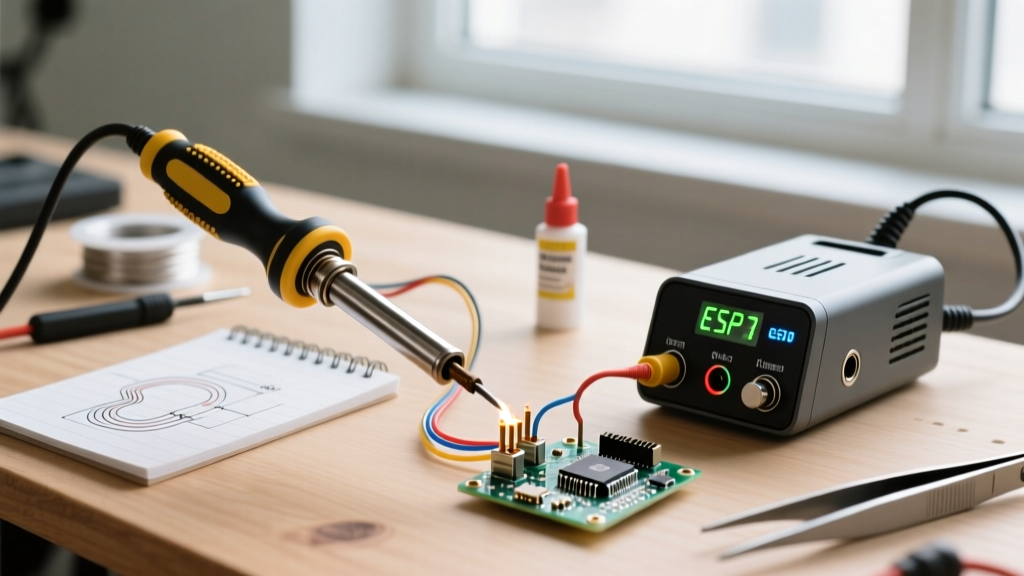
Search any DIY forum or video platform, and you will eventually encounter tutorials explaining how to make a soldering iron with a screwdriver. The premise is intoxicatingly simple: wrap some nichrome heating wire around a steel screwdriver shaft, connect it to a power source, and use the heated metal tip to melt solder. For a stranded maker or a hobbyist on a zero-dollar budget, it sounds like the ultimate MacGyver-style hack.
However, as we move through 2026, the landscape of budget electronics tools has radically shifted. With highly advanced, temperature-controlled smart soldering irons now available for under $30, the risk-to-reward ratio of building a DIY mains-powered screwdriver iron has completely collapsed. In this comprehensive guide, we will break down exactly how this viral hack is constructed, analyze the metallurgical and electrical reasons it fails in practice, and review the top budget smart stations that render this dangerous experiment obsolete.
Step-by-Step: How to Make a Soldering Iron With a Screwdriver (The Theory)
To understand why this hack is fundamentally flawed, we first need to examine the mechanical assembly typically proposed in online tutorials. Note: ElectricalFlux strongly advises against building this device due to severe shock and fire hazards.
The Materials and Assembly
- The Core: A standard flathead or Phillips steel screwdriver, stripped of its plastic or rubber handle to expose the metal tang.
- The Insulator: Mica sheets, fiberglass tape, or (in older, highly dangerous tutorials) asbestos wrapping to prevent short circuits.
- The Heating Element: 24 to 28 AWG nichrome wire, wrapped tightly around the insulated steel shaft.
- The Power Source: A 12V lead-acid battery, a repurposed laptop power brick, or, most dangerously, a direct 120V/240V AC mains connection via a dimmer switch.
The theory relies on Joule heating. As current passes through the high-resistance nichrome wire, it generates thermal energy, which conducts through the insulation and into the steel screwdriver shaft, theoretically heating the tip to the 183°C–250°C range required to melt rosin-core solder.
The Thermal and Metallurgical Reality: Why the Hack Fails
While a wrapped screwdriver will indeed get hot, it fails catastrophically as a soldering tool due to three distinct engineering barriers.
1. The Thermal Conductivity Bottleneck
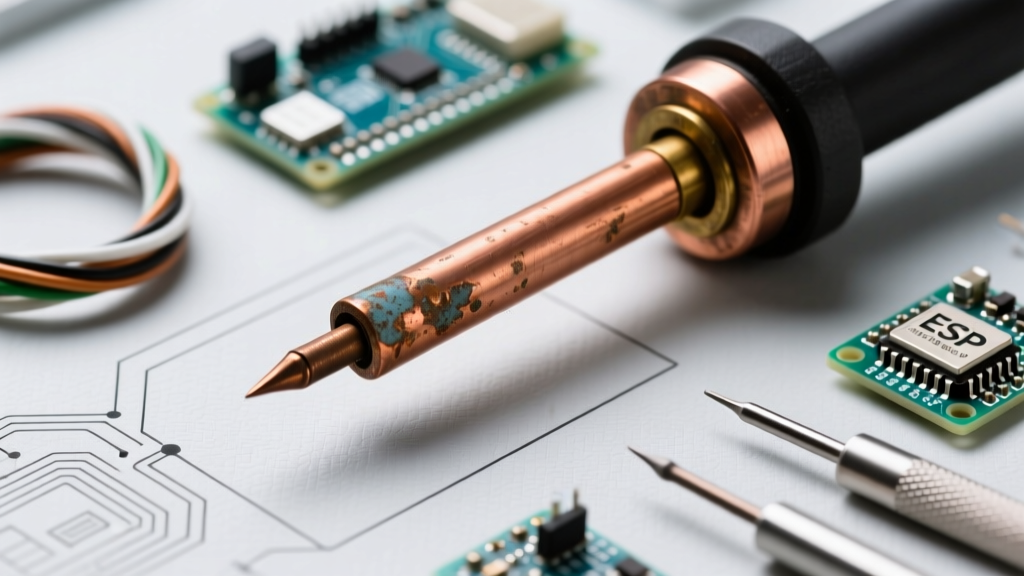
Professional soldering tips are not solid steel. They are complex, multi-layered metallurgical marvels. A standard OEM tip (like those from Hakko or Weller) features a solid copper core for rapid heat transfer, plated with iron to resist solder erosion, and finished with a chromium layer on the back to prevent wetting. Steel, the primary material in a screwdriver, has a thermal conductivity of roughly 45 W/m·K. Copper, by contrast, sits at nearly 400 W/m·K. When you touch a cold solder joint with a steel screwdriver, the heat is instantly absorbed by the joint, but the steel cannot replenish that heat fast enough, resulting in a notorious 'cold joint'.
2. The Wetting Problem
Solder does not naturally adhere to raw steel or oxidized metal. Without a specialized iron plating and a properly managed flux chemistry, molten solder will simply ball up and roll off the screwdriver tip. According to the Adafruit Guide to Excellent Soldering, proper tip wetting requires a pristine, tinned surface to facilitate the metallurgical bond between the solder alloy and the copper pad. A raw steel screwdriver will oxidize within seconds at 300°C, rendering it completely non-stick.
3. Zero Thermal Regulation
A nichrome-wrapped screwdriver has no thermocouple and no feedback loop. If the tip gets too hot (exceeding 400°C), it will instantly vaporize the flux in your solder, burn the copper pads off your PCB, and degrade the steel tip. If it drops too low, you create high-resistance, brittle cold joints that will fail under vibration.
⚠️ SAFETY WARNING: Connecting nichrome wire directly to 120V/240V AC mains without proper galvanic isolation violates basic National Electrical Code (NEC) safety principles. A single break in the wire or insulation failure exposes the user to lethal line voltage. Always adhere to OSHA electrical safety guidelines when working with DIY circuits.
DIY Hack vs. Budget Smart Irons: 2026 Comparison Matrix
Let us look at the hard data comparing the DIY screwdriver method against the leading budget smart irons available in 2026.
| Feature | DIY Screwdriver Hack | Pine64 Pinecil V2 | Hakko FX-601 |
|---|---|---|---|
| Average Cost | $15 - $30 (Materials) | $26.00 | $68.00 |
| Heat-Up Time (to 320°C) | 3 to 5 minutes (Unregulated) | 11 Seconds | 45 Seconds |
| Temperature Control | None (Manual power cycling) | PID via RISC-V BL706 Chip | Analog Ceramic Sensor |
| Tip Material | Raw Carbon Steel | Copper Core, Iron Plated | Copper Core, Iron Plated |
| Electrical Safety | Extreme Shock/Fire Hazard | Isolated DC (USB-C PD) | Isolated AC Transformer |
| Solder Joint Quality | Cold Joints, Pad Lifting | IPC-610 Compliant | IPC-610 Compliant |
Top 3 Budget Soldering Irons to Buy Instead (2026 Guide)
Rather than risking your safety and your PCBs with a screwdriver, invest in one of these highly capable, budget-friendly tools that offer professional-grade thermal recovery.
1. Pine64 Pinecil V2 ($26) - The Undisputed Budget King
The Pinecil V2 completely disrupted the soldering market and remains the gold standard for budget makers in 2026. Powered by a Bouffalo Lab BL706 RISC-V microcontroller, it supports USB-C Power Delivery (PD 3.0/3.1) up to 65W.
Why it beats the hack: It heats up in 11 seconds, features a customizable OLED interface, and uses standard Hakko T12-style tips. The PID algorithm samples the tip temperature dozens of times per second, injecting precise current bursts to maintain thermal stability even when soldering large ground planes. For $26, the idea of building a dangerous screwdriver iron is entirely illogical.
2. Hakko FX-601 ($68) - The Reliable Ceramic Workhorse
If you prefer a traditional AC-powered iron with a corded handpiece, the Hakko FX-601 is a legendary entry-level station. It utilizes a 67W ceramic heating element with an integrated temperature sensor.
Why it beats the hack: The FX-601 features a physical dial on the handle for on-the-fly temperature adjustments from 200°C to 540°C. Its ceramic heater provides excellent thermal recovery, and the included Hakko 900M-series tips offer the exact metallurgical properties (copper core, iron plating) that a screwdriver lacks. It is UL-listed and fully grounded, eliminating the electrocution risks of DIY mains wiring.
3. FNIRSI HS-01 ($45) - The Portable Smart Alternative
For field repairs and automotive electronics, the FNIRSI HS-01 offers a built-in 2500mAh battery, delivering up to 48W of wireless soldering power.
Why it beats the hack: The HS-01 features a vibrant color screen, auto-sleep functionality, and rapid-charge capabilities via Type-C. Taking a DIY screwdriver iron into the field requires hauling around heavy 12V lead-acid batteries and exposed wiring, whereas the HS-01 slips into your pocket and provides 40+ minutes of continuous, regulated soldering.
The Verdict: Put the Screwdriver Back in the Toolbox
Understanding how to make a soldering iron with a screwdriver is a fascinating exercise in basic electrical theory and Joule heating. However, as a practical solution for electronics assembly, repair, or DIY prototyping, it is a relic of a bygone era. The metallurgical inability of raw steel to wet with solder, combined with the severe risk of lethal electrical shock and PCB damage, makes this hack entirely counterproductive.
In 2026, the barrier to entry for high-quality, temperature-controlled soldering has never been lower. For the exact same cost as the nichrome wire, mica, and power supplies required for the screwdriver hack, you can purchase a Pinecil V2. You will gain instant heat-up times, perfect thermal regulation, IPC-compliant solder joints, and most importantly, the assurance that you will not become a cautionary tale in an electrical safety manual. Save the screwdrivers for driving screws, and let modern silicon and copper handle the soldering.