
The Physics of Tip Degradation: Why Cleaning Matters
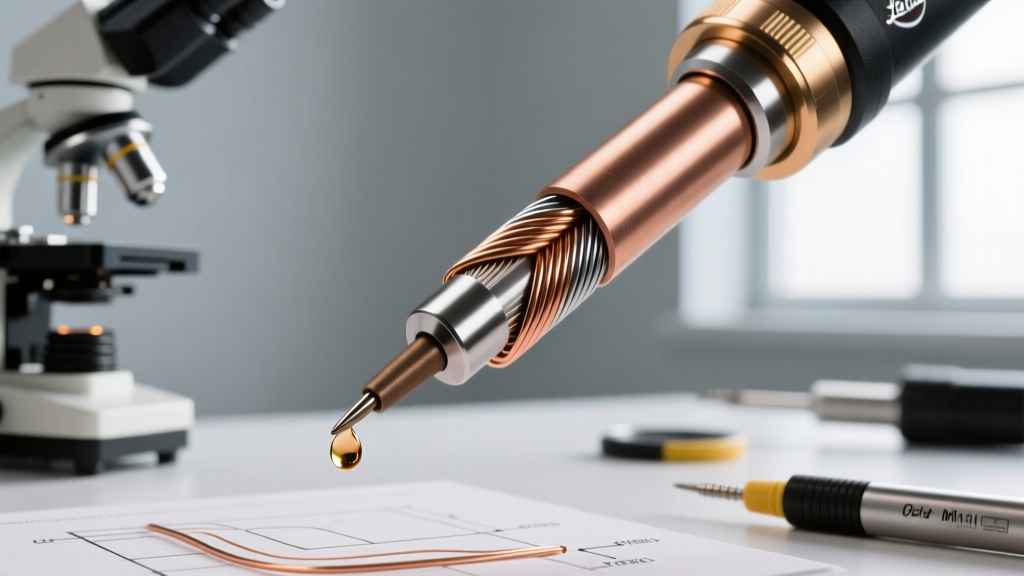
A soldering iron tip is a marvel of metallurgical engineering. Modern tips, such as the Hakko T18 series or Weller ET series, are not solid copper. They feature a highly conductive copper core plated with a microscopic layer of iron (typically 0.1mm to 0.8mm thick) to resist solder erosion, followed by a chromium layer to prevent solder from wetting the sides. When flux carbonizes and oxidized solder builds up on the working face, it creates a thermal barrier. This forces the operator to increase the station temperature, accelerating the very oxidation they are trying to overcome.
Choosing the right tool to clean the tip of a soldering iron is not just about aesthetics; it is about preserving the iron plating and ensuring compliant solder joints. According to workmanship guidelines referenced by the NASA Electronic Parts and Packaging (NEPP) Program, consistent thermal transfer is critical for achieving reliable intermetallic bonds in high-reliability electronics. Below, we compare the four primary cleaning methods available to professionals and hobbyists in 2026.
The Contenders: Soldering Tip Cleaning Tools Compared
| Cleaning Tool | Abrasiveness | Thermal Shock Risk | Best Use Case | Avg. Cost (2026) |
|---|---|---|---|---|
| Brass Wire Sponge | Low-Medium | None | Daily maintenance, active soldering | $12 - $18 |
| Damp Cellulose Sponge | None | High | Heavy flux removal, lead-free soldering | $4 - $8 |
| Chemical Tip Tinner | Chemical (Acidic) | Low | Resurrecting heavily oxidized tips | $8 - $15 |
| Fiberglass Scratch Pen | Extreme | None | Solid copper tips only (Plumbing) | $5 - $10 |
1. Brass Wire Sponges: The Modern Standard
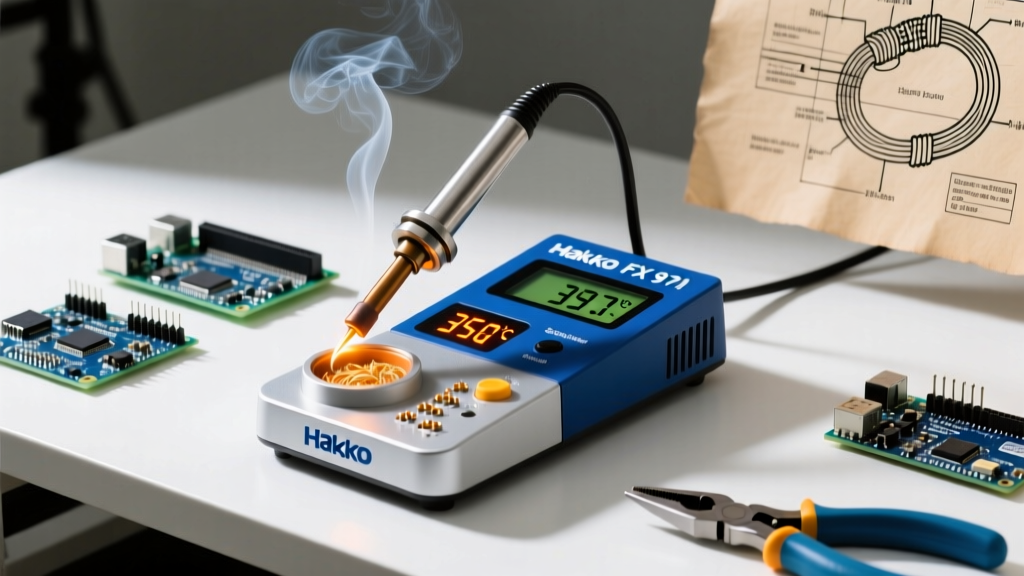
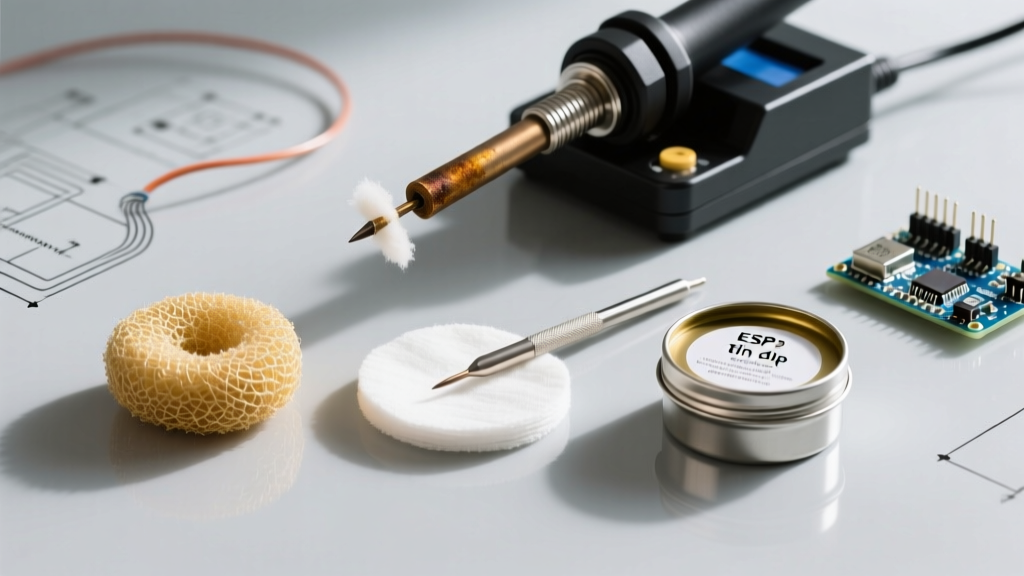
The brass wire sponge (often sold in a shallow metal tin with a heat-resistant base, like the Hakko 599B) has largely replaced the damp sponge on professional workbenches. Made from soft brass shavings, it is harder than solder but softer than the iron plating on your tip.
Thermal Dynamics and Plating Preservation
The primary advantage of brass wool is that it cleans mechanically without dropping the tip temperature. When you plunge a 350°C tip into a damp sponge, the temperature can plummet by over 100°C in a fraction of a second. This rapid contraction causes micro-fractures in the iron plating, eventually leading to pitting and tip death. Brass wool operates at ambient temperature and absorbs minimal heat, keeping your station's PID controller stable.
- Pros: Zero thermal shock; requires no preparation or water; excellent for quick wipes between joints.
- Cons: Can leave microscopic scratches if scrubbed with excessive downward force; requires occasional cleaning of the brass shavings themselves (using tweezers to pull out oxidized solder blobs).
2. Damp Cellulose Sponges: The Traditionalist Approach
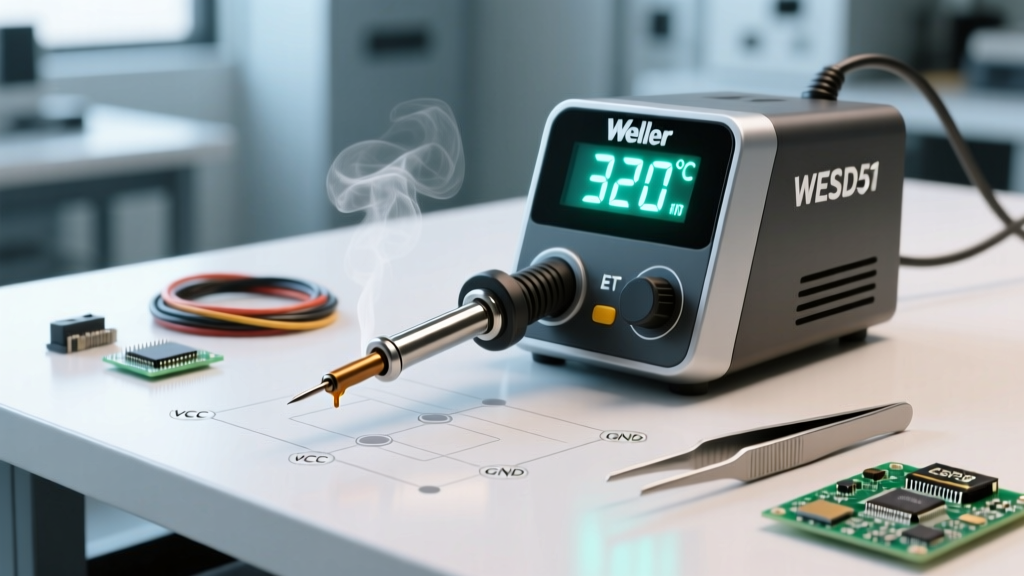
Cellulose sponges (such as the Weller WDC2) are the traditional cleaning medium included with most entry-level and mid-range stations. However, their usage requires strict discipline to avoid destroying your tips.
The Water Quality and Thermal Shock Problem
If you use a cellulose sponge, you must use distilled or deionized water. Tap water contains dissolved minerals (calcium, magnesium) that will bake onto the hot tip, creating a hard, insulating ceramic-like crust that is nearly impossible to remove. Furthermore, the sponge must be 'damp,' not wet. A waterlogged sponge will cause severe thermal shock.
Expert Tip: To achieve the perfect dampness, soak the cellulose sponge completely in distilled water, then squeeze it out firmly until no water drips when held vertically. Expand it slightly to let air back into the pores before placing it in the soldering station tray.3. Chemical Tip Tinners: The Resurrection Method
When a tip turns black and solder balls up and rolls off (a phenomenon known as 'de-wetting'), mechanical cleaning will not save it. The oxidation layer has become too thick. This is where a chemical tip tinner, like the MG Chemicals 4901 or Amtech Tip Tinner, becomes essential.
Tip tinners are a paste composed of solder powder suspended in a mildly acidic flux (usually phosphoric acid or rosin-based activators). When you plunge the oxidized, hot tip into the paste, the acid strips the black copper/iron oxide, and the solder powder immediately melts and wets the freshly exposed metal.
- Heat the iron to 300°C - 350°C.
- Dip the blackened tip into the tinner paste for 2-3 seconds.
- Remove and immediately wipe on a brass sponge to remove acidic residue.
- Apply fresh, high-quality rosin-core solder to the tip to seal it.
Warning: Never leave the tip sitting in the tinner, and always wipe off the residue. Prolonged exposure to the acidic activators will eat through the iron plating.
4. Fiberglass Scratch Pens & Abrasives: The Dangerous Last Resort
Fiberglass scratch pens, sandpaper, and Dremel wire wheels are strictly prohibited for modern electronics soldering tips. Adhering to IPC standards for electronics assembly requires intact tip plating to ensure consistent heat transfer and prevent copper dissolution. Using an abrasive tool will instantly strip the 0.2mm iron layer, exposing the soft copper core underneath. The copper will dissolve into the solder alloy within hours, creating a concave crater on the tip face.
The Only Exception: If you are doing vintage plumbing work, stained glass foiling, or using solid, un-plated copper irons (like older Weller heavy-duty guns), a fiberglass pen or fine steel wool is acceptable. For PCB work, keep abrasives far away from your bench.
The 2026 Expert Maintenance Protocol
Manufacturers like Hakko USA explicitly recommend a specific shutdown and operational routine to maximize tip lifespan, which can extend a tip's life from a few weeks to several years.
During Active Soldering
- The 'Wipe and Replace' Rule: After every 3 to 5 solder joints, wipe the tip on a brass sponge. Immediately apply a tiny amount of fresh solder to the working face before setting it back in the holder. This sacrificial layer of solder oxidizes instead of the iron plating.
- Temperature Discipline: Do not exceed 380°C (716°F) unless you are soldering massive ground planes with high thermal mass. High heat accelerates flux carbonization and iron plating erosion exponentially.
End of Day Shutdown
Never turn off your soldering station and walk away with a bare tip. As the tip cools from 350°C down to room temperature, it pulls in oxygen. If the tip is bare, it will form a thick black oxide layer by the time you return to the bench. Always 'tinning' the tip heavily with a blob of cheap, leaded solder (like 60/40 Sn/Pb) right before powering down. The next time you power up, simply wipe that sacrificial blob off on your brass sponge once it melts.
Troubleshooting Edge Cases
FAQ: My tip has tiny black pits in it. Can I sand it smooth?
No. Pitting means the iron plating has been breached, and the underlying copper is dissolving into your solder. Sanding it will only expose more copper, accelerating the destruction. A pitted tip will cause cold solder joints due to uneven thermal contact. The only correct action is to discard the tip and replace it.
FAQ: Why does my solder ball up and roll off the tip even after using brass wool?
You have encountered severe de-wetting. The brass wool cannot remove the hardened carbon-flux crust. Lower your station temperature to 250°C, apply a generous amount of no-clean flux paste directly to the tip, and let it cook for 10 seconds. Then, use a chemical tip tinner. If that fails, the tip's chromium non-wetting layer has likely been compromised, and replacement is required.
FAQ: Is lead-free solder destroying my tips faster?
Yes. Lead-free alloys (like SAC305) require higher melting temperatures (217°C vs 183°C for leaded) and contain high tin content, which is highly aggressive toward iron plating. When using lead-free solder, reduce your idle temperature, clean the tip more frequently, and consider upgrading to specialized 'lead-free' tip variants (often denoted by a specific suffix in Weller or Hakko part numbers) which feature thicker iron plating.