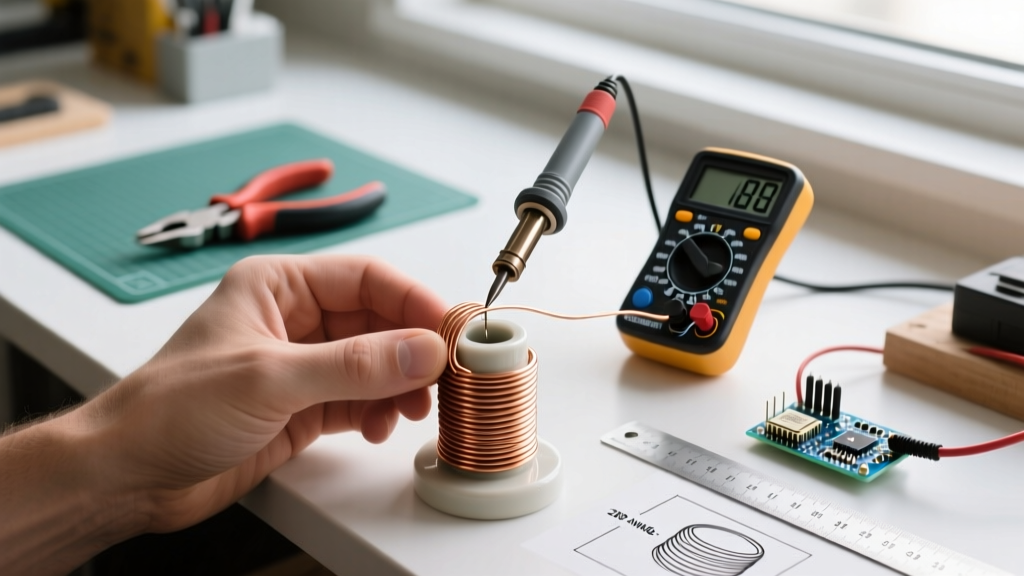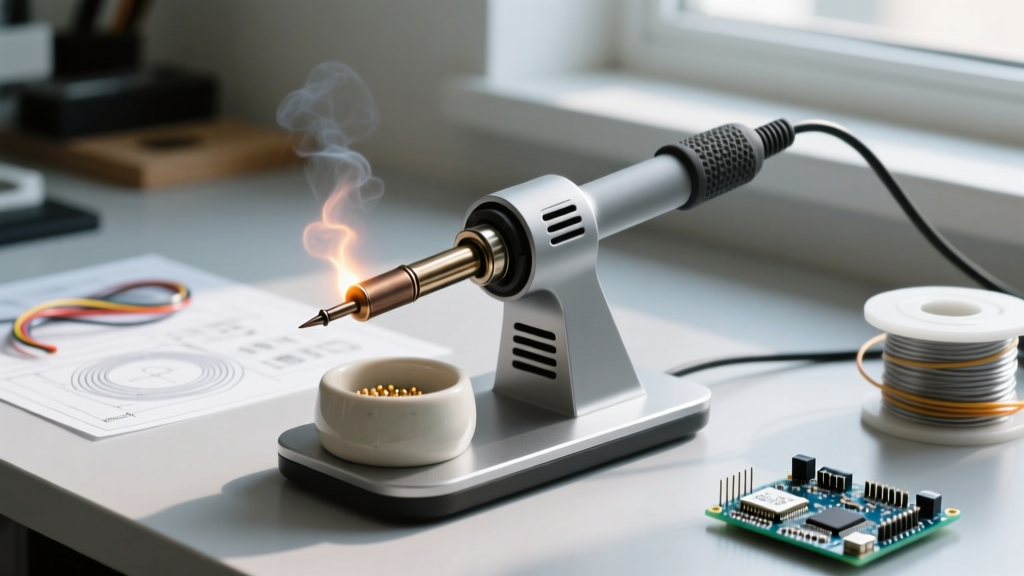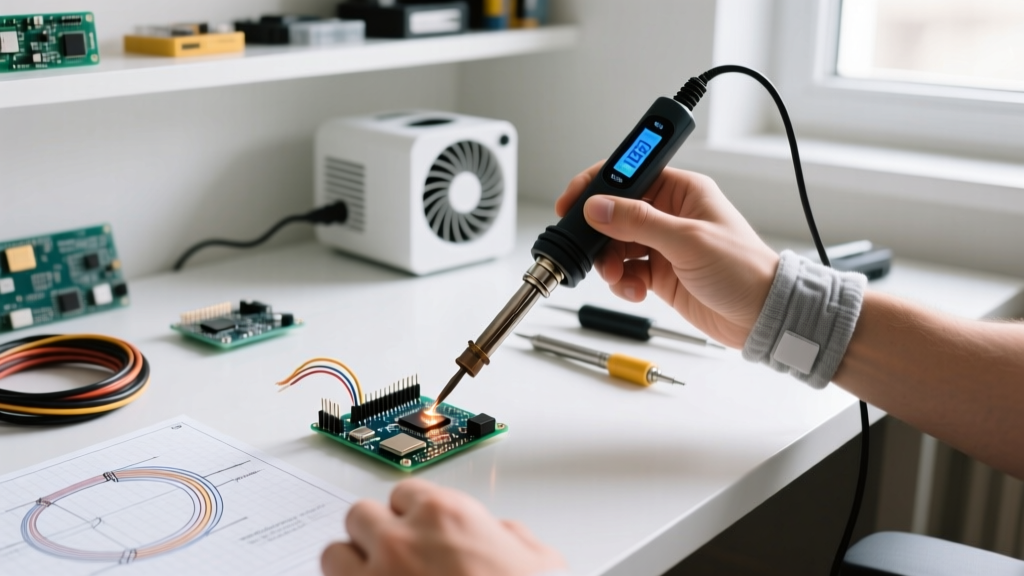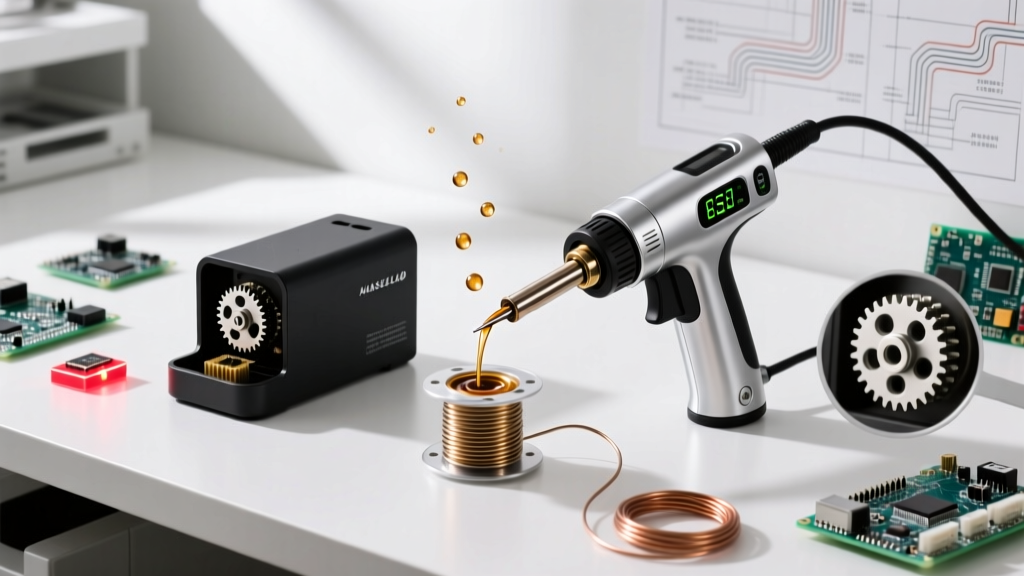

The Reality of High-Wattage Soldering: Why 100W Matters
When most hobbyists start their electronics journey, they are handed a 40W or 60W temperature-controlled station and told it can handle anything. But the moment you attempt to solder a 10 AWG silicone wire to an XT90 connector, or flow a seam on a stained glass copper foil project, that 60W station stalls out. The tip temperature plummets, the flux burns, and the joint turns into a cold, grainy mess. This is where a dedicated 100 watt soldering iron transitions from a luxury to an absolute necessity.
In 2026, the market for high-wattage irons has bifurcated into two distinct camps: heavy-duty mains-powered irons designed for continuous thermal recovery, and cordless butane catalytic irons built for field work. This guide breaks down the thermodynamics of high-wattage soldering, reviews the top-performing 100W tools on the market, and provides actionable frameworks for selecting the right tip geometry for massive thermal loads.
The Thermodynamics of Thermal Recovery
Wattage does not dictate maximum temperature; it dictates thermal recovery rate. A 60W iron and a 100W iron can both be set to 380°C (716°F). However, when the tip contacts a massive heat sink—like a 12-gauge copper wire or a multi-layer PCB ground plane—the joint rapidly absorbs heat.
The Physics of Dwell Time: According to guidelines referenced by the NASA Electronic Parts and Packaging (NEPP) Program, prolonged dwell times (exceeding 3-5 seconds) on a single joint drastically increases the risk of thermal damage to component leads and pad delamination. A 100W element replenishes Joules at nearly double the rate of a 50W element, allowing you to achieve flow-state soldering in under two seconds.
If you are consistently waiting more than four seconds for solder to flow on thick wires, your iron is underpowered. Upgrading to a 100 watt soldering iron solves this by providing the thermal mass and continuous energy transfer required to keep the tip above the solder's liquidus temperature (typically 217°C for SAC305 lead-free, or 183°C for 63/37 SnPb).
Top 100 Watt Soldering Iron Reviews for 2026
1. Weller SP100N (Best Mains-Powered Heavy-Duty Iron)
The Weller SP100N remains a legendary workhorse in the stained glass and heavy wiring communities. Operating at a fixed 100W via a 120V AC mains connection, it features a robust nichrome heating element wrapped around a massive ceramic core.
- Target Use Case: Stained glass copper foil, 8-14 AWG wire, large grounding lugs.
- Tip Ecosystem: Uses the Weller CT6 series. The CT6C (1/4-inch screwdriver/chisel) is mandatory for stained glass, while the CT6D (1/8-inch chisel) is ideal for thick wire.
- Real-World Performance: The thermal mass of the CT6 tips is enormous. Once heated, it takes a massive thermal drain to drop the tip temperature below 350°C. However, it lacks active digital temperature control, meaning it can overheat if left idle in a stand for extended periods.
- Price Range: $65 - $80 USD.
2. Weller 8200PK Dual-Power Soldering Gun (Best for Automotive & RC)
Technically a soldering gun rather than a traditional pencil iron, the Weller 8200PK offers a selectable 100W/150W output via a trigger switch. The tip itself is a heavy-gauge copper loop that heats via electrical resistance almost instantly.
- Target Use Case: Automotive wiring harnesses, RC hobby battery connectors (XT60/XT90), thick coaxial cables.
- The Catch: Because the tip carries low-voltage AC current, it generates a magnetic field and can inject noise or cause EOS (Electrical Overstress) damage to sensitive semiconductors. Never use this on populated PCBs.
- Real-World Performance: You can melt 63/37 rosin-core solder on a 10 AWG wire in roughly 1.5 seconds on the 150W trigger setting. The built-in LED work light is surprisingly useful for peering into dark engine bays.
- Price Range: $90 - $110 USD.
3. Portasol Professional Cordless (Best Field-Deployable 100W Equivalent)
For solar installers, marine electricians, and off-grid technicians, running a 100W mains iron is impossible. The Portasol Professional uses a catalytic butane heater (no open flame at the tip) to achieve thermal outputs equivalent to a 100W-125W electric iron.
- Target Use Case: Field repairs, marine environments, off-grid solar MC4 connector termination.
- Tip Ecosystem: Proprietary threaded tips. The 2.4mm chisel and 3.2mm bevel tips are the most versatile for heavy wire.
- Real-World Performance: Runs for over 2 hours on a single fill of highly refined butane. The adjustable gas flow allows you to dial in the exact thermal output needed, preventing tip oxidation when working on smaller joints.
- Price Range: $120 - $145 USD.
Comparative Analysis Matrix
Use the table below to match the tool to your specific heavy-duty application. Choosing the wrong tool can result in either damaged components or cold solder joints.
| Feature | Weller SP100N | Weller 8200PK Gun | Portasol Pro Cordless |
|---|---|---|---|
| Max Power Output | 100W (Fixed) | 150W (Trigger Select) | ~125W (Gas Adjust) |
| Thermal Recovery | Excellent (High Mass) | Instant (Resistance) | Very Good (Catalytic) |
| PCB Safe? | Caution (No Temp Control) | NO (AC Loop/Magnetic) | Yes (With care) |
| Best Tip for 10 AWG | CT6D (1/8" Chisel) | Standard Loop Tip | 3.2mm Chisel |
| Primary Environment | Workbench / Studio | Automotive / Garage | Field / Off-Grid |
Critical Buying Factors: Tip Geometry and Flux Chemistry
Buying a 100 watt soldering iron is only half the battle. If you pair a 100W heater with a fine-point conical tip, you will still fail to solder thick wires. Conical tips have minimal surface area and act as thermal bottlenecks.
The Chisel vs. Bevel Debate for Heavy Loads
- Long Chisel (Screwdriver): Maximizes surface area contact. Ideal for stained glass and flat grounding planes. The broad face allows capillary action to pull molten solder evenly across wide copper foils.
- Hoof / Bevel Tip: Features a concave scoop at the end. This is the ultimate tip for drag-soldering thick wires into large connector cups (like Dean's plugs or XT90s). The scoop holds a molten pool of solder, transferring heat omnidirectionally into the wire strands.
Flux Selection for High-Thermal-Mass Joints
When using high wattages, standard mild rosin flux (RMA) often boils off before the core of the thick wire reaches flow temperature. For heavy-duty 100W applications, you must use a high-activity, high-tack flux paste like Amtech NC-559-V2-TF or MG Chemicals 8341. These no-clean, tacky fluxes stay active at higher temperatures and prevent the rapid oxidation that occurs when thick copper is exposed to 380°C heat.
Safety Protocols and Fume Extraction
Operating a 100W iron on thick wires requires significantly more solder and flux, which exponentially increases the volume of Volatile Organic Compounds (VOCs) and colophony (rosin) fumes released into your breathing zone. The IPC (Association Connecting Electronics Industries) and various occupational safety bodies strictly warn against prolonged inhalation of rosin-based solder fumes, which is a known respiratory sensitizer and can lead to occupational asthma.
Actionable Safety Setup for 100W Soldering:
- Source Capture: Use a localized fume extractor (e.g., Hakko FA-400 or a DIY unit with a 150 CFM blower) positioned no more than 6 inches from the joint.
- Filtration: Standard HEPA filters do not capture VOC gases. Your extraction system must utilize an activated carbon bed weighing at least 1.5 lbs to effectively adsorb rosin vapors.
- Tip Maintenance: A 100W iron will oxidize and pit a tip rapidly if left dry. Always tin the tip with a blob of 63/37 solder before placing it in the stand, and never use abrasive sandpaper or steel wool to clean a hot tip; use a damp brass wire sponge instead.
Frequently Asked Questions (FAQ)
Can I use a 100W iron for delicate surface-mount (SMD) PCB work?
While technically possible if you use a micro-chisel tip and work very quickly, it is highly discouraged. The lack of precise thermal regulation on most dedicated 100W mains irons makes it too easy to exceed the 260°C thermal limit for SMD pads, causing delamination. For PCBs, stick to a 60W-80W digitally controlled station (like a Hakko FX-951 or JBC CD-2BQE) which uses active sensor feedback to manage thermal recovery safely.
Why does my 100W iron tip turn black and stop accepting solder?
This is called "dry tip oxidation." At 100W, the tip surface temperature can easily exceed 400°C if not actively transferring heat into a joint. At this temperature, the iron plating reacts with oxygen in the air, forming iron oxide, which solder will not wet. Always keep the tip tinned when idle, and lower the temperature (if adjustable) or unplug the iron between long pauses.
Is butane (cordless) as powerful as a 100W electric mains iron?
Yes, premium catalytic butane irons like the Portasol Professional generate the exact same thermal output (measured in Joules per second) as a 100W electric element. The catalytic reaction inside the tip housing converts butane gas into intense, focused radiant heat without an open flame, making it perfectly safe for electrical wiring in the field.