
The Anatomy of Hot Knife Soldering Iron Tips
When DIYers and marine technicians need to cut and seal synthetic ropes, foams, or heavy-gauge wiring insulation, they often face a dilemma: buy a dedicated $150+ hot knife tool, or adapt their existing soldering station. This is where hot knife soldering iron tips enter the workflow. Unlike standard chisel or conical tips designed for transferring solder to copper pads, hot knife tips feature a flattened, bladed geometry engineered to slice through polymers while simultaneously cauterizing the edges to prevent fraying.
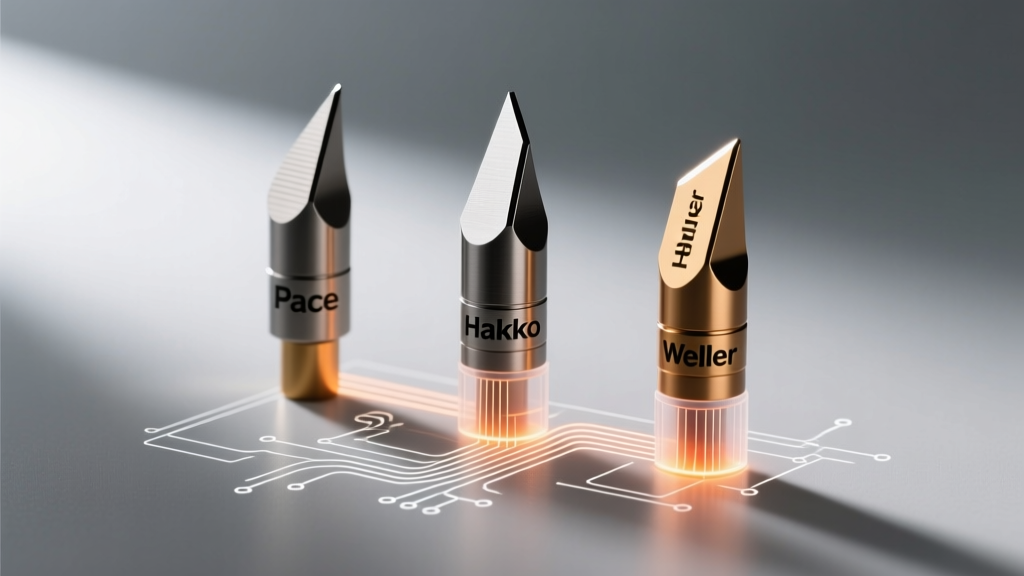
However, not all blade-style tips are created equal. A tip designed for drag-soldering surface-mount ICs will fail catastrophically when asked to cut through 1/2-inch braided Dacron. In this 2026 technical comparison, we dissect the metallurgy, thermal mass, and real-world failure modes of the three most popular blade attachments on the market: the Pace TD-200 Hot Knife, the Hakko T18-K, and the Weller 8200 Cutting Blade.
Metallurgy and Edge Geometry
Standard soldering tips consist of a high-conductivity copper core, plated with a 0.1mm to 0.15mm layer of iron to resist solder erosion, and finished with a chromium layer on the non-wetting sides. When adapting this technology into hot knife soldering iron tips, manufacturers must alter the edge geometry. The cutting edge is typically bare copper or thinly plated iron. If the thermal mass at this edge is too low, the polymer acts as a heatsink, dropping the blade temperature below the material's melting point. This results in a gummy, torn cut rather than a clean seal, and accelerates carbon buildup on the blade.
Head-to-Head: Top Hot Knife Tips for Soldering Stations
Below is a comparison matrix of the leading blade tips available in 2026, evaluated on thermal recovery, edge thickness, and ideal use cases.
| Model / Tip | Compatible Station | Edge Thickness | Thermal Mass | Avg. Price (2026) | Best Application |
|---|---|---|---|---|---|
| Pace 1121-0008-P1 | TD-200 / TD-100 | 1.2mm | High | $42.00 | Marine rope, Kevlar blends, thick nylon |
| Hakko T18-K (Knife) | FX-888D / 936 / FM-206 | 0.5mm | Low | $9.50 | Drag soldering, light foam, thin heat-shrink |
| Weller 8200PK Blade | Weller 8200 Soldering Gun | 1.5mm | Very High | $14.00 | Heavy-duty field cutting, thick plastics |
1. Pace 1121-0008-P1 (The True Hot Knife)
Pace's TD-200 cartridge heater system is renowned for its rapid thermal recovery. The 1121-0008-P1 is a dedicated hot knife tip featuring a robust 1.2mm steel-alloy blade with a copper core. Because it is designed specifically for cutting rather than soldering, it lacks the delicate iron plating found on standard PCB tips. Verdict: This is the gold standard for hot knife soldering iron tips if you already own a Pace station. It maintains a stable 400°C under load, easily sealing 3/8-inch double-braided polyester without stalling.
2. Hakko T18-K (The Imposter)
The Hakko T18-K is frequently misidentified as a hot knife. In reality, it is a 'Knife Blade' tip engineered for drag-soldering fine-pitch QFP and SOIC chips. Its 0.5mm edge is razor-thin, offering virtually zero thermal mass for cutting. If you attempt to cut a thick nylon zip-tie or paracord with the T18-K, the edge temperature will instantly plummet, causing the plastic to melt and fuse to the chromium plating. Verdict: Excellent for PCB rework, but strictly avoid using it as a hot knife for synthetic ropes.
3. Weller 8200PK Cutting Blade (The Brute)
The Weller 8200 is a 140W/120W dual-heat soldering gun, not a temperature-controlled station. The cutting blade attachment relies on sheer thermal mass and high wattage rather than closed-loop sensor feedback. It takes nearly 45 seconds to reach cutting temperatures and lacks precision. However, its 1.5mm thick blade holds enough latent heat to slice through thick PVC conduits and heavy canvas webbing. Verdict: Ideal for rough field work and plumbing-adjacent plastic cutting, but entirely unsuited for delicate electronics or precision foam carving.
Material-Specific Temperature Profiling
Using hot knife soldering iron tips requires precise temperature management. Setting your station to the maximum 480°C will instantly oxidize the blade and release toxic volatile organic compounds (VOCs). Below are the optimal cutting profiles for common synthetic materials:
- Nylon 6/6 (Paracord, Zip-Ties): Melts at 260°C. Set station to 320°C - 340°C. This ensures a clean cut and a fused end without excessive smoking.
- Dacron / Polyester (Marine Rigging): Melts at 250°C. Set station to 300°C. Requires a high-thermal-mass tip like the Pace 1121-0008-P1 to prevent the blade from sticking to the fibers.
- Polypropylene (Webbing, Straps): Melts at 160°C. Set station to 220°C. Cuts easily with almost any blade tip due to the low thermal threshold.
- EPS / XPS Foam (RC Models, Insulation): Melts at 100°C. Set station to 150°C - 180°C. Warning: Exceeding 200°C on XPS foam releases styrene gas, a known respiratory irritant.
Expert Insight: When cutting aramid fibers (Kevlar), standard hot knife tips will fail. Kevlar does not melt; it chars and degrades at 450°C+. Cutting Kevlar requires specialized serrated hot scissors or a dedicated 500°C+ industrial hot knife, not a standard soldering station attachment.
Failure Modes: Pitting, Oxidation, and Carbon Inclusion
Using soldering tips to cut plastics introduces unique failure modes that void most manufacturer warranties. Understanding these edge cases is critical for tool longevity.
Carbon Inclusion and Plating Delamination
When a blade tip is too cool, melting nylon adheres to the iron plating. If the user attempts to scrape this hardened carbon residue off with a metal tool or abrasive sandpaper, they will breach the 0.1mm iron plating. Once the underlying copper is exposed, the flux from subsequent soldering tasks will rapidly dissolve the copper, creating a deep pit. According to Hakko's official tip care guidelines, abrasive cleaning is the number one cause of premature tip death. Always use a damp cellulose sponge or brass wire wool to clean blade tips.
Edge Oxidation
Leaving a hot knife tip at 400°C on the bench while not cutting accelerates oxidation. The bare copper or thin iron at the cutting edge will turn black and lose its ability to transfer heat to the polymer. To prevent this, always 'tin' the cutting edge with a thick layer of high-temperature rosin-core solder before placing the iron back in its holster. The solder acts as a sacrificial barrier against oxygen.
Safety and Fume Extraction Protocols
Cutting synthetic polymers generates significantly more hazardous particulate matter and VOCs than standard rosin flux soldering. Melting nylon releases caprolactam vapors, while cutting PVC or fluoropolymers (like Teflon insulation) can release hydrogen chloride and hydrofluoric acid gases, which are highly corrosive to both human lungs and the metal components in your shop.
According to MIT Environmental Health and Safety protocols for soldering and thermal cutting, local exhaust ventilation (LEV) is mandatory. A standard desktop HEPA filter is insufficient for capturing VOCs; you must use an activated carbon filtration system or a ducted fume extractor positioned within 6 inches of the cutting zone. Furthermore, OSHA ventilation standards dictate that when engineering controls like LEV cannot fully eliminate airborne contaminants, supplemental PPE, such as a half-face respirator with organic vapor cartridges (e.g., 3M 6001), must be utilized.
Final Verdict: Which Tip Should You Buy?
If your primary goal is cutting marine ropes, heavy synthetic fabrics, or thick heat-shrink tubing, the Pace 1121-0008-P1 is the undisputed champion of hot knife soldering iron tips, justifying its $42 price tag with superior thermal mass and blade durability. If you are on a strict budget and only need to occasionally trim thin zip-ties or carve low-density foam, the Hakko T18-K can suffice, provided you keep temperatures below 280°C and accept that it will eventually degrade from carbon buildup. Avoid using PCB-specific chisel tips for cutting tasks altogether; the cost of replacing ruined $10 tips will quickly eclipse the investment in a proper blade attachment.