
The Hidden Economics of Soldering Tip Maintenance
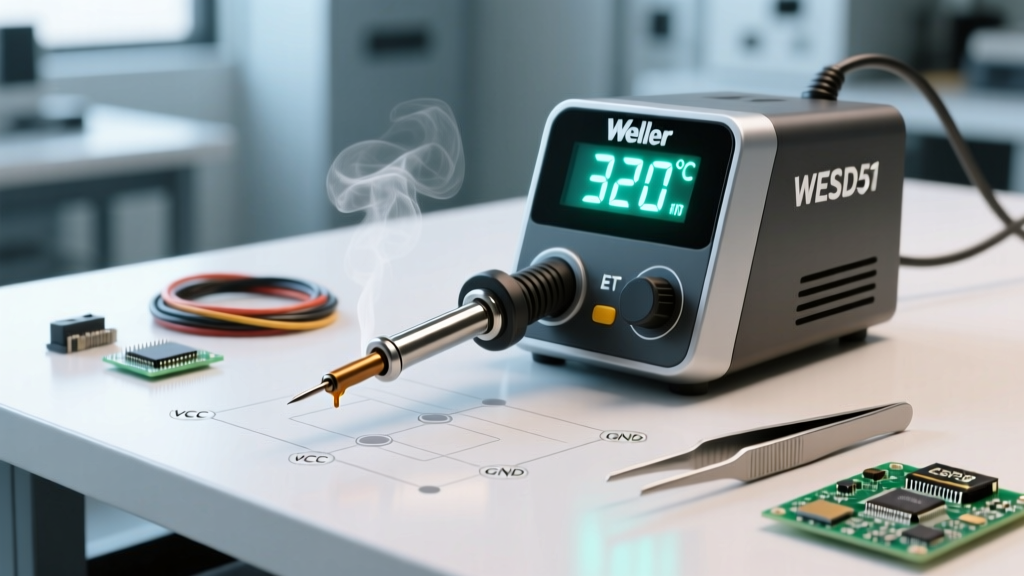
When makers and professionals ask how to clean a soldering iron tip, the conversation usually stops at damp sponges and brass wool. However, in 2026, with lead-free soldering alloys like SAC305 demanding higher operating temperatures (often 350°C to 380°C), tip oxidation and thermal fatigue are the primary killers of both budget and premium equipment. Whether you are using a $26 Pinecil V2 or a $600 JBC CD-2BQE station, your cleaning methodology directly dictates your consumable costs and joint reliability.
This analysis breaks down the metallurgy of tip degradation and compares budget-friendly cleaning techniques against premium, automated, and chemical ecosystems. By understanding the thermal dynamics at play, you can stop throwing away perfectly good copper cores and maximize your return on investment.
The Metallurgy of Failure: Why Tips Degrade
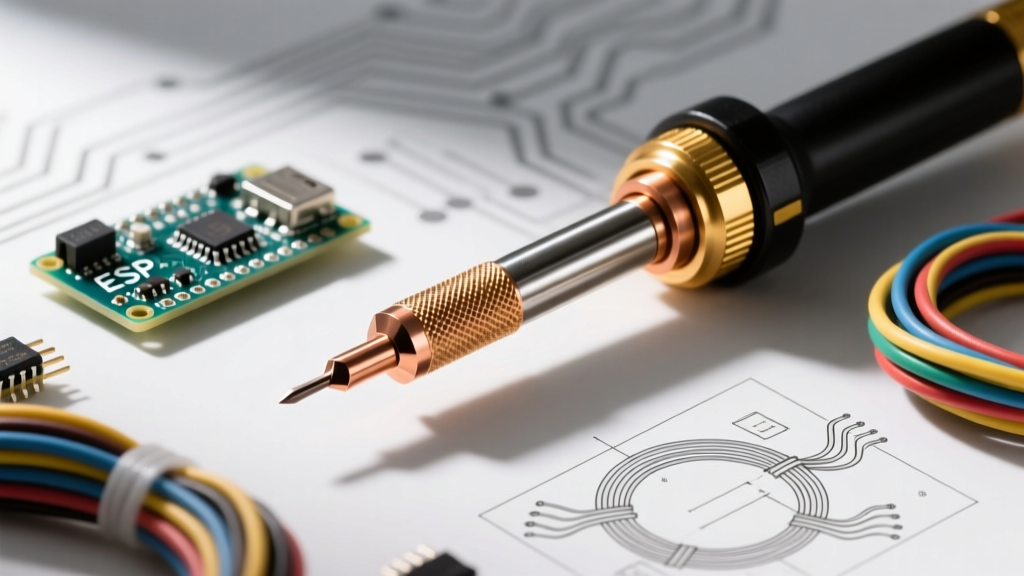
Modern soldering tips are not solid copper. They feature a highly conductive copper core, plated with a layer of iron (typically 0.1mm to 0.8mm thick) to resist solder erosion, and finished with a microscopic layer of chromium to prevent solder from wetting the non-working areas. According to the IPC J-STD-001 Standards for electronic assemblies, maintaining the integrity of this iron plating is critical for consistent thermal transfer and wetting.
Tips fail in two primary ways:
- Oxidation Burnout: Leaving a tip at 380°C without a protective solder coating causes the tin to oxidize into a black, non-wettable crust. This acts as a thermal insulator, forcing the user to turn up the heat, which accelerates further oxidation.
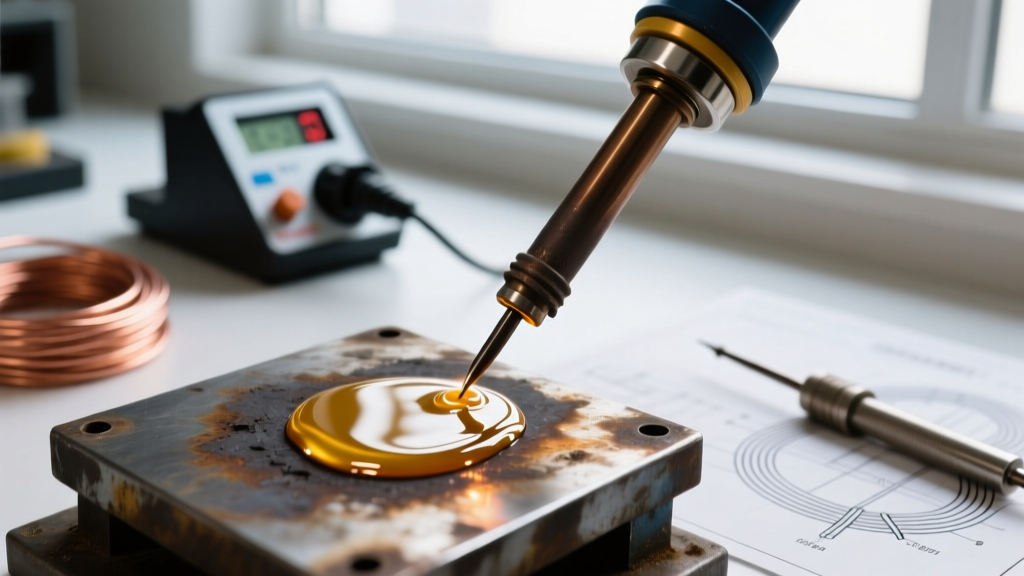
- Thermal Shock & Leaching: Rapid temperature drops cause micro-fractures in the iron plating. Once the copper core is exposed, it rapidly dissolves into the molten solder (leaching), creating a permanent crater.
Budget Cleaning Methods (Under $15)
Budget methods rely on manual mechanics and inexpensive materials. While effective, they require strict user discipline to avoid damaging the iron plating.
1. The Cellulose Sponge: A Thermal Shock Hazard
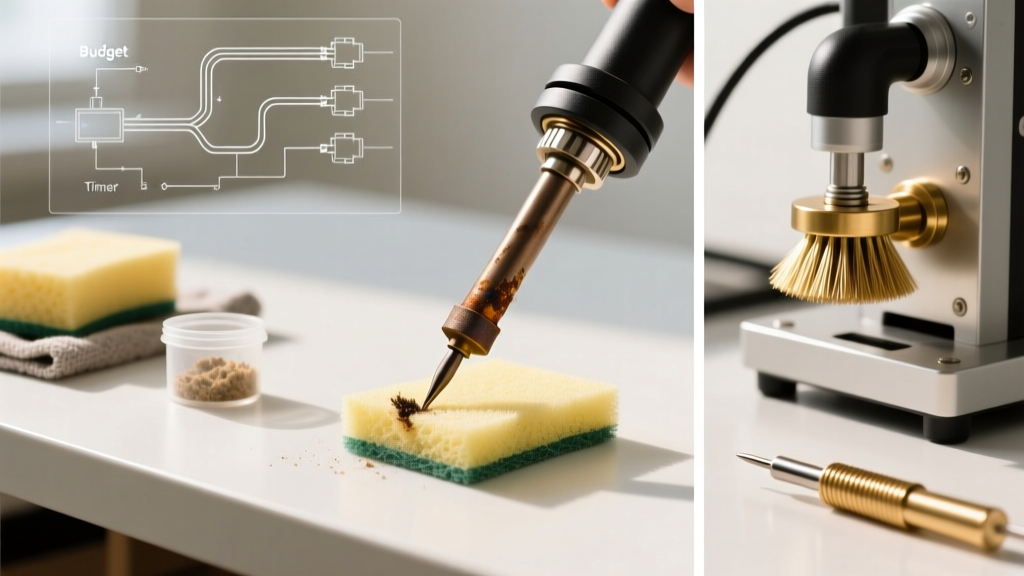
The standard damp cellulose sponge (like the Hakko B-5001, costing about $3) is the most ubiquitous cleaning tool. However, it is fundamentally flawed for high-temperature lead-free work. When a 360°C tip contacts a wet sponge, the surface temperature plummets to 100°C in milliseconds. This severe thermal contraction causes micro-fractures in the iron plating. Furthermore, tap water contains minerals that leave behind silicate residues, which bake onto the tip and create dead spots. If you must use a sponge, use distilled water and wring it out until it is barely damp.
2. Brass Wire Sponge: The $6 Champion
A brass wire sponge (often sold as a generic pot scrubber or branded tip cleaner for $6 to $12) is the superior budget choice. Brass is softer than the iron plating on your tip, meaning it will scrape away oxidized solder and carbonized flux without scratching the protective layer. More importantly, brass is a dry cleaner. It absorbs heat slowly, preventing the severe thermal shock associated with wet sponges. The NASA Electronic Parts and Packaging (NEPP) Program workmanship guidelines frequently favor dry metallic cleaning methods to maintain strict thermal profiles during aerospace soldering.
3. The 'Blob and Dab' Technique
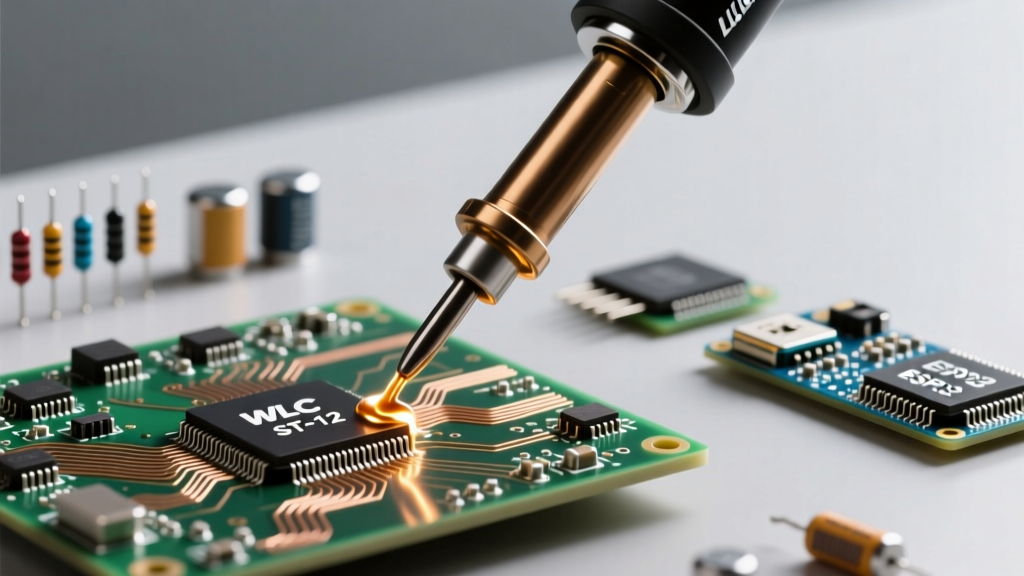
The cheapest and most effective way to clean a tip requires no extra tools. Simply melt a large blob of high-quality, heavily fluxed 63/37 or SAC305 solder onto the tip before placing the iron in its stand. The flux core actively fights oxidation while the iron sits idle. When you return, wipe the dirty solder into your brass wool, and the tip is instantly re-tinned and ready for the next joint.
Premium Cleaning Ecosystems ($30 to $400)
Premium cleaning tools remove human error from the equation, offering consistent, repeatable cleaning cycles that are essential for high-volume production or micro-soldering where tip geometry must be perfectly preserved.
1. Automated Tip Cleaners (JBC ST-245 & Hakko 599B)
The Hakko 599B ($25) uses a specialized brass wire coil with a built-in scraper, but the true premium tier is occupied by motorized units like the JBC ST-245 Automatic Tip Cleaner ($350). The ST-245 uses a motorized, rotating brass brush sequence that cleans a JBC C245 cartridge in exactly 3 seconds. The machine applies mathematically perfect lateral pressure, eliminating the risk of a technician accidentally bending a micro-tip or applying uneven force that degrades the cartridge's internal thermocouple contacts.
2. Chemical Tip Tinner and Polishers
Products like MG Chemicals 8341 or Kester 245 Tip Tinner ($15 to $30 per jar) are chemical cleaners. They consist of highly activated rosin flux (RMA) suspended in fine solder powder. When an oxidized, blackened tip is dipped into the paste at 300°C, the aggressive flux chemically strips the tin oxide layer, and the powder instantly re-tins the surface. This is a restorative process, not a routine cleaning process, and should only be used when mechanical wiping fails.
Budget vs Premium: Comparison Matrix
| Method | Avg Cost | Thermal Shock Risk | Oxidation Removal | Best Application |
|---|---|---|---|---|
| Damp Cellulose Sponge | $3 | High (Severe) | Poor | Low-temp leaded hobby work |
| Manual Brass Wool | $8 | Low (Minimal) | Good | Daily DIY, Pinecil/Hakko FX-888D |
| Chemical Tip Tinner | $22 | None | Excellent (Restorative) | Reviving dead/oxidized tips |
| Motorized Cleaner (JBC) | $350 | None | Excellent (Routine) | High-volume production, micro-BGA |
Step-by-Step: The 'Dead Tip' Restoration Protocol
If you have inherited a neglected iron or left your station on overnight, your tip is likely encased in a black, crusty oxide layer. Do not use sandpaper, a file, or a wire wheel—these will strip the iron plating and permanently destroy the tip. Follow this restorative protocol:
- Prep the Chemistry: Open a jar of Kester 245 or MG Chemicals Tip Tinner. Ensure your workspace is ventilated; the activated flux produces heavy smoke.
- Heat to 300°C: Set your station to 300°C (572°F). Do not exceed this; higher temperatures will burn the flux before it can react.
- The Dip: Plunge the blackened tip directly into the tinner paste for 2 to 3 seconds. You will hear a hiss and see smoke as the flux attacks the oxidation.
- Wipe and Inspect: Withdraw the tip and immediately wipe it in a dry brass sponge. The tip should now have a dull, silver appearance.
- Flood with Fresh Solder: Instantly apply fresh, high-quality rosin-core solder to coat the entire working surface. If water beads on a waxed car, the solder should bead and flow across the entire tip.
- Repeat if Necessary: For severe burnout, repeat steps 3 through 5 up to three times.
Cost-Benefit Analysis: Tip Replacement vs. Maintenance
Understanding how to clean a soldering iron tip is ultimately an exercise in financial efficiency. Consider the replacement costs of popular ecosystems in 2026:
- Budget Ecosystem (Hakko T18 / Pinecil T12 clones): Tips cost between $4 and $8. Replacing a tip every month due to sponge-induced thermal shock costs roughly $50 to $90 a year.
- Premium Ecosystem (JBC C245 / Weller RT): Cartridges cost $45 to $55 each. Destroying a JBC C245-945 micro-tip through improper cleaning or lateral bending in a brass sponge costs $50 per mistake.
Expert Insight: For hobbyists using budget irons, a $6 brass sponge and the 'blob and dab' technique will extend a $5 tip's lifespan from one month to over a year. For professionals using $50 JBC cartridges, investing in a motorized cleaner or strict chemical tinning protocols is mandatory to protect the high cost of consumables and ensure IPC-compliant wetting angles on micro-pads.
Final Verdict
Throw away the wet sponge. For 95% of electronics enthusiasts and field technicians, a high-quality brass wire sponge combined with disciplined tinning habits is the ultimate sweet spot between cost and performance. Reserve chemical tinner pastes for emergency restorations, and leave the $350 automated cleaners to the high-volume SMT rework labs. By respecting the metallurgy of your tips, you ensure consistent thermal transfer, cleaner joints, and a drastically lower cost per soldered connection.