
The Critical Role of Soldering Iron Tin in Tip Longevity
When electronics hobbyists and professional technicians discuss maintenance, the phrase soldering iron tin usually refers to the crucial act of coating the iron plating of a soldering tip with a protective layer of molten solder. However, the specific tin alloy (the solder wire itself) you choose to tin your tip dictates thermal transfer efficiency, oxidation resistance, and the overall lifespan of your equipment. As of 2026, with lead-free manufacturing mandates expanding globally, selecting the correct soldering iron tin wire has never been more complex—or more important.
Tinning is not merely about keeping the tip shiny; it is a metallurgical barrier. According to the IPC J-STD-001 standards for soldered electrical assemblies, a properly tinned tip prevents the underlying iron plating from oxidizing and protects the copper core from catastrophic thermal degradation. In this comprehensive best-of comparison, we evaluate the top solder wire alloys used specifically for tinning soldering iron tips, breaking down their chemistry, cost, and real-world performance.
The Metallurgy of Tip Tinning: Why Alloy Choice Matters
Modern soldering iron tips are not solid copper. They consist of a copper core, plated with a layer of pure iron (to resist erosion), and finally coated with chromium and tin. When you apply a soldering iron tin alloy, the tin in the wire forms an intermetallic compound with the iron plating.
Expert Insight: The phenomenon known as 'leaching' occurs when the tin in your solder wire dissolves the iron plating on your tip. Lead-free alloys with high tin content (like SAC305, which is 96.5% tin) leach iron up to three times faster than traditional 63/37 tin-lead alloys. This is why using the correct flux and temperature profile is critical when tinning with modern lead-free wires.
If you use a high-temperature, high-tin lead-free alloy to tin your tip but leave the station set to 400°C (752°F), you will accelerate pitting and dewetting. Conversely, using a low-temperature alloy like Bismuth-Tin (Sn42Bi58) for tip tinning will result in a brittle intermetallic layer that flakes off when it contacts a hot PCB pad.
2026 Comparison Matrix: Top Soldering Iron Tin Alloys
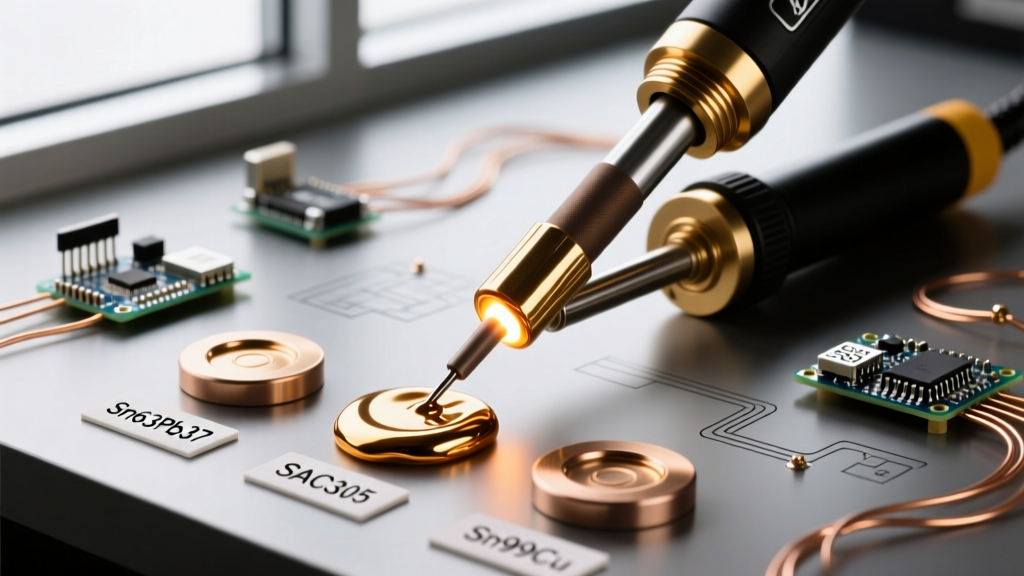
Below is a structured comparison of the three dominant solder wire alloys used for tinning and general PCB work in 2026. Pricing reflects average market rates for a standard 1 lb (454g) spool of 0.031" (0.8mm) diameter wire with a 2-3% flux core.
| Alloy Designation | Composition | Melting Point | Tip Wear Rate | Wetting Speed | Avg. Price (1lb Spool) |
|---|---|---|---|---|---|
| Sn63Pb37 (Eutectic) | 63% Tin / 37% Lead | 183°C (361°F) | Low | Excellent | $35 - $45 |
| SAC305 | 96.5% Sn / 3% Ag / 0.5% Cu | 217-220°C (428°F) | High | Good | $55 - $70 |
| Sn99.3Cu0.7 | 99.3% Tin / 0.7% Copper | 227°C (440°F) | Medium | Fair | $25 - $35 |
Top 3 Soldering Iron Tin Wires Reviewed
1. Kester 245 Sn63Pb37 (Best Overall for Leaded Tinning)
For non-RoHS restricted environments, hobbyists, and prototype labs, Kester 245 remains the undisputed gold standard. The 63/37 ratio is perfectly eutectic, meaning it transitions from solid to liquid instantly at 183°C without a plastic (pasty) state.
- Flux Core: 245 No-Clean (leaves a minimal, non-corrosive residue).
- Tinning Performance: Unmatched. The lower melting point allows you to tin your iron tip at a station setting of just 300°C (572°F), drastically reducing thermal stress on the iron's ceramic heating element and the tip's chrome barrier.
- Drawback: Contains lead, making it illegal for use in commercial consumer electronics manufacturing in the EU and restricted in many North American jurisdictions.
2. Kester SAC305 with 331 Flux (Best Lead-Free Premium)
When working in strict RoHS-compliant environments, SAC305 (Tin-Silver-Copper) is the industry standard. The addition of 3% silver improves the mechanical strength of the solder joint and slightly enhances wetting compared to silver-free alternatives.
- Flux Core: Kester 331 (Zero-Halogen, No-Clean).
- Tinning Performance: Requires higher tip temperatures (typically 340°C to 360°C) to activate the flux and achieve proper flow. Because of the high tin content, it is aggressive on tip plating. Pro Tip: Always use a brass wire sponge rather than a wet cellulose sponge when wiping excess SAC305, as the thermal shock of a wet sponge combined with high lead-free temps will cause micro-cracking in the iron plating.
- Drawback: High silver content drives up the cost, and the aggressive leaching requires more frequent tip replacement.
3. Alpha Metals Sn99.3Cu0.7 (Best Budget Lead-Free)
If you are tinning tips for heavy-duty through-hole work, ground planes, or basic plumbing applications where silver-bearing solder is an unnecessary expense, the Tin-Copper eutectic alloy is the optimal choice. As noted by researchers at the NASA Electronic Parts and Packaging (NEPP) Program, copper-bearing lead-free solders significantly reduce the dissolution of copper from PCB pads and iron from soldering tips compared to pure tin or SAC alloys.
- Flux Core: Typically available in Water-Soluble or Rosin Mildly Activated (RMA).
- Tinning Performance: Sluggish wetting compared to leaded options. Requires a generous application of external flux (like Amtech or Chip Quik tacky flux) if the tip is heavily oxidized before the solder wire will 'grab' the iron plating.
- Drawback: Dull, frosty appearance on joints (aesthetic only) and requires higher operating temperatures (350°C+).
Step-by-Step: The Perfect Tip Tinning Protocol
Even the best soldering iron tin alloy will fail if applied incorrectly. Follow this exact protocol to maximize tip life, a methodology endorsed by manufacturers like Hakko and Weller.
- Preparation: Set your soldering station to the alloy's optimal tinning temperature (300°C for Sn63Pb37; 340°C for SAC305). Do not exceed these temps during the tinning phase.
- Initial Melt: As the tip heats up, apply the solder wire to the bevel or conical point the second it is hot enough to melt the flux. Do not wait for the station to reach full setpoint if the solder begins to flow earlier.
- Coat the Bevel: Melt a generous blob of solder over the entire working surface of the tip. This encapsulates the iron plating, blocking oxygen from the ambient air.
- The Wipe (Crucial Step): Wipe the tip on a damp (not soaking wet) cellulose sponge or a dry brass wire sponge. Wiping removes oxidized flux and microscopic metal impurities.
- Immediate Re-tinning: Instantly apply a fresh layer of solder to the clean, hot tip. Never leave a soldering iron tip bare and hot.
- Shutdown Protocol: Before turning off the station, apply a massive, thick layer of solder to the tip. This sacrificial layer will oxidize as the tool cools, protecting the actual iron plating underneath for your next session.
Common Failure Modes and Troubleshooting
Black Tip Syndrome (Severe Oxidation)
Cause: Leaving the iron on at 400°C+ without a protective layer of solder, or using a water-soluble (OA) flux core wire and failing to clean the tip. The organic acids in water-soluble flux will eat through the chrome barrier and oxidize the iron.
Fix: Do NOT use sandpaper or a file (this destroys the iron plating instantly). Use a specialized tip tinner/activator paste (like Hakko FS-100). Dip the hot blackened tip into the paste, wipe on brass wool, and immediately apply fresh Sn63Pb37 solder.
Pitting and Cratering
Cause: Using SAC305 at excessively high temperatures, causing the tin to rapidly dissolve the iron plating, exposing the copper core. Once copper is exposed, it dissolves into the solder pool, creating a crater.
Fix: The tip is dead and must be replaced. To prevent this, lower your station temperature and switch to a Sn99.3Cu0.7 alloy, which is chemically less aggressive on iron plating than silver-bearing SAC alloys.
Final Verdict
Choosing the right soldering iron tin wire is a balancing act between joint reliability, regulatory compliance, and equipment maintenance. For pure tip longevity and ease of use in a personal lab, Kester 245 Sn63Pb37 remains unbeaten. However, for modern commercial electronics manufacturing in 2026, mastering the thermal management of SAC305 or Sn99.3Cu0.7 is mandatory. Invest in high-quality, name-brand solder wire with a reliable 2-3% no-clean flux core, adhere strictly to the shutdown tinning protocol, and your premium soldering tips will easily survive thousands of thermal cycles.