
The Hidden Enemy: Oxidation and Thermal Shock
When it comes to maintaining peak thermal transfer in electronics assembly, cleaning soldering iron tip surfaces is not just a chore—it is a critical metallurgical necessity. A layer of oxidation as thin as a single micron can act as a severe thermal insulator, dropping your effective heat transfer by up to 40%. This leads to dwell times that exceed 3 seconds, risking pad lift-off and damaged IC components. However, the method you use to remove this oxidation is equally important. Aggressive cleaning methods or improper thermal management during the cleaning process can destroy the protective iron plating of your tip, turning a $12 replacement part into scrap metal in a matter of weeks. In this comprehensive 2026 buying guide, we evaluate the best tools for the job, breaking down the science of tip degradation and reviewing the top brass, sponge, and chemical cleaners on the market.
Metallurgy 101: Why Your Soldering Tip Degrades
To understand why specific cleaning tools are superior, you must first understand the anatomy of a modern soldering tip. According to industry guidelines outlined in the IPC Standards for soldering workmanship, a standard tip is not a solid piece of metal. It is a complex, multi-layered composite:
- Copper Core: Provides rapid thermal conductivity from the heating element.
- Iron (Fe) Plating: A 5-to-15-micron layer that protects the soft copper from dissolving into the molten solder (a process known as leaching).
- Chromium/Nickel Barrier: Prevents molten solder from wicking up the outside of the tip shaft.
- Working Layer: The active tinned surface where soldering occurs.
When you plunge a 350°C tip into a wet cellulose sponge, the surface temperature plummets by up to 150°C in under a second. This severe thermal gradient causes micro-cracking in the iron plating. Once those micro-fissures reach the copper core, the solder eats through the tip, resulting in pitting and permanent failure. This is why the industry has heavily shifted toward low-thermal-shock alternatives for cleaning soldering iron tip surfaces.
Comparison Matrix: Brass Wool vs. Cellulose Sponge vs. Chemical Paste
| Cleaning Method | Thermal Shock (Temp Drop) | Abrasion Level | Best Use Case | Avg. Cost (2026) |
|---|---|---|---|---|
| Brass Wire Coil | Low (~20°C - 30°C) | Very Low | Daily maintenance, lead-free solder | $12 - $18 |
| Cellulose Sponge | High (~100°C - 150°C) | Moderate | Heavy flux residue removal | $5 - $9 |
| Chemical Tip Tinner | None (Exothermic) | None (Chemical) | Re-tinning, severe oxidation rescue | $10 - $15 |
Top Product Reviews for 2026
1. Hakko 599B Tip Cleaner (Brass Wool)
Price: $14.50 | Type: Brass Shavings | Compatibility: All standard tips
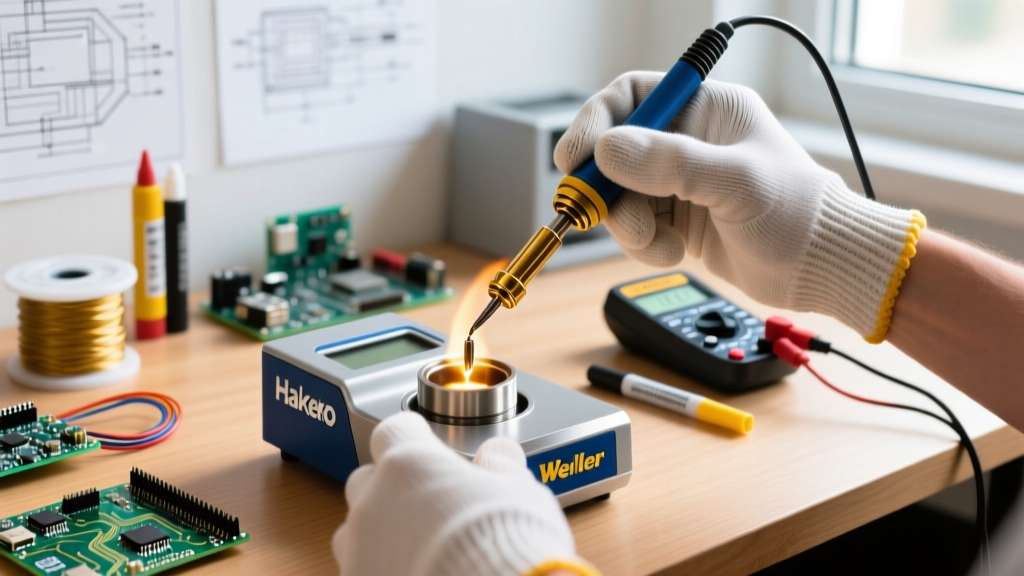
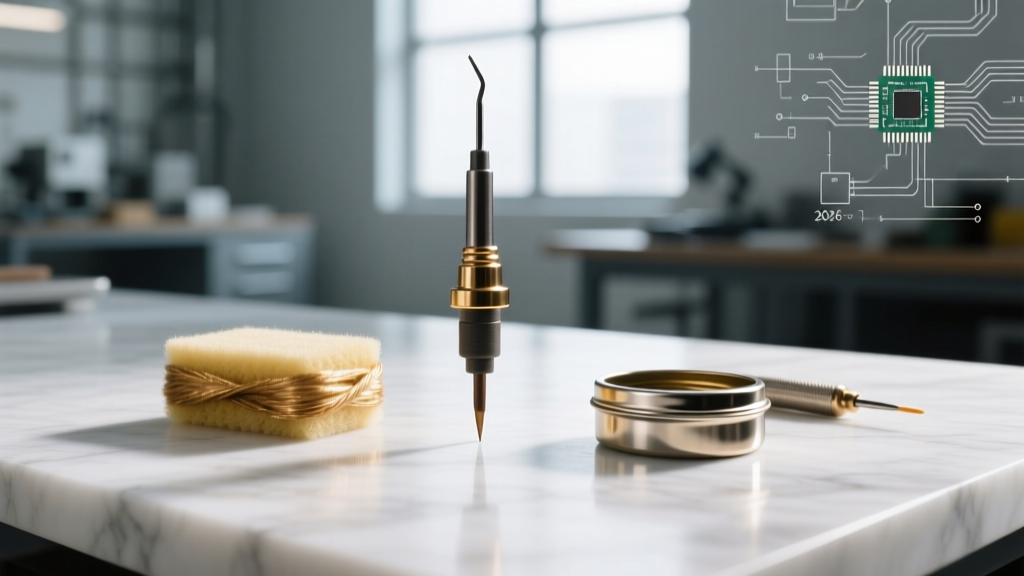
The Hakko 599B remains the gold standard for daily cleaning soldering iron tip maintenance. Unlike steel wool, which is harder than the iron plating and will strip your tip bare, the Hakko 599B uses a specialized soft brass alloy. The coiled shavings provide thousands of microscopic contact points that scrape away oxidized solder and burnt flux without generating enough friction to damage the 10-micron Fe layer. The included tray features a clever recessed bottom that keeps the collected solder dross away from the tip, preventing you from re-contaminating the working surface. For users running high-temperature lead-free alloys like SAC305 (melting point 217°C–220°C), the low thermal shock of the Hakko 599B is mandatory to prevent tip cracking.
2. Weller WDC2 Soldering Iron Sponge (Cellulose)
Price: $7.99 | Type: Cellulose Sponge | Compatibility: Weller, Hakko, and generic stations
While brass is superior for thermal retention, heavily charred rosin flux (RMA) can sometimes require the physical wiping action of a sponge. The Weller WDC2 is a high-density, pure cellulose sponge. Critical Warning: You must only dampen this sponge with distilled water. Tap water contains dissolved minerals (calcium, magnesium) that bake onto the hot tip, creating a hard, insulating ceramic-like scale that is nearly impossible to remove. The WDC2 expands to the perfect density when dampened, but remember to squeeze it out until it is merely moist, not dripping. A soaking wet sponge maximizes thermal shock and can actually warp the internal heating element in older ceramic-core stations.
3. MG Chemicals 8341 Tip Tinner (Chemical Paste)
Price: $12.00 | Type: Solder Powder & Activated Flux | Compatibility: All iron-plated tips
MG Chemicals 8341 is not for daily wiping; it is a restorative chemical paste. It consists of a highly activated flux suspended with fine solder powder. When you dip an oxidized, blackened tip into the 8341 paste, the aggressive flux strips the oxidation at a molecular level while the powder simultaneously re-tins the surface. The SparkFun Soldering Guide frequently recommends keeping a tin of chemical tinner on the bench as a last-resort rescue tool before throwing away a seemingly dead tip. It produces heavy, acrid smoke during use, so it must only be used under an active fume extractor.
The Ultimate Step-by-Step Cleaning Protocol
To maximize the lifespan of your tips, especially when switching between leaded (Sn60/Pb40) and lead-free (SAC305) solders, follow this exact protocol:
- Pre-Heat and Pre-Tin: Before turning off your station, always melt a generous bead of fresh, rosin-core solder over the entire working surface of the tip. This sacrificial layer oxidizes while the iron is off, protecting the iron plating underneath.
- The Morning Wipe: When powering on the next day, let the tip reach temperature. Wipe the sacrificial oxidized layer off using the Hakko 599B brass coil 3 to 4 times, rotating the tip to ensure all sides are cleared.
- During Soldering: Clean the tip in the brass coil before every single joint. Never use the sponge unless you are dealing with massive blobs of sticky, unburned gel flux.
- Weekly Rescue: Once a week, or if you notice the solder 'balling up' and refusing to wet the tip, dip the hot tip into the MG Chemicals 8341 paste for 2 seconds, then immediately wipe it clean in the brass coil and apply fresh solder.
Edge Cases: Rescuing a Severely Oxidized Tip
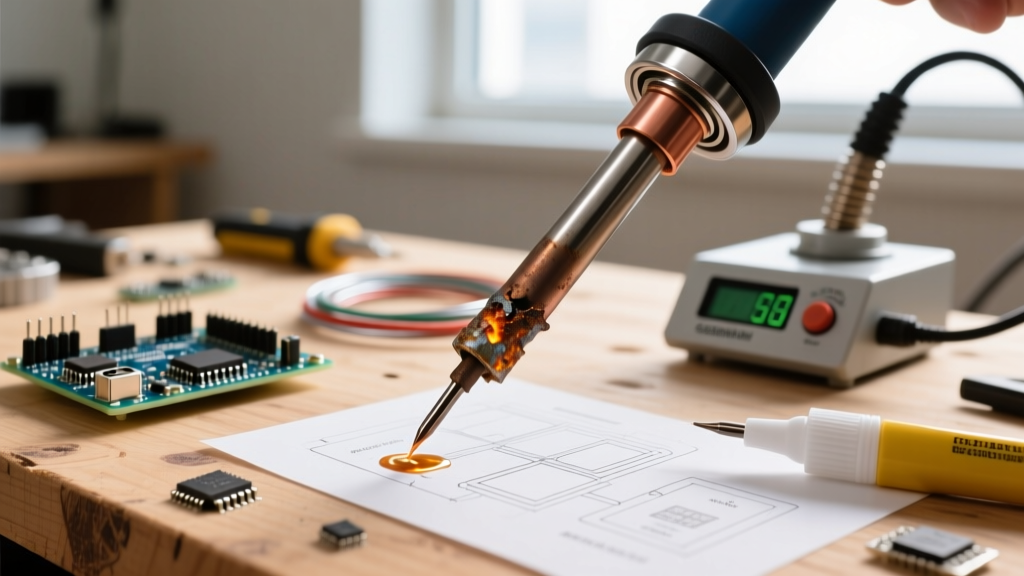
Expert Warning: Never use sandpaper, a file, or a Dremel tool to clean a soldering tip. Even 2000-grit sandpaper will instantly strip the 10-micron iron plating, exposing the copper core. The tip will dissolve into the solder pot within hours, ruining both the tip and your solder joints with copper contamination.
If your tip has turned a crusty, dark blue or black color and the chemical tinner fails to restore it, the oxidation has likely penetrated the iron layer. At this stage, the tip is structurally compromised and must be replaced. To prevent this, never leave your soldering station idle at 400°C for more than 5 minutes. Utilize the auto-standby (sleep) features built into modern digital stations like the Weller WE1010 or Hakko FX-951, which drop the temperature to 200°C when the iron is holstered.
Frequently Asked Questions
Can I use tap water to dampen my cellulose sponge?
No. Tap water contains dissolved minerals that flash-boil upon contact with a 350°C tip, leaving behind a hard mineral scale. This scale acts as a thermal barrier and cannot be wiped away. Always use distilled or deionized water for your Weller WDC2 or generic sponges.
How often should I apply tip tinner paste?
Chemical tip tinners like the MG Chemicals 8341 contain highly acidic activators. Using them daily will eventually eat away at the iron plating due to chemical corrosion. Reserve chemical pastes strictly for weekly maintenance or for rescuing tips that have suffered accidental dry-burns.
Does lead-free solder require different cleaning methods?
Yes. Lead-free solders require higher operating temperatures (typically 340°C–380°C) and contain higher tin content, which accelerates tip erosion and oxidation. When using lead-free alloys, you must exclusively use a brass wool cleaner like the Hakko 599B to minimize thermal shock, and you should re-tin the tip immediately after every cleaning cycle to prevent instant flash-oxidation.