
The Shift from Leaded to Lead-Free Electronics
For over half a century, Tin-Lead (Sn63/Pb37) was the undisputed gold standard in electronics assembly. It offered a low melting point of 183°C, excellent wetting characteristics, and a bright, shiny joint that made visual inspection straightforward. However, growing awareness of lead toxicity and its environmental impact forced a massive industry pivot. Today, understanding what is lead free soldering is no longer optional for DIYers, repair technicians, or manufacturing engineers—it is the baseline standard for modern electronics.
What Is Lead-Free Soldering? (Core Definition & Compliance)
Lead-free soldering is the process of joining electronic components to printed circuit boards (PCBs) using alloys that contain less than 0.1% lead by weight. This transition was primarily driven by the EU RoHS Directive (Restriction of Hazardous Substances), which mandated the elimination of lead in consumer electronics to prevent toxic heavy metals from leaching into landfills. Similar regulations and EPA guidelines on lead exposure have since been adopted globally.
Beyond environmental compliance, lead-free soldering requires a fundamental shift in thermal management. Because lead-free alloys melt at significantly higher temperatures (typically 217°C to 227°C compared to 183°C for Sn63), the entire soldering profile—from iron tip temperature to flux activation and dwell time—must be recalibrated to avoid thermal damage to components and FR-4 board substrates.
The IPC Standards You Need to Know
When transitioning to lead-free, visual inspection criteria change. The IPC J-STD-001 and IPC-A-610 standards explicitly state that lead-free solder joints will often appear dull, matte, or grainy. Unlike leaded joints, a dull finish in a lead-free joint is not a defect; it is a normal metallurgical characteristic of the cooling phase in Silver-Copper-Tin alloys.
Common Lead-Free Solder Alloys Compared
Selecting the right alloy is the first critical step in your consumables selection guide. The market has settled on a few dominant formulations, each with distinct thermal and mechanical properties.
| Alloy Designation | Composition (Sn/Ag/Cu/Other) | Melting Point (°C) | Est. Cost per 1lb Spool (2026) | Best Application |
|---|---|---|---|---|
| SAC305 | 96.5% Sn, 3.0% Ag, 0.5% Cu | 217°C - 220°C | $38 - $45 | High-reliability SMT, aerospace, automotive |
| SN100C | 99.3% Sn, 0.7% Cu, 0.05% Ni, Ge | 227°C | $26 - $32 | Hand soldering, wave soldering, general DIY |
| SAC0307 | 99.0% Sn, 0.3% Ag, 0.7% Cu | 217°C - 225°C | $28 - $34 | Consumer electronics, cost-sensitive SMT |
| Sn42/Bi57.6/Ag0.4 | 42% Sn, 57.6% Bi, 0.4% Ag | 138°C - 170°C | $45 - $55 | Heat-sensitive components, LED strips, rework |
Deep Dive: SAC305 vs. SN100C
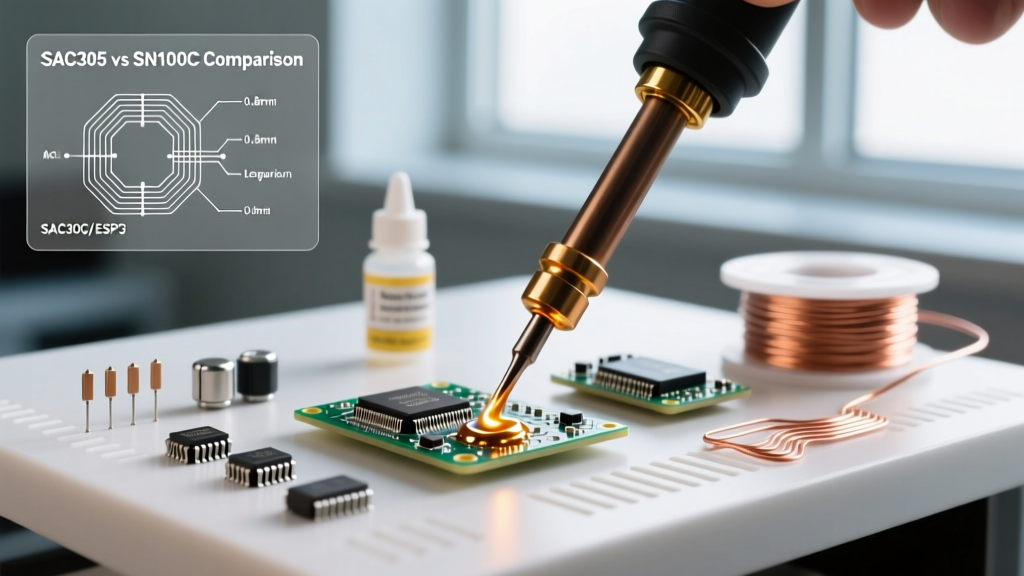
SAC305 (Tin-Silver-Copper) is the industry standard for surface mount technology (SMT) reflow. The 3% silver content provides excellent mechanical strength and thermal fatigue resistance. However, the high silver content makes it expensive, and the alloy is prone to 'tin whisker' growth over long periods if not properly managed.
SN100C (Tin-Copper-Nickel-Germanium), pioneered by Nihon Superior, is the premier choice for hand soldering and wave soldering. The addition of trace Nickel (0.05%) drastically reduces copper leaching from the PCB pads, while Germanium acts as an antioxidant, reducing dross formation and keeping the solder pot clean. For DIYers and repair techs, SN100C wire (like Alpha Metals or Kester variants) offers a superior balance of cost, flow, and tip longevity.
Flux Selection for Lead-Free Profiles
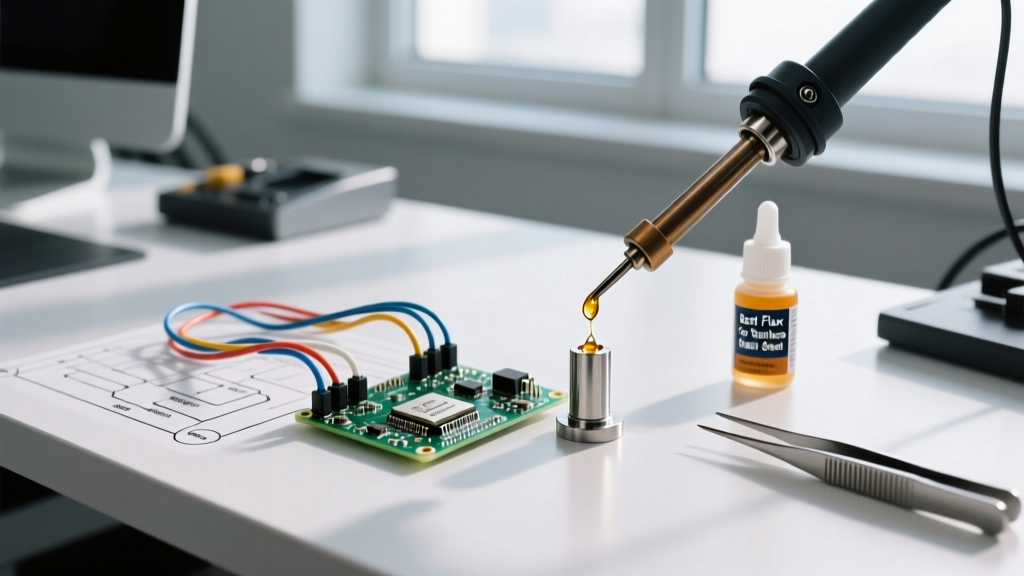
Flux is the unsung hero of the soldering process, and lead-free soldering demands more from your flux chemistry. Because you are operating at higher temperatures (350°C+ at the iron tip), standard rosin fluxes can char, burn, and leave behind corrosive residues before the solder even wets the pad.
Expert Tip: When hand soldering with SAC305 or SN100C, avoid standard 'No-Clean' fluxes unless they are specifically rated for high-temperature lead-free profiles. Opt for Rosin Activated (RA) or high-activity Water-Soluble (OA) fluxes to ensure rapid oxide removal at 220°C+.
- Water-Soluble (e.g., Kester 245 Core): Highly active organic acids. Excellent wetting on stubborn or oxidized lead-free pads. Must be cleaned with distilled water post-soldering to prevent electrochemical migration.
- No-Clean (e.g., Kester 282 or Alpha Metals NC): Uses synthetic resins with higher thermal decomposition points. Leaves a clear, hard residue that is non-conductive and non-corrosive. Ideal for tight-pitch QFN or BGA rework where cleaning is impossible.
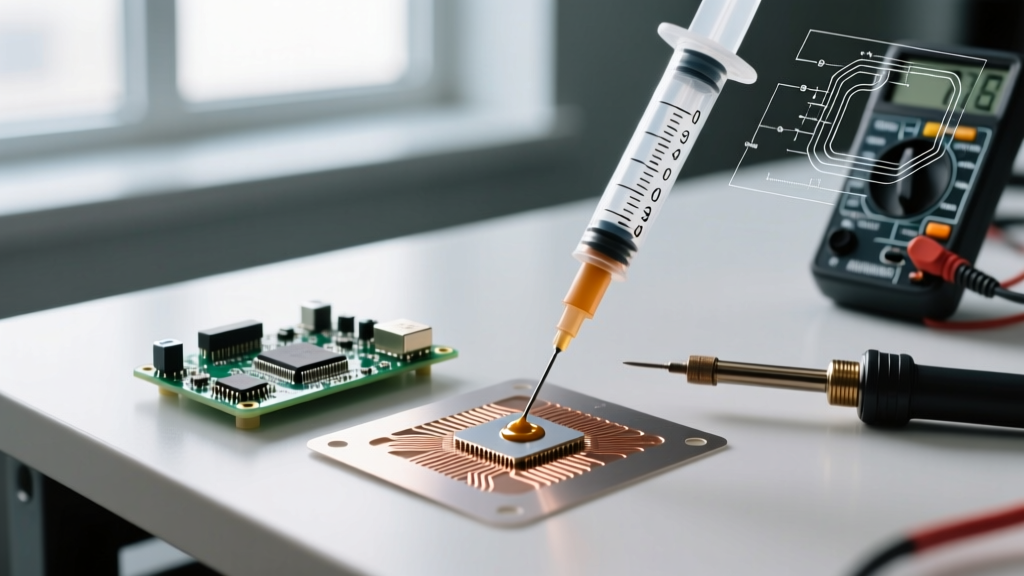
- Tack Flux (Syringe): For SMT rework, use a high-tack, lead-free specific gel flux (like Amtech NC-559-V2-TF) to hold components in place while surviving the prolonged heat of a hot air rework station.
Iron Temperature & Technique Adjustments
The most common mistake makers make when asking 'what is lead free soldering' is treating it exactly like Sn63. You cannot simply bump your iron to 400°C and hope for the best; you will destroy your PCB pads and oxidize your iron tips in minutes.
Step-by-Step Profile Adjustments
- Set the Baseline Temperature: For Sn63, a 320°C iron tip is standard. For SAC305 (melting at 217°C), set your station (e.g., Weller WE1010 or Hakko FX-951) to 350°C - 360°C. For SN100C (melting at 227°C), set it to 360°C - 380°C.
- Increase Dwell Time: Lead-free solder takes longer to transfer heat and wet the surfaces. Expect to hold the iron on the pad and lead for 2.5 to 4 seconds (compared to 1-2 seconds for leaded).
- Pre-Heat the Board: If you are soldering heavy ground planes or multi-layer boards, use a PCB pre-heater (like the YIHUA 853A) set to 100°C - 120°C. This reduces the thermal delta, allowing you to use a lower iron temperature (340°C) and preventing pad lift.
- Use Larger Tip Geometries: Swap your fine conical tips for chisel or bevel tips (e.g., Hakko T18-D24). The increased surface area improves thermal transfer, compensating for the higher thermal mass required by lead-free alloys.
Real-World Troubleshooting: Common Lead-Free Defects
Even with the right alloy and flux, lead-free soldering introduces specific failure modes that require targeted troubleshooting.
- Grainy or Disturbed Joints: If the component moves while the SAC305 is in its plastic (pasty) cooling phase between 217°C and 180°C, the joint will fracture internally, looking grainy. Fix: Use tweezers to hold the component completely still for an extra 2 seconds after removing the iron.
- Rapid Tip Oxidation (Black Crust): Lead-free solder eats iron plating much faster than leaded solder, especially above 380°C. Fix: Never leave the iron idle at high heat. Turn it down to 250°C when not in use, and regularly apply a high-quality tip tinner (like Edsyn or Hakko 599B) to re-tin the bevel.
- Copper Pad Lift: The FR-4 glass transition temperature (Tg) is typically 130°C-170°C. Prolonged exposure to 380°C iron tips delaminates the epoxy, lifting the copper trace. Fix: Limit dwell time to 4 seconds max per joint. If it doesn't wet, remove the iron, let it cool, add fresh flux, and try again.
- Solder Bridging on Fine Pitch: Lead-free solder has higher surface tension and doesn't flow as readily as Sn63. Fix: Apply generous amounts of high-quality liquid flux before dragging the iron. The flux reduces surface tension and pulls the solder away from adjacent pins.
FAQ: Quick Answers on Lead-Free Transitions
Can I mix leaded and lead-free solder?
While physically possible, mixing Sn63 with SAC305 creates a quaternary alloy with a wide, unpredictable pasty range and compromised mechanical strength. Furthermore, introducing lead into a RoHS-compliant assembly voids its certification. Always dedicate specific tips and spools to lead-free work.
Why does my lead-free solder joint look dull and matte?
This is normal. Leaded solder cools with a shiny, reflective finish due to the lead's crystalline structure. SAC and SN100C alloys cool with a matte, grainy, or slightly rough appearance. According to IPC-A-610, this is an acceptable visual characteristic, not a cold joint defect.
Is Bismuth solder a good alternative for beginners?
Sn42/Bi58 (Tin-Bismuth) melts at a very low 138°C, making it incredibly easy to use and great for heat-sensitive parts like flexible PCBs or LEDs. However, Bismuth makes the joint highly brittle. It should never be used on connectors that will experience mechanical stress or drop-shock (e.g., USB ports or headphone jacks).
Final Thoughts on Consumable Selection
Mastering what is lead free soldering comes down to respecting the thermal requirements of the alloys. By selecting a cost-effective, high-flow wire like SN100C for general DIY, pairing it with a thermally stable No-Clean or Water-Soluble flux, and strictly managing your iron's temperature and dwell time, you can achieve joints that rival or exceed the reliability of legacy leaded assemblies. Invest in a quality pre-heater, maintain your tips religiously, and let the flux do the heavy lifting.