
The Metallurgical Reality: Why Aluminium Soldering Demands a Premium
Soldering aluminium is fundamentally different from soldering copper or brass. The primary adversary is the aluminium oxide layer (Al2O3), which forms instantly upon exposure to air. While the base aluminium metal melts at a relatively low 660°C, the oxide layer boasts a melting point of approximately 2072°C. Standard rosin-based fluxes (RMA/RA) are chemically incapable of disrupting this barrier. Consequently, aluminium flux soldering requires highly aggressive, specialized chemical formulations and specific alloy pairings.
From a procurement and production standpoint in 2026, attempting to cut costs by using generic fluxes or incorrect alloys results in catastrophic failure rates, cold joints, and severe galvanic corrosion. This cost analysis breaks down the direct material expenses, equipment requirements, and hidden post-processing costs associated with reliable aluminium soldering.
2026 Flux Cost Matrix: Formulations and Performance
Specialty aluminium fluxes generally fall into two categories: highly corrosive zinc-chloride pastes and advanced organic amine/fluoroaluminate formulations. According to the IPC J-STD-004 standard for flux classification, aluminium fluxes often push the boundaries of standard activity levels, requiring strict post-solder cleaning protocols.
Expert Insight: Never use standard plumbing fluxes (like Stay-Clean) on aluminium. They are formulated for copper-to-copper joints and will fail to etch the Al2O3 layer, resulting in a 100% rework rate and wasted labour costs.| Flux Product / Type | Base Chemistry | 2026 Avg. Price | Corrosivity | Best Application |
|---|---|---|---|---|
| Superior Flux #809 | Organic Amine / Water-Soluble | $48.00 / 2 oz jar | Low (if cleaned) | PCB-to-Al, precision electronics |
| Alusol Paste | Zinc Chloride / Ammonium Chloride | $16.50 / 1.7 oz tube | Extreme | Heavy structural, HVAC, automotive |
| Generic Fluoroaluminate | Fluoroaluminate salts | $35.00 / 4 oz jar | Moderate | Heat exchangers, torch soldering |
While the upfront cost of Superior Flux #809 is nearly triple that of zinc-chloride alternatives, the total cost of ownership (TCO) often favours the organic amine formulation in electronics manufacturing. Zinc chloride residues are so aggressively hygroscopic and corrosive that they will destroy an aluminium joint via pitting within weeks if not cleaned to a microscopic standard.
Solder Alloy Pricing: Zinc-Tin vs. Silver-Tin
The solder alloy must be compatible with the aluminium substrate to prevent the formation of brittle intermetallic compounds (IMCs). In 2026, precious metal market fluctuations have heavily impacted silver-bearing alloys, making zinc-based alternatives more attractive for high-volume operations.
1. Tin-Zinc (Sn91/Zn9) - The Premium Choice
- Cost: ~$145.00 per pound (0.032" diameter wire)
- Melting Point: 199°C (Solidus/Liquidus)
- Analysis: Suppliers like Indium Corporation produce high-reliability Sn91Zn9 wire. The zinc content acts as a sacrificial barrier, preventing galvanic corrosion when joining aluminium to dissimilar metals like copper. The high material cost is offset by a near-zero rework rate in controlled environments.
2. Tin-Silver (Sn96.5/Ag3.5) - The Legacy Standard
- Cost: ~$110.00 per pound
- Melting Point: 221°C
- Analysis: Historically popular for its strength, the 2025/2026 spike in silver prices has made this alloy less economical for bulk aluminium work. Furthermore, it requires higher thermal input, increasing the risk of warping thin-gauge aluminium sheets.
3. Zinc-Aluminium (Zn95/Al5) - The High-Temp Option
- Cost: ~$65.00 per pound
- Melting Point: 382°C
- Analysis: Extremely cheap, but requires flame soldering or high-end induction heating. It is unsuitable for any application involving heat-sensitive components or plastics.
Thermal Delivery: Equipment Costs for High-Mass Joints
Aluminium’s thermal conductivity is approximately 237 W/m·K. It acts as a massive heat sink, pulling thermal energy away from the soldering iron tip faster than standard copper traces. If your equipment cannot recover heat instantly, the flux will burn and carbonize before the base metal reaches the alloy’s liquidus temperature.
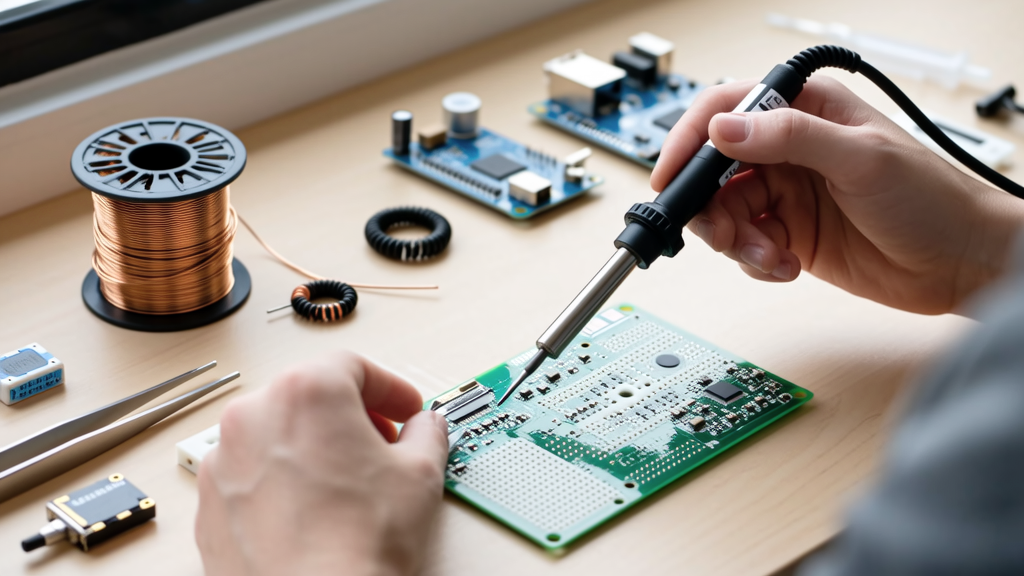
⚠ Hidden Equipment Cost: Using a standard 40W hobby iron for aluminium flux soldering will result in cold joints and oxidized flux. You must budget for a high-thermal-mass station (e.g., JBC CD-2BE or Metcal PS-900) costing between $600 and $900, or a precision micro-torch setup ($150) for structural work.For automated or high-volume bench work, active-tip technology is non-negotiable. The capital expenditure for a proper thermal delivery system is amortized over the lifespan of the production line, but it represents a significant barrier to entry for low-budget DIY or prototype operations.
The Hidden Cost of Post-Solder Cleaning
The most frequently overlooked line item in an aluminium soldering budget is the cleaning phase. Because the oxide layer requires aggressive chemistry to breach, the resulting flux residues are notoriously difficult to remove.
- Zinc Chloride Residues: Cannot be removed with Isopropyl Alcohol (IPA). Requires hot deionized (DI) water rinses, mechanical scrubbing, and often a mild alkaline saponifier to neutralize the acidic salts. Budget $0.15 to $0.30 per joint in chemical and DI water processing costs.
- Organic Amine Residues (e.g., Superior #809): Water-soluble, but still requires heated DI water and ultrasonic agitation for complex geometries to prevent localized galvanic cells from forming.
If a manufacturer skips the ultrasonic cleaning step to save 45 seconds per unit, the trapped flux will eventually draw moisture from the ambient air. This creates an electrolytic battery between the solder alloy and the aluminium substrate, leading to catastrophic joint failure in the field. The warranty replacement cost of a failed aluminium heat sink or power electronics module will instantly wipe out any labour savings gained by skipping the wash cycle.
Total Cost of Ownership (TCO) Scenario Analysis
To illustrate the real-world financial impact, consider a production run of 1,000 aluminium-to-copper power lugs.
Scenario A (The False Economy): Using generic ZnCl2 flux ($16) and Sn96.5/Ag3.5 solder ($110/lb). Initial material cost is low. However, manual scrubbing is required to remove corrosive salts, adding $400 in labour. Field failure rate due to trapped corrosion: 4%. Warranty replacements cost $2,500. Total TCO: High.
Scenario B (The Engineered Approach): Using Superior #809 flux ($48) and Sn91/Zn9 solder ($145/lb). Higher upfront material cost. Cleaning is automated via a standard inline aqueous washer ($0.05 per unit). Field failure rate: <0.1%. Total TCO: Low.
Final Verdict for 2026 Procurement
Aluminium flux soldering is not an area where commodity purchasing strategies succeed. The physics of the Al2O3 layer demands premium chemical and metallurgical solutions. When budgeting for your next project or production run, shift your focus from the price per ounce of the consumables to the cost per reliable joint. Invest in organic amine fluxes, zinc-bearing barrier alloys, and automated aqueous cleaning systems to ensure your aluminium soldered assemblies survive the harsh realities of real-world deployment.