
The Chemistry of Rosin: Abietic Acid and Activation
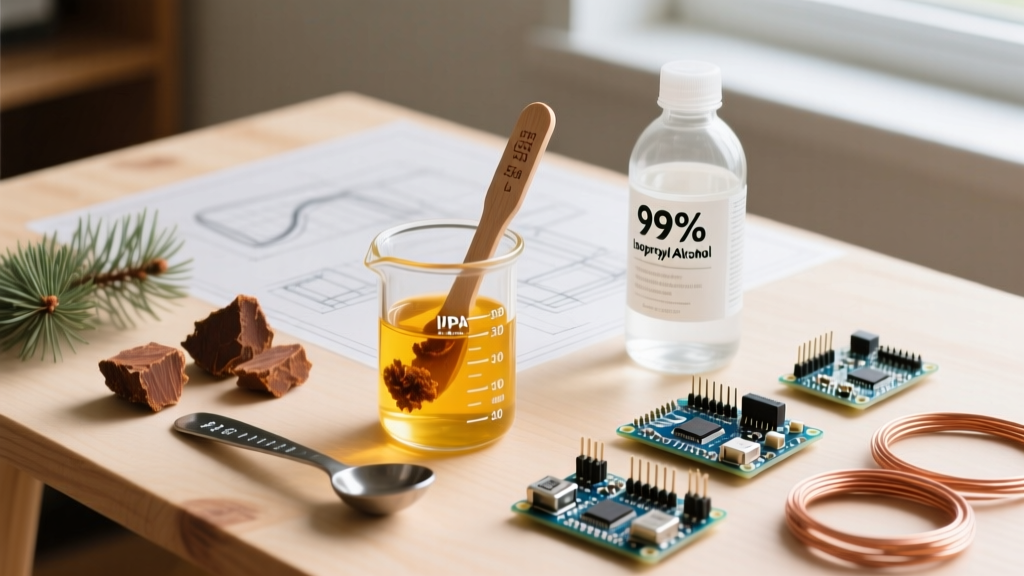
At its core, rosin flux is derived from the sap of pine trees, primarily consisting of abietic acid and related isomers. When heated, this weak organic acid becomes highly active, stripping away metal oxides to allow molten solder to wet the surface. However, not all rosin formulations are created equal. Selecting the correct soldering rosin flux paste is critical; using the wrong activation level can result in cold joints, severe PCB corrosion, or catastrophic pad lifting.
Before diving into metal compatibility, we must address a common beginner mistake: confusing flux paste with solder paste. Flux paste is a viscous chemical activator housed in syringes or jars, containing zero metal. Solder paste, conversely, is a stencil-printable mixture of microscopic metal spheres suspended in flux. This guide focuses strictly on pure rosin flux pastes used for manual soldering, rework, and wire tinning.
Decoding IPC J-STD-004 Classifications
The IPC J-STD-004 standard categorizes fluxes by material, activity level, and halide content. For rosin pastes, you will encounter three primary designations:
- ROL0 / ROL1 (Rosin, Low Activity): Often labeled as 'Pure Rosin' (R). Contains no added activators. Exceptional for highly sensitive aerospace or medical PCBs where post-solder cleaning is impossible, but struggles heavily with oxidized metals.
- ROM0 / ROM1 (Rosin, Mildly Activated): Labeled as RMA. The industry standard for general electronics. Contains mild halide or organic acid activators that burn off or become inert after soldering, leaving a safe, non-conductive residue.
- ROH0 / ROH1 (Rosin, Highly Activated): Labeled as RA. Packed with aggressive activators designed to cut through heavy oxidation on bare copper, brass, and nickel. Mandatory post-solder cleaning is required to prevent long-term galvanic corrosion.
Metal & PCB Finish Compatibility Matrix
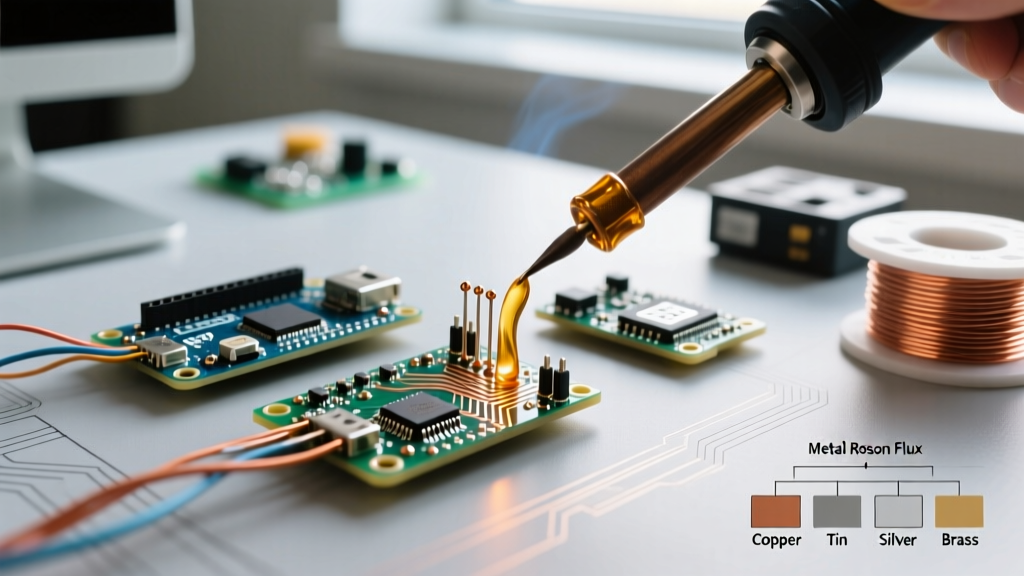
Matching your soldering rosin flux paste to the specific surface finish of your PCB or the base metal of your wire is the single most important factor in achieving a reliable metallurgical bond. Below is a comprehensive compatibility matrix for modern electronics manufacturing and DIY prototyping.
| Base Metal / PCB Finish | Recommended Rosin Type | Activation Temp Range | Risk of Incorrect Match |
|---|---|---|---|
| ENIG (Electroless Nickel Immersion Gold) | RMA (ROM0/ROM1) | 150°C - 180°C | Using RA flux can pit the ultra-thin gold layer and attack the underlying nickel if residue is left uncleaned. |
| HASL (Hot Air Solder Leveling) | R or RMA | 140°C - 170°C | Over-activated flux is unnecessary and leaves corrosive halide salts on an already easily wettable surface. |
| OSP (Organic Solderability Preservative) | RMA | 160°C - 190°C | Pure R flux often fails to penetrate the organic coating, resulting in non-wetting and dewetting defects. |
| Bare Copper (Mildly Oxidized) | RMA | 150°C - 180°C | Using R flux will result in beading solder and cold joints due to unremoved cupric oxide. |
| Brass & Nickel (Connectors, RF Shields) | RA (ROH0/ROH1) | 180°C - 220°C | RMA flux lacks the chemical aggression to break down heavy zinc/nickel oxides, leading to structural joint failure. |
| Immersion Silver | R or RMA | 140°C - 160°C | Highly activated fluxes can cause micro-pitting and tarnishing of the silver surface before the solder even melts. |
Alloy Synergy: Matching Paste to Solder Wire
A frequent point of failure in manual soldering is a thermal mismatch between the soldering rosin flux paste's solvent boil-off point and the solder alloy's liquidus temperature. Flux pastes utilize glycol-ether or alcohol-based solvents to maintain viscosity. If the solvent evaporates before the solder melts, the rosin burns, turns black, and loses all chemical efficacy.
Leaded Alloys (Sn63/Pb37 & Sn60/Pb40)
Standard eutectic leaded solder melts at a crisp 183°C. Most standard RMA rosin pastes (such as MG Chemicals 8341) are formulated with solvents that begin boiling around 150°C. This provides a perfect 30-second window for the flux to activate, clean the pad, and prepare the surface before the solder wire transitions to a liquid state. When using leaded alloys, keep your iron tip between 300°C and 320°C to ensure rapid heat transfer without scorching the rosin.
Lead-Free Alloys (SAC305 & Sn99.3/Cu0.7)
Lead-free alloys require significantly higher thermal energy, with SAC305 melting at 217°C–220°C. If you use a standard low-temp rosin paste with SAC305, the flux will burn to a hard, carbonized crust before the solder ever wets the pad. For lead-free manual soldering, you must source a high-temperature RMA paste formulated with high-boiling-point synthetic resins. Set your iron to 350°C–380°C and use a broader chisel tip to dump thermal mass into the joint quickly, minimizing the time the flux is exposed to extreme heat.
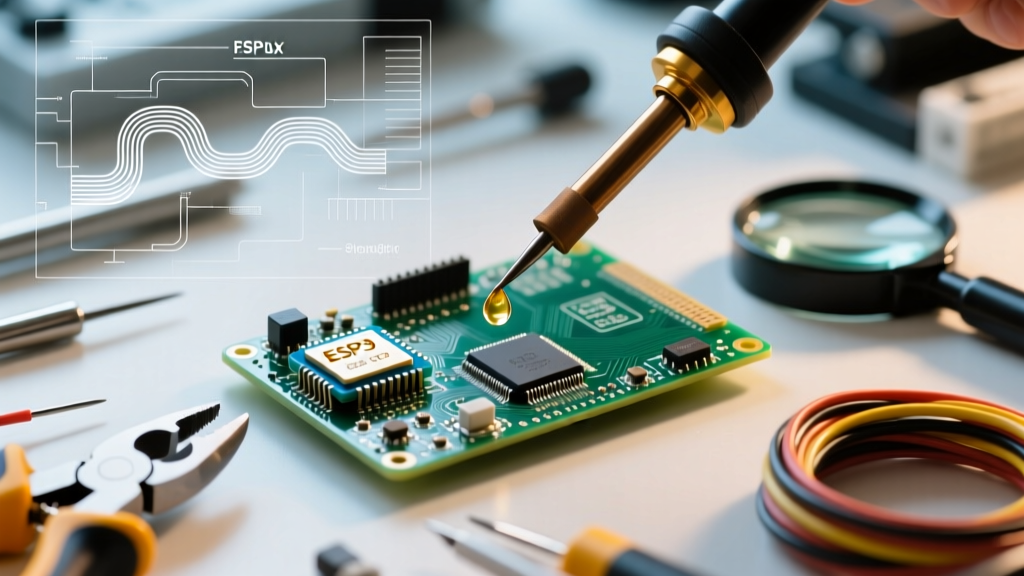
Expert Insight: When dragging soldering QFP or SOIC chips with lead-free paste, apply the rosin flux paste generously to the pads first. The thermal mass of the IC pins will absorb heat rapidly; the extra flux acts as a temporary thermal buffer and prevents the solder from bridging between fine-pitch leads.
Top Market Formulations for Modern Workbenches
Navigating the consumables market requires knowing which formulations deliver consistent results. Here are the benchmark rosin pastes trusted by rework professionals:
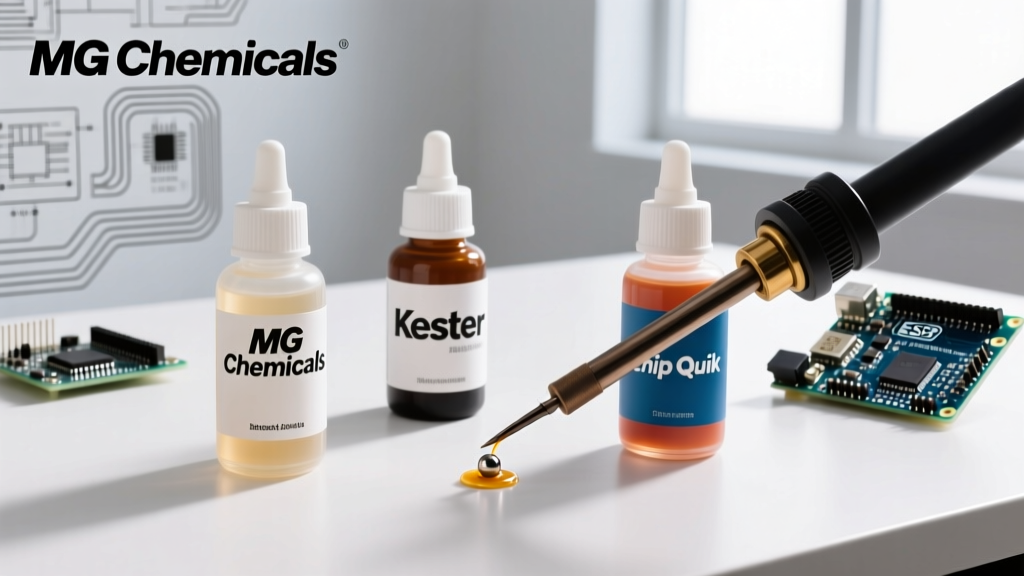
- Kester 186 RMA Paste: The historical gold standard for mildly activated rosin. Excellent wetting on HASL and bare copper. Leaves a hard, amber residue that is easily removed with 99% IPA. Typically priced around $12–$15 for a 2oz jar.
- MG Chemicals 8341: A highly viscous, tacky RMA paste ideal for holding SMD components in place prior to reflow. Its high tackiness makes it a favorite for 0402 and 0603 micro-components. Available in 10cc syringes for approximately $9.
- Senju Eco Rosin Paste: A halogen-free, environmentally compliant formulation designed specifically for demanding lead-free (SAC305) rework. It resists charring at higher temperatures and minimizes solder splatter.
Failure Modes & Troubleshooting Guide
Even with the right materials, technique dictates the outcome. Use this step-by-step troubleshooting matrix to diagnose rosin flux paste failures on your workbench.
- Failure Mode: Solder Beading / Non-Wetting
- Root Cause: Using R (Pure Rosin) on oxidized brass or OSP-coated PCBs, or the flux burned off before the iron reached the pad.
- Correction: Switch to an RMA or RA paste. Pre-tin the iron tip, apply flux directly to the cold pad, and then introduce heat.
- Failure Mode: Violent Solder Splatter (Outgassing)
- Root Cause: Applying the iron directly on top of a thick glob of flux paste. The rapid localized boiling of the solvent traps steam, which explodes outward, throwing micro-solder spheres across the PCB (a major short-circuit risk).
- Correction: Apply heat to the edge of the pad, allowing the flux to activate and flow outward gradually as it heats, rather than flash-boiling.
- Failure Mode: White Corrosive Crust Weeks Later
- Root Cause: Using an RA (Highly Activated) flux on a dense BGA or fine-pitch connector without performing post-solder cleaning. The halide activators absorb ambient moisture and create conductive, corrosive dendrites.
- Correction: Clean RA flux immediately using a specialized saponifier or high-purity (99%+) Isopropyl Alcohol and a stiff ESD-safe brush. Never use standard 70% pharmacy rubbing alcohol, as the 30% water content accelerates the very corrosion you are trying to prevent.
Final Thoughts on Storage and Shelf Life
Rosin flux pastes are highly susceptible to solvent evaporation and UV degradation. Always store your syringes and jars upright in a cool, dark environment (ideally between 10°C and 25°C). If your paste becomes stiff or stringy, it has lost its solvent carrier. While you can temporarily revive it with a few drops of specialized flux thinner, replacing the consumable is the only way to guarantee the chemical integrity required for mission-critical soldering joints. For comprehensive technical data sheets and safety profiles, always consult the manufacturer's technical resources library before integrating a new paste into your production workflow.