
What Exactly is Rosin Soldering Flux?
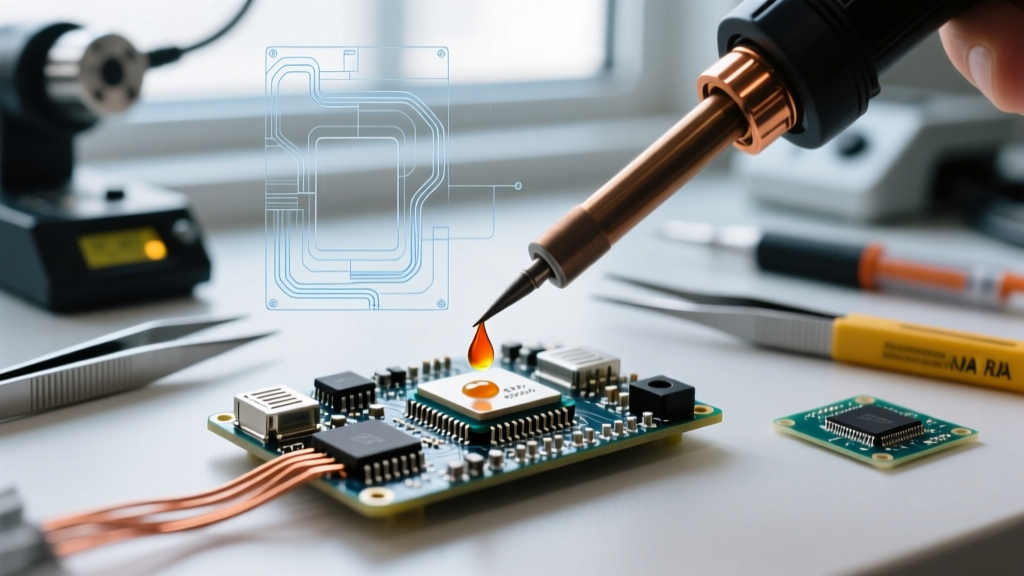
If you are stepping into the world of electronics assembly or PCB repair, you will quickly hear veterans insist that 'flux is magic.' But what is it, really? At its core, rosin soldering flux is a purified derivative of pine tree sap. Specifically, it is processed to isolate abietic acid and other resin acids. In its solid, unheated state, rosin is completely inert, non-conductive, and non-corrosive. However, when exposed to the heat of a soldering iron (typically between 150°C and 180°C), it melts and becomes a mild organic acid. This acid aggressively strips away metal oxides from copper pads and component leads, allowing molten solder to flow and form a reliable metallurgical bond.
Unlike plumbing fluxes—which use harsh, highly corrosive acids like zinc chloride that will destroy a circuit board in days—rosin is safe for delicate electronics. According to the NASA Workmanship Standards for soldering, rosin-based fluxes remain the benchmark for high-reliability aerospace and medical electronics due to their predictable activation and benign residue.
Decoding the Alphabet: R vs. RMA vs. RA
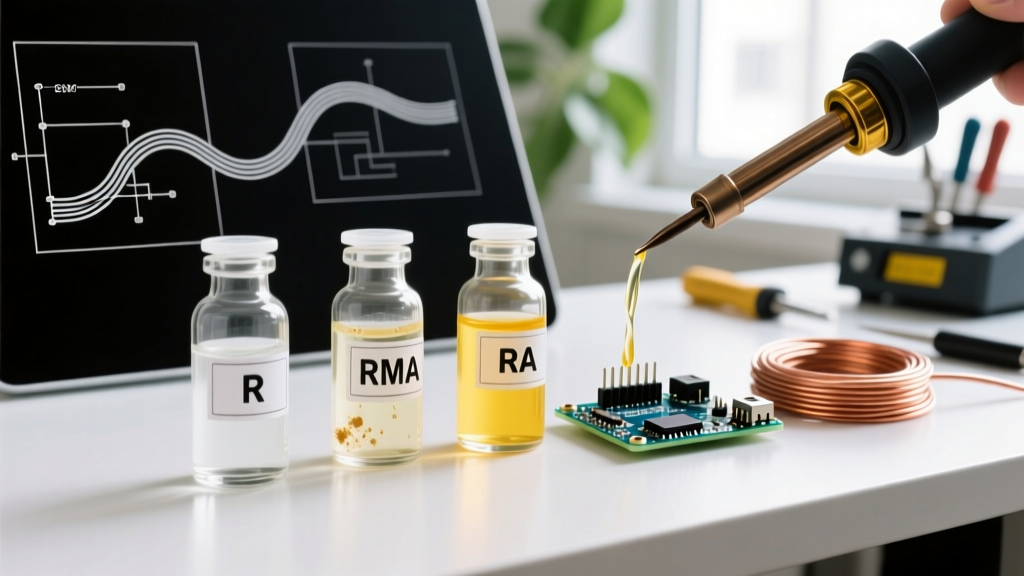
Not all rosin is created equal. Pure rosin struggles to clean heavily oxidized boards, so manufacturers add chemical 'activators' to boost its cleaning power. The IPC J-STD-004 standard categorizes rosin fluxes into three primary tiers based on their activator content. Understanding these differences is critical for selecting the right consumable for your workbench.
| Flux Type | Meaning | Activator Level | Residue Safety | Best Use Case |
|---|---|---|---|---|
| R (Rosin) | Pure Rosin | None (0%) | 100% Safe, Non-Corrosive | Pristine, new PCBs; pre-tinned wires; high-reliability aerospace where cleaning is impossible. |
| RMA (Rosin Mildly Activated) | Mild Activators | Low (~1-2%) | Safe for most apps; benign residue | General DIY, through-hole soldering, SMD rework, and standard prototype assembly. The gold standard for hobbyists. |
| RA (Rosin Activated) | Strong Activators | High (~3-5%+) | Corrosive; MUST be cleaned | Heavily oxidized vintage boards, thick ground planes, or tarnished component leads. Requires post-solder cleaning. |
Form Factors: Liquid, Paste, and Cored Wire
Once you decide on RMA (the recommended starting point for 90% of beginners), you must choose the physical delivery method. As of 2026, pricing and availability for these formats are highly stable:
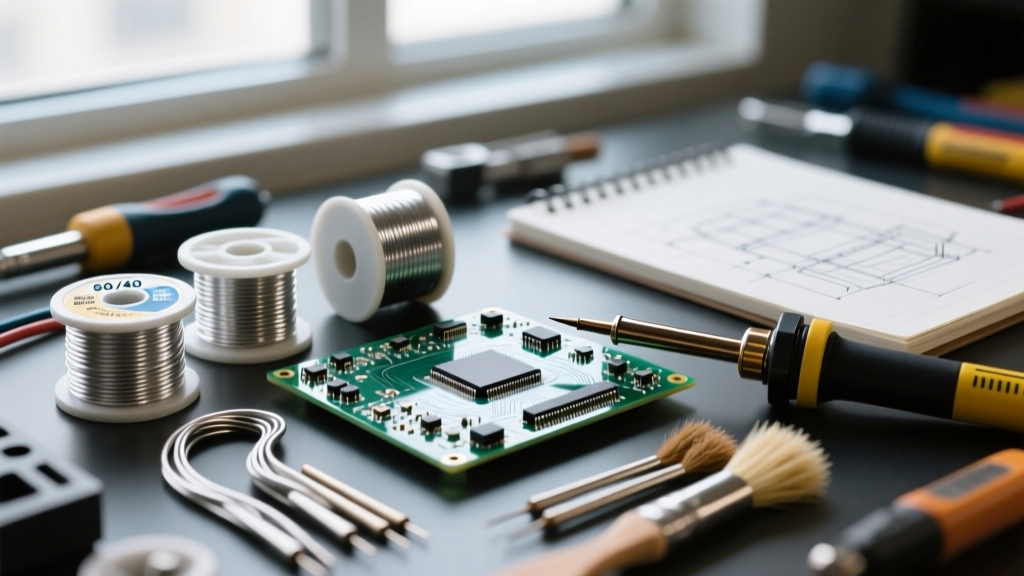
- Cored Solder Wire: The solder wire itself contains a hollow core filled with powdered rosin flux (usually 2% to 3% by weight). Cost: $25–$40 per lb. Great for basic through-hole work, but often insufficient for SMD rework or drag soldering.
- Liquid Flux: Rosin dissolved in an alcohol solvent (isopropanol or ethanol). Applied with a brush or dauber. Cost: $15–$22 for a 4oz bottle (e.g., Kester 186). Excellent for prepping large areas or vintage board restoration.
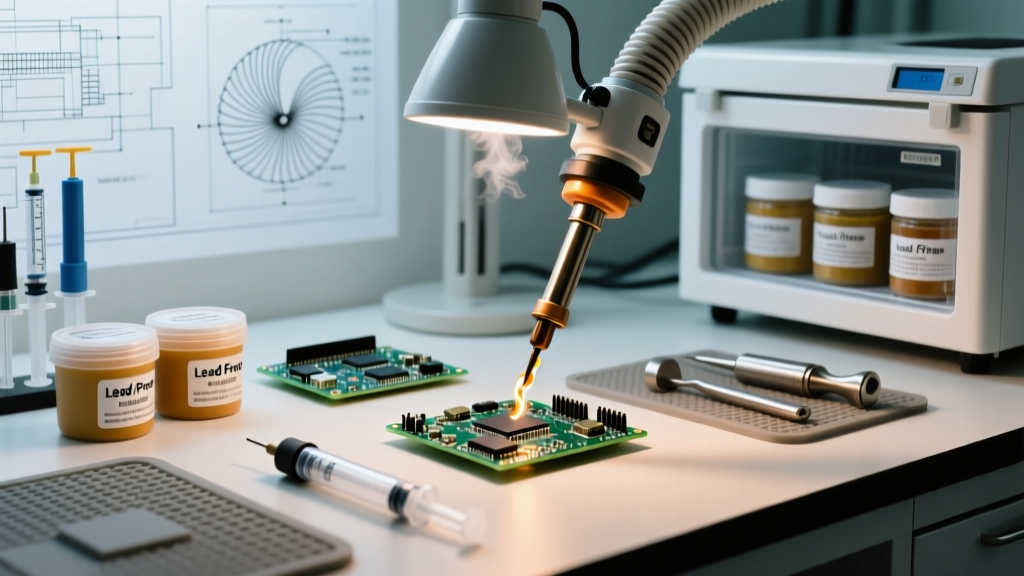
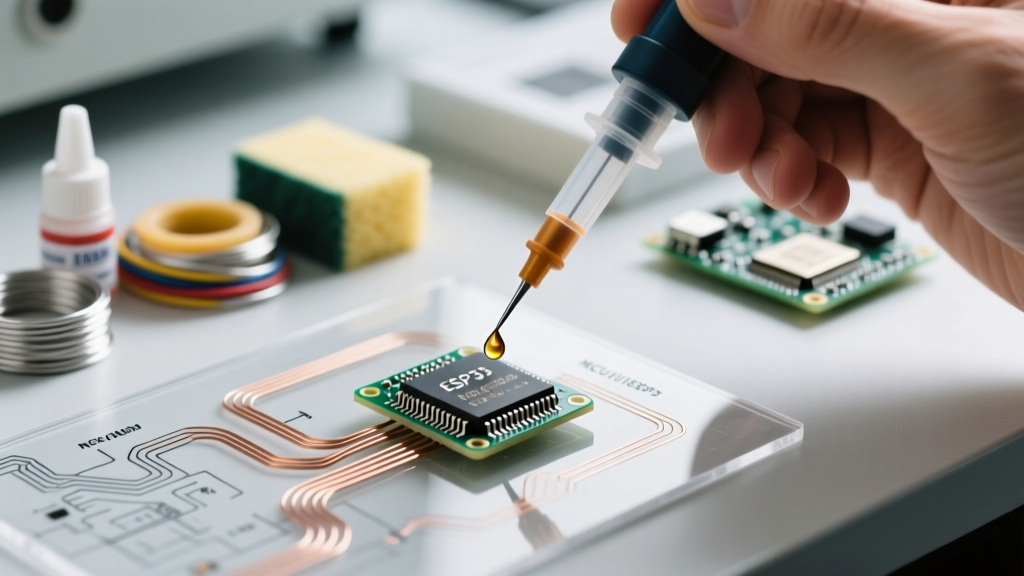
- Tacky Flux (Syringe/Paste): A thick, gel-like rosin mixture that stays exactly where you dispense it. Cost: $12–$16 for a 10cc syringe (e.g., Amtech RMA-223). Absolutely mandatory for surface-mount (SMD) soldering, QFN chips, and BGA reballing.
- Flux Pens: A convenient, mess-free way to apply liquid RMA flux to specific pads. Cost: $8–$11 per pen (e.g., MG Chemicals 834A-P). Perfect for quick touch-ups and field repairs.
Why Cored Wire Isn't Enough: The Case for External Flux
Beginners often assume that because their solder wire has a 'rosin core,' they never need to buy separate flux. This is a fundamental misunderstanding of soldering physics. The flux inside a standard 63/37 or 60/40 solder wire is designed to clean the immediate microscopic surface area right as the solder melts. It is entirely consumed during the initial wetting phase. If you are drag-soldering a 0.5mm pitch SOIC chip, or trying to reflow a large ground plane, the flux from the wire will burn off and carbonize long before the entire joint reaches thermal equilibrium. External flux (liquid or tacky) provides a sustained thermal buffer and a continuous supply of active rosin acids, keeping the pads oxide-free for the 5 to 10 seconds required to complete complex SMD joints. Always use external flux for rework; rely on cored wire only for simple, single-pass through-hole joints.
Step-by-Step: Applying Rosin Flux for Perfect Joints
The most common beginner mistake is applying heat to wet liquid flux. The alcohol solvents in liquid flux must evaporate before the rosin can activate properly. If you touch a 350°C iron to wet flux, the solvent boils instantly, causing microscopic explosions that result in 'solder balling' (tiny spheres of solder scattering across your PCB).
- Prep the Surface: Ensure the PCB pads and component leads are free of heavy grease. A quick wipe with 99% isopropyl alcohol (IPA) is recommended.
- Apply the Flux: Dispense a small amount of tacky flux to the pads, or brush on liquid flux. If using liquid, wait 3 to 5 seconds for the solvent to flash off (evaporate).
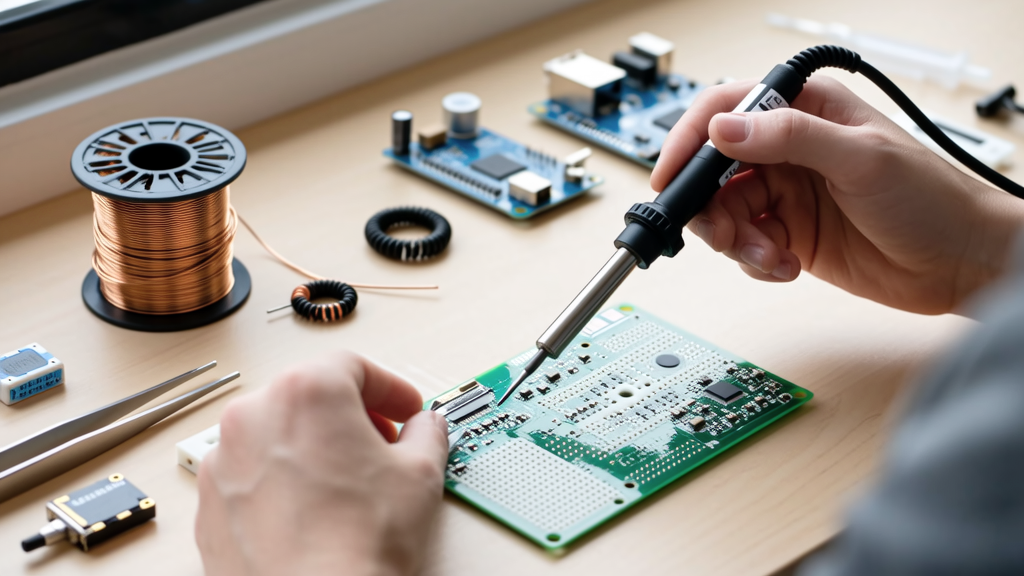
- Heat the Joint: Apply your iron tip to the pad and the component lead simultaneously. The rosin will melt, bubble slightly, and turn clear as it dissolves oxides.
- Feed the Solder: Introduce your cored solder wire to the joint, not the iron tip. The flux core will activate and pull the molten alloy into the joint via capillary action.
- Inspect and Cool: Remove the heat and let the joint solidify undisturbed for 2-3 seconds. A good rosin-fluxed joint will look shiny and form a smooth concave fillet, surrounded by a harmless amber ring of hardened rosin.
Expert Troubleshooting Tip: If your rosin flux turns black and chars onto the PCB pad, your iron temperature is too high (likely exceeding 380°C) or you are dwelling on the joint for more than 4 seconds. Carbonized flux loses all acidic properties and becomes an insulator, leading to cold, brittle solder joints. Drop your station to 320°C–340°C and reapply fresh flux.
The Cleaning Debate: Do You Need to Remove It?
Because R (Pure) and RMA (Mildly Activated) rosin residues are non-conductive and non-corrosive at room temperature, they do not strictly need to be removed for the circuit to function. Many commercial manufacturers leave RMA residue on the board to save time and solvent costs. However, there are three scenarios where you should absolutely clean your boards using 99% IPA and a soft ESD-safe brush:
- High-Impedance Circuits: Audio amplifiers, RF antennas, and precision sensor circuits can experience signal leakage or parasitic capacitance if thick rosin residue bridges high-impedance traces.
- Conformal Coating: If you plan to seal your PCB in silicone or acrylic conformal coating for environmental protection, the coating will not adhere properly to greasy rosin residue. It will peel and flake off over time.
- Aesthetics and Inspection: Thick, cloudy flux residue makes it incredibly difficult to visually inspect for micro-solder bridges or hairline cracks in the copper traces.
Warning: If you used RA (Activated) flux, cleaning is not optional. The halide activators left behind will absorb ambient humidity from the air, become highly acidic, and eventually eat through the copper traces, causing catastrophic board failure. Always clean RA flux immediately with a dedicated saponifier or high-purity IPA.
Final Thoughts for the Workbench
Mastering rosin soldering flux is what separates frustrating, messy solder joints from professional-grade assemblies. Stock your bench with a high-quality RMA liquid for general through-hole work, a 10cc syringe of tacky RMA for SMD components, and a bottle of 99% IPA for cleanup. By respecting the activation temperatures and solvent flash-off times, you will eliminate cold joints, reduce solder bridging, and drastically extend the life of your soldering iron tips.